
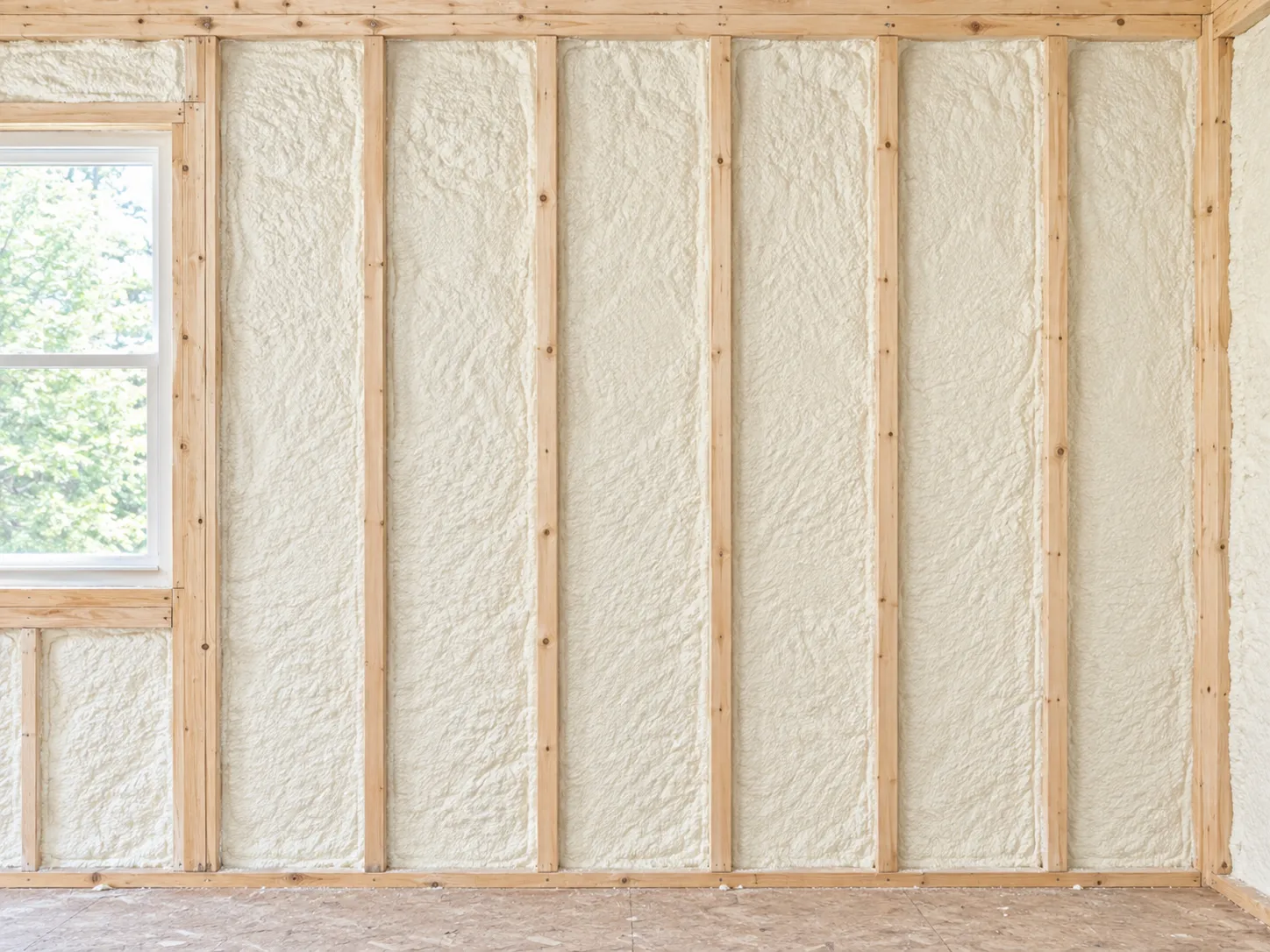
Attics & exterior walls
Closed-cell foam on roof decks, attic floors and 2×4 or 2×6 wall cavities, in new and existing homes. Attics and roofs are sprayed to R-38.
Spray foam insulation · West Michigan · Lakeshore to Lansing
Choose your project and we'll show you the services, foam and answers that fit it.
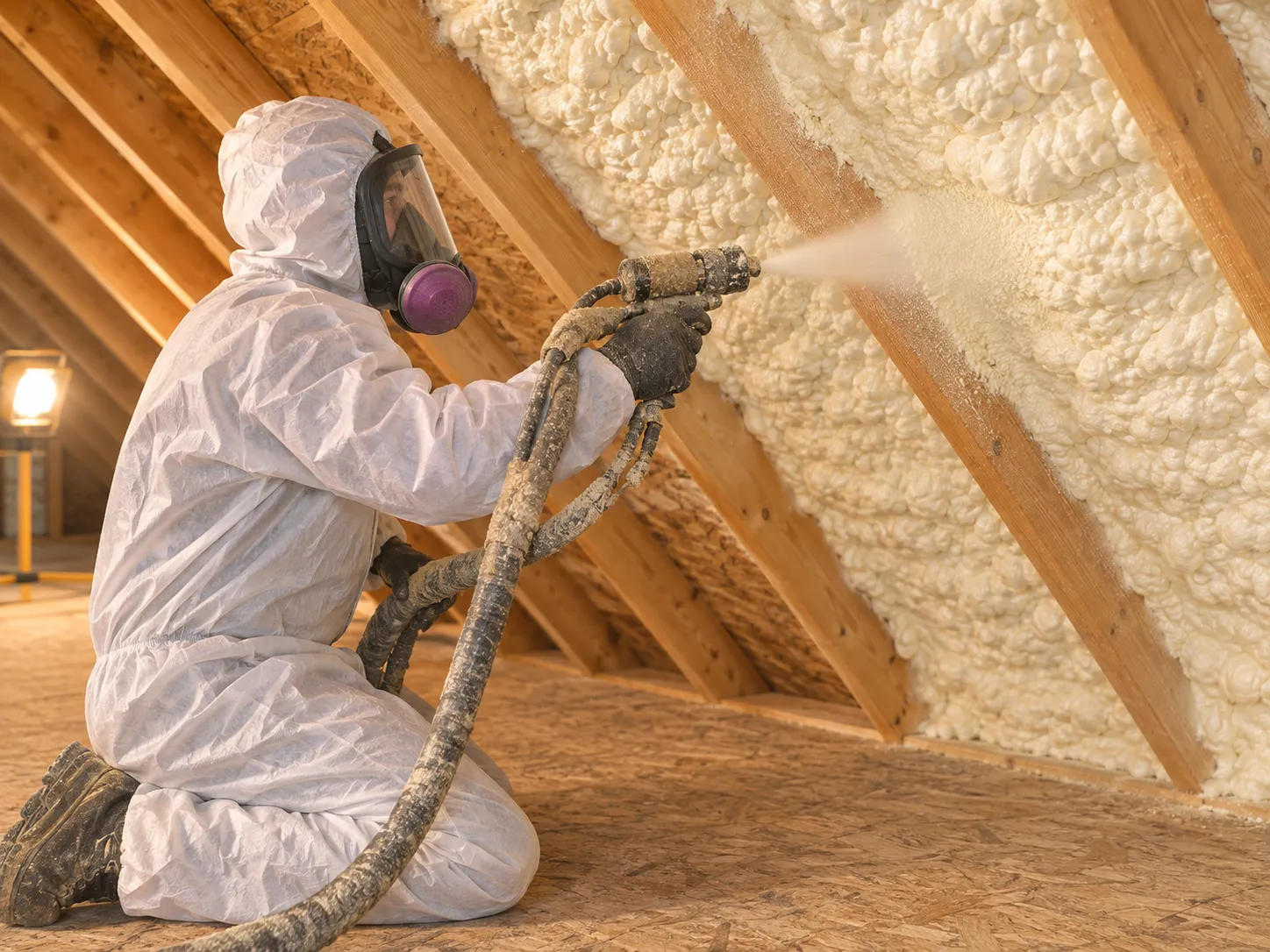
Residential services
Closed-cell foam on roof decks, attic floors and 2×4 or 2×6 wall cavities, in new and existing homes. Attics and roofs are sprayed to R-38.
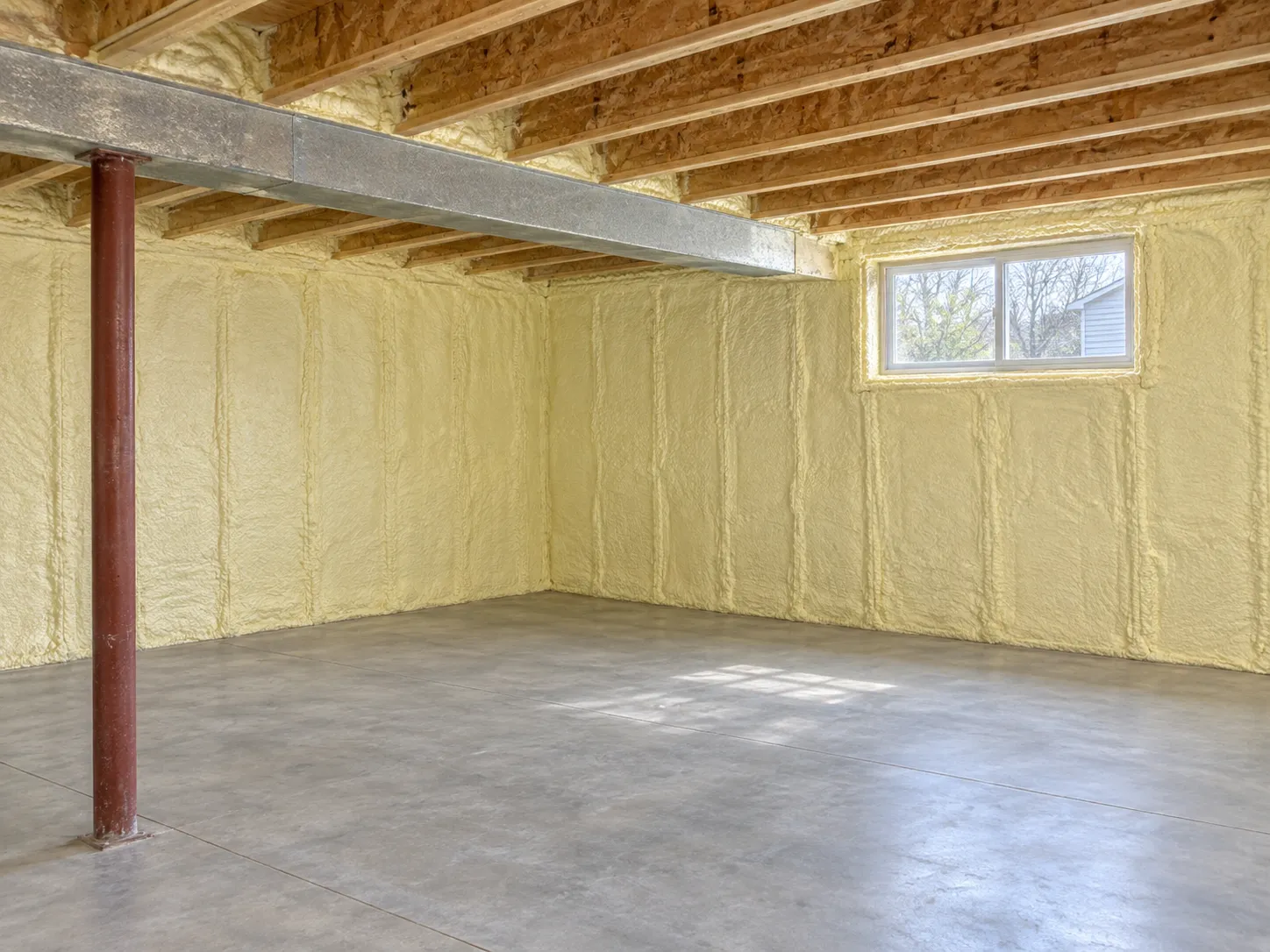
Closed-cell foam on foundation walls and rim joists, one of the biggest air-leak sources in older Michigan homes.
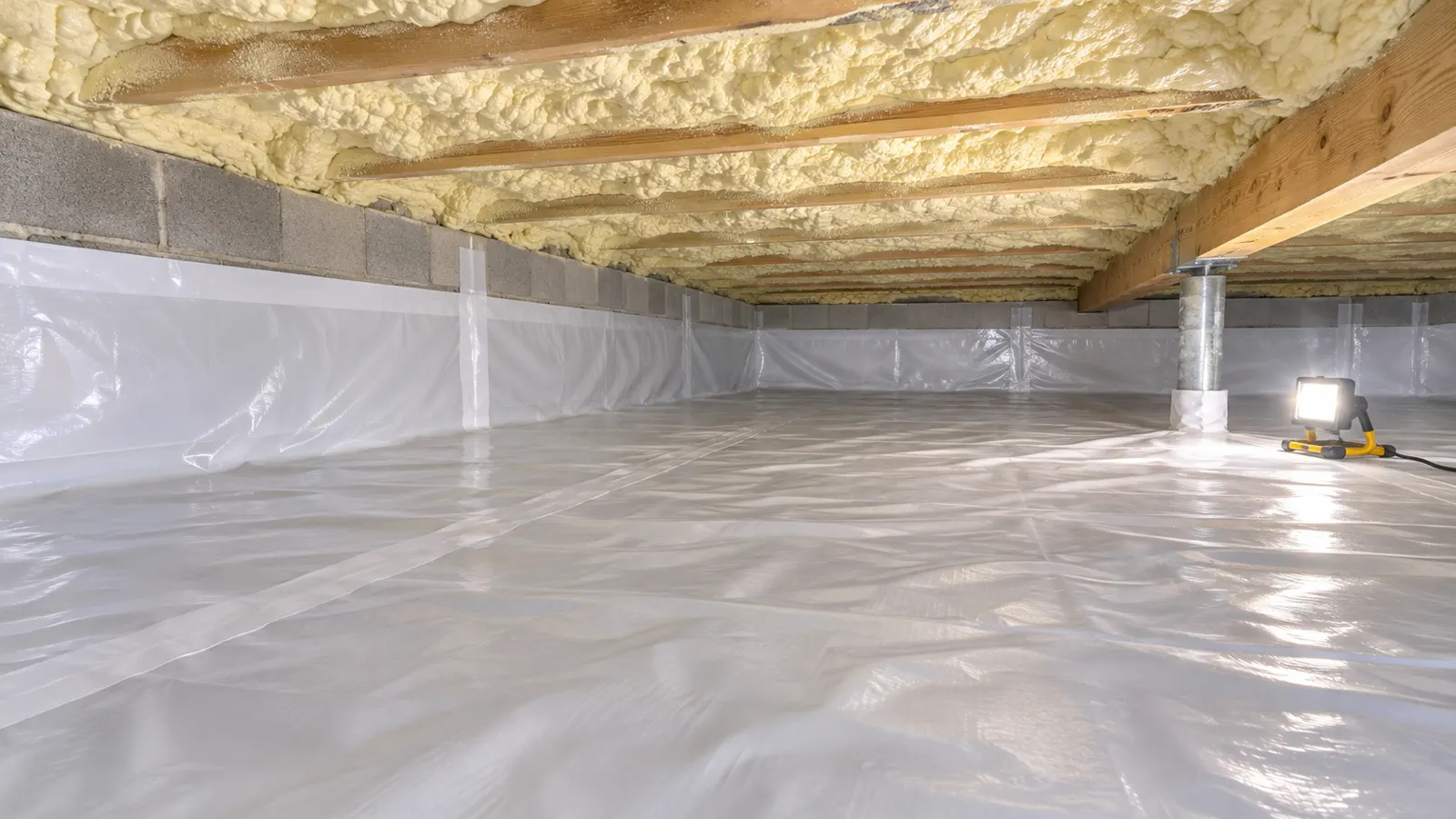
A sealed vapor barrier over the ground and up the walls, closed vents and openings, and closed-cell foam on the walls and rim joists. It keeps ground moisture, musty air and cold drafts out of the floor above.
Open-cell foam in interior walls and floors for quieter bedrooms, offices and media rooms.
Fiberglass, blown-in and hybrid systems when they are the right fit.
Foam guide
Typical recommendation
Every home is different. We confirm foam type and thickness during the free walkthrough.
R-value calculator
Enter a target R-value for an attic, wall or foundation and see the approximate closed-cell depth at R-7 per inch, compared with common framing depths.
R-38 is what we spray on residential attics and roofs.
Homeowner FAQ
Price depends on the area, foam type and thickness. Closed-cell, which we use on attics, exterior walls and foundations, delivers R-7 per inch plus a moisture barrier. Open-cell, used for interior and sound walls, costs less. We give a free, itemized estimate after a walkthrough.
For most Michigan homes, yes. Air leakage drives a large share of heat loss in cold climates, and spray foam insulates and air-seals in one step. Savings depend on the home and how it is used.
Occupants stay out of the work area during spraying and for a period afterward while the foam cures. We give you a specific re-entry time for your job.
We cover the ground and walls with a sealed vapor barrier, close vents and other openings, and insulate the crawl space walls and rim joists with closed-cell foam. Encapsulation limits ground moisture and outside air; it does not replace pest treatment or fix active water leaks, which should be handled first.
Yes. We remove old, damaged or pest-contaminated insulation before installing new material, or as a stand-alone job.
From the blog

The longer-lasting option isn't automatically the lower-cost choice over 30 years. The total cost of ownership for spray foam vs. fiberglass can...
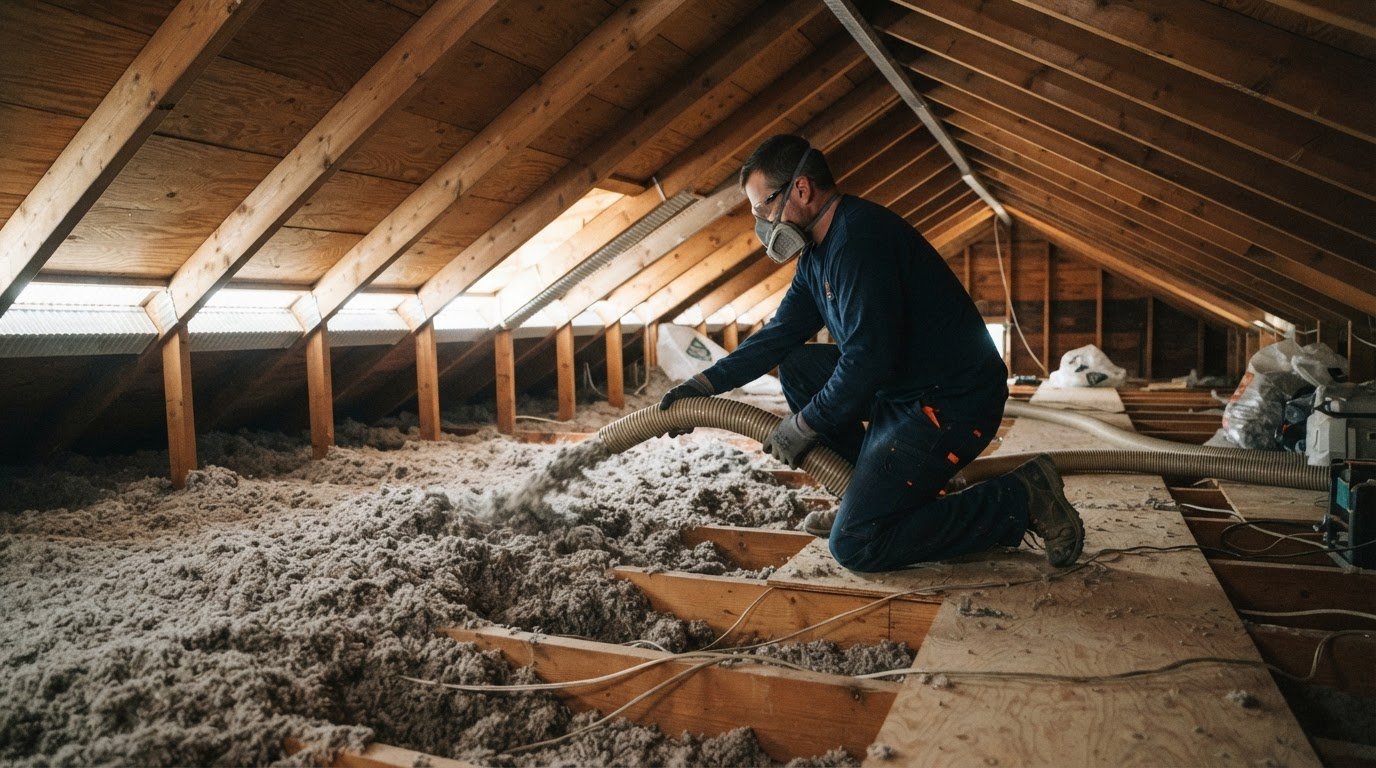
Could insulation intended to protect your roof actually trap moisture and put its structure at risk? Attic insulation for protecting the roof...

A musty crawl-space smell isn’t always caused by mold alone. Crawl space encapsulation for eliminating odors can help limit moisture and soil gases,...
Commercial services
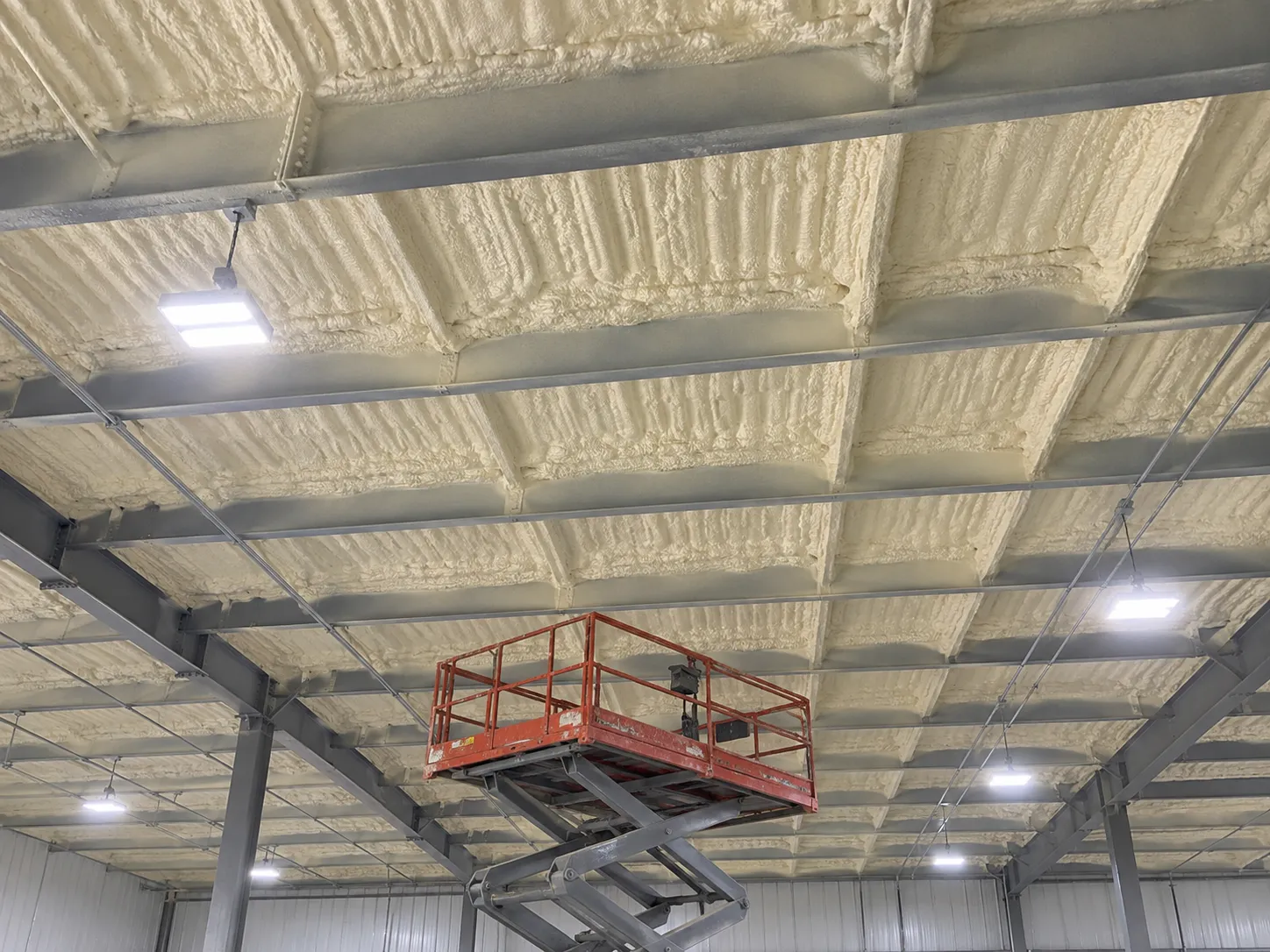
Closed-cell foam on the underside of metal and wood roof decks for an air seal and R-7 per inch.
Closed-cell in steel-stud and wood-frame exterior walls, with moisture control and added rigidity.
Stops condensation on steel and steadies temperatures in large open spaces.
Open-cell foam in interior walls between offices, classrooms and tenant spaces.
Removal of old insulation and upgrades in occupied buildings, with minimal disruption.

For builders & GCs
Send plans and we will return a takeoff-based quote by area and foam type, scheduled around your framing and inspection dates.
Send plans for a quoteCommercial FAQ
Yes. We work with owners and builders on offices, schools, retail and warehouse projects, both new build and retrofit, and quote from plans.
Often, yes. We plan the work area and schedule to keep disruption to your business to a minimum and give a clear re-occupancy time for each area.
Closed-cell for roof decks, exterior walls and steel buildings. Open-cell only for interior walls and sound dampening.
From the blog

Insulating a home office for sound and comfort works best as a system: seal air leaks around doors and other openings, then choose wall insulation...

A store can lose conditioned air through its roof, walls, floors, and gaps in the building envelope. Insulating a retail store in Grand Rapids starts...
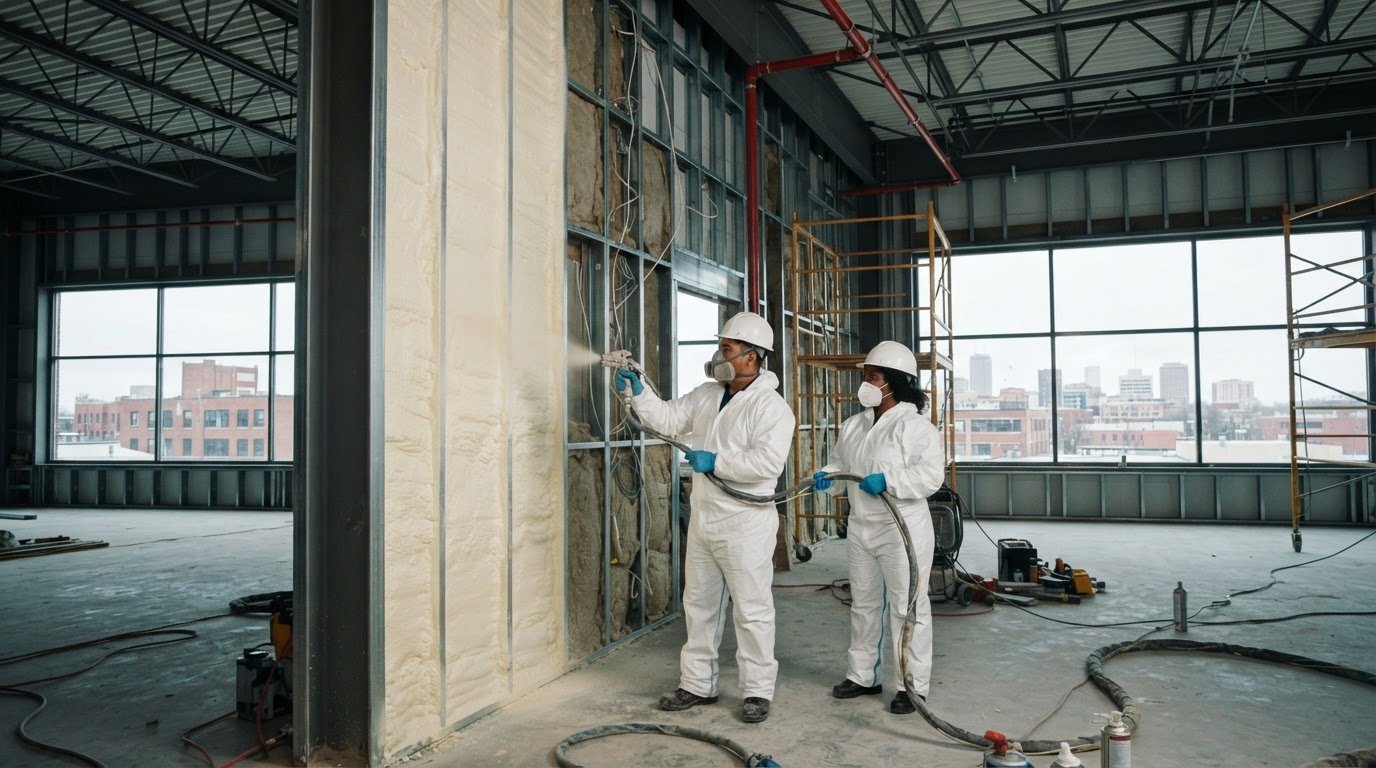
Insulating a commercial space in Grand Rapids starts with identifying air leaks and the areas that need coverage. The U.S. Environmental Protection...
Utility building services
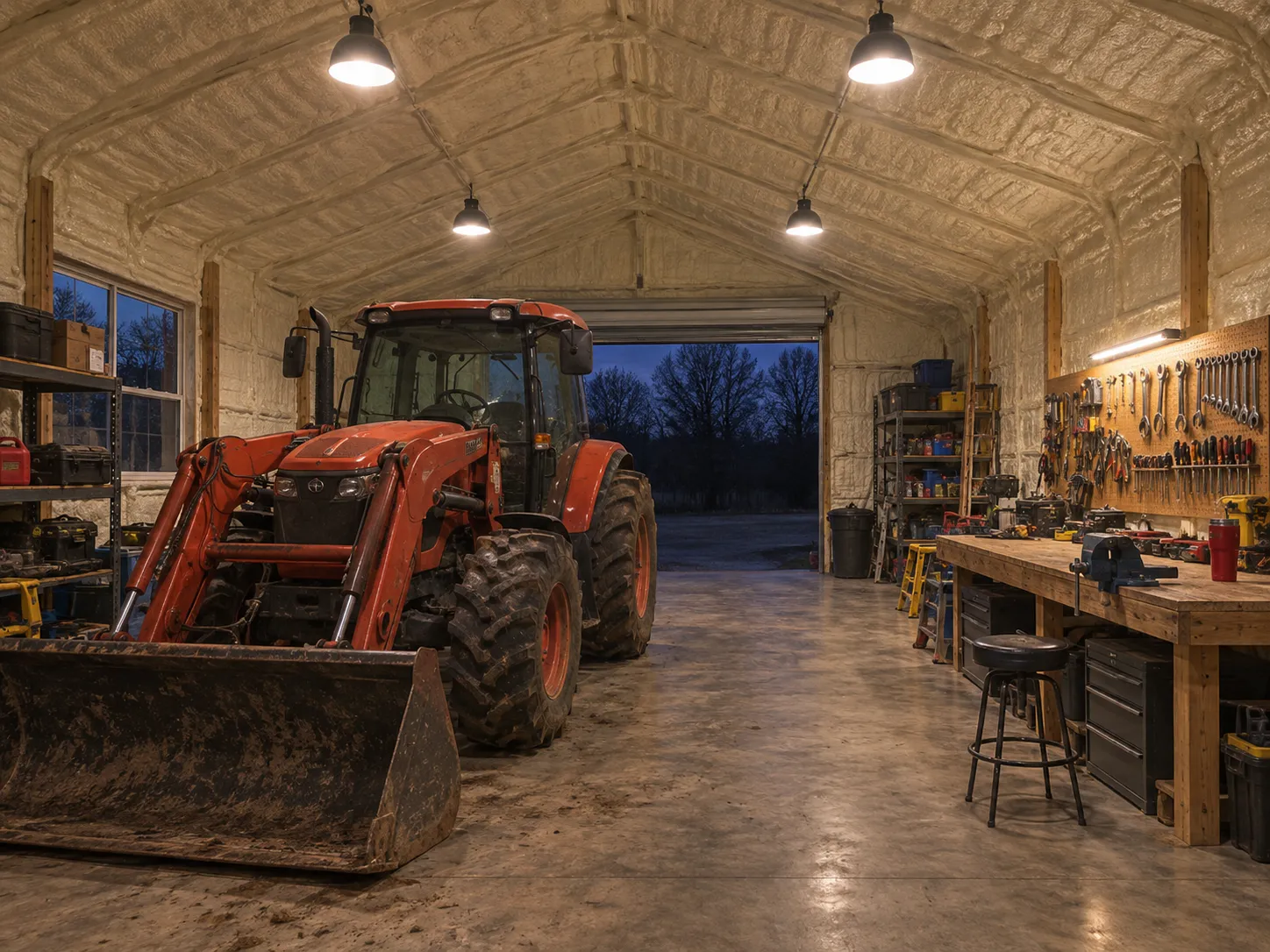
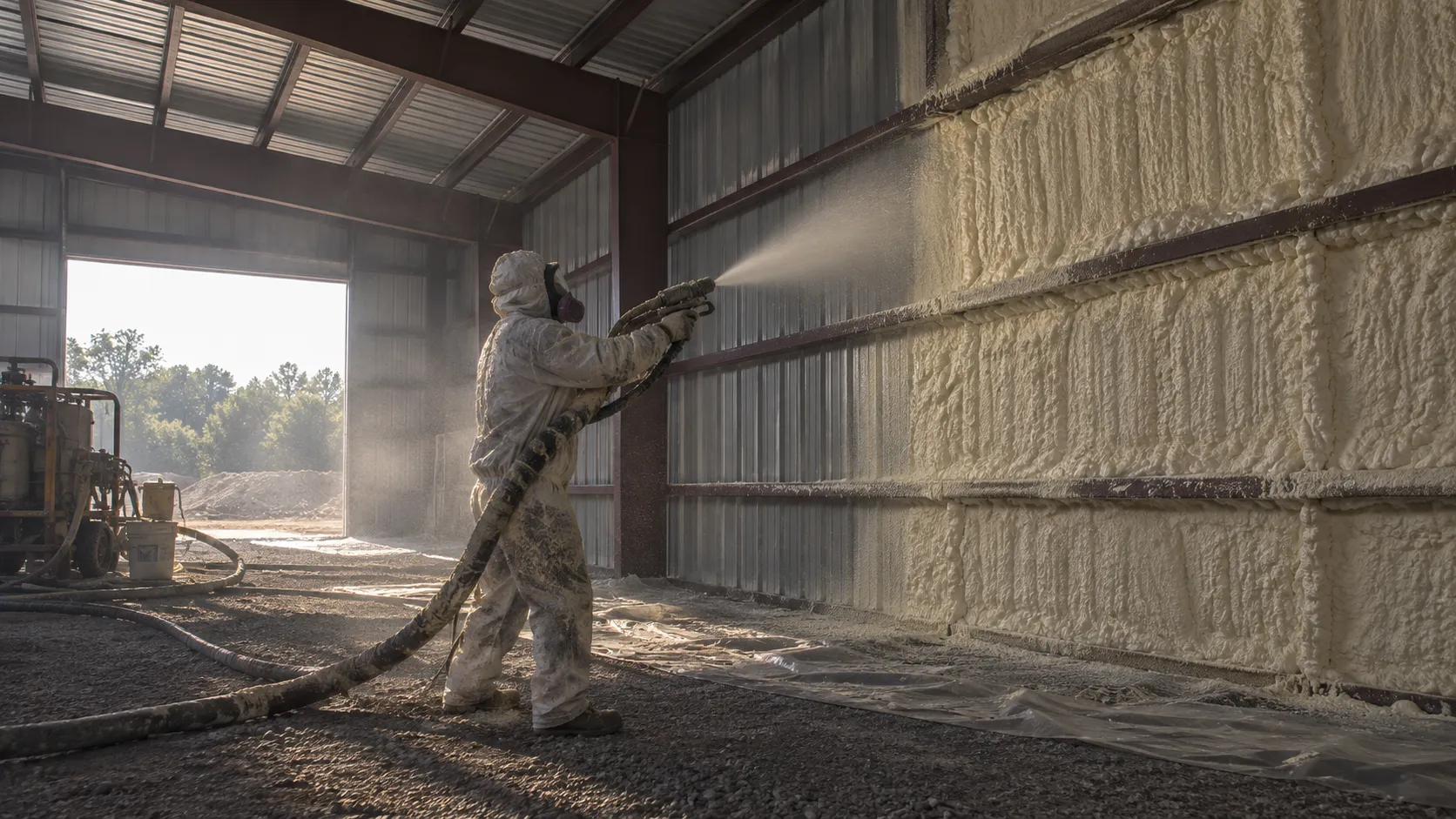
Turn a cold, dripping barn into a workshop you can use all winter. Foam goes straight onto steel and framing, sealing gaps around girts and trusses.

Protect equipment and framing from moisture and temperature swings, and make the building usable year-round.
Controls temperature swings, condensation and echo in steel buildings.
Most barns we see already have steel up. We spray directly onto the inside of the panels.
Old fiberglass or bubble wrap taken out first when needed.
The steel building problem
When moist indoor air touches an uninsulated steel roof or wall, it condenses. That water drips on equipment, rusts fasteners and rots framing. Closed-cell foam bonds directly to the panel, so warm air never reaches the cold surface.
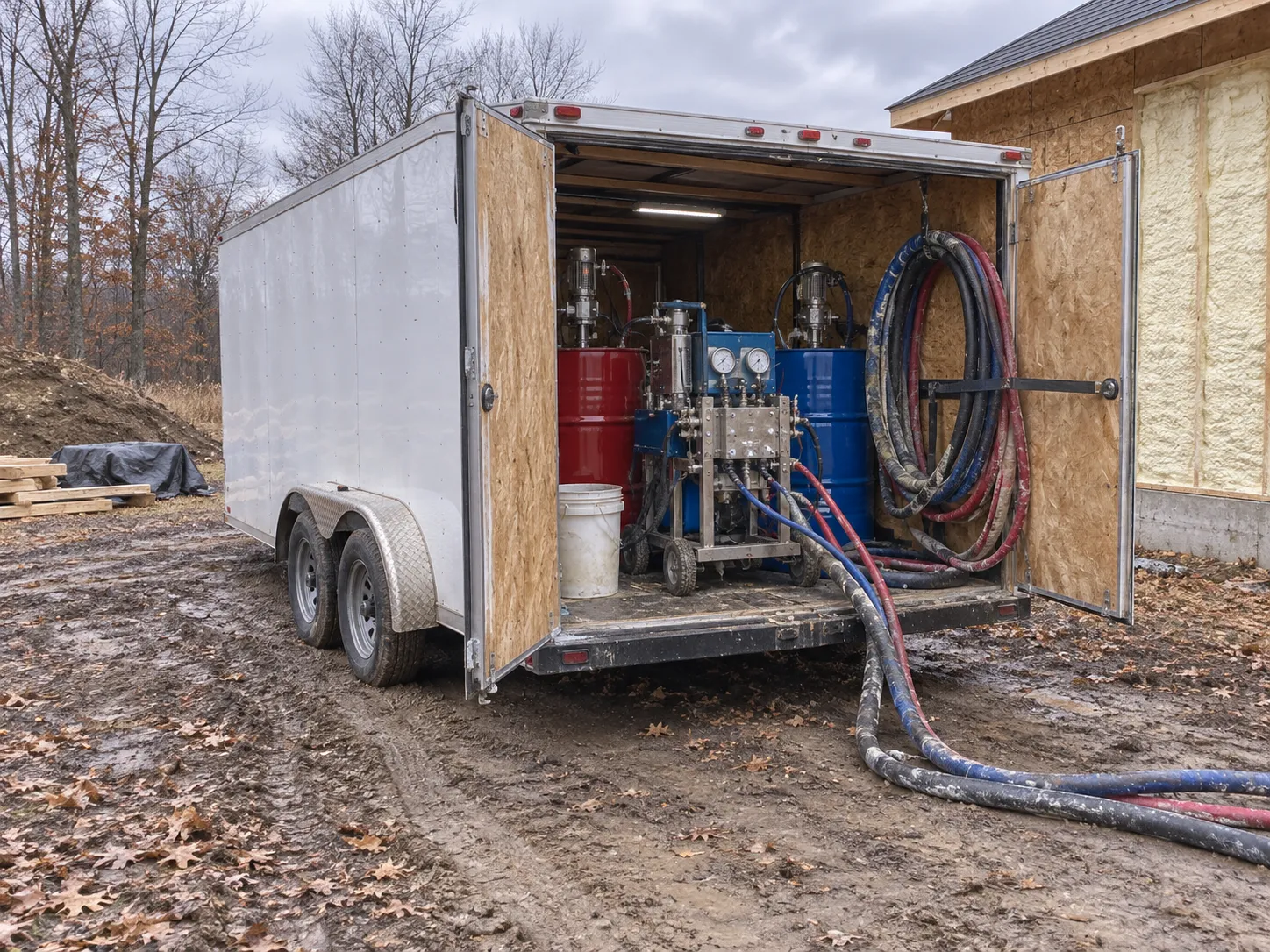
We bring the rig
We protect equipment and surfaces that stay, spray to the specified depth, and haul off our mess. Clearing the work area speeds things up; we'll tell you exactly what needs to move before the spray date.
Get a utility building quoteUtility building FAQ
Yes. That is most of the barns we see. Closed-cell foam sprays directly onto the inside of the steel and framing.
Closed-cell foam applied directly to the steel keeps warm, moist air from reaching the cold panel, which is what causes condensation and dripping.
It depends on square footage, thickness, and whether walls, ceiling or both are done. We give a free written quote after a walkthrough.
From the blog
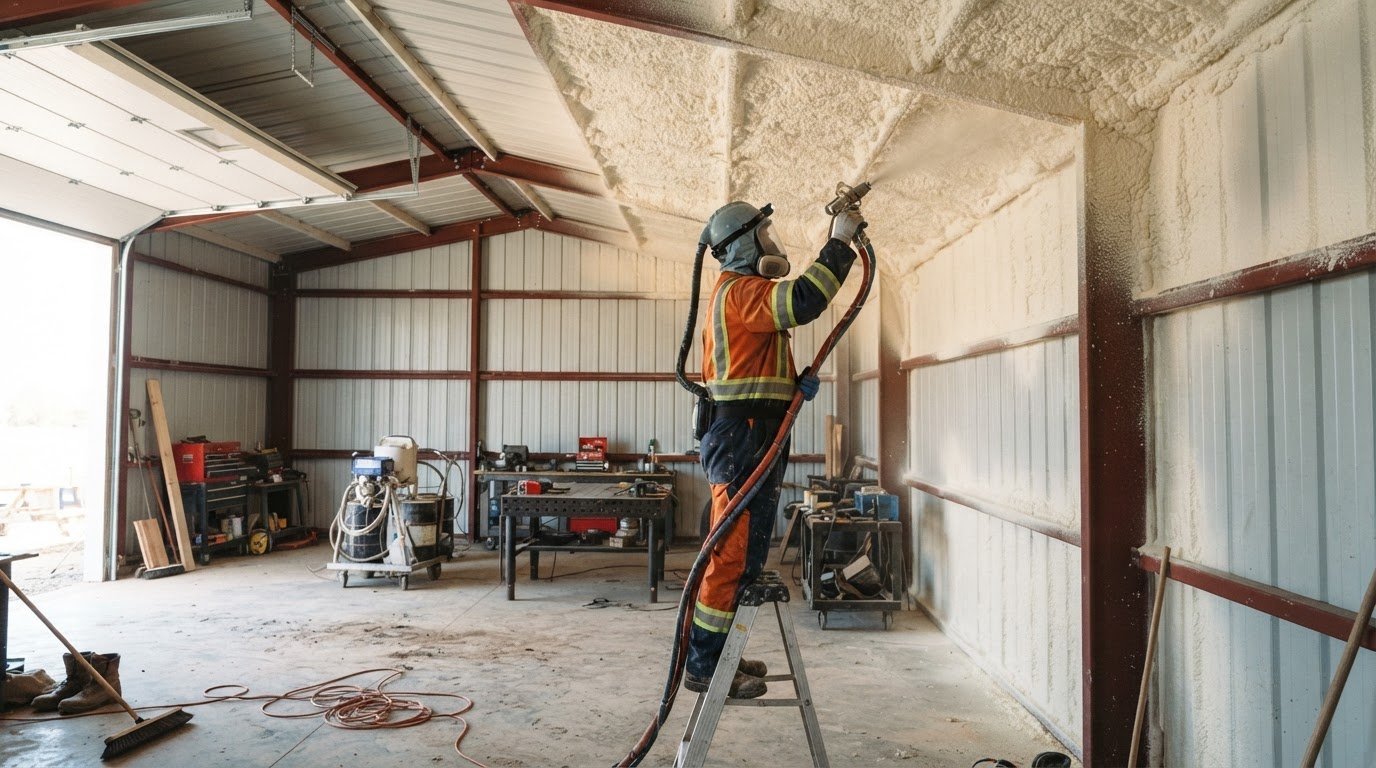
The highest R-value isn’t automatically the right choice for a metal workshop. To decide how to insulate a metal workshop, match the system to how...
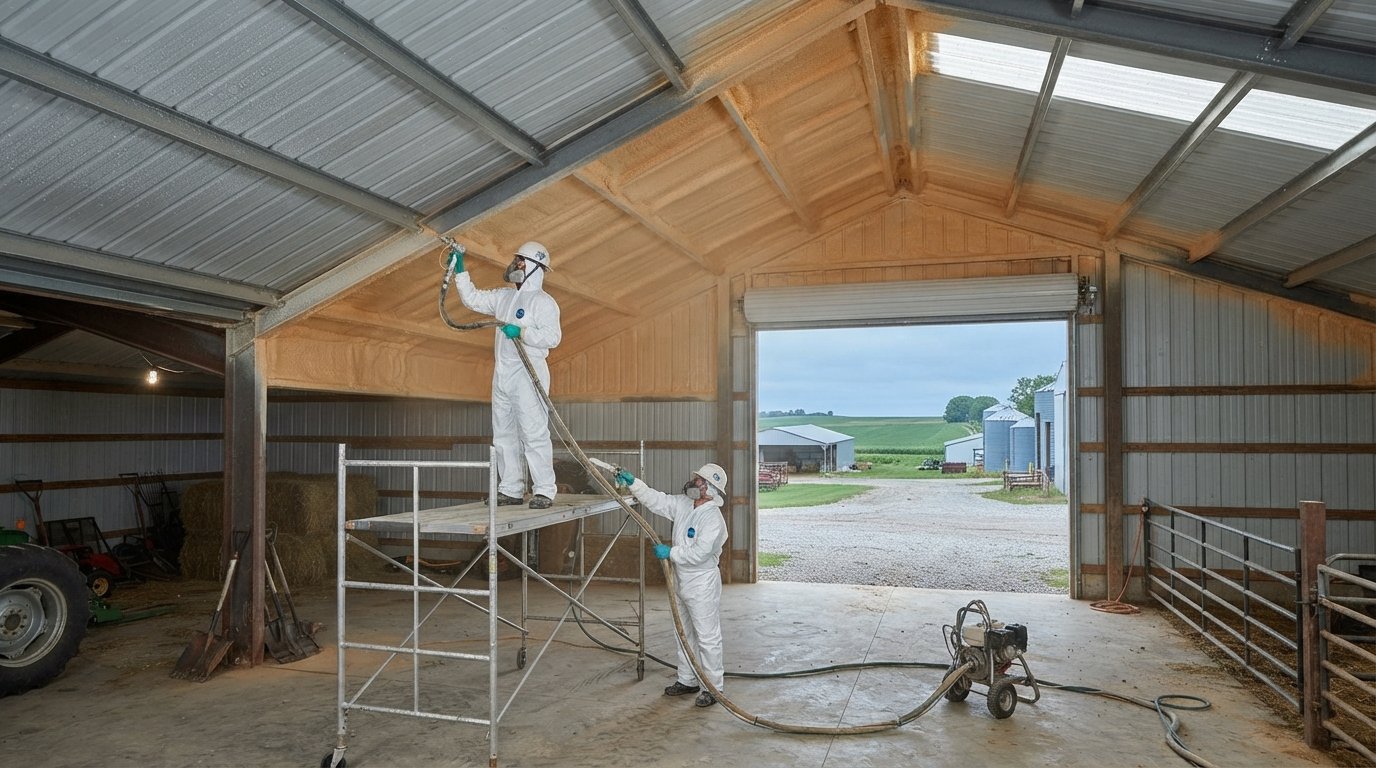
Condensation inside a metal barn is more than a nuisance: closed-cell spray foam can help limit moisture movement and improve the building envelope....

A well-insulated pole barn can still become damp and uncomfortable if the plan overlooks moisture. In West Michigan, temperature swings and...
Open-cell or closed-cell?
We use closed-cell foam on the building envelope: attics, exterior walls, foundations, roof decks and steel buildings. Open-cell is reserved for interior walls and sound dampening.
How we work
A no-obligation visit or plan review to understand the building and your goals, followed by a clear written quote.
We protect the area, apply foam to the specified depth, and keep disruption to a minimum.
A quality check of coverage, a full cleanup, and a walkthrough of the finished job.
Service area
Based in Fruitport, we work across West Michigan and everywhere in between.
Free estimate
Send a few details and we will follow up to schedule a walkthrough or review your plans.
(616) 277-7707Mon–Sat 8:00 am–6:00 pm · Sun closed
P.O. Box 18, Fruitport, MI 49415