
A store can lose conditioned air through its roof, walls, floors, and gaps in the building envelope. Insulating a retail store in Grand Rapids starts with finding where heat and cooled air escape, then choosing an appropriate approach for those areas. This can help steady indoor temperatures and reduce demand on heating and cooling equipment.
It’s frustrating when the HVAC system keeps running but customer and staff areas still feel uneven. This guide explains which commercial buildings may benefit, how insulation limits energy loss, and what affects the project, since every storefront and facility has its own construction and needs.
You’ll also see how moisture management and indoor air quality fit into a sound insulation plan, along with where service reaches across Grand Rapids and West Michigan. That local perspective can help you understand the options and the next practical step toward a more comfortable, efficient commercial space.
Key Takeaways
- Identify which commercial spaces may benefit from insulation by considering how the building is used and where its envelope loses conditioned air.
- Learn how insulation can help limit heat transfer and support more consistent indoor temperatures without treating it as a substitute for addressing moisture issues.
- See how the service area connects Grand Rapids with communities across West Michigan.
- Compare insulation options, including spray foam approaches, to understand which may suit a store’s building needs.
Commercial buildings served
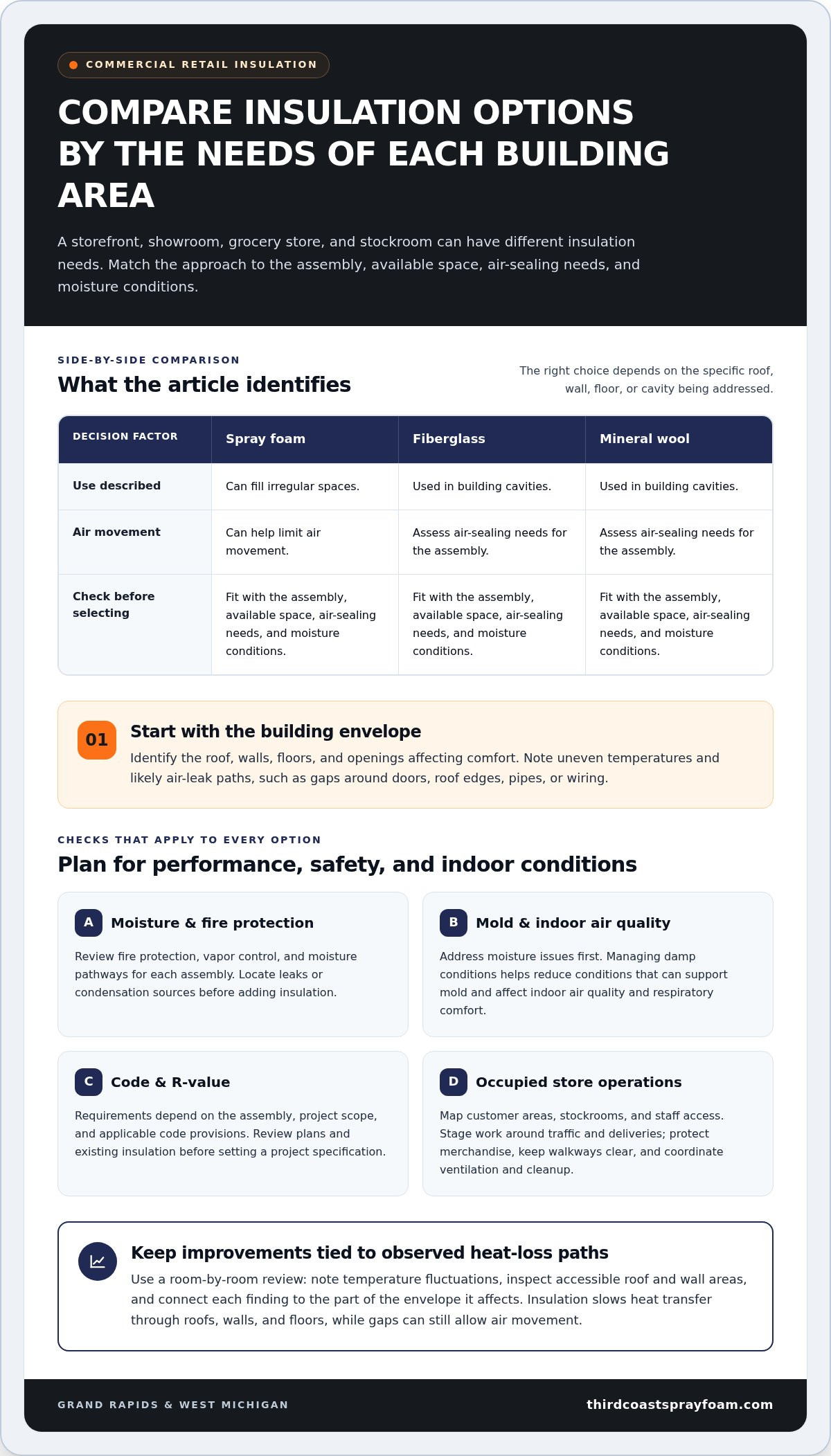
A practical plan for insulating a retail store in Grand Rapids starts with the building’s layout and use. A storefront, showroom, grocery store, or stockroom may have different insulation needs. Identify the roof, walls, floors, and openings that affect customer and staff comfort.
Spray foam can fill irregular spaces and help limit air movement. Fiberglass and mineral wool are also used in building cavities. Compare how each option fits the assembly, available space, air-sealing needs, and moisture conditions. Before selecting material for each area, assess these factors for your Grand Rapids retail store.
Michigan rebates or tax incentives depend on the building, proposed work, and applicable program criteria. Document the existing insulation and define the planned improvements, then compare the scope with current utility programs and tax provisions. Don’t include an incentive in the project budget until eligibility is established.
Fire and Moisture-Control Requirements
Review fire protection, vapor control, and moisture pathways for each commercial assembly. Building use and design determine which details need attention. Check how insulation meets existing fire protection and finishes, and locate leaks or condensation sources before adding insulation. Addressing moisture helps reduce conditions that can support mold and affect indoor air quality and respiratory comfort.
Insulation During Business Operations
To reduce disruption, map customer areas, stockrooms, and staff access before work begins. Divide the project by space and coordinate each area around store traffic and deliveries. For example, schedule back-room work separately from a busy sales floor. Protect merchandise, keep walkways clear, and coordinate ventilation and cleanup to limit dust and odors in occupied areas. This staged approach can help essential store operations continue.
Energy efficiency and heating and cooling loss
Insulation slows heat transfer through a store’s roof, walls, and floors. Start by locating uncomfortable zones and likely air-leak paths. When insulating a retail store in Grand Rapids, connect those observations to the building’s specific envelope.
Energy Efficiency and Heat Loss
In winter, heat moves from warmer indoor areas toward colder surfaces. In summer, outdoor heat moves inward and adds work for cooling equipment. Insulation slows this transfer, but gaps around doors, roof edges, and service penetrations can still let air move. Compare comfort concerns with the building layout. A draft near a stockroom door, for example, may need a different fix than a cold ceiling.
Use a room-by-room review to set priorities. Note where temperatures fluctuate, inspect accessible roof and wall areas, and identify openings around pipes or wiring. Connect each finding to the part of the building envelope it affects to keep improvements focused on actual heat-loss paths. For a Grand Rapids retail store, start with areas that most clearly affect comfort and HVAC demand.
Required Retail Building R-Values
There isn’t one R-value for every retail building in Grand Rapids. The appropriate requirement depends on the assembly, project scope, and applicable building-code provisions. R-value describes resistance to heat flow, but the target must be assessed for each roof, wall, or floor assembly. Review plans and existing insulation before setting a project specification.
Compare the planned assembly with the requirements that apply to the work. A roof replacement and an improvement to an existing wall can involve different conditions. Don’t select an insulation target from a product label alone. Consider cavity depth, air leakage, and moisture movement together. For a project-specific discussion, review commercial insulation options alongside the areas needing improvement.
Grand Rapids and West Michigan service area
For stores in Grand Rapids and West Michigan, start with the building’s location and project scope. A Grand Rapids storefront may face different review steps from a project elsewhere in West Michigan. Map the property, identify the areas needing insulation, and note whether the work affects the roof, walls, or another part of the building. This outline helps organize code, permit, and quote questions.
Commercial retail projects must follow the Michigan energy code provisions applicable to the work, as enforced for the property. Exact requirements depend on the project scope and building assembly. Share the plans and existing conditions during planning, then compare the proposed work with the applicable code requirements. This keeps insulation decisions tied to the actual building rather than a generic specification.
Permit needs also depend on the planned work and local review process. Installing insulation within an existing assembly may involve different considerations from changing walls, ceilings, or other building components. Before scheduling, define which surfaces will be opened or altered and include those details in the project scope. The Grand Rapids location and nature of the work shape the permit review.
Compare quotes by matching the scope, not just the totals. Check whether each proposal covers the same rooms, surfaces, preparation, insulation approach, and cleanup. A quote for a roof area alone, for example, isn’t equivalent to one covering both roof and wall work. Ask for exclusions and details on protecting occupied areas. Use the same written scope for every comparison.
For a Grand Rapids or West Michigan project, prepare a simple site brief with the property location, building use, affected areas, access limits, and known moisture concerns. This supports clearer planning and quote comparisons. It also keeps indoor air quality and moisture management in view alongside energy goals, especially where past leaks or damp areas could contribute to mold.
Third Coast Spray Foam: Closed Cell Spray Foam Insulation
Third Coast Spray Foam helps commercial property owners address insulation gaps with closed-cell spray foam insulation. It may suit a retail project that calls for spray foam in specific parts of the building envelope. The right scope depends on the assembly, access, and existing conditions, so start by identifying the areas contributing to drafts or uneven indoor temperatures.
For other building areas or project needs, Third Coast Spray Foam also installs open-cell spray foam, pole barn insulation, and rim joist insulation. A sound plan considers moisture sources and indoor air quality, too. Insulation doesn’t replace leak repairs or moisture management, which are important for limiting conditions that support mold and mildew and can affect respiratory comfort.
Share the store’s location, affected areas, and known building concerns to discuss a practical scope. You’re welcome to contact Third Coast Spray Foam about your project.
Set a Clear Plan for Your Store
A useful next step is to turn comfort concerns into a brief site plan. Note which areas feel drafty, where temperatures shift, and whether any rooms show signs of dampness or musty odors. Add operating constraints, such as customer hours, stock access, and rooms that need to remain available. This gives the project conversation a practical starting point instead of a broad request to improve the whole building.
Before insulating a retail store in Grand Rapids, decide which outcome matters most: steadier temperatures, reduced air leakage, moisture management, or a combination. Keep indoor air quality in view, since persistent dampness and mold can affect respiratory comfort. The right scope addresses the building’s conditions, not simply adds material.
For a project-specific conversation, contact Third Coast Spray Foam. A clear starting plan makes it easier to move toward a more comfortable, well-maintained store.
Frequently Asked Questions
What insulation materials are best for retail stores in Grand Rapids’ climate?
No single material suits every Grand Rapids retail roof, wall, or retrofit. Closed-cell spray foam is denser, has a higher R-value, and resists moisture. Open-cell foam is lighter and flexible, making it suitable for some interior walls and sound control. Match the material to the assembly, access, and moisture conditions. Address leaks before insulating, since dampness can contribute to mold and affect indoor air quality.
What rebates or tax incentives are available for commercial insulation in Michigan?
Michigan rebates or tax incentives depend on the building, proposed work, and applicable program criteria. Document existing insulation and planned improvements, then review current programs and provisions. Establish eligibility before including an incentive in the budget.
Disclaimer
Information provided is for general educational purposes. Individual needs and circumstances vary. Speak to an experienced professional to get the correct information for your situation.