Residential · Crawl spaces
Crawl Space Encapsulation
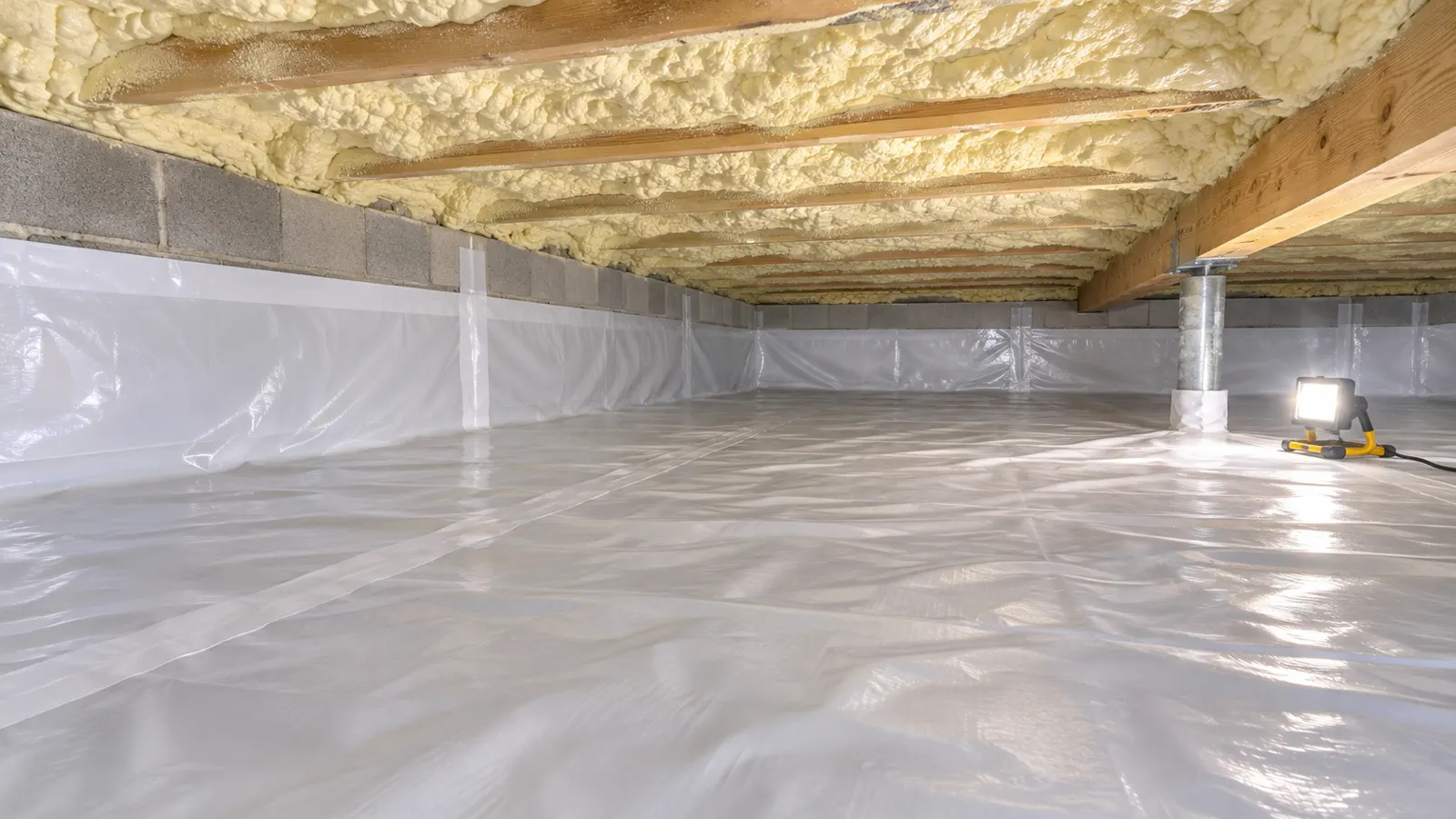
A sealed vapor barrier, closed vents and closed-cell foam on the walls and rim joists keep ground moisture, musty air and cold floors out of your home.
A vented, dirt-floor crawl space pulls damp ground air into the home above it. That moisture feeds musty smells, mold and wood rot, and the cold air makes the floors above uncomfortable all winter. Encapsulation turns the crawl space into a sealed, dry part of the house.
What encapsulation includes
- Vapor barrier. A heavy liner over the ground and up the walls, with seams and edges sealed.
- Closed vents and openings. Foundation vents, gaps and penetrations are sealed so outside air and pests have fewer ways in.
- Closed-cell spray foam. Applied to the crawl space walls and rim joists at R-7 per inch for an air seal and insulation in one step.
- Moisture control. Where it’s needed, we’ll recommend drainage or a dehumidifier so humidity stays in check.
Signs your crawl space needs attention
- Musty or damp smells in the house
- Cold floors over the crawl space
- Sagging or wet insulation hanging from the floor joists
- Condensation, standing water or mold on the framing
- Signs of rodents or insects
What it won’t do
Encapsulation limits moisture and closes openings, but it is not a pest treatment and it doesn’t repair rotted framing. If there is an active infestation or structural damage, that should be handled first. We’ll tell you what we see during the walkthrough.
Removing old insulation first
Many crawl spaces have old fiberglass batts that are wet, fallen or contaminated. We remove and dispose of it before the new work goes in. See insulation removal.