
Did you know that an estimated 90% of homes in the United States are under-insulated, leaving them vulnerable to costly structural damage every winter? Understanding what causes ice dams on roof is the first step toward protecting your home from the cycle of melting and refreezing that plagues so many local properties. It is exhausting to watch water seep into your walls or see your energy bills climb while you struggle to keep heat inside where it belongs. You shouldn’t have to fear the next snowstorm or worry about the hidden mold growth that often follows winter leaks.
We’re here to help you solve this problem at its source. This guide explores how improper attic insulation and air leaks create the perfect conditions for ice dams to form. You’ll discover how these failures impact your home’s structural integrity and your family’s respiratory health. We will explain the relationship between escaping heat and ice formation, identify the risks of mold-induced air quality issues, and discuss the permanent insulation solutions that stop the melting once and for all. By the end, you’ll have a clear path to a drier, healthier, and more efficient home.
Article Highlights: Understanding Ice Dam Prevention
- Learn how the combination of snow, freezing temperatures, and attic heat loss determines what causes ice dams on roof structures.
- Identify the “Stack Effect” and thermal bridging as the primary mechanical failures that allow warm air to escape into your attic space.
- Understand the critical link between moisture intrusion and respiratory health risks caused by hidden mold growth behind your walls.
- Discover why temporary “Band-Aid” fixes like heat cables fail to address the root cause of ice formation.
- Find out how spray foam insulation creates a permanent, airtight seal that protects your home’s structural integrity and indoor air quality.
What is an Ice Dam? The Physics of Winter Roof Damage
An ice dam isn’t just a heavy accumulation of snow. It’s a structural warning sign. At its core, an ice dam is a ridge of ice that forms at the edge of a roof, preventing melting snow from draining off as it should. This happens when the temperature of your roof deck rises above freezing while the eaves remain cold. This scientific process, often described as What is an Ice Dam, creates a reservoir of standing water that eventually finds its way into your home’s interior.
In West Michigan, our frequent lake effect snow makes homes here especially vulnerable. The thick, heavy snow provides a layer of insulation that traps escaping heat against the shingles. This accelerates the melting process. Identifying what causes ice dams on roof systems in our region usually reveals a “three-part recipe”: heavy snow cover, significant heat loss from the house, and freezing outdoor temperatures. When these elements combine, the resulting freeze-thaw cycle pushes water under your shingles and deep into your soffits.
To better understand the mechanics of this winter phenomenon, watch this helpful video:
The Role of Roof Temperature Differentials
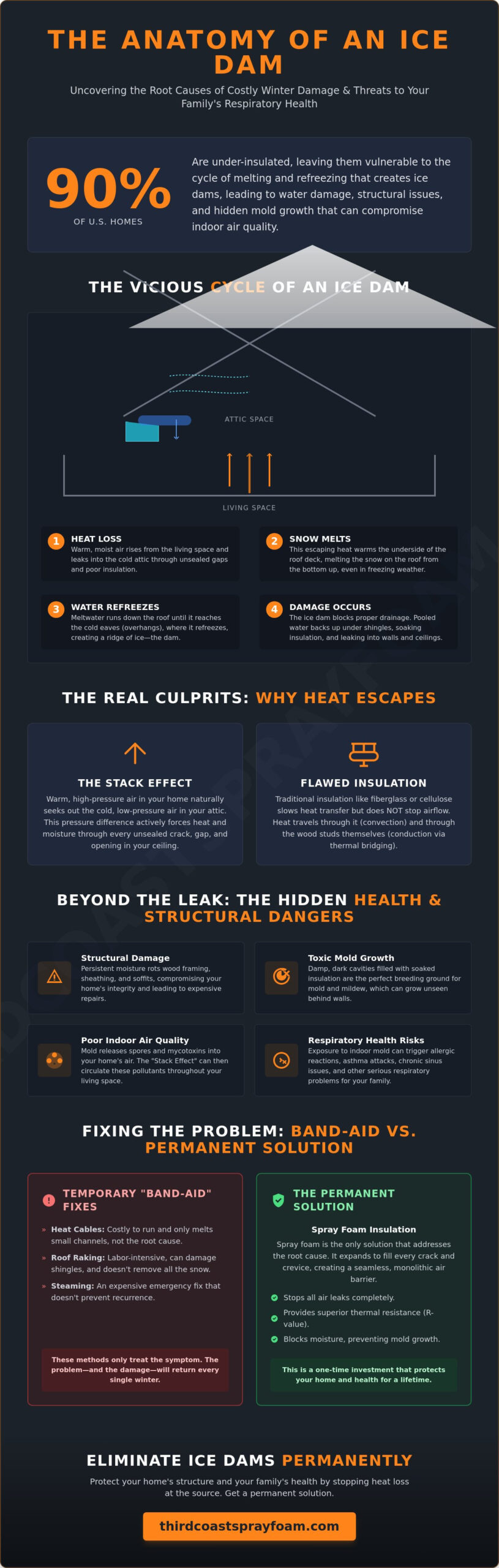
The physics of an ice dam rely on a temperature imbalance. Your attic should ideally stay at the same temperature as the outdoors. However, when heat leaks from your living space, the upper part of the roof stays warm while the eaves, which extend past the exterior walls, stay cold. Even a few degrees of heat loss can trigger the melting process. The snow at the peak melts and runs down until it hits the cold eave, where it refreezes. This creates a physical wall of ice. This trapped water doesn’t just damage wood; it creates the damp conditions necessary for mold to thrive, which can eventually impact your family’s respiratory health.
Warning Signs You Have an Ice Dam Problem
You don’t always have to climb a ladder to know you have a problem. Recognizing these signs early can help you determine what causes ice dams on roof areas of your specific home before the damage becomes permanent. Keep an eye out for these specific indicators during the winter months:
- Massive icicles: Look for ice forming specifically behind the gutters or along the siding rather than just on the edge.
- Ice in the soffits: If you see ice coming through the soffit vents, water has already breached your roof’s primary defenses.
- Interior moisture: Dark spots, peeling paint, or dampness on the ceiling in rooms below the roofline are clear signs of a leak.
- Unexplained odors: A musty smell in the attic often indicates that moisture is trapped, leading to mold growth and poor indoor air quality.
The Primary Cause: Attic Heat Loss and Air Leaks
Warm air naturally rises. In the winter, this creates a phenomenon known as the “Stack Effect.” Your heated living space creates high pressure, while the cold attic has low pressure. This pressure difference forces warm, moist air through every tiny crack and crevice in your ceiling. While many homeowners believe a lack of material is what causes ice dams on roof surfaces, the reality is often these invisible air bypasses that funnel heat directly to your roof deck.
Traditional fiberglass batts are frequently the first line of defense, but they have a fatal flaw. They are designed to slow down heat transfer, but they don’t stop airflow. Think of fiberglass like a wool sweater; it keeps you warm in still air, but the wind blows right through it. This moving air carries heat directly to the underside of your roof, causing snow to melt even when outdoor temperatures are well below freezing. This persistent heat loss is a primary driver of structural instability over time.
Thermal bridging adds another layer to the problem. Wood studs and ceiling joists act as highways for heat. Even if you have thick insulation between the beams, the wood itself conducts heat from your warm ceiling to the cold attic. These leaks don’t just waste energy; they transport humidity into your attic. When that moisture hits cold surfaces, it condenses into water droplets, fueling the growth of mold and mildew. This compromises your indoor air quality and can trigger respiratory health issues for your family.
It is vital to distinguish between R-value and air sealing. R-value measures a material’s resistance to heat flow, but it doesn’t account for air movement. You could have three feet of fiberglass in your attic and still suffer from ice dams if the air bypasses aren’t sealed. Understanding this distinction is key to identifying what causes ice dams on roof lines and finding a solution that actually works for the long term.
Common Attic Air Leak Sources
Most air leaks are hidden beneath existing insulation and require a trained eye to spot. Common culprits include:
- Recessed lighting: Standard can lights are notorious for radiating heat and allowing air to leak into the attic.
- Electrical penetrations: Small holes for wiring and ceiling fans act as tiny chimneys for warm air.
- Plumbing stacks: The gaps around PVC pipes often run from the basement to the attic, bypassing your insulation entirely.
- Attic hatches: Poorly sealed pull-down stairs or access panels are often the largest single source of air leakage.
Insulation Deficiencies in West Michigan Homes
Michigan energy codes now mandate ceiling insulation levels between R-49 and R-60 for Climate Zones 5 and 6. Many older homes in Grand Rapids or Muskegon fall significantly short of these standards, often relying on settled cellulose or fiberglass that has lost its effectiveness. Our team frequently finds that under-insulated rim joists and top plates are the silent culprits behind recurring ice issues. Closed cell spray foam provides both high-performance insulation and a built-in vapor barrier in a single application.
If you’re tired of the annual battle with icicles, you can request an attic inspection to identify these hidden air leaks before the next big snow.
The Hidden Danger: Mold, Air Quality, and Respiratory Health
While the exterior damage of an ice dam is obvious, the internal consequences are often invisible and far more dangerous. When water backs up under your shingles, it saturates your roof deck and spills into your attic insulation. This creates a high-moisture environment that serves as the perfect breeding ground for mold and mildew. Understanding what causes ice dams on roof structures is critical because these dams are the primary trigger for wintertime mold growth in Michigan homes. According to industry data, the average insurance claim for ice dam damage is approximately $8,000, but that figure can exceed $25,000 if extensive mold remediation is required.
The same “Stack Effect” that carries warm air into your attic also facilitates the movement of pollutants. Mold spores and bacteria from damp attic spaces can be pulled down into your living areas through air leaks around light fixtures and plumbing stacks. This direct connection between your attic and your breathing air means that an ice dam is not just a roofing issue; it’s a significant threat to your indoor air quality (IAQ). For family members with pre-existing conditions, this can trigger severe asthma attacks and other persistent respiratory issues.
Moisture and the ‘Hidden’ Mold Cycle
You might notice a musty odor in your home during the winter even if you don’t see a visible puddle. This is often the result of wet insulation harboring bacteria and mold behind your drywall. Once traditional insulation like fiberglass becomes wet, it loses its R-value and becomes a liability rather than an asset. We believe in a holistic approach to home health, where crawl space insulation and attic air sealing work together to manage moisture from the ground up to the roofline. This prevents the damp conditions that allow what causes ice dams on roof to compromise your structural integrity.
Protecting Your Family’s Respiratory Health
Poor indoor air quality often manifests as “winter allergies,” including symptoms like persistent coughing, nasal congestion, or itchy eyes. If these symptoms improve when you leave the house, your attic may be the source of the problem. Professional moisture management is the only way to ensure these triggers are permanently removed. Simply “fixing the roof” with new shingles isn’t enough if the underlying insulation remains contaminated with mold. True protection requires removing the damaged materials and installing a solution that prevents future air leaks and moisture intrusion. We prioritize your family’s well-being by addressing the environmental triggers that lead to these health implications.
How to Prevent Ice Dams: Short-Term vs. Long-Term Fixes
When the icicles start to grow, many homeowners reach for a roof rake. While removing snow from the first few feet of the eaves can provide temporary relief, it doesn’t address the root of what causes ice dams on roof systems. Raking is a reactive measure that requires constant attention every time a fresh layer of lake effect snow falls. Worse yet, some residents resort to “ice socks” filled with calcium chloride or chipping away at the ice with a hammer. These methods are dangerous. They often lead to cracked shingles or punctured gutters, creating new pathways for water to enter your home and damage your structural integrity.
A truly effective strategy requires moving beyond these “Band-Aid” fixes. The goal is to create a “Cold Roof” where the temperature of the shingles matches the outdoor air. This is achieved through a precise balance of high-performance insulation, meticulous air sealing, and proper ventilation. When these three elements work together, you stop the heat at the ceiling level, preventing the melt-refreeze cycle entirely. This proactive approach also safeguards your indoor air quality by keeping the attic dry and inhospitable to mold growth.
The Myth of the Quick Fix
Heat cables and de-icing tapes are common traps for homeowners looking for an easy out. These systems consume a significant amount of electricity throughout the winter, and they only melt small tunnels through the ice rather than removing the dam. They do nothing to stop the heat from escaping your living space. In fact, simply adding more blown in insulation without first performing professional air sealing can make the problem worse. Without a seal, the new material can trap escaping warm air against the roof deck, which actually accelerates what causes ice dams on roof lines to fail.
Building a Permanent Thermal Envelope
Creating a permanent thermal envelope requires a focus on the details that general contractors often overlook. We prioritize sealing the “top plate,” which is the junction where your exterior walls meet the attic floor. This area is a major highway for heat loss. Additionally, we must ensure that soffit vents are completely clear of loose-fill material. This allows fresh intake air to enter and travel up the underside of the roof deck before exiting through the ridge vents. A professional assessment using thermal imaging can identify the exact “hot spots” on your roof. This data allows us to apply targeted solutions that protect your home and your family’s respiratory health for decades.
If you are ready to stop the cycle of winter damage and high energy bills, schedule a professional attic evaluation with our expert team today.
Why Spray Foam is the Ultimate Ice Dam Solution in Michigan
Spray foam insulation is the only material that addresses the two-fold problem of heat transfer and air leakage simultaneously. While traditional products only slow down heat, spray foam expands to create a monolithic, airtight barrier. This prevents the air bypasses we’ve discussed from reaching the roof deck. By stopping the warm air at the source, we eliminate what causes ice dams on roof systems to fail during our harsh West Michigan winters. This material is particularly effective at sealing rim joists and top plates, which are the most common failure points in local homes.
In our high-humidity environment, durability is a requirement, not an option. Closed cell spray foam is moisture-resistant and doesn’t settle over time like cellulose or fiberglass. Because it creates an airtight seal, it eliminates the condensation points where warm air meets cold surfaces. This is a critical step in professional mold prevention. By keeping your attic dry, you’re directly protecting your family’s respiratory health and ensuring that your indoor air quality remains high throughout the year. We focus on these health outcomes as much as we focus on energy savings.
The Third Coast Professional Advantage
We take a health-first approach to every project in Grand Rapids, Muskegon, and Holland. Our team understands that your home is a complex system, and we treat it as such. Spray foam stops the ice dam cycle by creating a conditioned attic space that keeps the roof deck at a consistent temperature. This local expertise ensures that we account for heavy lake effect snow loads and the specific thermal challenges of Michigan’s Climate Zones 5 and 6. We don’t just sell insulation; we provide a permanent solution for long-term structural security.
Investing in Long-Term Structural Integrity
Upgrading to high-performance insulation is a smart financial move that increases your home’s resale value. Energy-efficient homes are in high demand, and a documented history of professional air sealing is a major selling point for future buyers. You can also take advantage of federal tax incentives to offset the cost of your project. Many homeowners qualify for the energy efficient home improvement credit, making this a more accessible investment in your property’s future health and efficiency.
Don’t wait for the next winter leak to cause permanent damage to your walls and ceilings. Protecting your home from what causes ice dams on roof formation starts with a comprehensive evaluation of your current attic conditions. Contact Third Coast Spray Foam today for a professional attic and roof assessment to find a permanent, health-conscious solution for your family.
Protect Your Home and Health This Winter
Understanding what causes ice dams on roof structures is about more than just preventing icicles. It is about identifying the hidden air leaks and insulation failures that compromise your home’s structural integrity and your family’s respiratory health. We’ve explored how high-performance solutions like spray foam eliminate the “Stack Effect” and stop moisture from fueling mold growth in your attic. By creating a permanent thermal envelope, you aren’t just fixing a leak; you’re investing in long-term indoor air quality and energy efficiency.
Since 2013, our team has served West Michigan as specialists in high-performance spray foam solutions. We take a health-first approach to every project, ensuring that your living space remains dry and safe from environmental triggers. You don’t have to face another season of rising energy bills and the fear of hidden water damage. Take the first step toward a more secure and comfortable home today. Get Your Free Ice Dam Prevention Estimate in Fruitport, MI and discover the difference that expert air sealing makes. We look forward to helping you achieve a permanent solution that protects your property for years to come.
Frequently Asked Questions
Can ice dams cause mold in my attic?
Yes, ice dams are a primary contributor to winter mold growth. When meltwater backs up under your shingles, it saturates the roof sheathing and attic insulation. This persistent moisture creates the ideal environment for mold and mildew to flourish. If left unaddressed, these fungal colonies can compromise your home’s structural integrity and release spores that eventually impact your family’s respiratory health.
Is it okay to leave ice dams on my roof all winter?
Leaving ice dams on your roof is a significant risk to your property. The weight of the ice can pull gutters away from the fascia and cause shingles to lift or crack. More importantly, the trapped water will eventually find a path into your walls and ceilings, leading to expensive interior repairs and hidden rot. Proactive management is essential to prevent long-term financial and structural damage.
Do heat cables actually prevent ice dams from forming?
Heat cables are a temporary “Band-Aid” and do not address the root of the problem. While they melt small channels to allow some water to drain, they don’t stop the heat loss from your attic that creates the ice in the first place. These systems are expensive to run and often fail to prevent the large-scale ice buildup that leads to interior leaks and poor indoor air quality.
How much insulation do I need in my attic to stop ice dams in Michigan?
The Michigan Energy Code requires ceiling insulation levels between R-49 and R-60 for our local climate zones. However, the amount of material is only half of the equation. Understanding what causes ice dams on roof systems involves looking at air leakage. You must pair high R-value insulation with professional air sealing to stop the warm air from escaping your living space and melting the snow on your roof.
Why is my roof leaking only when there is snow on it?
Snow acts as a powerful insulator that traps escaping heat against your roof deck. This causes the bottom layer of snow to melt even when outdoor temperatures are freezing. As this water runs down to the cold eaves, it refreezes and creates a dam. The resulting reservoir of standing water is then pushed under your shingles by hydrostatic pressure, causing leaks that only appear during the winter months.
Can poor air quality in my home be caused by ice dams?
Yes, your indoor air quality is directly connected to your attic’s condition. When ice dams introduce moisture into your home, mold growth often follows. The “Stack Effect” can then pull this contaminated air down into your living areas through gaps in light fixtures or attic access panels. This often results in increased respiratory health issues, such as persistent coughing or asthma triggers, during the winter season.
Does spray foam insulation stop ice dams permanently?
Spray foam insulation is a permanent solution because it provides both a high R-value and a complete air seal. Unlike traditional materials, it expands to fill the tiny crevices where warm air typically escapes into the attic. By eliminating these air bypasses, you maintain a consistent roof temperature. This stops the melt-refreeze cycle at its source and protects your home from the moisture that leads to mold and structural decay.
What is the fastest way to get rid of an existing ice dam safely?
Professional steam removal is the safest and fastest way to clear an existing ice dam without damaging your home. You should never use hammers, axes, or shovels, as these tools easily puncture shingles and gutters. Additionally, avoid using salt or chemical de-icers, which can corrode metal components and damage the landscaping around your foundation. Steam provides a gentle, effective solution that preserves your roof’s integrity.
Disclaimer
Information provided is for general educational purposes. Individual needs and circumstances vary. Speak to an experienced professional to get the correct information for your situation.