
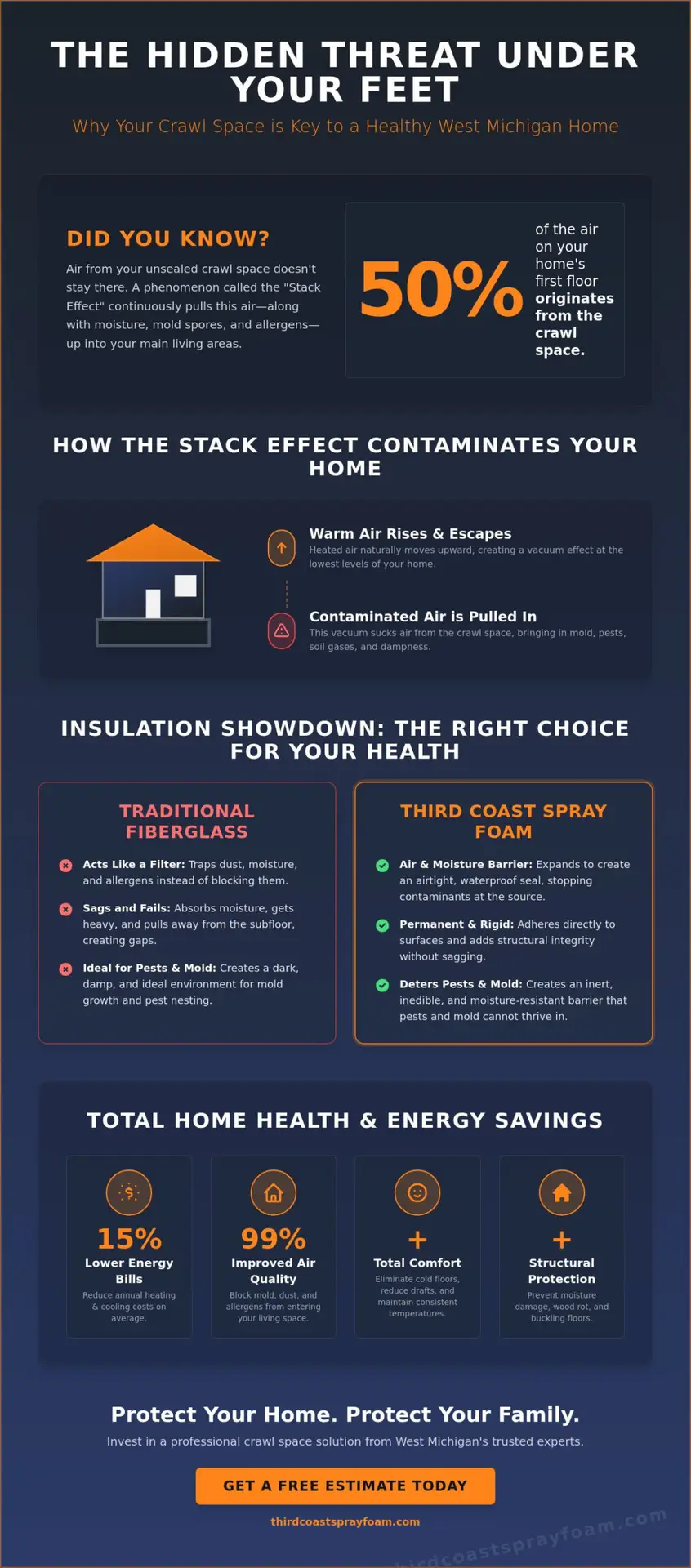
Did you know that as much as 50% of the air circulating through your home’s main floor originates directly from the dark, damp area beneath your feet? You likely already recognize the discomfort of trekking across freezing floors during a 15-degree West Michigan morning or worrying if that lingering musty odor is a hidden sign of mold growth. At Third Coast Spray Foam, we believe your home’s foundation should be a sanctuary, not a source of respiratory stress. Investing in high-quality crawl space insulation is the most effective way to seal your home’s thermal envelope and protect your family’s health from the ground up.
This health-first guide for 2026 explains how professional insulation strategies eliminate the moisture traps that lead to poor indoor air quality and skyrocketing utility bills. You’ll discover how a properly sealed crawl space can reduce your annual heating and cooling costs by an average of 15% while preventing the allergens that compromise your indoor environment. We will walk you through the technical process of air sealing and the long-term benefits of choosing durable, high-performance materials for a drier, safer Michigan home.
Key Takeaways
- Understand how the “Stack Effect” draws air from your crawl space into your living areas, directly impacting your family’s respiratory health.
- Learn why modern crawl space insulation using spray foam outperforms traditional fiberglass by eliminating the damp environments where mold and pests thrive.
- Discover the “total home health” benefits of encapsulation and how sealing the rim joist completes your home’s thermal envelope.
- Identify how professional installation protocols safely manage existing air quality issues to provide long-term peace of mind and energy savings.
- Explore the tangible link between a sealed foundation and lower utility bills for homeowners across West Michigan.
Why Your Crawl Space is the Secret to Home Health in West Michigan
A Crawl space is often the most overlooked component of a home’s thermal envelope, yet it directly influences the air quality of every room above it. In West Michigan, our high water table and damp soil conditions mean an unsealed crawl space constantly absorbs moisture from the earth. This creates a hidden environment where mold and mildew thrive. When you invest in professional crawl space insulation, you’re doing more than lowering utility costs; you’re installing a vital barrier against respiratory irritants that can compromise your family’s long-term health.
To better understand how these systems are properly addressed, watch this helpful video on the insulation process:
The Stack Effect: How Crawl Space Air Reaches Your Living Room
The Stack Effect is the continuous upward movement of air through a building caused by pressure and temperature differentials. As heat rises in your home during a cold Grand Rapids winter, it creates a vacuum that pulls air from the lowest point of the structure upward. Building science data confirms that approximately 50% of the air you breathe on the first floor of your home comes directly from the crawl space. If that space is damp and lacks proper crawl space insulation, you’re breathing in soil gases, dust mite waste, and fungal spores every minute you’re indoors.
Identifying Common Crawl Space Issues in Grand Rapids and Lansing
Local homeowners should look for specific indicators of a failing thermal barrier. Visual signs often include sagging floor joists, condensation dripping from cold water pipes, or standing water after a heavy spring thaw. Sensory signs are even more telling. That distinct “old house smell” is actually the off-gassing of microbial volatile organic compounds (mVOCs) from active mold growth under your feet.
In Ottawa County and surrounding areas, Lake Effect humidity frequently pushes outdoor moisture levels above 65%, which is the recognized threshold for mold colonization. These conditions lead to several common household issues:
- Persistent musty odors that linger in furniture, carpets, and clothing.
- Seasonal respiratory irritations or increased asthma flare-ups during humid months.
- Buckling hardwood floors caused by high subfloor humidity levels.
- Visible condensation on floor registers and HVAC ductwork.
Our team understands that West Michigan homes face unique challenges. By sealing the envelope and installing high-performance insulation, we stop moisture migration at the source. This results in a home that isn’t just more efficient, but significantly safer for everyone living inside.
Comparing Materials: Why Spray Foam Beats Fiberglass for Respiratory Safety
Traditional crawl space insulation often relies on fiberglass batts, but this approach frequently fails in the humid climate of West Michigan. Fiberglass is inherently porous. It doesn’t stop air movement; instead, it acts like a giant filter that traps dust, moisture, and allergens. In a damp crawl space, these batts eventually become heavy with water and sag away from the subfloor. This creates a dark, moist gap that serves as an ideal nesting ground for rodents and insects. These pests leave behind waste that degrades indoor air quality as it circulates upward into your living rooms.
Our team at Third Coast Spray Foam explicitly avoids fiberglass for these applications. We’ve seen too many homes in Grand Rapids where “pink batts” have turned into a soggy, mold-ridden mess within just five years of installation. We prioritize materials that protect the structural integrity of your home and the health of your family. By choosing high-performance alternatives, we eliminate the food sources and nesting environments that traditional materials provide.
The Hidden Dangers of Fiberglass Batts and Mold Growth
Fiberglass batts are notorious for trapping moisture directly against wooden floor joists. This constant contact leads to wood rot and structural weakening over time. Because fiberglass is not an air barrier, it allows warm, humid air to reach cold surfaces, causing condensation to pool within the insulation fibers. This moisture is the primary catalyst for mold growth in West Michigan homes.
The connection between these materials and respiratory discomfort is direct. When mold spores and tiny glass fibers become airborne, they travel through floor penetrations and HVAC ducts. This often results in the persistent musty odors that many homeowners mistake for “just an old house smell.” For the 10 percent of the population sensitive to mold, these conditions can trigger chronic coughing, sneezing, and more severe respiratory issues.
Closed Cell Spray Foam: The Gold Standard for Moisture Control
Closed-cell spray foam provides a superior alternative by creating an impermeable vapor barrier and a consistent thermal break. It expands to fill every crack and crevice, effectively sealing the home’s envelope against the outside elements. This is especially beneficial for the older foundations found in Muskegon and Holland, where shifting masonry often creates air leaks. Unlike permeable alternatives, closed-cell foam does not support mold growth because it lacks organic nutrients.
This material also adds impressive structural rigidity to your floor system. It bonds tightly to the joists and subfloor, which can reduce floor bounce and seal out soil gases like radon. By transforming the crawl space into a dry, conditioned environment, you stop the “stack effect” from pulling contaminated air into your bedrooms. If you want to improve your home’s environment, you can request a professional inspection to see the difference for yourself. We focus on long-term results that ensure your peace of mind and physical well-being.
Beyond the Floor: Encapsulation vs. Traditional Crawl Space Insulation
Traditional crawl space insulation often involves stuffing fiberglass batts between floor joists. In West Michigan, this method usually falls short because it doesn’t account for the moisture rising from the soil or the air leaking through the foundation. Our team advocates for a “total home health” approach. This means viewing your crawl space as a critical part of your house’s thermal envelope rather than just a dark corner. We treat the building as a holistic system to ensure long-term durability and comfort.
The air in your living room isn’t just coming from your HVAC system. Roughly 40% to 50% of the air you breathe on the first floor originates in your crawl space. If that space is damp and unsealed, it becomes a breeding ground for mold spores and dust mites. These environmental triggers are direct contributors to respiratory health issues and poor indoor air quality. By choosing the right strategy, you protect both your property’s structure and your family’s physical well-being.
When to Choose Full Crawl Space Encapsulation
Simple crawl space insulation might work for a dry, well-ventilated space, but many homes in Kent County require more. You should choose full encapsulation if you experience chronic flooding, heavy mold growth, or if family members suffer from severe allergies. A professional system uses heavy-duty, 20-mil reinforced liners to separate the home from the raw earth. We integrate these liners with dedicated dehumidification to keep relative humidity below 55%, which is a critical threshold for stopping fungal growth. To understand how to block Michigan moisture effectively, review our vapor barrier guide for Ottawa and Kent County.
Insulating Rim Joists and Box Sills for Maximum Air Sealing
The rim joist is the perimeter where your home’s floor framing meets the foundation. It’s notoriously the leakiest part of any house. In Kalamazoo and Grand Rapids, these gaps allow humid summer air and freezing winter drafts to bypass your walls. Using spray foam for rim joist insulation stops the “drafty floor” syndrome immediately. Unlike traditional materials, spray foam expands to fill every crack, providing a permanent air seal and high R-value. This synergy between floor protection and rim joist sealing ensures your heating and cooling systems don’t have to work overtime to compensate for foundation leaks.
The Third Coast Process: Professional Installation for Peace of Mind
Achieving a healthy home starts with a no-nonsense professional assessment. We don’t just look at your floor joists; we evaluate the entire ecosystem of your home’s foundation. DIY kits often fail because they lack the pressure and temperature controls required for a stable chemical bond. In fact, industry data suggests that up to 40% of DIY spray foam applications result in off-ratio mixing or incomplete seals. These gaps allow moisture to bypass the barrier, leading to wood rot and hidden mold growth that compromises your respiratory health. Our team views crawl space insulation as a permanent technical solution, not a weekend project. We focus on total home health to ensure the air you breathe is free from the damp, heavy odors common in West Michigan basements.
Preparing Your Crawl Space: Inspection and Debris Removal
A clean environment is the foundation of a successful thermal seal. We begin by removing old, contaminated fiberglass insulation. This material acts like a sponge for moisture and often houses rodent waste or mold colonies. According to the EPA, mold can begin to colonize organic materials within 24 to 48 hours of moisture exposure. We clear all organic debris and address standing water or drainage issues before any foam is applied. Our process includes testing for mold spores to ensure we are starting with a clean slate. This step is vital for protecting your family’s air quality and preventing the “stack effect” from pulling allergens into your living areas.
- Extraction of sodden, compressed fiberglass batts.
- Removal of wood scraps and organic matter that fuel fungal growth.
- Identification of bulk water intrusion points and foundation cracks.
- Site stabilization to ensure the substrate is dry and ready for adhesion.
Precision Application: Sealing the Thermal Envelope
Our installers are trained to navigate the tight 18-inch clearances found in many Grand Rapids homes. We apply the foam with precision to create a seamless air barrier that stops drafts and moisture in their tracks. This process transforms the crawl space into a conditioned part of your home’s thermal envelope. During application and curing, we utilize high-volume air scrubbers to manage ventilation and protect your indoor air quality. Once the foam has cured, we perform a final quality check. This verification ensures the crawl space insulation meets the R-value requirements of the 2023 Michigan Energy Code and provides a 100% airtight seal around rim joists and sill plates.
Our commitment to the West Michigan community means we never cut corners on safety or performance. We treat your home as if it were our own, prioritizing long-term durability over a quick fix. If you want to protect your home’s structural integrity and your family’s health, it’s time to talk to the experts.
Ready to secure your home’s foundation? Contact Third Coast Spray Foam today for a professional crawl space evaluation.
The Long-Term Benefits: Energy Savings and Improved Air Quality
Investing in professional crawl space insulation offers a rare combination of immediate financial relief and permanent health protection. For homeowners in Grand Rapids, the crawl space often dictates the efficiency of the entire house. When this area is neglected, your HVAC system works 20% harder to combat the “stack effect,” a process where cold, damp air from the earth is pulled upward into your living spaces. By sealing this area, you stop the cycle of energy waste and protect the structural integrity of your foundation from wood rot and moisture-induced decay.
A dry foundation is a stable foundation. Moisture in Michigan crawl spaces often leads to “cupping” in hardwood floors and weakened floor joists. Addressing these issues now prevents the need for structural repairs that can cost upwards of $10,000. Additionally, a high-performance crawl space is a major selling point in the West Michigan real estate market. Potential buyers in 2026 prioritize energy-efficient homes with documented air quality standards, making this upgrade a smart move for your property value.
Calculating Your ROI on Crawl Space Upgrades
The financial return on crawl space insulation begins the first month after installation. Most Michigan residents see a 15% reduction in annual heating and cooling costs according to EPA estimates. You can accelerate your payback period by taking advantage of the energy efficient home improvement credit. This federal incentive allows you to claim 30% of the project cost, up to $1,200 annually, for weatherization upgrades. This credit effectively lowers your initial investment while you start saving on utility bills. You also avoid the hidden costs of mold remediation. Professional mold removal in a crawl space can exceed $3,500; doing the job right the first time is the most cost-effective strategy for your wallet.
Protecting Your Family’s Respiratory Health
Your home’s air quality is inextricably linked to the conditions beneath your feet. Research shows that roughly 40% of the air on your first floor originates in the crawl space. If that space is damp and uninsulated, it becomes a breeding ground for dust mites and mold spores. These are primary triggers for asthma and seasonal allergies. Our team focuses on “total home health” by ensuring your crawl space insulation creates a permanent barrier against these pollutants.
Eliminating the source of moisture provides more than just physical health benefits; it offers psychological peace of mind. You won’t have to worry about musty odors or the long-term impact of poor IAQ on your children or elderly relatives. It’s time to stop treating symptoms and fix the source. Seal the envelope for a healthier Michigan home and enjoy a cleaner, more efficient environment for years to come.
Protect Your Family’s Health with a Sealed Thermal Envelope
Your foundation shouldn’t be a source of hidden health risks or rising utility costs. By choosing closed-cell crawl space insulation, you create a permanent barrier against the moisture that fuels mold growth and degrades your indoor air quality. Traditional fiberglass often traps allergens and fails in West Michigan’s humid climate, but our specialized application seals the thermal envelope to protect your family’s respiratory health. Third Coast Spray Foam brings over 10 years of local expertise to every project we undertake. We’re a family-owned and operated team dedicated to total home health through precision air sealing and moisture management. Investing in your home’s foundation today prevents structural damage and ensures your living space remains a safe sanctuary for decades. Our proven process eliminates drafts and blocks common airborne pollutants at the source. It’s time to stop guessing about what’s happening beneath your feet and start prioritizing your well-being with a solution that lasts. You deserve a home that supports your health rather than compromising it.
Get Your Free Crawl Space Health Assessment from Third Coast Spray Foam
Frequently Asked Questions
Is it better to insulate the crawl space floor or the walls?
It’s significantly better to insulate the crawl space walls as part of a sealed encapsulation system. This method brings the area into your home’s thermal envelope, which prevents the 60% humidity levels often found in Michigan crawl spaces from condensing on cold floor joists. By treating the walls, we stop moisture at the source and eliminate the damp environment where toxic mold thrives.
Can crawl space insulation actually help with my allergies and asthma?
Yes, proper crawl space insulation improves respiratory health by blocking the “Stack Effect” in your home. Research shows that 40% of the air you breathe on your first floor originates in the crawl space. When our team seals this area with spray foam, we prevent mold spores, dust mites, and outdoor allergens from migrating into your living zones.
How much does crawl space insulation cost in Grand Rapids, MI?
While specific project costs depend on your home’s footprint, 2024 industry data suggests crawl space work typically ranges from $1,500 to $15,000 depending on the scope of the project. In West Michigan, factors like the 50% average outdoor humidity and local labor rates influence the final investment. We provide detailed, transparent quotes after a physical inspection to ensure your home’s specific health needs are met.
What is the best R-value for a Michigan crawl space?
Michigan is located in Climate Zone 5, where the 2021 International Energy Conservation Code recommends an R-value of at least R-15 for continuous insulation on crawl space walls. We target these specific benchmarks to ensure your floors stay warm during 10-degree January nights. This level of thermal resistance keeps your HVAC system from overworking and maintains a stable indoor climate.
How do I know if I have mold in my crawl space before you start?
You can identify potential mold growth by checking for musty odors or a relative humidity reading above 60% with a digital hygrometer. Visible signs include black, white, or green spotting on wooden floor joists. Since mold is a primary trigger for asthma, our team assesses these conditions during our initial walkthrough to ensure the environment is safe for the installation process.
Will spray foam insulation in my crawl space stop my pipes from freezing?
Spray foam insulation is highly effective at preventing frozen pipes because it creates an airtight seal that eliminates frigid drafts. By moving the thermal boundary to the exterior walls, the crawl space stays much closer to your home’s interior temperature. This protects your plumbing even when Grand Rapids temperatures drop below zero degrees.
Can I stay in my house while you are installing the spray foam?
We require residents and pets to vacate the home for 24 hours during and after the spray foam application. This window allows for proper ventilation and ensures the foam cures completely without affecting your indoor air quality. Your safety is our priority; this standard re-occupancy period is a non-negotiable part of our health-first installation process.
Does Michigan have specific building codes for crawl space ventilation?
Yes, the Michigan Residential Code Section R408.3 outlines the requirements for unvented crawl spaces. To skip traditional vents, you must install a 100% ground vapor retarder and provide a continuous mechanical exhaust system or conditioned air. Our team ensures every crawl space insulation project in West Michigan meets these 2026 safety standards to protect your home’s structural integrity.
Disclaimer
Information provided is for general educational purposes. Individual needs and circumstances vary. Speak to an experienced professional to get the correct information for your situation.