
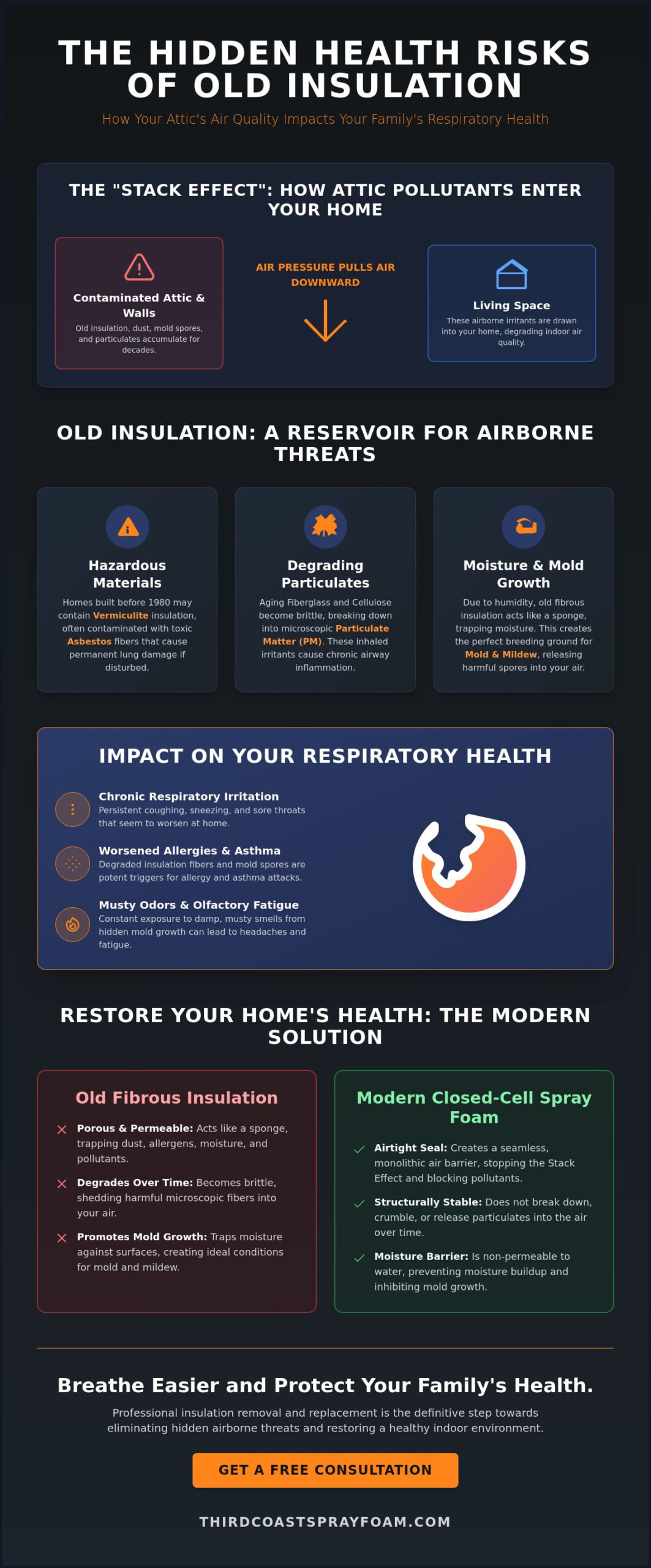
Did you know that approximately 60% of homes built before 1980 contain some form of potentially hazardous material in their attics or walls? If you’re living in an older Michigan home, those persistent musty smells or unexplained respiratory irritations might be more than just a seasonal nuisance. The health risks of old insulation are often invisible, yet they can significantly degrade your indoor air quality through a process called the Stack Effect, which pulls attic air directly into your living spaces.
It’s natural to feel concerned when you suspect your home’s environment is working against your family’s well-being. We understand that the fear of disturbing unknown materials like asbestos or mold can be overwhelming for many homeowners. This article will help you identify if your current materials are hazardous and explain the direct link between compromised insulation and chronic respiratory issues. You’ll discover the hidden environmental dangers lurking in your home and learn how professional insulation removal can restore your peace of mind. We’ll also preview modern, safer solutions like crawl space encapsulation and spray foam that create a permanent barrier against pollutants, ensuring your home remains a stable and healthy sanctuary for years to come.
Key Takeaways
- Learn how aging materials act as a passive filter for decades of allergens and how microscopic particulates contribute to the health risks of old insulation.
- Understand the link between degraded fibers and chronic respiratory irritation, including the exacerbation of asthma and seasonal allergies.
- Discover why Michigan’s unique humidity levels often lead to hidden mold growth within traditional fibrous materials.
- Identify the visual and olfactory signs, such as dark spots or musty odors, that indicate your home needs professional insulation removal.
- See how modern solutions like closed cell spray foam provide a permanent airtight seal to block future moisture and airborne pollutants.
The Hidden Health Risks of Old Insulation in Older Homes
Think about your attic insulation as a giant, forgotten sponge. For decades, it has sat undisturbed, acting as a passive filter that captures every bit of dust, rodent waste, and outdoor pollutant that enters your home’s structure. In many older Michigan residences, these materials weren’t designed with modern health standards in mind. They were installed to keep heat in, with little regard for how they might impact your family’s respiratory health over time.
As these materials age, they undergo a chemical and physical transformation. What started as a solid batt or loose fill begins to crumble into microscopic particulates. The health risks of old insulation are often ignored because the material is tucked away in the attic, but “out of sight” certainly doesn’t mean “out of the lungs.” Air currents within your home naturally pull these contaminants down into your living areas.
To better understand the dangers lurking in your attic, watch this helpful video:
Identifying Hazardous Materials: Asbestos and Vermiculite
Michigan’s historical housing stock often contains hazardous insulation materials like vermiculite. This material typically looks like small, grey-brown or gold pebbles with a distinct accordion-like texture. If your home was built or renovated between 1920 and 1980, there’s a high probability that this insulation is contaminated with asbestos fibers. Brands like Zonolite were staples in local construction for decades. You should never attempt to sample or move these materials yourself. Disturbing them releases invisible fibers into the air that can cause permanent lung damage.
Deterioration and Particulate Matter
Even if your insulation doesn’t contain asbestos, it can still pose a threat through physical deterioration. Fiberglass batts and cellulose loose-fill become extremely brittle as the decades pass. These fibers break down into Particulate Matter (PM), which refers to microscopic solids or liquid droplets that are small enough to be inhaled and cause chronic airway inflammation. Gravity and small air leaks in your ceiling act as a delivery system; they move these irritants from the attic directly into your bedrooms and kitchen. Understanding the health risks of old insulation starts with recognizing that your home’s air quality is only as clean as the materials hidden behind your walls.
Respiratory Health and Air Quality: How Insulation Impacts Your Lungs
Your home’s air quality is a silent factor that dictates your daily comfort and long-term health. While we often focus on outdoor pollutants, some of the most persistent irritants are found right above your ceiling. Legacy insulation materials don’t just sit there; they actively shed particles and chemicals that circulate through your living spaces. Over years of occupancy, breathing this “insulation dust” can lead to cumulative respiratory issues that are often mistaken for common seasonal allergies.
The health risks of old insulation involve both physical and chemical triggers. When these materials are compromised, they release a cocktail of irritants into the air. If you’re noticing persistent coughing or congestion that clears up when you leave the house, your attic’s thermal envelope might be the culprit. Evaluating the state of your attic is a critical step toward a healthier home, and professional insulation removal can provide the fresh start your indoor air quality needs.
Airborne Fiberglass and Lung Irritation
Fiberglass is essentially composed of microscopic glass shards. In older homes, these fibers become brittle and easily break apart. When air moves through your attic, these tiny needles become airborne and can bypass the natural filters in your nose and throat. They reach the deep bronchial tubes, causing mechanical irritation to the delicate lining of your lungs. This often results in a persistent “attic cough” or chronic morning congestion. Children and the elderly are at a much higher risk for this type of respiratory distress because their airways are either still developing or are more sensitive to environmental particulates.
Volatile Organic Compounds (VOCs) and Formaldehyde
Beyond the physical shards, the chemical makeup of legacy products is a major concern. Many older fiberglass batts were manufactured using formaldehyde-based binders to hold the fibers together. As these binders age, they release Volatile Organic Compounds (VOCs) through a process called off-gassing. Michigan’s climate creates a unique challenge here. Our intense summer heat causes attic temperatures to soar, which accelerates the release of these chemical vapors. These gases can exacerbate asthma symptoms and lead to long-term health complications. Moisture trapped in these degraded materials also leads to the health effects of mold exposure, which can trigger severe allergic reactions. Shifting to modern, VOC-free solutions is a pragmatic investment in your family’s safety and well-being.
The Mold and Moisture Connection: A Michigan Climate Challenge
Living in West Michigan means dealing with intense Lake Effect humidity year-round. While we often focus on external moisture like rain or snow, the real danger is the humidity that settles inside your home’s structure. Fibrous materials like fiberglass and cellulose are highly porous. They don’t just stop heat; they trap moisture like a sponge. This creates a hidden reservoir for biological growth that traditional ventilation often fails to clear. The health risks of old insulation become much more severe when moisture is introduced into these aging materials.
According to a study by the Centers for Disease Control and Prevention, indoor mold affects approximately 20% of U.S. homes. In damp environments, this can increase the rate of respiratory illness by up to 40%. When your insulation stays damp, it becomes a permanent breeding ground for mold and mildew that actively degrades your indoor air quality.
Why Lake Effect Humidity Traps Moisture in Your Attic
The science of attic moisture is simple but destructive. When warm, humid air from your living space rises into a cold attic during a Michigan winter, condensation occurs. This “sweating” roof deck drips water directly onto the insulation below. Because these materials are often packed with organic dust and debris, they provide a perfect habitat for toxic mold. Mold mycotoxins are particularly resilient; they can survive and remain hazardous to your respiratory health even after the insulation appears to have dried out. In older homes, this risk is compounded if the attic contains asbestos-contaminated vermiculite insulation, as moisture can make these materials more prone to breaking down and shedding dangerous fibers.
Crawl Space Contamination and the Stack Effect
The problem isn’t limited to the top of your house. In fact, much of the air you breathe starts at the very bottom. The Stack Effect is the natural process where air enters the lower levels of your home, warms up, and rises out through the attic. This means that up to 50% of the air on your first floor actually originates in your crawl space. If you have traditional crawl space insulation, it likely acts as a collection point for Michigan groundwater and soil moisture. This damp environment allows mold spores and soil gases to hitch a ride on rising air currents and move directly into your family’s breathing zone. Addressing the health risks of old insulation requires a holistic view of how air and moisture move through every level of your home’s structure.
Recognizing the Signs: When to Call a Professional for Removal
Identifying the health risks of old insulation begins with a simple sensory check of your attic or crawl space. While we’ve discussed the microscopic dangers of asbestos and mold, there are often visible and olfactory cues that your insulation has reached the end of its functional life. One of the most immediate signs is a persistent, musty odor. This isn’t just a “house smell.” It’s often the scent of active biological decomposition occurring within the fibers of your insulation as moisture and organic matter break down over time.
Beyond the smell, you should look for physical changes in the material itself. Healthy insulation should be fluffy and consistent. If you see sagging batts, compressed sections, or dark, discolored spots, the material is failing. These dark patches are often a sign of “filtration soiling,” where the insulation acts as a dirty filter for air leaking through your ceiling. This indicates that your thermal envelope is compromised, allowing pollutants and allergens to bypass your home’s defenses and enter your breathing air.
Visual Cues and Physical Symptoms
Sometimes the signs aren’t in the attic, but in how you feel every morning. If your family suffers from persistent, non-seasonal allergy symptoms, the culprit might be dust mites living in old cellulose insulation. These microscopic pests thrive in the organic debris trapped within aging materials. You might also notice dark rings around light fixtures or registers. This is a clear indicator that air is pulling dust and particulates through your insulation and into your living space. A professional inspection is often the only way to find hidden moisture pockets that are currently fueling mold growth behind your walls.
Why DIY Removal Increases Health Risks
It’s tempting to treat insulation removal as a weekend project, but doing so often creates a much larger problem. Standard shop vacs are dangerous in this context because they lack the HEPA filtration required to trap fine particulates. Instead of removing the debris, they often exhaust microscopic fibers and pathogens directly back into your home’s air. There’s also a significant risk from pest waste. Rodent feces, urine, and carcasses embedded in old insulation can carry hantavirus and other dangerous pathogens. When you disturb these materials without professional gear, you risk inhaling dried waste particles.
Safe insulation removal requires professional-grade negative air pressure to ensure that no contaminants escape into your living areas during the process. We use high-powered vacuum systems and strict containment protocols to “detox” your home without cross-contaminating your bedrooms or kitchen. If you’ve noticed these warning signs, don’t wait for your respiratory health to decline further. Contact the experts at Third Coast Spray Foam to schedule a professional assessment of your home’s insulation health.
Restoring Your Home’s Health with Modern Insulation Solutions
Removing degraded materials from your home is more than a simple maintenance task; it is a structural detox. When we eliminate the source of contaminants, we effectively neutralize the primary health risks of old insulation that have been accumulating for decades. This process provides a clean slate, allowing your home’s mechanical systems to circulate air that is free from legacy pollutants, chemical binders, and microscopic glass fibers. It’s the most direct path to improving your family’s respiratory health and ensuring long-term physical well-being.
The transition from a “particulate reservoir” to a sealed, healthy environment requires a strategic approach. By replacing failing materials with modern alternatives, you stop the cycle of indoor air pollution at the source. This isn’t just about comfort or energy bills. It’s about creating a stable, secure environment where your family can thrive without the hidden burden of poor indoor air quality.
The Benefits of Professional High-HEPA Extraction
We use high-powered, truck-mounted vacuum systems to move hazardous materials directly from your attic or crawl space into a sealed containment unit. This professional-grade equipment ensures that no dust, rodent waste, or fibers enter your living areas during the process. Once the old material is gone, we sanitize the structural surfaces to eliminate lingering bacteria and mold spores. This comprehensive cleaning ensures that your new insulation isn’t just sitting on top of old problems, giving you total peace of mind regarding your home’s air system.
Why Spray Foam is the Healthier Choice for Michigan
For Michigan homeowners, closed cell spray foam represents the gold standard for indoor air quality. Unlike fibrous batts that trap moisture and dust, spray foam expands to fill every crack and crevice, creating a permanent airtight seal. This effectively stops the Stack Effect by blocking the pathways that pull unconditioned, polluted air from the lower levels of the home into your breathing zone. Since it’s a non-fibrous material, it won’t break down into inhalable particulates or act as a sponge for Lake Effect moisture.
If you’re looking to restore thermal performance on an attic floor, modern blown-in insulation offers a significant upgrade over older products, utilizing safer materials that resist pests and biological growth. The long-term health ROI of these modern solutions is tangible. You’ll likely experience better sleep, fewer allergy flare-ups, and a significantly cleaner home environment. Investing in a permanent, high-performance solution today protects your family from the health risks of old insulation while securing your property’s structural integrity. Schedule a health-focused insulation audit today to start your home’s recovery.
Securing Your Home’s Future and Family’s Health
Addressing the health risks of old insulation is a vital step in maintaining a safe and efficient home. We’ve explored how legacy materials trap decades of pollutants, exacerbate respiratory issues, and harbor mold growth fueled by Michigan’s unique humidity. Leaving these issues unaddressed compromises your indoor air quality and the structural integrity of your property. Protecting your family requires moving beyond surface-level fixes to achieve a truly clean indoor environment.
Restoring your home starts with a clean slate. We provide expert insulation removal using industrial-grade HEPA extraction to ensure that contaminants are safely moved directly to our sealed trucks without entering your living space. As a locally owned specialist based in Fruitport, we’ve served West Michigan since 2013 with a focus on precision and local reliability. We understand how to solve regional moisture challenges and help you transition to modern, non-fibrous solutions that protect your lungs for the long term.
Take the first step toward a healthier indoor environment today. You can Request a Professional Insulation Health Assessment to identify hidden hazards and secure your peace of mind. Your family deserves a home that supports their well-being, and we’re here to help you make that permanent investment in your health.
Frequently Asked Questions
Is old fiberglass insulation dangerous if it is not disturbed?
Old fiberglass insulation can still pose a threat even without direct contact because air currents naturally move through your home’s structure. Over time, these fibers become brittle and shed microscopic glass shards that enter your ventilation. These particles degrade your indoor air quality and can irritate your respiratory system. While leaving it alone is better than improper DIY handling, the material continues to act as a reservoir for dust and allergens.
Can old insulation cause a permanent cough or sore throat?
Chronic respiratory irritation, such as a persistent cough or scratchy throat, is a common symptom of poor air quality linked to aging materials. Inhaling fine particulates or chemical vapors from legacy adhesives can cause ongoing inflammation in your bronchial tubes. If your symptoms improve when you spend time away from home, it’s a strong indicator that the health risks of old insulation are impacting your daily well-being.
How can I tell if my insulation contains asbestos or vermiculite?
Vermiculite insulation typically has a pebble-like appearance and is often grey-brown or silver-gold in color. Because much of the vermiculite used in older Michigan homes was contaminated with asbestos, you should treat any such material with extreme caution. Never touch or sample it yourself. If your home was built before 1980, a professional inspection is the safest way to identify these hazardous materials without risking exposure.
What is the “Stack Effect” and how does it affect my air quality?
The Stack Effect is a natural process where warm air rises and escapes through the top of your home, creating a vacuum that pulls air from the bottom. This means that up to 50% of the air you breathe on the first floor originates in your crawl space or basement. If those areas contain moldy or degraded materials, the Stack Effect delivers those pollutants directly into your family’s living space.
Will removing old insulation make my allergies worse during the process?
Professional removal shouldn’t exacerbate your allergies because we use high-powered, industrial HEPA extraction systems. These vacuums create negative air pressure, ensuring that all dust, fibers, and allergens are pulled directly into a sealed truck rather than circulating through your home. Unlike DIY methods, our process contains the mess and prevents cross-contamination, making the transition to a cleaner environment safe for sensitive individuals and children.
How often should home insulation be replaced for health reasons?
Most traditional insulation materials have a functional lifespan of 15 to 20 years before they start to settle or break down. However, you should consider replacement sooner if your home has experienced roof leaks, high humidity, or pest infestations. Once materials are compromised by moisture or waste, they become a permanent biological hazard. Regular assessments of the health risks of old insulation help ensure your home remains a safe sanctuary.
Is blown-in cellulose safer than old fiberglass batts?
Modern blown-in insulation is often a safer alternative to legacy fiberglass because it’s treated with borates to resist fire, mold, and pests. It provides a denser thermal barrier that reduces air infiltration more effectively than old batts. However, the healthiest upgrade for many Michigan homes is often spray foam, which provides a permanent, non-fibrous air seal that completely eliminates the particulate shedding associated with older, degraded materials.
Can mold grow on fiberglass insulation, or just on the paper backing?
Mold can grow directly on fiberglass fibers if they’re coated in organic dust and debris. While the glass itself is inorganic, the “passive filter” nature of the insulation captures dust, skin cells, and pollen that serve as a food source for mold. When combined with Michigan’s high humidity, even fiberglass without a paper backing can become a significant source of biological growth and respiratory irritation.
Disclaimer
Information provided is for general educational purposes. Individual needs and circumstances vary. Speak to an experienced professional to get the correct information for your situation.