
When the lake-effect snow starts piling up 12 inches deep in Heritage Hill or East Grand Rapids, you shouldn’t have to wear three layers of wool just to sit in your living room. Many West Michigan homeowners assume that fixing a drafty house requires gutting the walls, but that is a costly misconception that keeps utility bills 30% higher than they need to be. If you’re tired of watching ice dams form on your gutters or feeling that sharp chill across your floors every time the wind kicks up from Lake Michigan, you’re facing a common local struggle.
We believe your home should be a fortress against the elements, not a sieve for expensive heated air. This 2026 guide shows you how to implement retro insulation solutions that create a permanent thermal envelope without tearing down a single sheet of drywall. Our team at Third Coast Spray Foam has identified specific strategies that can lower your monthly energy costs by up to $400 each season. We’ll walk you through the process of air sealing your attic, stabilizing room temperatures, and securing a solution that protects your family’s comfort for the next 20 years.
Key Takeaways
- Understand how to reinforce your home’s thermal envelope against West Michigan’s lake-effect weather without tearing down your existing walls.
- Learn why air sealing is the secret to preventing condensation and maintaining total home health in Grand Rapids’ high-humidity climate.
- Evaluate the performance and long-term ROI of different retro insulation methods to ensure you aren’t paying more for the “cheapest” option over time.
- Follow a professional roadmap from initial audit to final inspection to eliminate drafty “hot spots” once and for all.
- Gain the confidence to choose a local specialist by knowing exactly what to ask about equipment, insurance, and regional building codes.
What is Retro Insulation and Why Does Your West Michigan Home Need It?
Retro insulation is the specialized process of upgrading the thermal envelope of an existing building without the need for major demolition. Unlike a new build where the “bones” of the house are exposed, retrofitting requires a surgical approach to add high-performance materials to finished walls, attics, and crawlspaces. Most Grand Rapids homes built between 1880 and 1950 were constructed with methods that prioritize airflow over heat retention. Our team at Third Coast Spray Foam focuses on sealing these gaps to ensure your home remains a sanctuary against the elements.
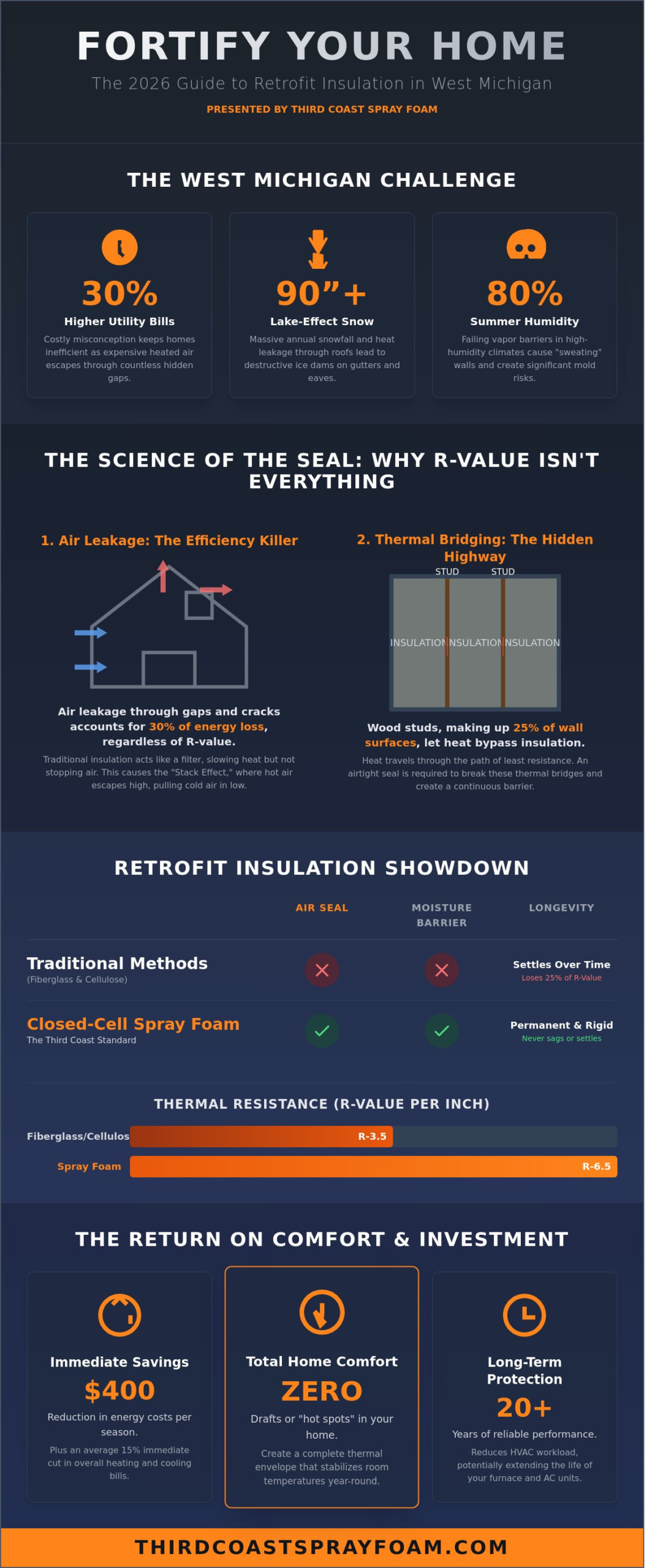
West Michigan weather is notoriously unforgiving. Muskegon residents often face over 90 inches of lake-effect snow annually, which leads to massive ice dams when heat leaks through an under-insulated roof. In Ottawa County, 80% humidity levels during July cause “sweating” walls and mold risks in homes with failing vapor barriers. Investing in retro insulation provides a permanent fix for these seasonal frustrations. Homeowners typically see a 15% reduction in heating and cooling costs immediately after we finish sealing the envelope. This efficiency also reduces the daily workload on your HVAC system, potentially extending the life of a $6,000 furnace by several years.
The Difference Between New Construction and Retrofitting
New construction allows installers to place materials into open wall studs. In a 50-year-old Grand Rapids home, we must work around finished drywall and historic lath and plaster. Third Coast uses non-invasive injection techniques to fill these cavities without major demolition. Modern spray foam expands to fill every nook, providing a level of air sealing that standard fiberglass simply cannot achieve in tight, enclosed spaces.
Common Insulation Problems in Older Fruitport Homes
Many Fruitport residences rely on original cellulose that has settled over the last 30 years, often losing 25% of its intended R-value. This degradation facilitates the chimney effect, where heat escapes through attic bypasses and creates a vacuum. In a two-story West Michigan farmhouse, the stack effect acts as a vertical pressure cycle where rising heat escapes through the attic and pulls cold, damp air into the living space through the foundation.
By treating your property as a holistic system, we address the “total home health” rather than just adding layers of material. This results-oriented approach ensures that your retro insulation project delivers the security and pragmatism your family deserves.
The Science of the Seal: Why R-Value Isn’t Everything
Many homeowners believe that a higher R-value automatically equals a warmer house. While R-value measures a material’s resistance to heat flow, it doesn’t account for the 30% of energy loss caused by air leakage. At Third Coast, we view your home as a holistic system called the thermal envelope. This envelope is the boundary between your conditioned living space and the harsh West Michigan elements. Effective retro insulation requires more than just adding thickness; it requires stopping the literal wind from whistling through your wall cavities.
Thermal bridging is another silent efficiency killer. In a typical stick-built home, wooden studs make up roughly 25% of the wall surface. Wood has a much lower R-value than modern insulation, meaning heat bypasses your insulation by traveling directly through the wood framing. Our approach focuses on sealing the envelope to break these thermal bridges. This ensures that the heat you pay for stays inside your rooms rather than escaping through the skeleton of the building. We don’t just stuff the walls; we create a continuous barrier that protects your home from the ground up.
Air Sealing vs. Insulation: A Two-Part System
Traditional fiberglass batts often fail because they act like a giant air filter. They might slow down heat transfer, but they allow cold air to pass right through the fibers. In contrast, closed-cell spray foam provides a dual benefit. It delivers an impressive R-value of 6.5 per inch and creates a rigid, airtight seal that strengthens the structure. We frequently find that rim joists are the #1 source of air infiltration in Grand Rapids basements. By sealing these gaps, our team can eliminate the stack effect that pulls cold air up through your floorboards. You can learn more about how we optimize home performance through precision air sealing.
Managing Moisture and Humidity Near the Lake
Living near Lake Michigan means dealing with high humidity levels year-round. Improperly installed retro insulation can trap moisture against wooden headers, leading to mold growth within 48 to 72 hours of moisture exposure. We use specific applications of vapor-retardant closed-cell foam or breathable open-cell foam depending on the specific moisture profile of the room. There is a common myth that houses need to breathe. This is false. Houses need to be tight, and people need to breathe. We prioritize a tight seal and recommend proper mechanical ventilation to ensure your indoor air remains fresh without sacrificing your monthly energy savings.
Comparing Retrofit Options: Spray Foam, Injection, and Blown-In
Choosing the right material for retro insulation in West Michigan requires looking past the initial quote. While fiberglass batts or cellulose might seem like a bargain, the cheapest option often results in higher utility bills within 5 to 8 years. Our team evaluates three primary methods for local homes: spray foam, injection foam, and blown-in materials. Spray foam maintains 100% of its R-value for decades. In contrast, cellulose can settle by 20% in vertical cavities, leaving the top of your walls uninsulated and vulnerable to Lake Michigan winds.
Performance varies significantly based on where the material is placed. We’ve found that homeowners who prioritize the lowest upfront cost often pay 15% more in annual heating costs compared to those who invest in high-performance seals. Long-term comfort depends on how well the material handles Michigan’s humidity and extreme temperature swings. We look at the total home health to ensure your investment lasts for the life of the structure.
Closed-Cell Spray Foam: The Gold Standard for Michigan
Closed-cell spray foam is the most robust solution for the West Michigan climate. It offers an impressive R-value of 7 per inch, which is nearly double that of traditional materials. This density allows it to act as a built-in water vapor barrier, preventing the rot and mold issues common in older Kent County homes. It’s the preferred choice for rim joists and pole barns because it adheres to surfaces and seals every gap.
- Structural Strength: Closed-cell foam can increase the racking strength of your walls by up to 250%, providing extra stability to aging frames.
- Air Sealing: It stops drafts instantly by creating an airtight envelope that mechanical fasteners can’t match.
- Moisture Control: It doesn’t absorb water, making it ideal for damp West Michigan crawl spaces.
Blown-In Cellulose and Fiberglass
Blown-in materials are effective for horizontal applications, specifically attic floors. We use these when a homeowner needs a cost-effective way to boost R-values in large, open spaces. However, we don’t recommend blown-in materials for vertical wall cavities. Over time, gravity causes these materials to settle, creating “cold spots” at the top of the wall. This settling can reduce the effective R-value of your retro insulation project by 15% within the first decade.
Third Coast always recommends a “clean slate” approach. We suggest the removal of old, dusty, or moisture-damaged insulation before adding new blown-in material. This process ensures we aren’t trapping allergens or pests against your ceiling. It also allows our team to air-seal the attic floor properly before the new layer goes down, ensuring the heat stays in your living space where it belongs.
How to Retrofit Your Home: A Step-by-Step Process
Upgrading an older West Michigan home requires a systematic approach rather than a quick fix. We don’t just add material; we re-engineer the building’s thermal performance. Our team follows a clear roadmap that protects your living space while maximizing energy efficiency. This process ensures that every dollar you spend on retro insulation results in a more comfortable, durable home. We prioritize the prep phase to ensure your interior remains pristine while we work on the bones of the house.
Step 1: The Energy Audit and Assessment
Everything starts with a professional diagnostic. We use high-resolution thermal imaging cameras to identify hidden “hot spots” where heat escapes in real-time. These scans often reveal that 20% of a home’s energy loss occurs through small, invisible gaps in the building envelope. We inspect the attic, crawl space, and rim joists to check the quality of existing materials. If our technicians find signs of pests or mold, we address those issues before any new material is installed. You can’t build a healthy home on a compromised foundation.
Step 2: Professional Insulation Removal
Many contractors suggest “topping off” old insulation, but that is often a costly mistake. Layering new foam or cellulose over 30 year old fiberglass traps decades of dust, dander, and allergens inside your walls. Our team uses industrial strength vacuum systems to extract old materials safely through a closed-loop process. We also use protective drop cloths and floor runners to safeguard your carpets and hardwood. Removing moldy batts and degraded loose-fill clears the way for a superior seal and significantly improves your indoor air quality.
Step 3: Installation and Air Sealing
The installation phase focuses on the “critical seal” zones that define your home’s thermal boundary. For finished walls, we use a specialized retro insulation injection process. We drill small 2-inch holes and inject foam that expands to fill the entire cavity, reaching corners that traditional batts miss. We pay special attention to box sills and top plates using closed-cell spray foam to block Michigan’s winter winds. After the foam cures, our crew handles the cleanup, patching access points and leaving your home in its original state. This meticulous attention to detail is why our retrofits typically help homeowners see a 30% reduction in monthly utility costs.
Choosing the Right West Michigan Retrofit Contractor
Selecting a partner for your retro insulation project requires more than a quick search for the lowest price. In the Muskegon and Grand Rapids area, local expertise is the difference between a drafty house and a sealed thermal envelope. Our regional building codes are specific, and our “Third Coast” climate demands a contractor who understands how lake effect moisture interacts with older building materials. When you vet a crew, ask about their equipment. Professional-grade proportioners ensure the chemical mix is exact, which is something you won’t get with smaller, portable tanks or retail-grade tools.
Insurance and experience are non-negotiable. You want a team that has worked on hundreds of West Michigan homes, not a crew that treats your property as a training ground. We prioritize technical precision because we live here too. Our Fruitport-based team approaches every job with a “total home health” mindset. This means we look at how your insulation affects your attic ventilation and your indoor air quality. We provide clear, honest communication from the first phone call to the final walkthrough.
- Does the crew have specific experience with 19th-century balloon framing?
- Can they provide proof of current liability and workers’ compensation insurance?
- Do they use thermal imaging to verify the coverage after the job is done?
Red Flags to Watch For in Insulation Quotes
Be wary of any contractor who refuses to perform air sealing. Adding new material on top of old drafts is a waste of your money. You should also avoid “DIY kits” for large-scale residential retrofits. These kits often fail to maintain the 130-degree temperature required for proper foam expansion, which can lead to lingering odors or poor R-value. The lowest bid usually indicates that the contractor is skipping the rim joists or attic bypasses. These areas represent 15% to 25% of your home’s total heat loss, so ignoring them negates the benefits of the project.
Maximizing Your ROI with Michigan Energy Rebates
Your investment in retro insulation is more affordable thanks to current financial incentives. The 2026 Federal tax credits allow you to claim 30% of the project cost, with a cap of $1,200 per year for weatherization. Local utility providers like Consumers Energy and DTE also offer prescriptive rebates. These can save you between $75 and $600 on attic and wall upgrades depending on the square footage. These programs exist because high-performance insulation is a proven way to reduce the load on our local power grid. You get a more comfortable home, and your utility bills stay lower for the next 20 years.
Take Control of Your Home’s Efficiency and Comfort
Upgrading your property to meet 2026 efficiency standards requires more than just adding layers of old-fashioned materials. You’ve seen how air sealing serves as the foundation of total home health, preventing the drafts that plague West Michigan houses. By prioritizing high-performance retro insulation, you create a permanent barrier against the elements. Our team at Third Coast Spray Foam is locally owned in Fruitport, Michigan; we’ve spent years perfecting techniques that withstand our region’s average 80 inches of annual snowfall. We focus on the science of the seal to ensure your thermal envelope remains intact for decades.
Don’t let another season of high utility bills pass you by. Homeowners who switch to modern spray foam often see energy cost reductions of up to 15% immediately. We pride ourselves on being your reliable local partner, offering the technical expertise needed to solve complex climate challenges. It’s time to invest in the long-term security and pragmatism your family deserves. Get Your Free Retrofit Estimate in West Michigan and start your journey toward a more stable, comfortable living environment. We look forward to helping you protect what matters most.
Frequently Asked Questions
Does retro insulation require tearing down my drywall?
No, you don’t need to tear down your drywall to install retro insulation. Our team drills small 2 inch access holes into the wall cavities from either the exterior or interior of the building. We then inject the foam and plug the holes with matching material to ensure a seamless finish. This method preserves your original plaster or drywall while creating a complete thermal envelope.
Most West Michigan homeowners find this process 90% less invasive than traditional renovations. It’s a clean, efficient way to upgrade your home’s performance without the mess of a full construction project.
How much can I actually save on my Michigan heating bills?
You can typically save 15% to 20% on your annual heating and cooling costs by installing retro insulation. For a standard 1,800 square foot home in Grand Rapids, this often translates to $400 in yearly utility savings. By sealing air leaks that traditional materials miss, our foam provides a permanent solution to high energy bills.
These savings often allow the project to pay for itself within 5 to 7 years. Because Michigan winters are harsh, the return on investment is often higher here than in milder climates.
Is spray foam safe for older homes built before 1950?
Spray foam is perfectly safe and highly beneficial for Michigan homes built before 1950. Many older structures in our region have empty wall cavities that allow heat to escape rapidly through the stack effect. Our specialized injection foam expands slowly to fill these gaps without damaging delicate lath and plaster walls.
This process actually strengthens an 80 year old structure by providing additional rigidity to the wall assembly. It protects the home’s integrity while bringing its efficiency up to modern 2024 standards.
How long does the retrofitting process take for a standard house?
A standard retrofitting project for a 2,000 square foot home usually takes 1 to 2 business days to complete. Our crew of 3 specialists can typically finish a full attic or crawl space in about 6 hours. Larger whole-house projects might require a second day for detailed finishing and site cleanup.
We prioritize a steady, logical workflow to ensure your daily routine faces minimal disruption. Our team arrives on time and works efficiently to seal your home’s envelope as quickly as possible.
What is the best insulation for a West Michigan crawl space?
Closed-cell spray foam is the superior choice for West Michigan crawl spaces due to its moisture resistance. It provides a high R-value of 7 per inch and acts as a vapor barrier to stop ground dampness. Since 60% of the air you breathe on the first floor comes from the crawl space, this installation improves your total home health.
It prevents the wood rot and mold growth common in our humid lake-effect climate. This creates a dry, conditioned space that protects your floor joists for decades.
Can I stay in my home while the insulation is being installed?
You can remain in your home during the installation of injection foam in your walls. This specific process is non-toxic and creates no dust or debris inside your living areas. If we’re applying open-cell spray foam in an attic, we recommend leaving for 24 hours to allow for proper curing and ventilation.
Our team provides a clear schedule so you can plan your day with confidence. We handle the technical details so you can enjoy immediate peace of mind and comfort.
Do I need to remove my old fiberglass before adding spray foam?
We recommend removing 100% of old fiberglass or cellulose before applying new spray foam. Old insulation often traps 5 decades of dust, moisture, and pests that can compromise your indoor air quality. Removing the old debris allows our team to see every crack and gap in the floor or ceiling.
This ensures the new foam creates a perfect air seal against the substrate for maximum efficiency. Starting with a clean slate is the only way to guarantee a high-performing thermal envelope.
Does retro insulation help with summer cooling in Grand Rapids?
Yes, retro insulation is vital for staying cool during Grand Rapids summers when temperatures hit 90 degrees. It stops the sun’s heat from radiating through your attic and into your bedrooms. In a typical West Michigan home, this can lower upstairs temperatures by 10 degrees without running the air conditioner longer.
You’ll notice your cooling system cycles 30% less often during July and August heatwaves. This reduces wear on your HVAC equipment while keeping your living space consistently comfortable.
Disclaimer
Information provided is for general educational purposes. Individual needs and circumstances vary. Speak to an experienced professional before relying on the information given here.
