

Tag Archive for: home improvement

Rim Joist Insulation in Grand Rapids, MI: The Ultimate Guide to a Dryer, Warmer Home

Last January, a homeowner in East Grand Rapids watched their Consumers Energy bill climb toward $400 while the floors in their living room stayed a frigid 56 degrees. You probably know that feeling of wearing thick wool socks inside just to stay comfortable. It’s a common struggle across West Michigan, where the gap between your foundation and your walls acts like an open window for the winter wind. Properly installed rim joist insulation is the professional solution that seals these critical air leaks, turning a drafty house into a high-performance home.

Our team at Third Coast Spray Foam understands that you want a home that’s both efficient and healthy. We’ll show you exactly how sealing the thermal envelope can slash your heating costs by up to 15% and stop the musty smells rising from your crawl space. This guide covers everything from preventing basement condensation to choosing the right R-value for our unique climate, giving you the peace of mind that your investment will last for decades. We’re here to help you improve your total home health starting from the ground up.

Key Takeaways

  • Identify why the rim joist is the primary source of air leaks and cold floors in West Michigan homes.
  • Understand how proper sealing manages the Michigan dew point to protect your home’s structure from moisture and rot.
  • Learn why closed-cell spray foam is the only effective solution for rim joist insulation to stop the “filter effect” of traditional fiberglass.
  • Explore our professional installation approach to sealing your home’s envelope for maximum durability and thermal efficiency.
  • Discover how this single upgrade slashes monthly utility costs while providing immediate comfort and long-term peace of mind.

What is a Rim Joist and Why is it the Leakiest Part of Your Grand Rapids Home?

Every Grand Rapids homeowner knows the bite of a Michigan winter. You feel it in your utility bills and in the cold drafts that seem to crawl across your floorboards. The culprit is often hidden from view in your basement or crawl space. The rim joist is the critical junction where the foundation meets the frame. Also known as the box sill, this component forms the perimeter of your floor system, sitting directly on top of your foundation wall. To understand your home’s energy efficiency, you must first understand What is a Rim Joist and how its structural position makes it a primary source of air infiltration.

This area is notoriously difficult to seal with traditional building methods. Because wood and concrete expand and contract at different rates, gaps are inevitable. A gap of just 1/16th of an inch around the perimeter of an average 2,000 square foot home can leak as much air as a five inch hole in your wall. In our West Michigan climate, where temperatures drop to an average of 18 degrees in January, these small cracks become major liabilities. Frigid air pours through these openings, cooling your floors and forcing your furnace to run 20% longer than necessary to maintain comfort.

The physics of a Michigan home relies on the “Stack Effect.” As you heat your home, that warm air rises and escapes through the attic. This creates a vacuum in the lower levels of the house, which actively pulls cold outdoor air in through the rim joist. This isn’t just a passive leak; it’s a mechanical suction that makes the rim joist the most vulnerable part of your thermal envelope. Without professional rim joist insulation, your home acts like a chimney, constantly pulling in cold air from the base and exhausting heat out the top.

Identifying the Rim Joist in Your Basement or Crawl Space

You can find the rim joist by looking at the very top of your basement wall where the wood framing begins. It’s the board that runs perpendicular to your floor joists, capping them off. In older Grand Rapids neighborhoods like Heritage Hill or the West Side, where 38% of homes were built before 1940, these areas often have zero sealing. You can spot air leaks by looking for cobwebs or dark dust streaks. Spiders build webs here because they thrive on the constant airflow, while dust streaks act as a natural filter, showing you exactly where the air bypasses your walls. If you see daylight at the corners, you’re losing money every hour.

The “Leaky Bucket” Metaphor for Home Energy

Think of your home’s heating system as a bucket you’re trying to fill with water. If the bucket has holes at the bottom, it doesn’t matter how fast you turn on the faucet; you’ll never keep it full. An uninsulated rim joist is exactly like leaving a window cracked in every room of your house all winter long. By prioritizing rim joist insulation, you’re plugging the most significant leaks at the base of your home. This targeted approach provides the highest ROI in the insulation industry, often reducing annual heating costs by 15% to 20%. Sealing this specific junction is the most pragmatic step toward a permanent, energy-efficient home environment.

The Science of Sealing: Why Michigan Winters Demand Better Rim Joist Insulation

The physics of a Michigan winter are unforgiving for any home with an unsealed foundation. In Grand Rapids, where January temperatures frequently plummet to 10°F or lower, the rim joist becomes a thermal bridge between the sub-zero outdoors and your 70°F basement. This creates a collision of air temperatures known as the dew point. When warm, moisture-laden indoor air touches the freezing surface of an uninsulated rim joist, it instantly transforms into liquid water. This isn’t just a minor dampness; it’s a constant cycle of “sweating” that occurs every hour your heater is running.

West Michigan homeowners face a unique challenge due to our proximity to Lake Michigan. The lake effect doesn’t just bring snow; it maintains high ambient humidity levels that often exceed 75% during the winter months. This moisture finds its way into your basement, where it condenses against cold wood surfaces. Over a single season, this moisture causes wood fibers to swell and soften. By the third or fourth year of neglect, the structural integrity of your sill plate can begin to compromise. This environment is the primary breeding ground for Stachybotrys and other mold varieties that thrive in the dark, damp pockets of a basement ceiling. Utilizing high-quality rim joist insulation is the only way to move the dew point outside of your home’s structural wood components.

Our team at Third Coast Spray Foam often finds that homeowners attempt to fix this with fiberglass batts. Unfortunately, fiberglass acts like a filter rather than a barrier. It allows air to pass through while trapping moisture against the wood, which actually accelerates rot. The process of properly insulating rim joists requires a material that creates an airtight seal, stopping the condensation cycle before it starts. This isn’t just about saving a few dollars on heat; it’s about protecting the very skeleton of your property.

Winter Challenges in Kent and Ottawa Counties

Residents in Kent and Ottawa counties deal with extreme temperature differentials that can span 60 degrees in a single day. On a typical February night, the frost line can penetrate deep into the soil, causing the concrete foundation to act like a giant ice cube. This extreme cold travels up the foundation wall to the sill plate. We often see actual frost forming on the interior side of unsealed rim joists. During the 25 to 30 freeze-thaw cycles we experience each season, the gap between your foundation and the wood framing expands and contracts, breaking down old caulk and allowing even more icy air to infiltrate the home.

Total Home Health and Indoor Air Quality

We view every house as a holistic system. Because of the “stack effect,” air enters through the basement and exits through the attic. If your rim joists aren’t sealed, you’re breathing air that has been filtered through damp basement corners and soil gaps. This air often carries allergens, dust mites, and even trace amounts of radon gas common in Michigan soils. By sealing the envelope at the foundation level, you stop the upward migration of these contaminants. It’s the first step in a healthy home strategy that prioritizes respiratory health as much as energy efficiency. If you’re concerned about your basement’s air quality, you can request a professional inspection to identify hidden air leaks.

Rim Joist Insulation in Grand Rapids, MI: The Ultimate Guide to a Dryer, Warmer Home

Spray Foam vs. Fiberglass: Why Traditional Batts Fail in West Michigan

Grand Rapids homeowners often find their basements are the coldest rooms in the house. This usually points back to the rim joist. For decades, the standard practice was to stuff pink fiberglass batts into these spaces. It’s a cheap method, but it’s fundamentally flawed for West Michigan’s climate. Fiberglass is a porous material designed to trap pockets of air. While it works inside a dry, sealed wall, it fails at the rim joist because it doesn’t stop air movement.

Air leakage accounts for roughly 40% of a typical home’s heating and cooling costs according to Energy Star data. When you use fiberglass for rim joist insulation, you aren’t sealing the house. You’re just filtering the air. This “filter effect” is why old fiberglass looks gray or black when you pull it out. It’s spent years catching dust and allergens while letting cold Michigan wind blow right through the fibers. This renders the R-value almost useless in drafty conditions because the air simply moves around and through the material.

The Dangers of Fiberglass in Damp Areas

Fiberglass cannot stop vapor or moisture. In the Great Lakes region, summer humidity levels often stay above 60%. When warm, humid air hits a cold rim joist, it turns into liquid water. Fiberglass absorbs this moisture like a sponge and holds it against your rim joist and sill plate. This leads to wood rot and mold growth that can compromise your home’s air quality. Within 5 to 10 years, the weight of the moisture and gravity causes the batts to sag, leaving the top of the joist bay completely uninsulated. For comprehensive moisture protection throughout your home, implementing a proper vapor barrier system is essential to prevent these damaging effects.

Why Closed-Cell Spray Foam is the Gold Standard

Closed-cell spray foam is the only product that addresses every challenge of the rim joist. It offers a high R-value of 6.5 to 7.0 per inch, but its real power is the air seal. As we apply the foam, it expands into every 1/16 inch crack where the wood meets the foundation. This creates a monolithic vapor barrier that stops condensation before it starts. It’s a permanent solution that won’t require maintenance or replacement.

Our team at Third Coast prefers closed-cell foam because it adds structural rigidity to the floor system. Studies show that closed-cell foam can increase the racking strength of a wall by up to 300%. It won’t settle, shrink, or lose its shape over time. This is a “one and done” investment for your home’s total health. You get a permanent seal that keeps the Michigan winter outside where it belongs. By sealing the envelope at the foundation level, we ensure that your rim joist insulation provides the comfort and energy savings you actually paid for.

  • Total Air Seal: Stops drafts that fiberglass ignores.
  • Vapor Barrier: Prevents wood rot by stopping condensation.
  • Structural Strength: Hardens to reinforce the floor joists.
  • Longevity: Maintains performance for the life of the structure.

The Professional Installation Process: Sealing Your Home’s Envelope

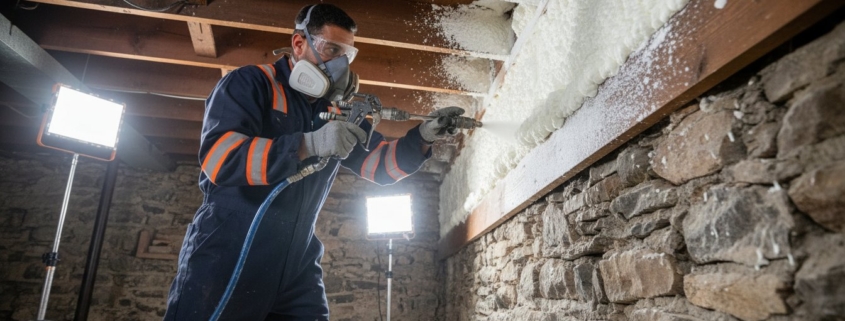
Third Coast Spray Foam treats every rim joist as a critical junction in your home’s thermal envelope. Our process begins with a 360-degree inspection of every joist pocket to identify existing wood rot or pest activity. If we find moisture levels exceeding 19% in the rim board, we pause to address the source before proceeding. We don’t just spray over problems; we solve them. This ensures the 2.0-pound density closed-cell spray foam adheres perfectly to a clean, stable substrate. Once the area is prepped, we apply the foam with surgical precision to create a monolithic seal. This stops the 30% of energy loss typically attributed to air leakage in Michigan basements. We also ensure the sill plate, where the wood framing meets the concrete foundation, is fully encapsulated to block pests and moisture.

What to Expect During Your Installation Day

For a standard 1,500-square-foot Grand Rapids basement, the installation typically takes between 4 and 6 hours from start to finish. Safety is our primary concern during this window. We utilize high-volume exhaust fans to exchange the air in your basement 10 times per hour throughout the application process. We ask that residents and pets remain out of the immediate area for 24 hours to allow for full off-gassing and curing. Our team protects your belongings by draping everything in 6-mil poly sheeting to prevent overspray. You can expect a clean workspace when we leave. We treat your home like it’s our own, ensuring that the only evidence of our visit is a warmer floor and lower energy bills.

Addressing Penetrations and Utilities

A truly effective rim joist insulation project requires more than just filling the large bays. We pay special attention to “the penetrations,” which are the holes drilled for dryer vents, outdoor spigots, and electrical conduits. These small gaps often leak as much air as a window left open an inch. We seal these gaps to create a continuous air barrier across the entire perimeter. By integrating the sill plate, the rim joist, and the subfloor above into one airtight system, we eliminate the drafts that make your living room floors feel like ice during a West Michigan winter. This level of detail is what separates a professional application from a temporary DIY fix.

The final phase involves a rigorous quality check. We verify that the foam has reached its full R-7 per inch depth and that the chemical reaction has completed properly. Every bay is inspected for consistency. A professional Third Coast finish means no gaps, no mess, and no lingering odors. We remove all protective coverings and debris, leaving your basement better than we found it. This meticulous attention to detail is why we’re the preferred choice for rim joist insulation in Kent County. We take pride in delivering results that you can feel the moment you walk across your hardwood floors.

Ready to stop the drafts at their source? Schedule your professional rim joist inspection today with the Third Coast team.

Long-Term Benefits and ROI for Grand Rapids Homeowners

Upgrading your rim joist insulation delivers immediate financial relief that shows up on your next Consumers Energy or DTE bill. When we seal the thermal envelope at this critical junction, your HVAC system stops fighting a losing battle against the West Michigan wind. Most homeowners see a 15% reduction in monthly heating and cooling costs immediately after installation. This is not just a seasonal fix. It is a permanent barrier that protects your home’s mechanical systems from overworking, which extends the lifespan of your furnace and air conditioner.

Beyond the ledger, the physical comfort of your home changes overnight. We often hear clients complain about “cold floor” syndrome, where the first floor feels like an ice box even when the thermostat is set to 70 degrees. This happens because uninsulated rim joists allow cold air to pull heat right out of your floorboards. By creating an airtight seal with spray foam, we eliminate those drafts. Your feet stay warm, and your living space maintains a consistent temperature from the floor to the ceiling.

The financial incentives extend into your tax returns through the 2026 Energy Efficient Home Improvement Credit. Under Section 25C of the Internal Revenue Code, Grand Rapids residents can claim a federal tax credit of 30% for professional energy upgrades. This credit is capped at $1,200 annually for weatherization measures like insulation and air sealing. When you combine these federal savings with the long-term increase in property value, the project pays for itself. Modern buyers look for energy-efficient homes with documented upgrades, making professional insulation a high-yield investment for your home’s equity.

Calculating Your Savings in West Michigan

In a typical Grand Rapids home, the rim joist area accounts for roughly 20% of total air leakage. Because spray foam provides both a high R-value and a superior air seal, it is the most efficient material for this space. Most of our clients find that their investment in spray foam pays for itself in energy savings within 3 to 5 years. You should also check for local rebates. Consumers Energy and DTE frequently offer cash-back incentives for air sealing and basement insulation projects that meet specific efficiency standards.

Choosing a Local Expert in Fruitport and Grand Rapids

Michigan building codes, specifically Part 11 of the Michigan Residential Code, require precise R-values and fire-rated barriers in basement areas. Hiring a local specialist ensures your project is compliant and safe. At Third Coast Spray Foam, we don’t just spray and leave. We focus on total home health by evaluating how rim joist insulation interacts with your basement’s ventilation and moisture levels. We take pride in serving our neighbors with precision and honesty.

Take Control of Your Home’s Thermal Envelope Today

Your property’s comfort and efficiency start at the foundation. Replacing failing fiberglass batts with professional rim joist insulation stops the 15% of residential energy loss that typically escapes through an unsealed basement perimeter. At Third Coast Spray Foam, our team of West Michigan climate specialists understands that a complete air seal is the foundation of total home health. We use expert closed-cell foam application to create a permanent barrier that won’t sag or harbor moisture like traditional materials. This upgrade can reduce annual heating costs by $240 or more while eliminating the cold floors that make Grand Rapids winters feel harsh. We take pride in delivering tangible results that improve your daily living standards and long-term financial well-being. It’s a practical investment in a dryer, more stable environment for your family. Our technicians are ready to help you identify hidden leaks and optimize your home’s performance with precision. Get Your Free Rim Joist Insulation Estimate and take advantage of our free on-site energy audits for Grand Rapids residents. You deserve a home that stays warm and protected all year long.

Frequently Asked Questions

Is it worth insulating rim joists?

Yes, insulating your rim joists is one of the most cost effective upgrades you can make because this area accounts for up to 20% of a home’s total energy loss. By sealing these gaps, you stop the stack effect that pulls cold air into your basement from the outside. Our team at Third Coast Spray Foam often sees homeowners reduce their monthly heating bills by 15% immediately after the installation is complete.

What is the best material for rim joist insulation in Michigan?

Closed-cell spray foam is the superior choice for Michigan homes because it provides a high R-value of 6.5 per inch and acts as a total air seal. Unlike other materials, it doesn’t allow moisture to reach cold wood surfaces during a 10 degree Grand Rapids winter. This creates a permanent thermal envelope that protects your foundation from the extreme temperature swings common in the Great Lakes region.

Can I use fiberglass batts for my rim joist?

You shouldn’t use fiberglass batts because they fail to create an airtight seal, allowing 100% of humid air to pass through to the wood. In Michigan, this leads to condensation and rot within 3 to 5 years. Fiberglass acts like a filter for dust and pests rather than a barrier. For effective rim joist insulation, you need a material that bonds directly to the substrate to prevent air gaps.

How much does professional rim joist insulation cost in Grand Rapids?

Most professional rim joist insulation projects in Grand Rapids range from $1,200 to $2,500 depending on the total linear footage and accessibility. This price typically covers the prep work, premium closed-cell foam, and professional cleanup. While DIY kits exist, our team ensures a 100% seal around every utility penetration. This investment usually pays for itself through energy savings within 4 to 6 years.

Will insulating my rim joists stop my floors from being cold?

Yes, properly sealing the rim joist can increase the temperature of your floors by 5 to 8 degrees during the winter months. Cold air usually leaks through the sill plate and travels under your floorboards, making your home feel drafty even if the thermostat is set to 70 degrees. By sealing the envelope, we keep the heat inside and the West Michigan wind outside where it belongs.

Does spray foam on rim joists prevent mold?

Yes, closed-cell spray foam prevents mold growth by ensuring warm, indoor air never hits the cold wood of your rim joist. When the temperature outside hits 32 degrees, uninsulated wood becomes a magnet for condensation. Our foam application eliminates this moisture source entirely. By maintaining total home health, you protect your structure from the 40% of basement air that eventually circulates into your living spaces.

How long does the spray foam installation take?

A standard rim joist installation for a 1,500 square foot basement takes our team between 3 and 5 hours from setup to finish. We spend the first 60 minutes prepping the area to protect your belongings and mechanical systems. Once the foam is applied, it cures within seconds. You can return to using your basement space immediately after we finish our final safety check and professional cleanup.

Are there tax credits for rim joist insulation in 2026?

Yes, under the federal guidelines extending through 2032, homeowners can claim a 30% tax credit on the cost of insulation materials. This credit is capped at $1,200 annually for weatherization upgrades. We provide the necessary documentation and manufacturer certificates so you can claim these savings on your 2026 tax return. It’s a smart way to reduce the net cost of your energy efficiency project while improving your home.

Disclaimer

Information provided is for general educational purposes. Individual needs and circumstances vary. Speak to an experienced professional before relying on the information given here.

Closed Cell Spray Foam in Grand Rapids: The West Michigan Homeowner’s Guide

What if your home’s biggest enemy isn’t the 30 inches of lake-effect snow on your roof, but the invisible air leaks draining your bank account? For many Grand Rapids homeowners, seeing a monthly Consumers Energy or DTE bill exceed $350 is a frustrating winter reality. You already know that West Michigan weather is relentless, swinging from sub-zero winds to 90% summer humidity that turns pole barns into sweating, dripping messes. That’s why closed cell spray foam is becoming the standard for families who want to seal their home’s envelope and stop the cycle of wasted energy once and for all.

We believe your home should be a fortress against these extremes, not a sieve. In this guide, you’ll discover how this high-density insulation provides a 100% air seal while adding up to 300% more structural strength to your walls. We’ll show you how to permanently slash your utility costs, stop mold growth in its tracks, and finally achieve a bone-dry crawl space. Our team is going to break down the technical R-values and the real-world benefits of protecting your investment for the next 50 years.

Key Takeaways

  • Understand why standard insulation struggles with West Michigan’s unique lake-effect climate and how to build a more resilient thermal envelope for your home.
  • Explore the science behind closed cell spray foam, including its industry-leading R-value and its ability to provide a rigid, moisture-resistant barrier.
  • Learn to distinguish between open and closed cell options to make an informed decision that prioritizes long-term energy efficiency and structural integrity.
  • Pinpoint high-priority areas like rim joists and pole barns where specialized insulation is the only way to effectively stop condensation and “sweating” issues.
  • Discover the hidden risks of DIY foam kits and why professional installation is necessary to ensure the safety and longevity of your Grand Rapids property.

The West Michigan Climate Challenge: Why Standard Insulation Fails

Living in West Michigan means facing a relentless weather cycle driven by Lake Michigan. Our team sees how this unique high-humidity and extreme-cold pattern destroys traditional insulation performance. In Grand Rapids, relative humidity often exceeds 75% during the summer months, only to be followed by sub-zero lake-effect winds in January. This creates a constant vapor drive where moisture tries to force its way into your home’s structure. Standard materials aren’t designed to handle this pressure.

Fiberglass batts are often sold as a solution, but they function more like a filter than a barrier. When those 25 mph lake-effect gusts hit your siding, they push air directly through the gaps in your framing. Because fiberglass is porous, it lets this cold air pass through while trapping dust and allergens. You aren’t just losing heat; you’re losing control of your indoor air quality. To understand the mechanics of these materials, looking into the history of Spray foam reveals why modern chemistry has moved toward more rigid, non-porous solutions for harsh climates.

The dew point is where the most significant damage occurs in local homes. This is the specific temperature where air can no longer hold its water vapor, causing it to turn into liquid. In a typical Michigan winter, that dew point often lands right on your roof deck or inside your crawl space walls. When warm air from your living room hits these cold surfaces, condensation forms. We’ve found that this process leads to mold growth or wood rot in approximately 40% of older homes in the region. Without a complete thermal envelope, your house is essentially “breathing” in a way that invites structural decay.

The Problem with “Standard” Insulation in Grand Rapids

Traditional insulation in Muskegon and Grand Rapids fails because it’s physically unstable. Cellulose and fiberglass settle under their own weight. Industry data shows that loose-fill cellulose can lose 20% of its volume over a decade, leaving the top of your wall cavities completely uninsulated. These gaps create air bypasses that act like chimneys, sucking heat out of your home. During humid Muskegon summers, these materials absorb moisture, which makes them heavy and further accelerates the settling process while creating a breeding ground for bacteria. For homeowners dealing with blown in insulation that has settled or thinned over time, this settling problem becomes even more pronounced in attic spaces where loose-fill materials gradually lose their effectiveness.

Sealing the Envelope: A 2026 Perspective

The thermal envelope is the continuous boundary that separates your conditioned living space from the outdoors. For 2026 energy codes in Grand Rapids, the focus has shifted from simple thickness to total airtightness. Air sealing is more important than R-value alone in 2026 because a high R-value means nothing if the wind blows right through the material. This shift in building science is why closed cell spray foam has become the local benchmark for climate resilience. It doesn’t just insulate; it creates a structural, air-tight, and moisture-resistant seal that stays in place for the life of the home. By using closed cell spray foam, we treat the house as a holistic system, ensuring that your energy dollars aren’t literally vanishing into the West Michigan wind.

What is Closed Cell Spray Foam? The Science of Superiority

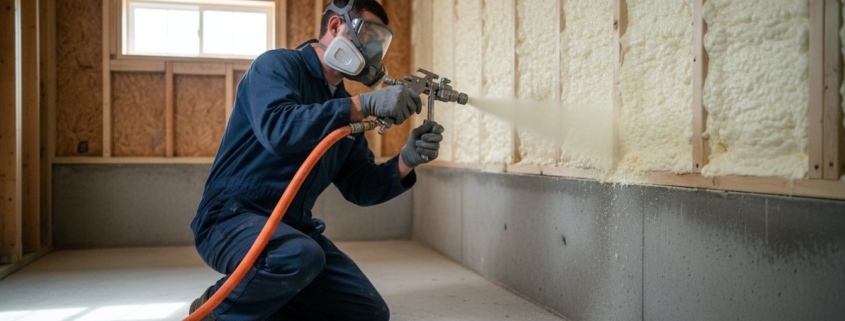
Closed cell spray foam is a high-density, rigid insulation that functions as much as a structural component as it does a thermal barrier. Unlike its softer counterparts, this material consists of tiny, compact cells that are completely closed off from one another. During the application process, two liquid components meet at the tip of a spray gun, triggering a chemical reaction that expands the foam and creates a permanent, monolithic bond to your home’s substrate. This isn’t just a layer of material sitting in a wall; it’s a hard, plastic-like reinforcement that seals every crack and crevice.

Density and R-Value: Breaking Down the Numbers

The physical properties of this insulation are measured by density, which for closed cell products typically sits at 2.0 lbs per cubic foot. This density allows for an impressive R-value of 6.5 to 7.0 per inch of thickness. In the tight 2×4 or 2×6 wall cavities found in West Michigan homes, this high R-value is a game changer. You can achieve superior thermal performance in half the space required by fiberglass batts or cellulose. Beyond heat retention, the rigidity of the foam adds immense physical integrity to a building. Engineering tests have shown that filling a wall cavity with closed cell spray foam can increase the racking strength of a structure by up to 300%. For pole barns or homes exposed to high wind loads near the lake, this added durability provides a level of security that traditional materials can’t match.

The Built-in Vapor Barrier

Moisture management is a primary concern for any homeowner in our region. When applied at a thickness of 2 inches or more, closed cell foam acts as its own Class II vapor retarder. This means it effectively stops moisture from migrating through the walls, which is a critical feature for Michigan crawl spaces and rim joists. In these areas, warm, humid air often meets cold surfaces, leading to condensation and mold growth. Because the foam has a closed-pore structure, it possesses a moisture-wicking resistance that keeps water out of the building envelope. This technical advantage is a core reason why experts like Green Building Advisor on spray foam highlight the importance of understanding how these high-performance materials create airtight environments. By sealing the envelope so tightly, you prevent the rot and structural decay often associated with seasonal temperature swings.

Choosing the right material for your project depends on your specific goals for home health and energy efficiency. If you’re ready to see how this technology fits into your renovation or new build, you can request a detailed assessment from our local team to ensure your property is protected for decades. We focus on the long-term stability of your structure, ensuring every inch of the application meets the highest industry standards for density and adhesion.

Closed Cell Spray Foam in Grand Rapids: The West Michigan Homeowner’s Guide

Closed Cell vs. Open Cell: Which is Right for Your Michigan Property?

Choosing the right insulation requires looking beyond the price tag. In West Michigan, the choice between open and closed cell foam depends entirely on the specific environment of the installation site. A common misunderstanding among homeowners in Grand Rapids is the “breathability” myth. Some believe houses need to breathe through their walls to stay healthy. This is inaccurate. Uncontrolled air movement through walls leads to heat loss and hidden condensation. True efficiency comes from an airtight building envelope where ventilation is managed by your HVAC system, not by gaps in your siding. Closed cell spray foam provides this absolute air seal, effectively stopping the biting winds that roll off Lake Michigan.

The cost-to-benefit ratio shifts depending on where you apply the product. While closed cell has a higher upfront cost, its R-value of approximately 7.0 per inch is nearly double that of open cell. This means you achieve superior thermal resistance in half the space. Scientific data from long-term thermal performance research conducted by the Oak Ridge National Laboratory shows that closed cell structures maintain their insulating power over decades without settling or sagging. This longevity makes it a pragmatic investment for the permanent protection of your property.

When to Choose Closed Cell (The Heavy Hitter)

We recommend closed cell for any area exposed to high moisture or structural stress. For pole barns in Kent County, this foam adds significant racking strength to the building, helping it withstand heavy snow loads. It is also the only choice for rim joists and flood-prone crawl spaces. Because it is a FEMA Class 5 flood-resistant material, it won’t be ruined if it comes into contact with water. This is a critical consideration for properties near the Grand River or in low-lying areas of Ottawa County. The rigid nature of the foam also acts as a vapor barrier, preventing the humid Michigan summers from migrating into your cooled living spaces.

When Open Cell Might Suffice

Open cell foam has its place, particularly when the primary goal is sound attenuation or budget-conscious attic projects. It is a softer, more flexible material that excels at absorbing mid-to-high frequency noises. We often suggest it for interior walls between bedrooms and laundry rooms or for attic roof decks where a vapor barrier isn’t legally required by local building codes. It is less expensive than closed cell spray foam, but it doesn’t offer the same structural reinforcement or moisture resistance. Our team evaluates your home as a holistic system to ensure you aren’t overpaying for performance you don’t need, or under-insulating a critical area. Check out our guide on Open vs. Closed Cell Foam for a deeper dive into these technical differences.

The West Michigan Decision Matrix

To simplify the choice for homeowners in Kent and Ottawa counties, use this quick reference guide based on common local applications:

  • Rim Joists: Always Closed Cell. Stops 95% of air infiltration at the home’s most vulnerable leak point.
  • Metal Buildings/Pole Barns: Closed Cell. Prevents “sweating” on the metal and adds structural rigidity.
  • Conditioned Crawl Spaces: Closed Cell. Essential for moisture management and pest deterrence.
  • Interior Soundproofing: Open Cell. Superior at dampening echoes and room-to-room noise.
  • Standard 2×6 Exterior Walls: Closed Cell. Maximizes R-value in a limited cavity space.

Third Coast Spray Foam focuses on “sealing the envelope” correctly the first time. We don’t just spray foam; we engineer a barrier that protects your financial well-being and your family’s comfort for the life of the home.

Critical Applications in Grand Rapids: Pole Barns, Rim Joists, and Crawl Spaces

West Michigan winters bring a specific set of challenges for homeowners from Fruitport to Grand Rapids. Our local climate demands more than standard insulation; it requires a complete air seal that stands up to heavy lake-effect snow and high humidity. We focus on three critical areas where closed cell spray foam provides the most significant impact on building longevity and comfort.

Stop the Sweat: Insulating West Michigan Pole Barns

If you own a metal pole barn in the Grand Rapids area, you’ve likely seen “Sweating Pole Barn” syndrome. This occurs when warm interior air meets a cold metal ceiling, causing water to condense and drip like rain onto your vehicles or equipment. It’s a physics problem that fiberglass can’t solve. Closed cell foam is the only permanent fix because it creates a 100% airtight thermal break directly against the metal. This application provides three major benefits for local owners:

  • Condensation Elimination: It stops moisture from forming, protecting tools and inventory from rust.
  • Structural Rigidity: The foam hardens into a dense plastic, adding up to 30% more racking strength to the building.
  • Pest Control: It creates a hard barrier that rodents and insects can’t easily nest in.

This durability is vital for local workshops and agricultural buildings that need to withstand years of heavy use without losing thermal efficiency. It turns a seasonal storage shed into a usable, year-round workspace.

Rim Joists and Foundations: The Energy Leak You Can’t See

Rim joists are often the most neglected part of a Michigan home, yet they’re usually the biggest source of energy loss. Through a process called the “Stack Effect,” cold air pours into your basement through the gaps where your house meets its foundation. This forces your furnace to work 20% harder just to keep up with the infiltration. Our team at Third Coast targets these specific leaks with precision. We spray the rim joist area to create an impenetrable barrier that stops drafts at the source. Learn more about our Rim Joist services to understand how this single project can make your kitchen floors feel warmer immediately.

Crawl Space Encapsulation for Foundation Protection

Damp crawl spaces are a recipe for structural rot and poor indoor air quality. In the Grand Rapids region, high water tables and sandy soil often lead to moisture migrating through foundation walls. We use closed cell spray foam to encapsulate these spaces, sealing out the earth’s moisture and preventing wood rot in your floor joists. This process transforms a dark, damp area into a clean, dry part of your home’s thermal envelope. By treating your foundation as a holistic system, we ensure your home remains stable and healthy for decades. It’s about protecting your biggest investment from the ground up while lowering your monthly utility costs. Many homeowners also benefit from upgrading their blown in insulation in attic spaces to complement the comprehensive thermal envelope protection that closed cell foam provides in basements and crawl spaces.

Ready to stop the drafts and protect your property? Contact our West Michigan experts today for a professional evaluation.

The Professional Advantage: Why DIY Foam Kits Risk Your Investment

It is tempting to walk into a big-box retailer and grab a portable spray foam kit for $800. You might think you are saving $2,500 on labor costs. However, closed cell spray foam is not just “insulation in a can.” It is a complex chemical reaction that requires surgical precision. If the mix ratio between the “A” and “B” sides deviates by even a small margin, the foam may never fully cure. This leaves you with a sticky, ineffective mess that fails to provide the air seal you paid for.

Professional installation is a one-and-done permanent solution because of the industrial-grade equipment we bring to your driveway. Third Coast utilizes high-pressure pumps and 210-foot heated hoses to maintain a constant 130-degree temperature and 1,000 PSI of pressure. DIY tanks rely entirely on the ambient temperature of your garage floor. If those tanks drop below 70 degrees, the chemical reaction fails. This leads to lingering “fishy” odors or toxic off-gassing that can persist for years, compromising your indoor air quality.

When you hire a professional, you are paying for the chemical expertise required to manage the “exothermic” reaction. If foam is applied too thick in a single pass, it can actually generate enough heat to cause internal charring or, in extreme cases, a fire. Our technicians monitor every inch of the application to ensure the thermal envelope is sealed safely and effectively.

The Hidden Dangers of DIY Spray Foam

In a cold Michigan winter, applying foam in an unheated space is a recipe for disaster. When foam doesn’t cure properly due to freezing substrate temperatures, it loses its structural integrity and adhesive properties. Removing uncured, “wet” foam is a nightmare scenario that often costs three times the original installation price in labor alone. We dedicate 20% of our total project time to professional masking and prep to ensure your windows, floors, and mechanical systems remain protected from permanent overspray damage.

Why Third Coast is West Michigan’s Trusted Partner

We serve homeowners throughout Muskegon, Ottawa, and Kent counties with a focus on long-term home health. We treat your house as a holistic system rather than just a collection of walls. Our “Straight-Shooter” approach means we won’t upsell you on unnecessary thickness. We only recommend the specific R-value your home requires to stop drafts and lower your Consumers Energy or DTE bills. We live where we work, and our reputation is built on the durability of our seals.

Stop guessing with retail kits and start investing in a permanent thermal barrier. Get your free insulation estimate in Grand Rapids today!

Choosing professional closed cell spray foam ensures your home remains a sanctuary. Our team brings the technical rigor and local reliability needed to handle the unique climate challenges of the Lakeshore. We don’t just spray foam; we provide the peace of mind that comes with a job done right the first time.

Secure Your West Michigan Home for the Long Haul

West Michigan winters don’t wait for anyone, and your home shouldn’t have to fight them with outdated materials. By upgrading to closed cell spray foam, you’re investing in a high-performance 2.0 lb density barrier that seals the thermal envelope against Lake Michigan’s heavy humidity. Our Fruitport-based team specializes in reinforcing critical areas like rim joists and pole barns. We ensure your structure stands up to 60-plus mph wind gusts and the sub-zero temperatures that regularly hit the Grand Rapids area. Choosing a professional application over a DIY kit protects your property from the structural risks of improper curing. It’s about more than just lowering monthly energy bills by up to 15 percent; it’s about the permanent health of your building. We take pride in being local partners who understand exactly what your property needs to stay dry and warm. You deserve a home that works as hard as you do. Our experts are ready to provide the precision your project requires.

Schedule Your Free West Michigan Insulation Inspection

Frequently Asked Questions

Is closed cell spray foam waterproof?

Yes, closed cell spray foam is completely waterproof and acts as a high-performance vapor barrier. It’s engineered with a high-density, closed-cell structure that doesn’t absorb or hold moisture. FEMA classifies this material as a Class 5 flood-resistant material, which means it can survive contact with floodwaters for 72 hours without damage. This makes it the most reliable choice for protecting West Michigan homes against heavy rains and melting snow.

How much does closed cell spray foam cost per square foot in Michigan?

In the Michigan market, you can expect to pay between $1.50 and $2.50 per board foot for professional installation. A board foot is a measure of 1 square foot of coverage at 1 inch of thickness. For a typical 1,500-square-foot basement or attic project, homeowners usually see a total investment ranging from $3,500 to $8,000. While the upfront cost is higher than fiberglass, the 15% to 50% reduction in monthly heating bills provides a fast return on investment.

Does closed cell spray foam stop condensation in metal buildings?

Yes, it stops 100% of condensation by eliminating the temperature differential that causes “sweating” on metal surfaces. When our team applies a 1.5-inch layer of foam to a metal roof or wall, it creates a seamless air seal that prevents warm, humid air from touching the cold steel. By keeping the surface temperature above the dew point, you protect your building from the rust and dripping that typically occurs during Michigan’s volatile spring and fall seasons.

Can closed cell spray foam be used in a crawl space?

Yes, it’s the most effective solution for sealing and insulating West Michigan crawl spaces. We apply the foam directly to the rim joists and foundation walls to create a permanent thermal envelope. This process blocks 99% of outside air infiltration and prevents damp soil odors from rising into your living areas. Sealing a crawl space this way can increase your first-floor temperature by 5 to 10 degrees during a typical January freeze in Grand Rapids.

How long does closed cell spray foam last?

Closed cell spray foam is designed to last for the entire life of the building, often exceeding 80 years. Unlike traditional fiberglass batts that sag or settle after 10 to 15 years, this material maintains its rigid structure and R-value indefinitely. It’s a chemically stable product that won’t shrink or degrade over time. Once it cures, it becomes a permanent part of your home’s structure, providing consistent energy savings for as long as the house stands.

Is there a smell after installing closed cell spray foam?

There’s a temporary odor during the application process, but it dissipates completely within 24 hours. Our crew uses high-powered ventilation fans to cycle the air 10 times per hour during the installation to ensure proper airflow. We require homeowners and pets to stay out of the house for 24 hours to allow the foam to fully cure and off-gas. After this period, the foam is inert, odorless, and safe for your family to be around.

Does spray foam insulation qualify for the 2026 federal tax credit?

Yes, spray foam insulation qualifies for the Energy Efficient Home Improvement Credit, also known as Section 25C. Under current federal law, homeowners can claim 30% of the material costs, up to a maximum of $1,200 every year, through December 31, 2032. This includes the 2026 tax year. We recommend saving your itemized receipts and the manufacturer’s certification statement to ensure you receive the full credit when you file your annual tax return. For detailed guidance on maximizing your energy efficient home improvement credit in Grand Rapids, our team can help you understand the specific documentation requirements and qualifying improvements that provide the greatest tax benefits for Michigan homeowners.

Disclaimer

Information provided is for general educational purposes. Individual needs and circumstances vary. Speak to an experienced professional before relying on the information given here.