
Tag Archive for: Grand Rapids MI

How to Hire the Best Home Insulation Contractors in Grand Rapids, MI (2026 Checklist)

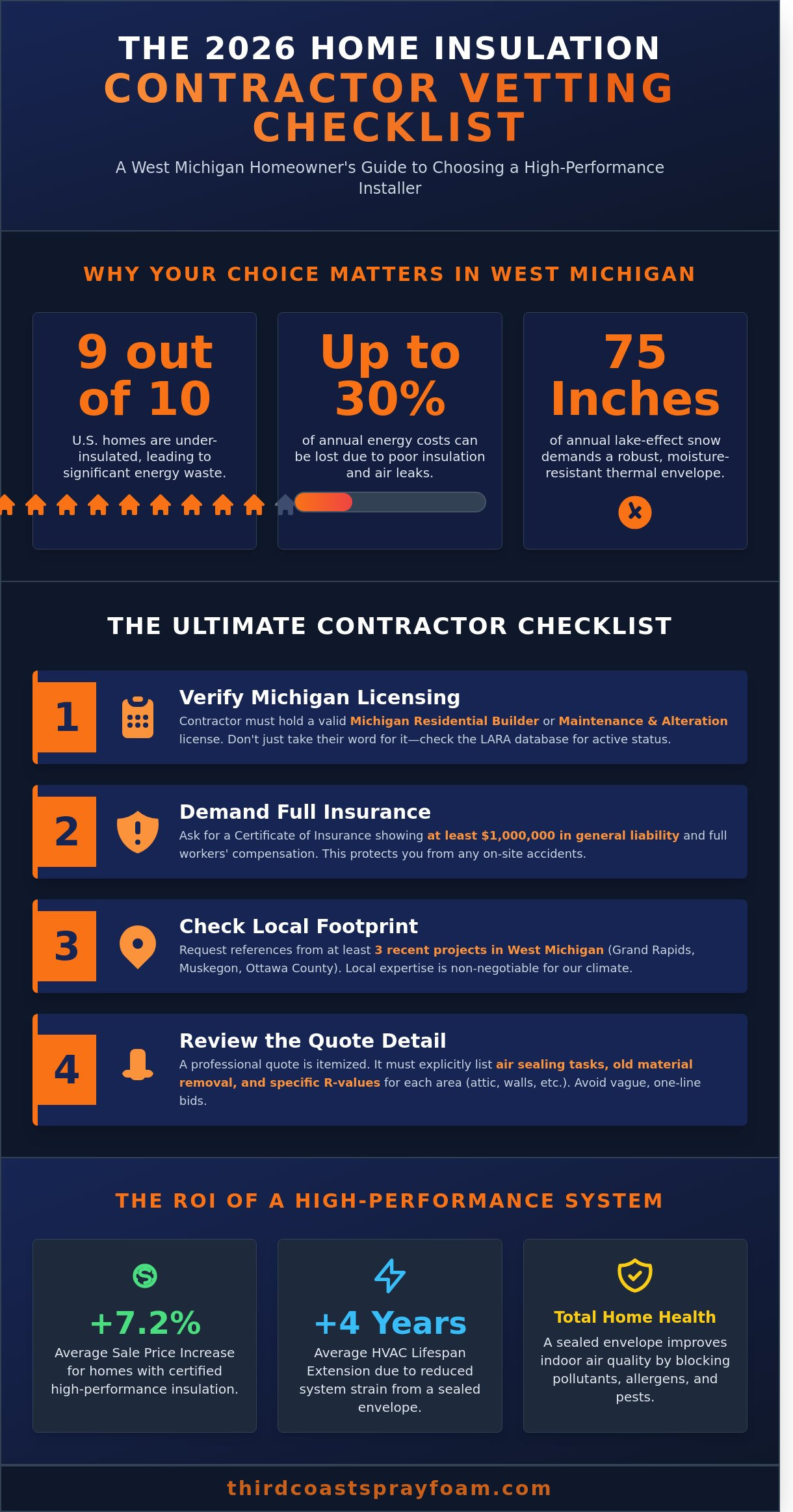
Did you know that 9 out of 10 existing homes in the United States are under-insulated, causing West Michigan residents to lose up to 30% on their annual energy costs? When you are searching for home insulation contractors in Grand Rapids, you aren’t just buying material; you’re investing in a thermal envelope that must withstand 75 inches of annual lake-effect snow. Our team knows that a poor choice leads to more than just drafts. It results in moisture problems and structural decay that can cost thousands to repair down the road.

You’ve likely spent winters wearing extra layers indoors because your upstairs is freezing while the main floor is stifling. It’s frustrating to deal with $450 monthly heating bills or the constant worry of ice dams damaging your roof. You deserve a home that feels consistent and secure. This guide provides a comprehensive 2026 vetting checklist to help you choose a professional who understands total home health. We’ll show you exactly how to identify high-performance installers who prioritize air sealing and permanent R-value over temporary, cheap fixes.

Key Takeaways

  • Understand why West Michigan’s lake-effect humidity makes air sealing just as vital as R-value for maintaining your home’s thermal envelope.
  • Learn how to vet home insulation contractors by verifying Michigan-specific licenses and the professional-grade equipment required for a precision install.
  • Evaluate the long-term ROI of high-performance insulation to see how investing in quality materials now reduces your 10-year ownership costs.
  • Identify common red flags, such as low-ball bids and contractors who ignore the “stack effect,” to protect your home from subpar workmanship.
  • Discover the benefits of a “total home health” approach that prioritizes permanent comfort and energy efficiency for residents in Muskegon, Ottawa, and Kent Counties.

Why Choosing the Right Home Insulation Contractor in Grand Rapids Matters

In 2026, West Michigan homeowners face higher utility rates and more volatile weather patterns than ever before. Selecting the right home insulation contractors is no longer a simple matter of price shopping for the cheapest material. It is a critical decision that dictates the long term structural integrity and comfort of your property. In Grand Rapids, the “Lake Effect” creates a high-humidity environment that traditional insulation materials struggle to handle. When humidity levels exceed 60 percent, standard fiberglass batts often trap moisture, leading to a 28 percent reduction in thermal performance and potential mold growth within your walls.

Our team understands that a high R-value is only half the story. While R-value measures a material’s resistance to heat flow, it does not account for air movement. A home can have R-60 insulation in the attic and still feel drafty if the building envelope is not properly sealed. High-performance building envelope specialists focus on air sealing to stop the “stack effect,” which is the process where warm air escapes through the roof and pulls cold, damp air in through your crawlspace or rim joists. This distinction is why a specialist is a much safer investment than a general laborer who simply blows in loose-fill material without addressing the gaps.

The financial impact is measurable in our local market. Data from Kent and Ottawa county real estate transactions in 2025 showed that homes with certified high-performance insulation packages sold for an average of 7.2 percent more than homes with standard code-minimum installs. Investing in quality work from professional home insulation contractors provides immediate monthly savings and builds significant equity for the future.

The West Michigan Climate Factor

Weather patterns in 2026 have brought more frequent “flash freezes” and heavy, wet lake effect snow to our region. In coastal communities like Fruitport and Muskegon, these conditions are particularly harsh on homes. Traditional fiberglass often fails here because it allows moisture-laden air to pass through, causing attic condensation. This moisture eventually leads to ice dams, which caused over $14 million in property damage across Grand Rapids during the 2025 winter season. A robust thermal envelope prevents these temperature fluctuations from reaching your roof deck.

The Total Home Health Philosophy

We view your home as a holistic system rather than a collection of separate rooms. This “total home health” approach recognizes the direct link between your insulation and your indoor air quality (IAQ). When we focus on sealing the envelope, we aren’t just stopping heat loss; we are blocking outdoor pollutants, allergens, and pests from entering your living space. This is the gold standard for Grand Rapids homes. It ensures your HVAC system doesn’t have to work overtime, extending the life of your furnace by an average of 4 years while providing a quiet, draft-free environment for your family.

The Ultimate West Michigan Insulation Contractor Checklist

Choosing between different home insulation contractors in Grand Rapids requires more than a quick look at a price tag. Our West Michigan climate, where temperatures swing from 90 degrees in July to sub-zero in January, demands precision. A low-cost bid often hides missing licenses or inferior equipment that could compromise your home’s thermal envelope. It’s vital to vet every company through a local lens to ensure they understand our lake-effect humidity and seasonal shifts.

  • Verify Michigan Licensing: Your contractor must hold a valid Michigan Residential Builder or Maintenance and Alteration license. Don’t just take their word for it. Check the LARA database to ensure their status is active.
  • Demand Full Insurance: Ask for a Certificate of Insurance showing at least $1,000,000 in general liability and workers’ compensation. This protects you if an accident occurs on your property.
  • Check Local Footprints: Request references from at least 3 projects completed within the last 12 months in Grand Rapids or Fruitport. Local contractors understand our specific moisture challenges and building codes.
  • Review the Quote Detail: A professional estimate should never just say “install insulation.” It must list air sealing, old material removal, and specific R-values for each area of the home.

If you’re ready to see how a professional team handles these details, you can request a detailed site evaluation from our local experts.

Technical Vetting Questions to Ask

The right home insulation contractors will answer technical questions without hesitation. Ask if they offer both open and closed-cell spray foam. Open-cell is excellent for attic gables, but closed-cell is necessary for Michigan basements to provide a built-in vapor barrier. You should also ask how they treat rim joists and box sills. These areas account for roughly 20 percent of a home’s total air leakage. Finally, ensure they use high-powered industrial vacuums for old insulation removal. Tossing old fiberglass into trash bags spreads dust and allergens throughout your living space.

Equipment and Safety Standards

Equipment quality directly impacts the longevity of your investment. Professional contractors invest $75,000 or more in high-end proportioners, like Graco E-30 models, to maintain precise chemical temperatures. This ensures the foam cures correctly and stays odorless. DIY kits or low-end rigs often produce off-ratio foam that can shrink over time. Safety is equally vital. Your contractor must provide a clear timeline for occupant re-entry, which is typically 24 hours for spray foam projects. For attic blow-in jobs, they should use professional-grade machines that prevent the material from settling, maintaining a consistent R-49 or R-60 rating for decades.
How to Hire the Best Home Insulation Contractors in Grand Rapids, MI (2026 Checklist)

Performance vs. Price: Evaluating Insulation Methods for MI Homes

Choosing between different insulation materials isn’t just about the initial quote. It’s a decision that dictates your home’s comfort and your bank account’s health for the next 25 years. Many home insulation contractors in West Michigan still rely on the “Fiberglass Fallacy,” the idea that standard pink batts are sufficient for our climate. In reality, fiberglass batts can lose up to 40% of their effective R-value when Grand Rapids temperatures drop below zero because they allow air to bypass the material. This creates cold spots and drives up your Consumers Energy or DTE bills.

The 10-year ownership cost is the metric that truly matters. While spray foam requires an upfront investment roughly 2.5 times higher than blown-in fiberglass, the return on investment is undeniable. Homeowners in Kent County typically report 15% to 30% savings on monthly utility costs immediately after a full envelope seal. Over a decade, these savings often surpass the initial cost of the upgrade, whereas cheaper materials continue to cost you money through energy waste and potential ice dam repairs.

Specialized structures like pole barns require a different strategy than a standard residential attic. Metal buildings are prone to internal condensation that can cause structural rust within 12 years if not managed. We use closed-cell foam in these environments to create a seamless vapor barrier that prevents moisture from ever reaching the metal panels, a level of protection that blown-in materials simply cannot provide.

Spray Foam: The Permanent Air Seal

Closed-cell spray foam is the gold standard for total home health. It acts as a powerful vapor barrier, which is essential for flood-prone areas or high-humidity zones near Muskegon. Beyond thermal resistance, this material provides structural reinforcement, increasing wall racking strength by up to 300%. Professional installation is non-negotiable. Our team monitors precise chemical temperatures and mixing ratios to ensure the foam cures correctly, providing a permanent, airtight seal that won’t sag or settle over time.

Blown-In Solutions for Grand Rapids Attics

Blown-in cellulose is a strategic choice for restoring R-value in historic districts like Heritage Hill. Many of these homes, built between 1880 and 1920, have original insulation that has settled to a measly R-10. We use high-density cellulose to reach the 2026 recommended R-49 or R-60 levels. However, we never “just blow it in.” We prioritize air-sealing top plates first and installing attic baffles to maintain proper ventilation. This prevents the stagnant air that leads to mold growth and ensures your new insulation performs at its peak capacity.

Red Flags: How to Spot ‘Solar Cowboy’ Installers in West Michigan

Hiring the wrong team costs more than just the initial deposit. Low-ball bids from out-of-town crews often signal that they’re cutting corners on material quality or safety protocols. If a quote is 25% lower than every other local estimate, ask why. Usually, it’s because they aren’t using high-grade chemicals or they’re rushing the application. Proper spray foam requires a precise 1:1 ratio of chemicals heated to specific temperatures, often around 130 degrees Fahrenheit. When home insulation contractors get this wrong, the foam fails to cure. This leads to a permanent chemical odor and a compromised thermal seal that won’t pass a 2026 building inspection.

Verify that the company has a physical office in West Michigan rather than just a P.O. Box or a temporary rental. Crews traveling from out of state often lack knowledge of the specific humidity challenges found near Lake Michigan. They might disappear before the job is finished or fail to provide the required Michigan project history for warranty claims. A local contractor understands that our 30-degree temperature swings require specific density settings for open-cell and closed-cell products.

The Stack Effect and Your Foundation

Physics dictates how your home breathes. The Stack Effect describes how warm air rises and escapes through the attic, creating a vacuum that pulls freezing air in through the basement or crawl space. Many home insulation contractors ignore the foundation, but this is where the cycle begins. A reputable team will always prioritize the rim joists, which account for up to 15% of a home’s total air leakage. Don’t settle for a contractor who simply throws a 6-mil plastic tarp on the ground. True crawl space encapsulation requires a permanent seal to the walls to prevent moisture from rotting your floor joists.

Poor Communication and Lack of Transparency

Transparency is the hallmark of a professional. You should avoid any installer who won’t walk you through their R-value math. Michigan energy codes are strict, and you need to know exactly how many inches of foam are required to meet current standards. If they can’t provide a clear, written timeline for the removal of old fiberglass and the subsequent install, they’re likely overbooked and understaffed. This lead to “rush jobs” where safety masks aren’t worn and overspray ruins your personal belongings.

We believe in a straight-shooter approach. Our team provides a detailed breakdown of every cubic foot of material used and a firm schedule that we stick to. We treat your home like a holistic system, ensuring the “envelope” is sealed from the peak of the roof to the foot of the foundation. If you want a contractor who values precision over a quick buck, contact Third Coast Spray Foam for an honest assessment of your home’s needs.

Partnering with Third Coast Spray Foam for Total Home Health

Based in Fruitport, our team has served the Muskegon, Ottawa, and Kent County communities since 2013. We’ve built our reputation as leading home insulation contractors by focusing exclusively on high-performance spray foam and blown-in solutions. We skip fiberglass entirely. Fiberglass batts are porous and fail to stop air movement, which contributes to nearly 40% of a building’s energy loss. By specializing in materials that provide a true air seal, we ensure your investment provides permanent results and real comfort.

Our process is thorough and scientific. We don’t just add new material over old problems. We begin with the professional removal of aged, dusty, or pest-damaged insulation to create a clean slate. Once the area is prepared, we focus on precision air sealing. This step is critical for sealing the envelope and preventing the stack effect that pulls cold lake-effect air into your living spaces. We treat your property as a holistic system, prioritizing total home health rather than just filling gaps.

Why Local Expertise Matters for Your Pole Barn or Home

West Michigan weather presents unique challenges that out-of-state franchises often overlook. We frequently solve the sweating ceiling problem in local pole barns, where temperature differentials cause condensation that ruins equipment and structural wood. Residents rely on expert home insulation contractors to understand these Michigan-specific moisture issues. Our identity is rooted in the Third Coast. We never use subcontractors. Every specialist on your job site is a direct member of our team, ensuring the highest level of accountability and local reliability.

Next Steps for a More Comfortable Home

Preparing for your on-site assessment is a simple process. Just clear a path to your attic hatch, crawlspace, or rim joists so our team can perform a detailed visual inspection. We’ll help you maximize your project’s value by navigating 2026 energy credits and utility rebates. These incentives can significantly offset the cost of upgrading your thermal envelope. Our estimates are straightforward and data-driven, giving you a clear roadmap to a more efficient, durable property.

Take Control of Your West Michigan Home Comfort Today

Protecting your property starts with a commitment to quality over shortcuts. Choosing the right home insulation contractors means looking past the lowest bid to find a partner who understands the specific climate demands of Grand Rapids and the Lakeshore. We’ve spent over 10 years perfecting our craft; we use specialized, high-performance spray foam rigs that ensure every seal is airtight and permanent. By following our 2026 checklist, you can successfully avoid the “solar cowboy” installers who lack the technical expertise required for total home health. As a family-owned and operated business based right here in Fruitport, we treat your property with the neighborly care it deserves. We focus on long-term efficiency and structural durability, ensuring your investment pays off for decades. Don’t settle for drafts or high utility bills when a professional, localized solution is within reach. Our team is ready to help you lock in comfort and security for your family right now.

Get Your Free, No-Nonsense Insulation Estimate

You deserve a home that works as hard as you do, and we’re here to make that happen.

Frequently Asked Questions

How do I find a reputable insulation contractor in Grand Rapids?

You can identify reputable home insulation contractors in Grand Rapids by verifying their Michigan residential builder license and checking for a minimum of 50 local Google reviews with a 4.8 star average. Our team recommends asking for a thermal imaging report after the job is finished. This ensures the thermal envelope is completely sealed without gaps. Reliable professionals will always provide a written 10 year workmanship warranty to protect your investment.

What is the best type of insulation for a West Michigan home?

Closed-cell spray foam is the most effective choice for West Michigan homes because it provides a high R-value of 7.0 per inch and acts as a moisture barrier. Our region faces 40 degree temperature shifts in a single day during spring. Spray foam handles these fluctuations by creating an airtight seal that fiberglass cannot match. This prevents the common draft issues found in older Grand Rapids neighborhoods and keeps your home stable.

Is spray foam insulation worth the extra cost compared to fiberglass?

Spray foam is worth the initial investment because it typically lowers monthly heating and cooling costs by 30% to 50% over traditional fiberglass. While the upfront cost is higher, the ROI hits 100% within 5 to 7 years through utility savings. Fiberglass lacks air-sealing properties, meaning your furnace works 20% harder to maintain temperatures. Investing in foam creates a permanent solution that won’t sag or lose efficiency over 25 years.

How long does the home insulation installation process take?

A standard residential insulation project takes between 4 and 8 hours for a single attic or 2 full days for an entire home. Our crew arrives at 8:00 AM and typically finishes a crawl space encapsulation by 4:00 PM the same day. We use high volume proportioners to ensure the application is precise and efficient. You’ll be back in your home and enjoying improved comfort within 24 hours of the final spray.

Should I remove my old insulation before adding new spray foam?

You must remove old fiberglass or cellulose before applying spray foam to ensure a 100% airtight bond to the wood or masonry. Leaving old material traps 20 years of dust, allergens, and rodent waste against your new thermal barrier. Our team uses 150 foot industrial vacuums to clear the space entirely. This process ensures your home’s air quality improves and the new insulation performs at its maximum R-value without interference.

Can an insulation contractor help with condensation in my pole barn?

Our home insulation contractors specialize in pole barn solutions by applying 2 inches of closed-cell foam to eliminate condensation on metal roofs. This thickness prevents the interior air from reaching the cold metal surface, which stops “ceiling rain” instantly. We’ve successfully treated 200 plus outbuildings in Kent County to protect tractors and equipment from moisture damage. It’s the only way to keep a workspace dry during Michigan’s humid summers.

Are there energy tax credits available for Michigan homeowners in 2026?

Michigan homeowners can claim a federal tax credit of 30% for insulation costs, capped at $1,200 per year through the 2026 tax cycle. This credit applies to both materials and professional labor costs for sealing the building envelope. We provide detailed invoices that include the necessary manufacturer certification statements for your tax filings. Combining this with local utility rebates from Consumers Energy can save you an additional $250 on average.

Do you provide crawl space encapsulation in Muskegon County?

We provide comprehensive crawl space encapsulation and spray foam services to all residents in Muskegon County, including Norton Shores and Whitehall. Our team manages the entire process from debris removal to the installation of 20 mil vapor barriers. We’ve helped 85 homeowners in the Muskegon area eliminate damp odors and frozen floors since 2022. Every project includes a 100% satisfaction guarantee to ensure your home stays dry and healthy for years.

Disclaimer

Information provided is for general educational purposes. Individual needs and circumstances vary. Speak to an experienced professional before relying on the information given here.
Best House Insulation Contractors in Grand Rapids, MI: 2026 Homeowner's Guide

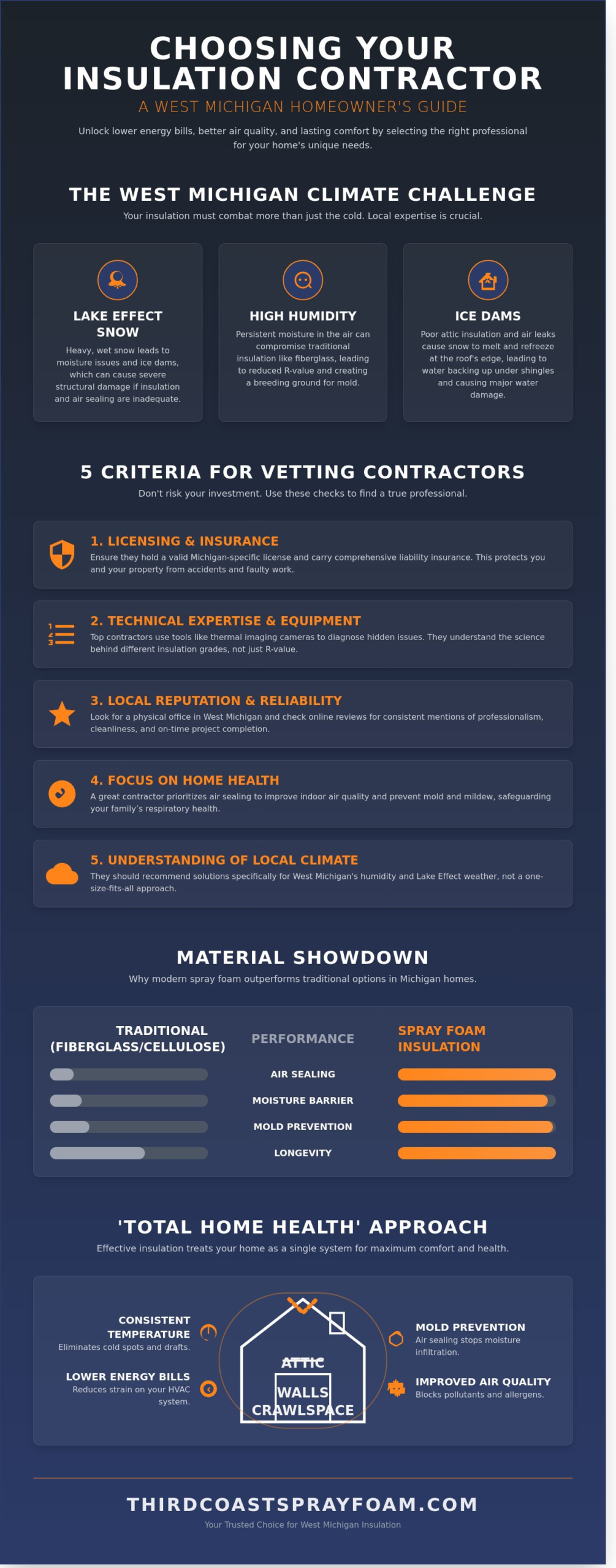
What if the key to lower energy bills and a healthier home lies in the insulation contractors you choose? Many homeowners in Grand Rapids, MI, grapple with issues like cold floors, ice dams, and skyrocketing utility costs. Finding reliable house insulation contractors can feel overwhelming, especially with so many options and the risk of “fly-by-night” services. But you don’t have to navigate this alone. In this article, you’ll learn how to identify the right insulation professional for your West Michigan home by understanding local climate needs, vetting contractor credentials, and comparing high-performance materials. We’ll also explore how effective insulation can enhance your indoor air quality, ensuring that your home is not only comfortable but also safe from mold and mildew. Let’s embark on this journey to secure your home’s comfort and health together.

Key Takeaways

  • Understanding local climate impacts is crucial for effective insulation; choose contractors who specialize in West Michigan’s unique weather conditions.
  • Ensure that house insulation contractors are properly licensed and insured to protect your investment and your home’s integrity.
  • Modern insulation methods, like spray foam, not only improve energy efficiency but also enhance indoor air quality by effectively sealing drafts.
  • Learn how to identify and mitigate mold and mildew risks during insulation projects to safeguard your family’s respiratory health.
  • Follow a structured process in professional insulation projects for optimal results and long-term comfort in your home.

Why Local Expertise Matters for West Michigan House Insulation Contractors

Choosing the right house insulation contractors is essential for homeowners in Grand Rapids, MI. Unlike general handymen, specialized insulation contractors bring a wealth of knowledge about local climate conditions, building codes, and effective insulation materials. This expertise ensures that your home is not only well-insulated but also equipped to handle the unique challenges posed by West Michigan’s weather.

The region’s high humidity and Lake Effect snow significantly influence insulation choices. Standard R-values may not suffice for homes in Muskegon and Ottawa County, where moisture accumulation and ice dams can cause severe damage. A qualified contractor understands how to select and implement solutions that address these specific challenges, providing a tailored approach to insulation that a general handyman simply cannot match.

One of the critical roles of a skilled insulation contractor is to prevent common Michigan issues, such as ice dams, that can lead to costly repairs and health risks. Proper insulation, combined with effective air sealing techniques, creates a barrier that minimizes heat loss and protects your home from winter’s wrath.

Combating the Lake Effect Climate

The Lake Effect climate brings unique challenges, particularly the high humidity that affects traditional insulation materials. Standard fiberglass or cellulose may not perform optimally in such an environment. Instead, contractors often recommend spray foam insulation in Grand Rapids, MI, which acts as both an insulator and an air sealant, providing superior protection against moisture infiltration.

In this region, air sealing becomes just as crucial as achieving the right R-value. Air leaks can lead to drafts and energy loss, which not only increases heating costs but also jeopardizes indoor air quality. Poor insulation can cause mold growth, a serious concern for respiratory health. Older homes in Grand Rapids neighborhoods often face additional challenges, as they may have outdated insulation and structural issues that require a comprehensive assessment and solution.

The ‘Total Home Health’ Approach

Effective insulation is about more than just filling walls; it involves treating the attic, walls, and crawl space as a single thermal envelope. This holistic view ensures that all areas work together to maintain consistent temperatures and improve indoor air quality. Improper insulation can lead to stagnant air and mold growth, both of which pose serious health risks.

The thermal envelope is the primary barrier between your living space and the Michigan elements, ensuring comfort and energy efficiency throughout the year. By working with experienced house insulation contractors, you can create a healthier indoor environment that supports both your well-being and the longevity of your home.

5 Essential Criteria for Vetting Insulation Companies in Grand Rapids

Choosing the right house insulation contractors is vital for ensuring your home is energy-efficient and healthy. In Grand Rapids, where climate conditions can fluctuate dramatically, proper insulation contributes not only to energy savings but also to maintaining indoor air quality. Here are five essential criteria to consider when vetting insulation companies in the area.

Verification of Licensing and Insurance

Before hiring any contractor, check for Michigan-specific licensing and comprehensive insurance coverage. A licensed contractor indicates that they are qualified to perform insulation work, while insurance protects you from liability in case of accidents. Always request to see proof of both and ensure they are up-to-date.

Technical Knowledge and Equipment

The grade of insulation material used plays a crucial role in your home’s long-term comfort. High-quality spray foam or cellulose options can significantly reduce air leaks, ultimately improving indoor air quality and preventing mold growth. Ask potential contractors about their thermal imaging and diagnostic tools. These advanced technologies help identify areas of heat loss and moisture buildup, which are critical for effective insulation.

  • Why the grade of spray foam or cellulose matters for long-term settling
  • Questions to ask about thermal imaging tools
  • How professional-grade application differs from DIY kits

Local Reputation and Reliability

Check for a physical presence in West Michigan, such as offices in Grand Rapids or nearby Fruitport. A local company is more likely to understand the unique challenges of the area’s climate. Online reviews should reveal specific mentions of cleanliness and professionalism. You want contractors who respect your home as if it were their own.

  • Evaluating online reviews for cleanliness and professionalism
  • The value of understanding local utility rebate programs

Transparency in Quoting

Be wary of contractors who provide vague quotes over the phone. A reputable contractor will perform a detailed assessment before giving you a price estimate. Clear, itemized quotes help avoid unexpected costs later and reflect a contractor’s honesty and integrity.

Knowledge of Michigan Energy Codes

Insulation standards can vary by state. A knowledgeable contractor should be familiar with Michigan’s energy codes, which are designed to enhance energy efficiency and indoor air quality. This knowledge ensures that your home meets all necessary regulations while also protecting your health by preventing issues like mold and poor air quality.

By carefully evaluating these criteria, you can find house insulation contractors who not only meet your needs but also enhance the safety and comfort of your home. If you’re ready to explore your insulation options, consider reaching out to Third Coast Spray Foam for expert guidance tailored to your specific situation.

Best House Insulation Contractors in Grand Rapids, MI: 2026 Homeowner's Guide

Beyond Fiberglass: Why Top Contractors Prioritize Air Sealing

One of the biggest misconceptions about insulation in Michigan is that fiberglass batts are the gold standard for homes. While they may have been a popular choice in the past, modern house insulation contractors know that relying solely on fiberglass can lead to significant issues, particularly in the cold winters of Grand Rapids. Fiberglass batts allow air to bypass, creating cold spots that can compromise comfort and drive up energy bills.

The Failure of Traditional Batt Insulation

Fiberglass insulation does not create a complete seal, which means that air can flow through gaps, leading to drafts and uneven temperatures. This air bypass not only makes your home less comfortable but can also result in higher heating costs during Michigan’s frigid winters. Additionally, ‘dirty’ insulation, which accumulates dust and allergens, can be a sign of air leaks. This compromised environment can negatively impact indoor air quality, posing risks to respiratory health.

To learn more about why we don’t install fiberglass batts, check out our website.

The Spray Foam Advantage

In contrast, modern insulation solutions like spray foam offer significant advantages. Closed-cell spray foam provides a high R-value and acts as a moisture barrier, making it ideal for rim joists and box sills. Open-cell spray foam is better suited for attic applications due to its lighter weight and sound-dampening properties. By employing these methods, professional contractors can effectively seal your home, reducing air leakage that can account for up to 40% of a Michigan home’s heating and cooling costs.

Additionally, air sealing is crucial for combating the ‘stack effect’ in multi-story homes. This phenomenon occurs when warm air rises and escapes through gaps in the upper levels, drawing cold air in from below. Properly sealing these leaks not only enhances energy efficiency but also improves indoor air quality by reducing the potential for mold and mildew growth, which can thrive in poorly insulated spaces.

Choosing the right house insulation contractors can make all the difference. Prioritizing air sealing alongside insulation ensures that your home remains comfortable, energy-efficient, and healthy for years to come. In the long run, investing in effective air sealing and high-quality insulation will yield significant savings on your energy bills while also contributing to a healthier living environment.

The Step-by-Step Process of a Professional Insulation Project

When you decide to improve your home’s insulation, understanding the process can help you feel more confident in your choice of house insulation contractors. A professional insulation project typically follows several crucial steps, ensuring that your home remains healthy, energy-efficient, and comfortable.

Preparation and Removal

The first step in the process is an initial site audit and thermal diagnostic testing. This assessment identifies existing insulation issues, such as air leaks or thermal bridging, that could affect your home’s energy efficiency. Removing old insulation is critical, as it helps uncover hidden mold or pests that could compromise indoor air quality and respiratory health.

At Third Coast Spray Foam, we prioritize the protection of your home during this stage. Our team uses advanced techniques to minimize disruption and safeguard your belongings, ensuring that your living space remains clean and undamaged throughout the process. You can explore more about our approach by visiting our professional insulation removal process.

Installation and Quality Control

Once the old insulation has been removed, the installation of new, high-performance insulation begins. On the application day, you can expect our team to perform either a professional spray foam installation or blown-in application, depending on your specific needs. We adhere to strict guidelines to verify that R-value targets have been met, ensuring that your insulation provides the desired thermal resistance.

After installation, we conduct a thorough final inspection and cleanup. This ‘walk-through’ phase is essential as it allows the homeowner to understand the work performed and ask any questions. We aim to leave your home in pristine condition, ensuring a ‘no-trace’ finish that reflects our commitment to quality and durability.

In summary, a professional insulation project involves:

  • Initial site audit and thermal diagnostic testing
  • Preparation and protection of home surfaces
  • Professional removal of old materials
  • Precision installation of new insulation
  • Final inspection and cleanup

By choosing experienced house insulation contractors like Third Coast Spray Foam, you can enjoy peace of mind knowing that your home is in capable hands. For more information on how we can enhance your home’s insulation, contact us today.

Why Third Coast Spray Foam is the Trusted Choice for West Michigan

At Third Coast Spray Foam, our roots run deep in Fruitport, where we’ve proudly served Grand Rapids, Muskegon, and the surrounding areas. We’re not just another name in the industry; we’re your local house insulation contractors committed to delivering high-performance spray foam and blown-in insulation solutions tailored to the unique climate challenges of Michigan.

We understand that insulation is about more than just energy efficiency. It’s about creating a healthy, comfortable home environment. Our ‘No-Nonsense’ guarantee emphasizes expert application without the pressure of sales tactics, so you can make informed decisions about your insulation needs without feeling rushed.

We also help homeowners maximize their energy efficient home improvement credit and other available Michigan energy rebates and tax credits, ensuring that your investment in insulation pays off in the long run. By partnering with us, you’ll not only enhance your home’s energy efficiency but also improve indoor air quality, reducing the risk of respiratory problems associated with inadequate insulation and moisture intrusion.

Expertise in Specialized Applications

Our team specializes in various applications, from residential attics to pole barn insulation-often needed in West Michigan’s agricultural communities. We also offer crawl space encapsulation designed specifically for local moisture problems, effectively managing humidity levels and preventing mold and mildew growth that can compromise indoor air quality.

Our ‘Total Home Health’ philosophy sets us apart from generalist contractors. We view your home as a holistic system where each component impacts overall health. By focusing on the interplay between insulation and air quality, we help ensure your home remains a safe and comfortable refuge.

Ready to Start Your Home Efficiency Project?

If you’re considering improving your home’s energy efficiency, getting started is easy. We offer free, detailed estimates for your Grand Rapids property, providing you with an understanding of the best insulation solutions for your specific needs. Our reputation as reliable house insulation contractors near you is built on trust and results.

Don’t wait to enhance your home’s comfort and efficiency. Schedule your free West Michigan insulation audit today and take the first step towards a healthier home environment.

Take Control of Your Home’s Comfort and Health

Choosing the right house insulation contractors can significantly impact your home’s energy efficiency and indoor air quality. By prioritizing air sealing and selecting materials that contribute to a healthy living environment, you not only save on energy costs but also protect your family from respiratory issues caused by mold and allergens. Third Coast Spray Foam stands ready to serve Grand Rapids and Fruitport with expert solutions tailored to your specific needs.

Ready to enhance your home’s insulation and overall health? Get your free insulation estimate in West Michigan today. Experience the comfort and security that comes from working with a local, family-owned business dedicated to your home’s well-being since 2013.

Frequently Asked Questions

How much do house insulation contractors charge in Grand Rapids?

House insulation contractors in Grand Rapids typically charge between $1.50 to $3.50 per square foot for insulation installation. This price can vary based on the type of insulation used, the size of the area, and the complexity of the job. Always request quotes from multiple contractors to ensure you receive a fair price for your insulation project.

Is spray foam insulation worth the extra cost for a Michigan home?

Yes, spray foam insulation is often considered worth the extra cost for Michigan homes due to its superior R-value and air-sealing properties. This type of insulation can help improve indoor air quality by preventing moisture infiltration, which reduces the risk of mold and mildew. Homeowners may also see significant energy savings, as spray foam helps maintain consistent indoor temperatures.

Can I stay in my house while spray foam is being installed?

It’s generally recommended to vacate your home during the spray foam installation process. The chemicals used in spray foam can emit strong odors and potentially harmful fumes. For optimal safety, plan to stay away from your home for at least 24 hours post-installation to ensure proper ventilation and to allow the foam to cure fully.

How do I know if my current attic insulation needs to be replaced?

You may need to replace your attic insulation if it appears compacted, wet, or has visible signs of mold. A lack of sufficient insulation can lead to increased energy costs and poor indoor air quality. If your home experiences drafts or fluctuating temperatures, it’s advisable to have a professional evaluation to determine if replacement is necessary.

Does the state of Michigan offer rebates for home insulation upgrades?

Yes, Michigan offers various rebate programs for home insulation upgrades. The Michigan Saves program, for instance, provides incentives for energy-efficient home improvements, including insulation. Homeowners can receive up to $1,500 for insulation work that meets specific energy efficiency standards, helping to offset the initial costs.

What is the best type of insulation for a crawl space in West Michigan?

For crawl spaces in West Michigan, closed-cell spray foam insulation is often the best choice. This type of insulation not only provides high R-value and effective air sealing but also helps manage moisture levels. By preventing dampness, it reduces the risk of mold growth, improving both indoor air quality and the overall health of your home.

How long does it take for a professional team to insulate an entire house?

Insulating an entire house typically takes a professional team between one to three days, depending on the size of the home and the type of insulation being installed. Factors such as the complexity of the layout and any necessary preparatory work can also affect the timeline. A thorough job ensures optimal energy efficiency and air quality in your home.

Will new insulation help stop the ice dams on my roof this winter?

Yes, new insulation can help prevent ice dams on your roof by improving the thermal performance of your home. Proper insulation minimizes heat loss from your living space, keeping your roof temperature consistent. This reduces the likelihood of snow melting and refreezing, which leads to ice dams, ultimately protecting your roof and maintaining indoor air quality. If you’re dealing with ice dams and need professional help, consider searching for foam insulation near me in Grand Rapids to find qualified contractors who understand West Michigan’s unique climate challenges.

Disclaimer

Information provided is for general educational purposes. Individual needs and circumstances vary. Speak to an experienced professional before relying on the information given here.
How to Insulate a Pole Barn in Grand Rapids, MI: The Professional Guide

Imagine walking into your Grand Rapids workshop on a Tuesday morning in November only to find your $5,000 table saw covered in a fine layer of rust because the ceiling is “sweating” again. It’s a common sight across West Michigan, where a 30 degree temperature swing in a single day turns uninsulated metal buildings into literal rain chambers. Learning how to insulate a pole barn correctly isn’t just about comfort; it’s about protecting your tools and vehicles from the relentless humidity of the Lake Michigan shoreline.

You already know that a thin sheet of steel is a poor defense against a brutal Michigan winter. We believe your outbuilding should be as functional as your home, providing a dry, climate controlled environment for your hobbies or business. In this guide, our team at Third Coast Spray Foam will show you the most effective methods to stop condensation and slash your heating bills by up to 50 percent. We will break down the mechanics of air sealing, explain why traditional fiberglass often fails in metal structures, and provide a clear roadmap to creating a year-round usable space.

Key Takeaways

  • Discover why creating a continuous thermal and air barrier is essential for protecting metal buildings from the unique heat transfer challenges of the West Michigan climate.
  • Learn exactly how to insulate a pole barn by comparing traditional materials against high-performance solutions that eliminate the common failures of fiberglass batts.
  • Explore the professional process for sealing the building envelope, including how to properly address girts and purlins to eliminate costly thermal bridging.
  • Master the science of the dew point to stop building “sweat” and moisture buildup, ensuring your structure remains dry and mold-free in every season.
  • Identify the critical factors to look for in a professional quote to ensure your Grand Rapids or Fruitport project delivers a permanent return on investment.

Understanding Pole Barn Insulation Needs in West Michigan

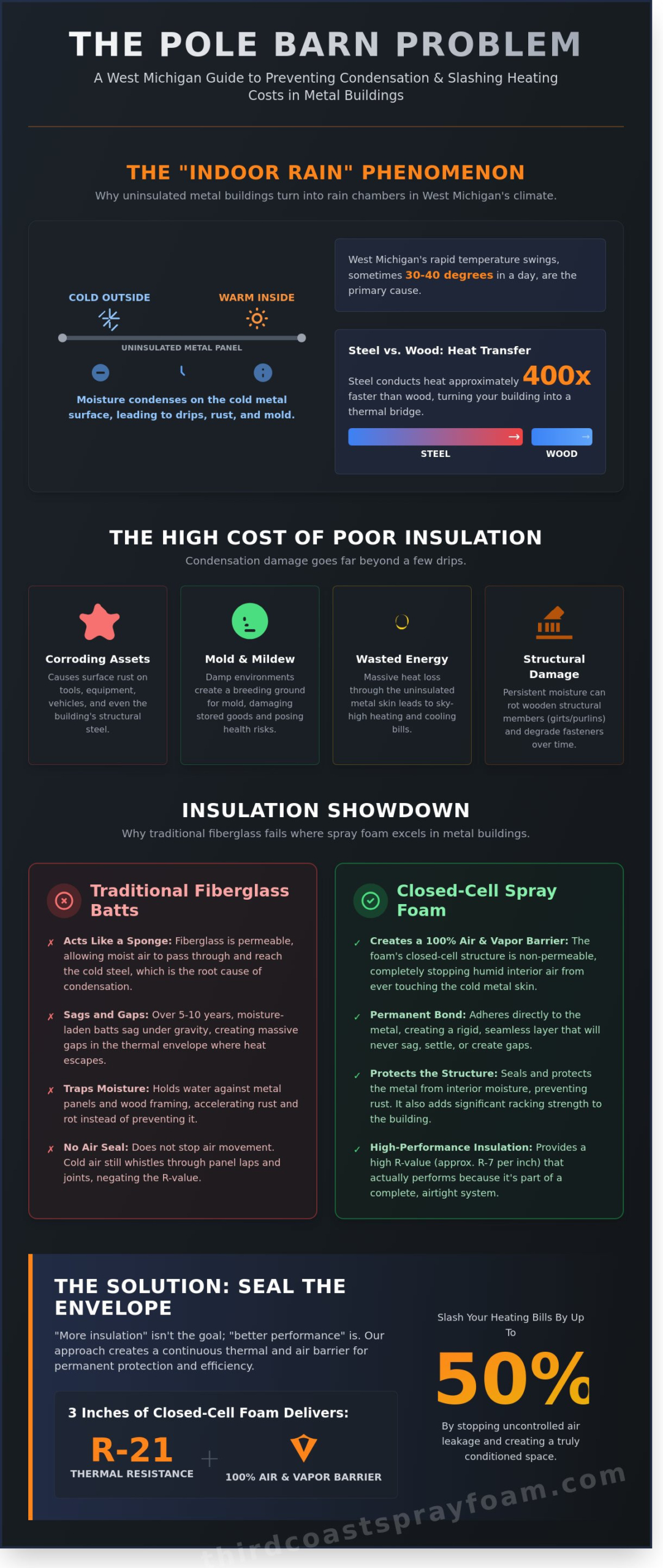
In West Michigan, where temperatures can swing 40 degrees in a single afternoon, understanding how to insulate a pole barn is about more than just comfort. It is about building survival. Unlike a traditional wood-frame house, a metal building acts as a massive thermal bridge. Steel conducts heat approximately 400 times faster than wood. This means your building’s exterior skin is constantly transferring the freezing Lake Michigan winds directly to your interior space. To stop this, we must create a continuous thermal and air barrier. This barrier separates the metal skin from the interior climate, preventing the two from ever interacting.

Effective insulation requires a deep dive into building insulation principles to ensure the structure remains dry and efficient. In Grand Rapids and surrounding areas, we operate within Climate Zone 5 and 6. These zones demand specific strategies because of our high humidity and extreme winter lows. While many owners focus solely on R-value, which measures thermal resistance, agricultural structures require a heavy emphasis on air-sealing. Without a proper air seal, even the thickest insulation will fail as cold air whistles through the laps and joints of the metal panels.

The “Indoor Rain” Phenomenon

Condensation in a metal building is often called “indoor rain” because it literally drips from the ceiling. When warm, moist air inside the barn touches the cold metal panels, it reaches its dew point instantly. This moisture leads to surface rust on structural steel and provides a breeding ground for mold in stored hay or drywall. In 2023, our team inspected several sites where expensive classic cars and tractors suffered thousands of dollars in corrosion damage due to simple ceiling drips. Our “Sealing the Envelope” philosophy at Third Coast Spray Foam addresses this by ensuring humid air never reaches the cold metal surface. We create a permanent, airtight bond that eliminates the gap where condensation forms.

Michigan Building Codes and R-Values

Michigan Building Codes for Kent and Ottawa Counties distinguish between unconditioned agricultural buildings and heated workspaces. For a heated pole barn, the 2015 Michigan Energy Code often points toward R-values like R-19 for walls and R-49 for ceilings. However, a high R-value is useless if it isn’t air-tight. In a pole barn, “more insulation” isn’t the goal; “better performance” is. Consider these local standards:

  • Agricultural Use: Often exempt from strict R-value mandates, but requires moisture control to prevent structural rot.
  • Residential/Commercial Use: Must meet specific Zone 5 requirements, often requiring a minimum of R-13 to R-20 in the walls.
  • The Air Seal Factor: 3 inches of closed-cell spray foam provides roughly R-21 while simultaneously creating a 100% air and vapor barrier.

When you are researching how to insulate a pole barn, remember that residential fiberglass batts often fail in these environments. They sag over time and trap moisture against the metal, which accelerates rust. Our team focuses on materials that stay in place for the life of the building. We prioritize the long-term health of your structure by using methods that treat the barn as a holistic system. This approach provides the peace of mind that your equipment, livestock, or workshop remains protected regardless of the Michigan weather.

Comparing Insulation Methods: Why Traditional Batts Fail in Metal Buildings

Choosing the right material is the most critical decision you’ll make when researching how to insulate a pole barn. While a lower price tag on a roll of fiberglass might look tempting, the physics of a metal building often turn that “saving” into a costly mistake. Metal is an excellent conductor of heat. In a typical 40×60 pole barn, temperature swings can cause the steel to sweat profusely. If your insulation can’t handle that moisture, it’s going to fail. We focus on results that last 30 years, not just 30 days.

The Problem with Fiberglass Batts

Fiberglass is a permeable material, which means it allows air and water vapor to pass right through it. In a damp barn environment, these batts act like a giant sponge. Gravity is a constant enemy here. Within 5 to 10 years, heavy, moisture-laden batts often sag away from the roofline. This creates massive gaps in your thermal envelope. This leads to “ghosting,” where dark patterns of condensation and dust form on your metal panels. Even worse, the Department of Energy on insulation notes that R-value decreases significantly when materials become compressed or wet. Trapped moisture against steel creates a breeding ground for mold, which can compromise the air quality of your entire shop. Common failures include:

  • Loss of R-value due to moisture compression
  • Sagging caused by gravity and water weight
  • Promotion of rust on the interior of metal panels
  • Air infiltration that bypasses the insulation entirely

Foam Board and DIY Kits

Rigid foam board is a step up, but it’s rarely a complete solution for a pole barn. A standard 2,400 square foot building has hundreds of linear feet of seams between the panels and the girts. If you don’t seal every single junction with specialized tape or canned foam, air will bypass the board entirely. We often see folks try to save money with small DIY spray foam canisters. These kits often lack the precise temperature control and 1,000 PSI pressure needed for a proper chemical bond. This “false economy” results in a 25% loss in thermal efficiency compared to professional applications. For a true thermal break, you need the high-pressure delivery systems our team uses to ensure the foam adheres permanently to the substrate without peeling or shrinking.

Closed-cell spray foam remains the gold standard because it serves three purposes at once. It provides a high R-value of approximately 7 per inch, acts as a total vapor barrier, and adds significant structural integrity. In fact, studies show closed-cell foam can increase the racking strength of your walls by up to 300%. It fills every nook and cranny, leaving no room for condensation to form against the metal. When you’re looking at long-term protection for your investment, the initial cost of spray foam is offset by the decades of energy savings and structural preservation it provides. It’s the only way to truly seal the envelope and stop the cycle of moisture damage for good. Our goal is to give you peace of mind that your barn will stay dry through every Michigan season. Knowing how to insulate a pole barn correctly means looking past the initial invoice and focusing on the total cost of ownership over the life of the building.

How to Insulate a Pole Barn in Grand Rapids, MI: The Professional Guide

Step-by-Step: The Professional Process for Insulating a Pole Barn

Success in any project depends on a rigorous, repeatable process. At Third Coast Spray Foam, we view every job as a technical challenge that requires a specific sequence of actions to achieve a 100% airtight seal. Learning how to insulate a pole barn isn’t just about owning a spray gun; it’s about understanding the chemistry of the substrate and the mechanics of the structure. We don’t take shortcuts because we know that a single gap can lead to moisture buildup and structural rot over time.

Preparing the Structure

We begin by cleaning the metal skin. Metal is non-porous, so any dust, oil, or moisture will prevent the foam from bonding. If the metal temperature is below 50 degrees Fahrenheit, we use specialized heaters to warm the building. Moisture is the biggest enemy of adhesion. We use industrial moisture meters to ensure the surface is dry before the first lift is applied. Our crews spend roughly 15% of the total project time masking electrical panels, plumbing runs, and windows. We cover the concrete floors with heavy-duty poly to prevent permanent overspray damage, ensuring your shop looks as clean as it did when we arrived.

The Application Technique

Applying closed-cell foam is a science. We apply the foam in lifts, which are layers typically 1 to 1.5 inches thick. This allows the heat from the chemical reaction to dissipate properly. During the expansion process, the foam can reach internal temperatures of 200 degrees Fahrenheit. Managing this heat is vital for the structural integrity of the insulation. If the foam is applied too quickly, it can lose its R-value or even pull away from the wall. For a detailed comparison of how these materials perform, you can reference the Department of Energy’s guide to insulation types.

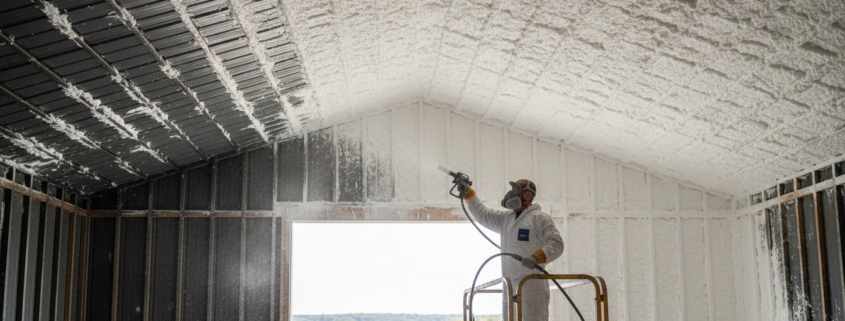
We pay special attention to the girts and purlins. These metal components act as thermal bridges, pulling cold air from the outside directly into your workspace. By wrapping these elements in 2 inches of closed-cell foam, we break that bridge. We also prioritize the rim joist area. This is the critical junction where the wall meets the foundation. Sealing this gap can reduce air leakage by 30% or more, creating a true thermal envelope that stops condensation in its tracks. This holistic approach is why professional application is superior to DIY kits. Understanding the mechanics of how to insulate a pole barn ensures you get the most out of your investment.

The final phase involves a rigorous inspection. Our technicians use infrared thermal imaging to scan for any voids or thin spots in the foam. We then trim any excess material around doors and windows to ensure a flush finish for your interior metal or wood liners. This attention to detail ensures your pole barn is durable, efficient, and comfortable for decades. We take pride in the “straight-shooter” approach, giving you a result that’s as solid as the building itself. Once the trimming is complete, the structure is ready for immediate use or the installation of finish materials.

Solving the Sweating Problem: Preventing Condensation and Mold

Metal buildings are notorious for “raining” inside, even when the sun is shining. This phenomenon occurs because of a simple scientific principle called the dew point. In the context of a metal barn, the dew point is the specific temperature where moisture in the air transforms into liquid water upon contact with the cold steel skin. Our team at Third Coast Spray Foam sees this constantly across West Michigan. When you learn how to insulate a pole barn correctly, you move this thermal bridge outside the structure. By applying closed-cell spray foam directly to the metal, the warm, humid interior air never reaches the cold exterior surface. This prevents the physical process of condensation from ever starting.

Eliminating the Dew Point

Visualizing this process is simple. Imagine a cold soda can on a humid July day; it sweats because the air is warmer than the surface of the aluminum. Spray foam acts like a high-performance koozie for your entire building. For West Michigan owners, the ceiling is the primary culprit, with 90% of condensation complaints originating from dripping roof panels. Two inches of closed-cell foam creates a seamless air seal that eliminates these cold spots entirely. It doesn’t just slow down the moisture; it stops the physical reaction by ensuring the interior surface stays at a consistent, controlled temperature.

Understanding how to insulate a pole barn involves more than just adding R-value. You must address the “breathability” myth. Many people believe a building needs to “breathe” through its walls, but in a metal structure, this is a recipe for disaster. Air-tight construction is the gold standard for durability. Traditional fiberglass batts allow air to pass through, which traps moisture against the metal. Closed-cell spray foam is its own vapor barrier once it reaches a thickness of 1.5 inches. Our 2-pound density foam provides a Class II vapor retarder rating, ensuring your structure stays dry for decades without the need for flimsy plastic sheeting.

Ventilation and Air Quality

Once you’ve sealed the envelope, you have total control over your environment. This is where “total home health” comes into play, especially if your barn is located near your primary residence or used as a workshop. A sealed building requires mechanical ventilation to maintain air quality and prevent stagnant conditions. We recommend systems like mini-splits or Heat Recovery Ventilators (HRVs) to swap stale air for fresh air without losing your thermal efficiency. This protects your investment from the “musty barn smell” caused by persistent humidity.

Proper air-sealing protects your tools, vehicles, and the structural integrity of the barn itself. In a 4,000-square-foot pole barn, a properly sized ventilation system can keep humidity levels below the 50% threshold where mold thrives. This creates a stable environment that feels as comfortable as your living room. By focusing on a holistic system rather than just a collection of walls, you ensure your barn remains a functional, healthy space for the long term.

Stop the rain inside your building by learning more about our pole barn insulation services today.

Choosing the Right Partner for Your Grand Rapids Pole Barn Project

Grand Rapids and Fruitport residents know that West Michigan weather is unforgiving. Our region experiences humidity levels that often climb above 80 percent in the summer, followed by sub-zero winters that turn metal buildings into refrigerators. When you are researching how to insulate a pole barn, local expertise is the most critical factor. A contractor from a different climate might not understand how Lake Michigan moisture interacts with steel siding. Our team understands the specific dew point shifts that occur in Kent and Ottawa counties. We design our insulation systems to handle these 40-degree temperature swings that happen in a single 24-hour period.

A professional quote should provide more than just a bottom-line price. You need to see the technical specifics to ensure your investment is protected. A high-quality proposal from Third Coast Spray Foam includes:

  • Specified Thickness: We typically recommend at least 2 inches of closed-cell foam for Michigan walls to hit the necessary thermal break.
  • Targeted R-Value: Our closed-cell foam delivers an R-value of 7 per inch, providing a total of R-14 or higher where it matters most.
  • Substrate Preparation: We include detailed cleaning of the metal panels to ensure a 100 percent bond, preventing the foam from delaminating over time.
  • Air Sealing: We focus on the gables, base plates, and corner trim where air leakage is most prevalent.

The Third Coast Difference

Our team takes a no-nonsense approach to every project. We don’t use “flash and batt” techniques or cheap fiberglass that eventually sags and traps moisture against your steel. Instead, we use professional-grade closed-cell spray foam. This material is dense and rigid, adding up to 300 percent more racking strength to your pole barn structure. This structural reinforcement is vital for buildings that face heavy Michigan snow loads and high wind gusts. We focus on “Sealing the Envelope,” a holistic method that treats the building as a single, airtight system. If you are ready to stop the drips for good, you can Get a Pole Barn Insulation Quote from our local specialists.

Investing in Your Property

Insulating your barn is not just about comfort; it is a strategic financial move. Converting a cold storage shed into a conditioned, usable space can increase your property’s resale value by an average of 12 percent based on recent West Michigan real estate trends. You are upgrading the building from a simple shell to a high-performance workshop or hobby space. This is a permanent, 25-year solution that eliminates the risk of rust and wood rot caused by internal “rain.”

Property owners who seal their building envelope often see an immediate 40 percent reduction in heating costs during the winter months. This efficiency pays for the installation over time while protecting your vehicles, tools, and equipment from moisture damage. You deserve the peace of mind that comes from a dry, stable environment. Don’t let your barn sweat through another Michigan winter. Contact us to secure your building for the long haul.

Protect Your Investment with Professional West Michigan Insulation

Your pole barn is more than just a metal shell; it’s a significant investment that deserves protection from West Michigan’s unpredictable 4-season climate. Traditional fiberglass batts often fail in these structures because they trap moisture against metal panels, leading to rust and mold within 5 to 10 years. By prioritizing air sealing and a complete thermal envelope, you eliminate the sweating issues that plague standard builds. Learning how to insulate a pole barn correctly means choosing high-performance spray foam that stops 99% of air infiltration.

Based in Fruitport, Michigan, our team specializes in the “total home health” approach to ensure your building remains dry and energy-efficient year-round. We apply technical expertise to every project, treating your shop or garage with the same precision as a primary residence. Don’t settle for a drafty space that costs a fortune to heat during a Grand Rapids winter. When selecting a professional for your project, it’s essential to understand the key factors that separate qualified specialists from general contractors. Our comprehensive guide on hiring an insulation contractor in Grand Rapids provides the detailed criteria you need to evaluate expertise, licensing, and long-term performance guarantees.

Request Your Free Pole Barn Insulation Estimate Today

Take the first step toward a more comfortable, durable building that stands up to everything the Lake Michigan shoreline throws its way.

Frequently Asked Questions

Is spray foam the best way to insulate a pole barn in Michigan?

Yes, spray foam is the most effective solution for Michigan pole barns because it creates a seamless air seal that eliminates condensation. When considering how to insulate a pole barn in our region, you must account for 90% humidity in the summer and sub-zero winters. At Third Coast, we see temperatures swing from -10 to 95 degrees Fahrenheit annually. Spray foam handles these extremes by bonding directly to the metal, preventing moisture-laden air from hitting cold steel.

How much does it cost to insulate a pole barn in Grand Rapids?

Most pole barn insulation projects in Grand Rapids range from $1.50 to $4.50 per square foot of sprayed surface area. This price varies based on whether you choose open-cell or closed-cell foam and the specific depth required for your building’s use. A standard 30×40 pole barn with 12-foot walls typically requires an investment between $4,000 and $9,000. While the upfront cost is higher than fiberglass, the 15% to 50% reduction in monthly energy bills helps the system pay for itself.

Do I need a vapor barrier if I use spray foam in my pole barn?

You don’t need a separate vapor barrier when you install at least 2 inches of closed-cell spray foam. This thickness naturally acts as a Class II vapor retarder, preventing moisture from migrating through the walls. Our team focuses on sealing the envelope completely to ensure no moisture reaches the metal panels. This single-step process saves you the $0.50 per square foot cost of installing plastic sheeting and prevents the common sweating issues found in traditional builds.

Can I insulate my pole barn myself with a DIY kit?

You can use a DIY kit, but these portable tanks often cost 30% more per board foot than a professional application. Maintaining a consistent 1:1 chemical ratio is difficult without a heated, high-pressure rig, leading to a 15% failure rate in DIY applications. If the chemicals don’t mix perfectly, the foam can pull away from the metal or produce lingering odors. We recommend professional installation to ensure a permanent bond and a lifetime warranty on the product’s performance.

Will insulating my pole barn stop the ceiling from dripping?

Spray foam stops ceiling drips immediately by preventing warm, moist air from contacting the cold metal roof. This process eliminates the dew point, which is the exact temperature where water vapor turns into liquid. In a typical uninsulated Michigan barn, you’ll see hundreds of drips per hour during a spring thaw. By applying foam directly to the underside of the roof deck, we ensure the interior surface stays warm, keeping your equipment and floor 100% dry.

How thick should spray foam be in a Michigan pole barn?

For most Michigan pole barns, we recommend 2 inches of closed-cell spray foam on the walls and roof. This thickness provides an R-value of approximately 13 to 14 while creating a structural bond and a moisture barrier. If you’re using open-cell foam, you’ll need 3 to 5 inches to achieve similar thermal performance. This specific depth is designed to handle the 40-degree temperature drops common in Grand Rapids winters, keeping your heating system from running constantly.

What happens if I insulate my pole barn with fiberglass batts?

Using fiberglass batts often leads to trapped moisture and metal rust within 3 to 5 years of installation. Fiberglass is porous, so it allows humid air to pass through and condense against the cold metal skin. Once the insulation gets wet, it loses 40% of its R-value and begins to sag under the weight of the water. This creates a breeding ground for mold and accelerates the corrosion of your pole barn’s structural steel or wood girts.

Does pole barn insulation help in the summer heat?

Learning how to insulate a pole barn correctly helps you stay cool because spray foam blocks up to 95% of radiant heat transfer. During a 90-degree Michigan summer day, an uninsulated metal building can reach internal temperatures of 110 degrees. Spray foam acts as a thermal break that stops the sun’s energy from radiating through the metal panels. This keeps your shop or storage space 15 to 20 degrees cooler, allowing you to work comfortably without an expensive cooling system.

Disclaimer

Information provided is for general educational purposes. Individual needs and circumstances vary. Speak to an experienced professional before relying on the information given here.