
Imagine waking up on a Tuesday morning in January to find a 2 foot ice dam creeping up your shingles while your furnace runs non-stop. For many Michigan homeowners, this isn’t just a bad dream; it’s a reality that costs an average of $450 in extra heating expenses every winter due to inadequate home insulation. You shouldn’t have to wear three layers of wool just to walk across your kitchen floor or worry about that musty, humid smell taking over your living room every July.
Michigan weather is relentless, and we all know that a house that can’t hold its temperature is more than just uncomfortable; it’s a drain on your bank account and your peace of mind. Our team at Third Coast Spray Foam wants to help you take control of your environment. We promise to show you the exact steps needed to secure your thermal envelope, which can lead to a noticeable reduction in your annual energy costs while preventing long term structural moisture damage.
This 2026 checklist provides a clear, professional roadmap to sealing the envelope of your property, from the attic rafters down to the crawl space floor.
Key Takeaways
-
Learn how to protect your home’s thermal envelope against West Michigan’s unique Lake Effect humidity and extreme Climate Zone 5 temperatures.
-
Master a 7-point home insulation audit to identify hidden air leaks in your rim joists and ensure your attic meets the latest 2026 Michigan building codes.
-
Discover why traditional fiberglass batts often fail in high-performance applications and how modern alternatives provide a permanent seal for total home health.
-
Protect your investment by learning how to spot "Cowboy" contractors and avoid the common pitfalls of improperly mixed spray foam.
-
Maximize your project ROI by navigating the 2026 federal tax credits and local utility rebates available from Consumers Energy and DTE.
Table of Contents
-
Why Home Insulation in Grand Rapids Requires a Specific Strategy
-
Evaluating Insulation Types: What Actually Works in West Michigan?
-
Hiring a Grand Rapids Insulation Contractor: Avoiding ‘Solar Cowboy’ Mistakes
-
Maximizing Your ROI: Rebates, Tax Credits, and Long-Term Savings
Why Home Insulation in West Michigan Requires a Specific Strategy
Grand Rapids, Kalamazoo, Lansing, and all of West Michigan sit firmly within Michigan’s Climate Zone 5. This is a region defined by its aggressive seasonal shifts and unique moisture patterns. For local homeowners, your thermal envelope is the most critical component of your house. It is the physical separator between the conditioned air you pay to heat and the unforgiving West Michigan elements. Because Lake Michigan remains relatively warm in early winter, the resulting lake effect creates high local humidity that can compromise home insulation if it isn’t specifically designed for this environment. Traditional building insulation materials often struggle here because they lack the necessary air-sealing properties to combat our specific pressure changes.
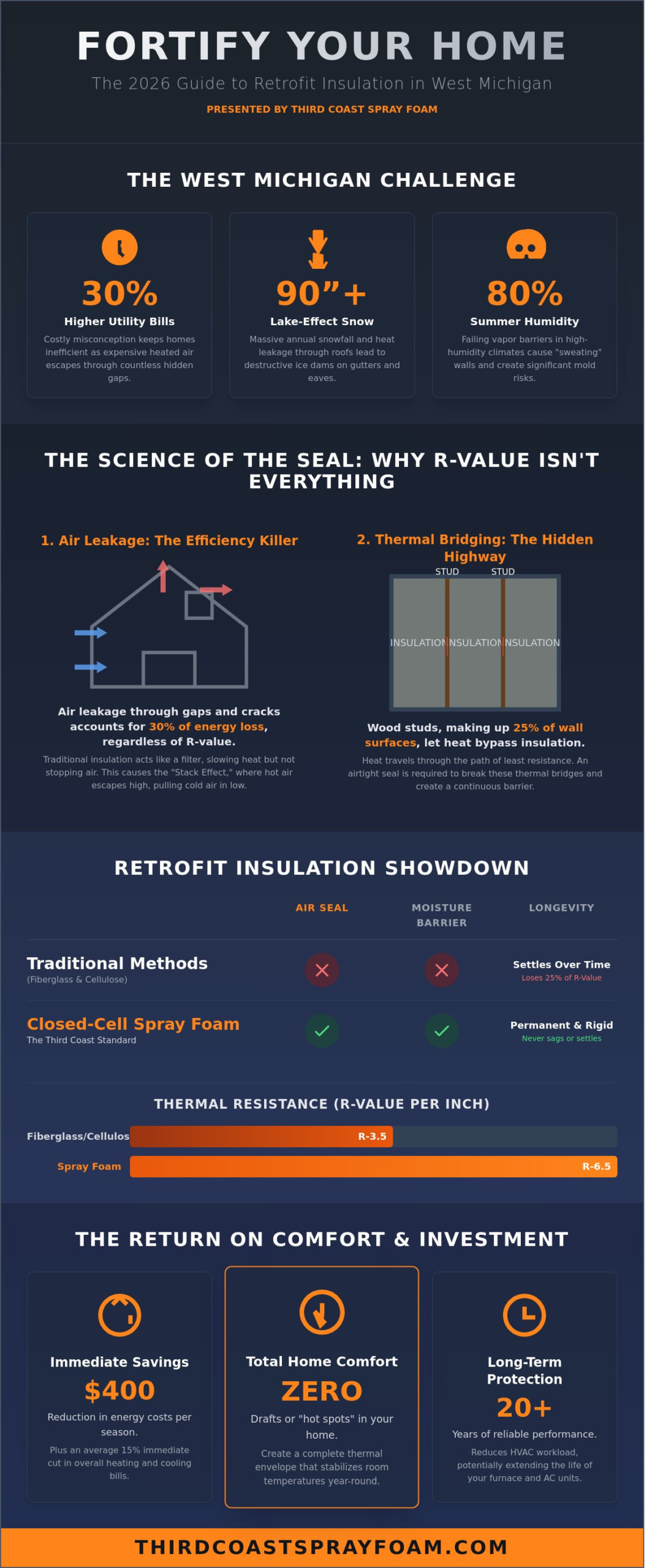
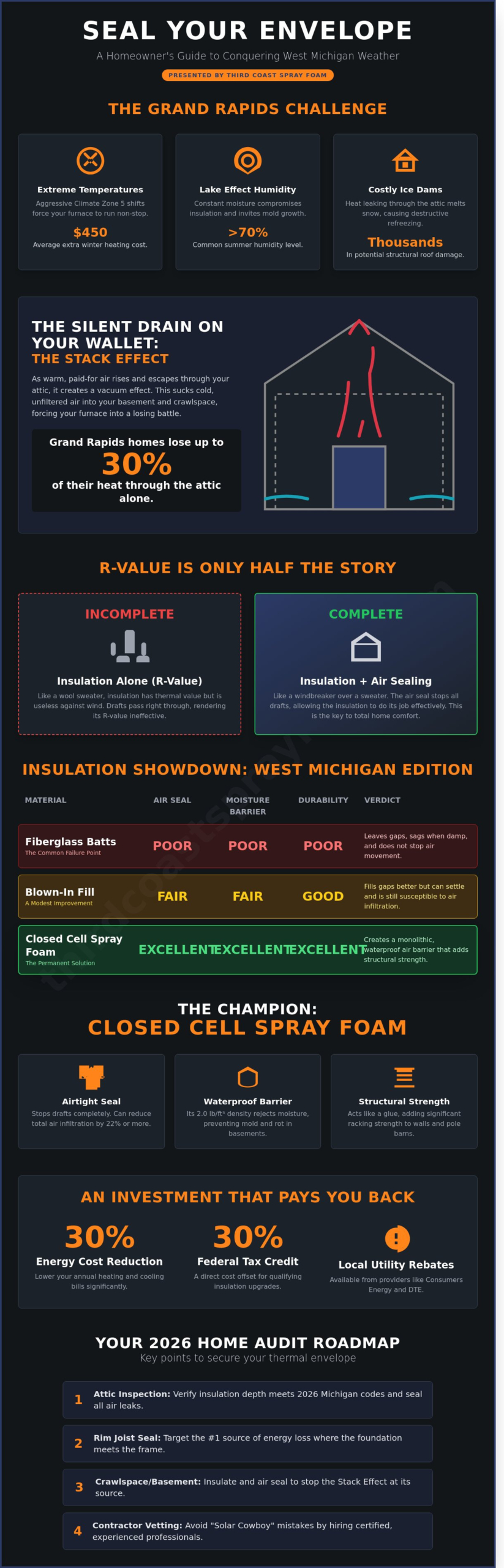
The "stack effect" is a primary driver of energy loss in local homes. As warm air rises, it escapes through the top of your house, creating a vacuum that pulls cold air in through the basement and crawl space. Statistics show that Grand Rapids homes typically lose 30% of their heat through the attic alone due to this pressure cycle. Relying on generic R-value recommendations from big-box stores or uneducated contractors can lead to disappointing results. These standard ratings don’t account for the high-velocity winds coming off the lake, which can push cold air straight through loose-fill materials, effectively neutralizing their thermal resistance.
Michigan’s Extreme Weather Cycles
Our region’s freeze-thaw cycle is particularly brutal on fiberglass batts. When temperatures fluctuate between 20 and 40 degrees in a single week, moisture trapped in the attic can freeze and expand, eventually causing traditional materials to sag and lose their loft. In Ottawa County, Allegan County, and Muskegon County, summer humidity levels often exceed 70%, making vapor barriers a critical part of the conversation to prevent mold growth. Without a robust strategy, this moisture leads to the dreaded Michigan ice damming. Heat leaking into your gutters melts snow, which then refreezes at the eaves, causing thousands of dollars in structural damage to your roofline.
The Difference Between R-Value and Air Sealing
A high R-value is a measurement of heat resistance, but it means very little if cold air is blowing directly through the material. Air infiltration is the silent killer of West Michigan home comfort, as it forces your furnace to run constantly to replace lost air. Our team views a home as a holistic system where thermal resistance and air tightness must work together. Air sealing is the windbreaker for your home’s sweater. By stopping the movement of air, we ensure that your home insulation can actually do the job it was designed to do, keeping your family warm and your energy bills stable regardless of the forecast.
Evaluating Insulation Types: What Actually Works in West Michigan?
Choosing the right home insulation determines whether your Grand Rapids bungalow, Kalamazoo Victorian, or Lansing ranch house stays comfortable or becomes an expensive wind tunnel during a polar vortex. Most local homes rely on three primary materials: spray foam, blown-in, and fiberglass batts. Our team at Third Coast explicitly avoids fiberglass batts for high-performance projects. Batts leave gaps, sag over a 10-year period, and fail to stop air movement. In a climate where temperatures swing from -10°F to 95°F, you need an airtight seal, not a pink filter that lets drafts pass through its fibers. We focus on solutions that create a permanent thermal boundary.
The Power of Closed Cell Spray Foam
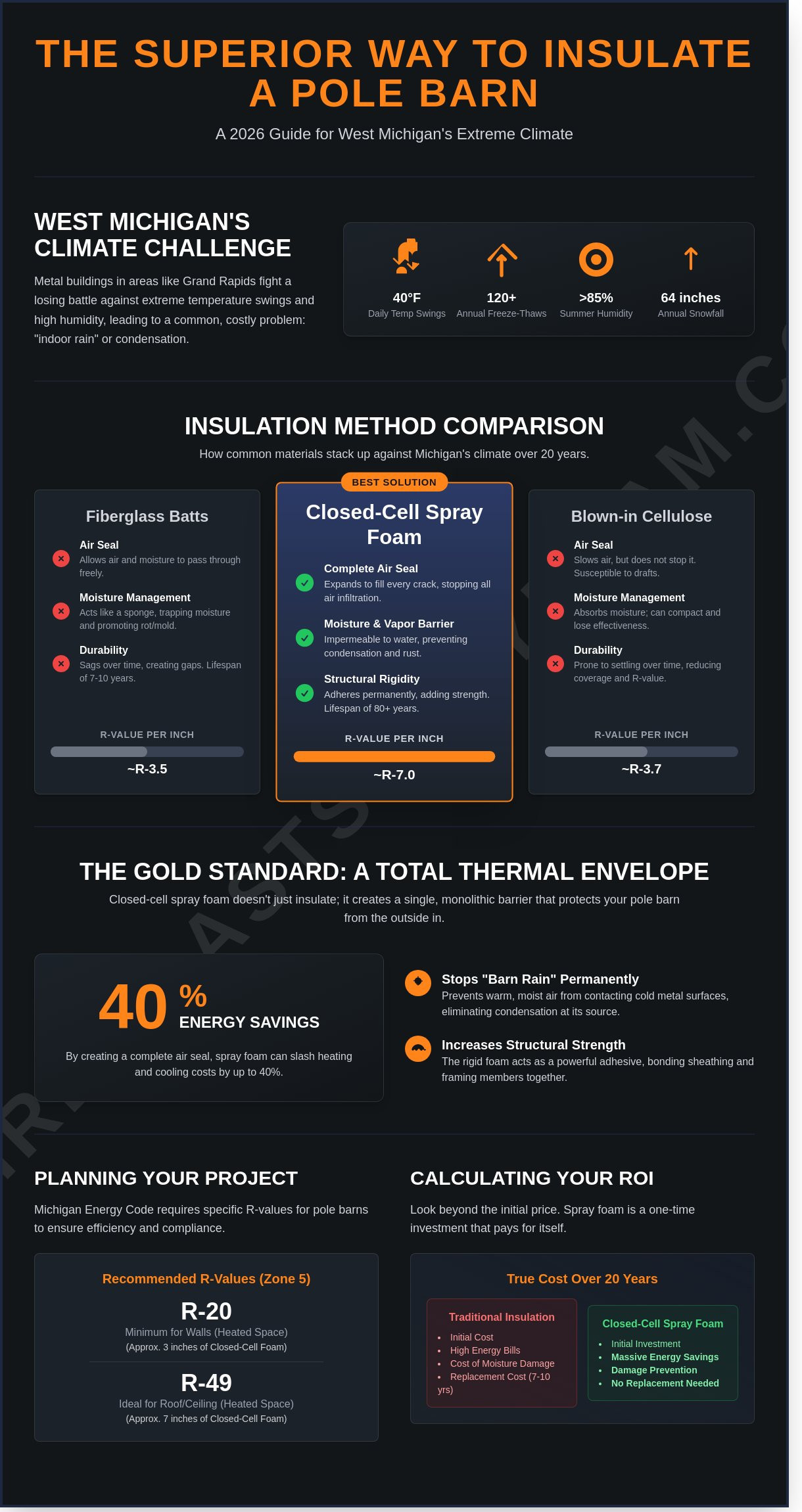
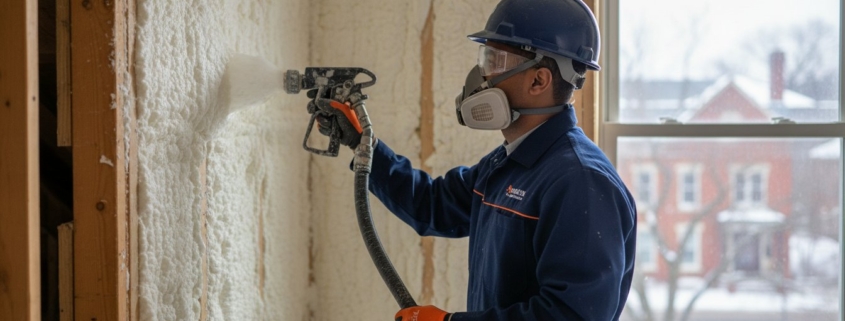
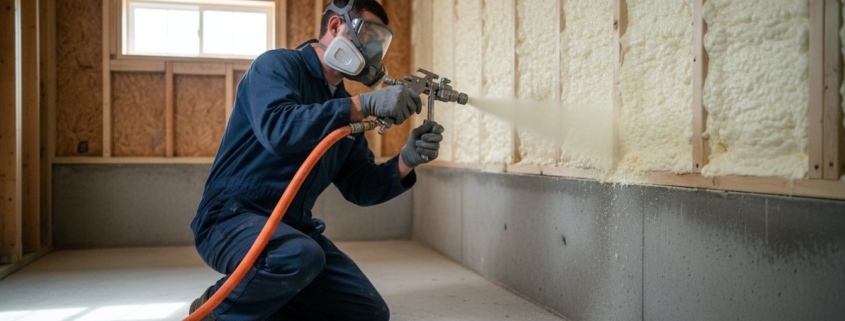
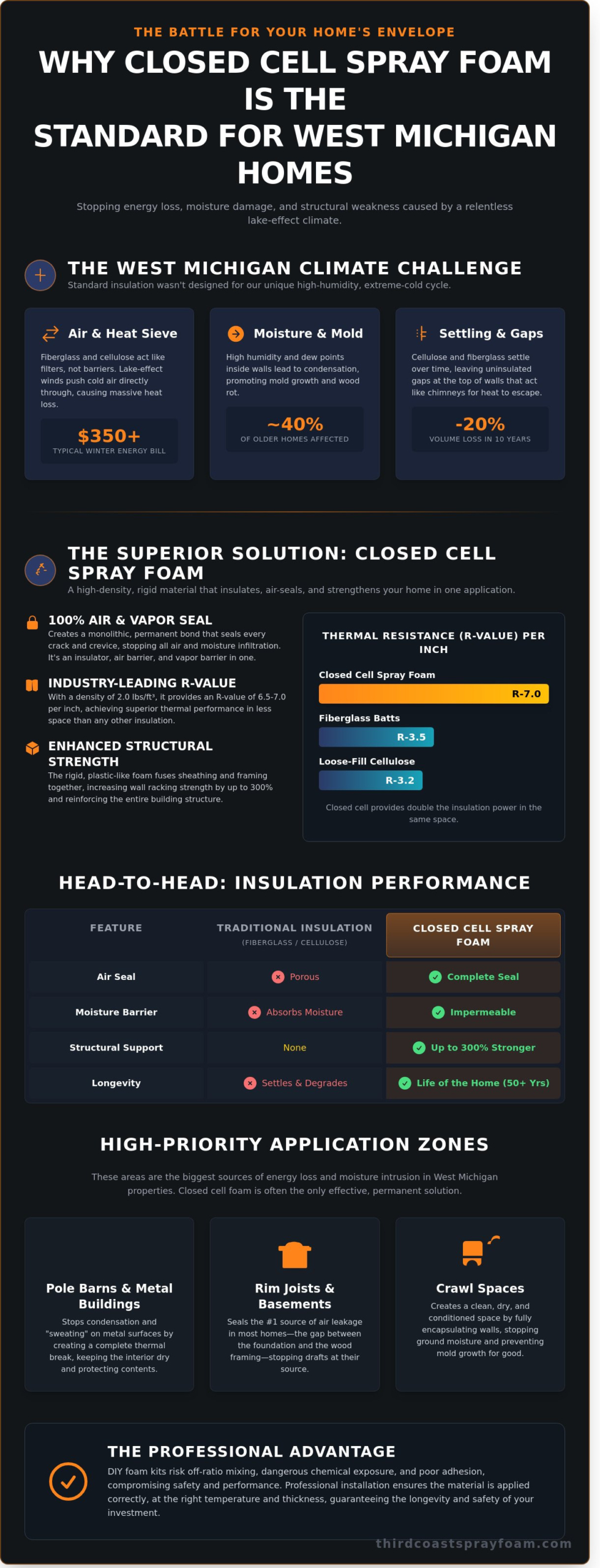
Closed cell foam is a thermal and structural powerhouse. Unlike open cell alternatives, it has a density of 2.0 pounds per cubic foot, making it completely waterproof and rigid. This moisture-rejecting property is vital in West Michigan, where spring thaws and high humidity often lead to basement dampness. When we apply it to the rim joist, the area where your home’s frame meets the foundation, it seals the #1 source of energy loss in the building. This single upgrade can reduce air infiltration by 22% or more.
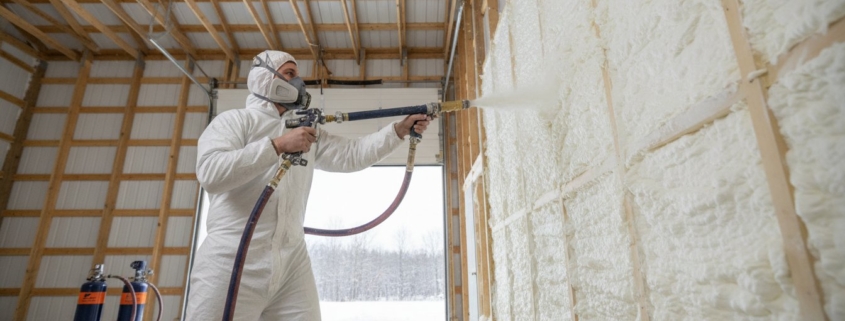
Beyond thermal protection, closed cell foam adds structural racking strength to older builds and pole barns, essentially gluing the building components together. Because it qualifies for Federal tax credits for home insulation, the 30% cost offset makes this premium solution a pragmatic financial move for long-term homeowners. It creates a barrier that pests cannot chew through and mold cannot grow on, ensuring the health of your home remains intact for decades.
Blown-In Insulation: The Attic Specialist
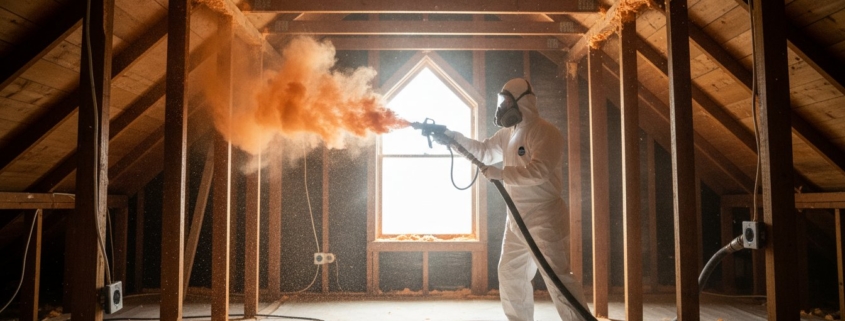
We recommend blown in insulation for Grand Rapids attics specifically for attic floor "top-offs" in older homes where the budget doesn’t allow for a full foam encapsulation. Cellulose is our preferred choice over fiberglass because its higher density blocks air more effectively. However, adding new material over old, compressed insulation is a mistake. We perform professional insulation removal to eliminate decades of allergens, dust, and rodent waste before installing fresh product.
DIY kits from big-box stores often lead to disaster for local homeowners. Amateur installers frequently block their soffit vents, which traps heat and moisture in the attic. This mistake leads to roof rot and mold growth within 24 months. Professional installation ensures your attic breathes correctly while keeping the heat in your living space. If you’re unsure which material fits your specific floor plan, schedule a free attic inspection to see the data for your own home.
The 7-Point West Michigan Home Insulation Audit Checklist
Performing a DIY audit helps you understand why your energy bills spiked last January. Start your inspection in the basement. Look closely at the rim joists where the house frame meets the foundation. If you see cobwebs, you have air leaks. Spiders specifically spin webs in these areas because they can catch insects riding the incoming drafts. These gaps represent a major break in your thermal envelope.
Next, head to the attic with a measuring tape. The 2026 Michigan building code suggests moving toward an R-60 value for optimal efficiency. This requires roughly 19 to 20 inches of blown-in cellulose or specialized foam applications. Most Grand Rapids homes built before 2015 only have about 9 to 11 inches. You can cross-reference your findings with this U.S. Department of Energy guide to insulation to see how your current R-value stacks up against modern standards.
The third step involves identifying "zone variances" in your floor plan. If a bedroom above the garage is 7 degrees colder than the rest of the house, the floor insulation has failed. Fourth, inspect your crawl space for silverfish or dark spotting on the wood. These pests thrive in the damp environments created by poor moisture barriers. Finally, test your outlets. On a windy day, hold a lit incense stick or a thin tissue near an exterior wall outlet. If the smoke or paper moves, your home insulation isn’t stopping air infiltration effectively.
Visual Cues of Insulation Failure
Look for "dirty" fiberglass batts. Insulation isn’t designed to be a filter. If your pink or yellow batts have turned grey or black in specific spots, it’s a sign that air is whistling through the material. You should also look for sagging material between floor joists. When fiberglass sags, it creates an air gap that renders the R-value useless. During a 10-degree January freeze in Muskegon, try the touch test. If your interior walls feel significantly colder than an interior partition wall, your home insulation is likely settled or missing in those cavities.
The Crawl Space & Basement Focus
Michigan’s climate requires a shift away from traditional methods. Stuffing "pink stuff" into crawl space ceilings is a dated practice that often leads to moisture traps and wood rot. Modern West Michigan standards prioritize encapsulation. This process seals the entire space from the earth’s moisture. Check for standing water or damp soil. These conditions can increase your home’s humidity by 20 percent and force your HVAC system to work harder. A healthy rim joist must be bone-dry, free of condensation, and sealed with a material that won’t shrink over time.
Hiring a Grand Rapids Insulation Contractor: Avoiding ‘Cowboy’ Mistakes
West Michigan sees its fair share of "weekend warriors" and fly-by-night contractors who disappear as soon as the check clears. In the state of Michigan, any reputable contractor must hold a Residential Builder or Maintenance and Alteration license through the Department of Licensing and Regulatory Affairs (LARA). Verify their insurance coverage specifically for pollution or "over-spray" liability; standard general liability often excludes the specific risks associated with spray foam.
Choosing a contractor based solely on a low-ball quote is a recipe for disaster.
Proper home insulation relies on a precise 1:1 chemical ratio. If a technician rushes or uses uncalibrated equipment, the foam fails to cure correctly. This leads to permanent off-gassing and a lingering "fishy" odor that can decrease a home’s value by 15% or more. Our team at Third Coast Spray Foam sees these failures often. We fix the mess left behind by crews who didn’t understand the chemistry of the product. If you own a pole barn or agricultural building in Ottawa County, Muskegon County, Allegan County, or Kent County, ask for specific examples of metal-sided projects. These structures have unique condensation points that require a different approach than a standard attic.
Key Questions for Your Quote
Demand transparency before signing any contract. Ask if the crew provides full insulation removal or if they plan to install over old, contaminated material. Blowing fresh material over 30 year old cellulose traps moisture and allergens against your attic floor. Ensure they include high-quality baffles in their quote to maintain attic ventilation. Finally, ask for their specific process for sealing box sills. This area in your basement accounts for up to 20% of total air leakage in older homes.
Red Flags to Watch For
-
R-Value Obsession: If a contractor only talks about R-value and ignores air sealing, they don’t understand building science. A high R-value is useless if wind blows right through the material.
-
Missing Local Proof: Refusal to provide at least three references within Kent County, Ottawa County, Allegan County, or Muskegon County is a sign they haven’t built a local reputation.
-
Extreme Low-Bids: Quotes that are 25% lower than the market average usually indicate the use of "seconds" or expired chemical drums.
A successful home insulation project is a 20 year investment in your property’s structural health. We treat every home as a holistic system, ensuring the thermal envelope is airtight and durable. You deserve a partner who values precision over speed.
Contact Third Coast Spray Foam for a no-nonsense inspection of your Grand Rapids home.
Maximizing Your ROI: Rebates, Tax Credits, and Long-Term Savings
Upgrading your home insulation isn’t just about comfort; it’s a strategic financial move for your household. In 2026, the Energy Efficient Home Improvement Credit remains a cornerstone for West Michigan renovation projects. This federal incentive provides a tax credit of 30% for weatherization costs, allowing you to claim up to $1,200 every year. When you combine this with a 15% to 20% reduction in monthly heating and cooling bills, the initial investment starts paying for itself immediately.
While spray foam has a higher upfront cost than fiberglass, the payback period is significantly shorter when you account for total air sealing. Traditional methods often require replacement or "topping off" every 10 to 15 years. Spray foam is a permanent solution. For a standard 2,000-square-foot home in Grand Rapids, the ROI typically hits the break-even point within 5 to 7 years. You’re not just buying material; you’re buying a lifetime of lower overhead.
Navigating Michigan Energy Rebates
Local providers like Consumers Energy and DTE Energy offer tiered rebates that can put hundreds of dollars back in your pocket. To qualify, you generally need to follow a specific path. First, schedule a professional home energy audit to identify thermal leak points. Second, hire a licensed contractor, as DIY projects rarely qualify for the highest "Home Performance" payouts. Third, submit your documentation within 30 days of installation. The Energy Efficient Home Improvement Credit serves as your primary funding source, working alongside these local incentives to lower your net cost.
The Total Home Health Solution
Our team views your property as a holistic system. A "Sealed Envelope" does more than lower bills; it protects your mechanical equipment. By reducing the load on your HVAC system, you can extend the life of your furnace or AC by 3 to 5 years. Crawl space encapsulation is another critical piece. It prevents moisture buildup, which saves homeowners an average of $3,000 to $5,000 in potential mold remediation or foundation repairs down the line. Beyond the monthly savings, energy-efficient homes in West Michigan often see a 7% increase in resale value according to recent real estate trends.
Take the next step toward a more efficient home.
Contact Third Coast Spray Foam for a professional West Michigan home insulation audit today.
Secure Your Grand Rapids Home for the 2026 Season
Managing the lake-effect winters of West Michigan requires more than just standard materials. By following our 7-point audit and taking advantage of 2026 federal tax credits, you can reduce your annual energy waste by up to 15% through precision air sealing. High-quality home insulation acts as a permanent shield for your property, protecting your thermal envelope from the humid summers and freezing winters that define Kent County living.
Since 2013, our family-owned team has provided professional thermal solutions across Muskegon, Ottawa, Allegan, Eaton, and Kent Counties. We aren’t just generalists; we are dedicated experts in complex Michigan new home, remodel, and pole barn projects and critical rim joist sealing. We prioritize your long-term comfort and financial security over quick fixes. You deserve a home that stays quiet and temperature-controlled throughout every season.
Ready to lock in your energy savings? Get Your Free Insulation Estimate in Fruitport, MI today. Our crew is ready to help you build a more efficient future for your family.
Frequently Asked Questions
Is spray foam insulation worth the extra cost for Michigan homes?
Yes, if you value your family’s health, comfort, and long-term savings. Spray foam is worth the investment because it addresses both heat loss and air infiltration in one step. While the initial cost is noticeably higher than fiberglass, it reduces monthly energy bills in West Michigan. We consider it a permanent solution for our local climate. It seals the building envelope completely, preventing the drafts that lead to high heating costs during our 20-degree January nights.
How much home insulation do I need for the West Michigan climate?
Homeowners should aim for an R-49 value in their attics to meet 2026 energy standards. This typically requires 16 inches of blown-in material or 7 inches of high-performance spray foam. Proper home insulation levels ensure your furnace doesn’t overwork when temperatures drop below zero. Our team follows the Michigan Energy Code to ensure your home meets all local efficiency requirements and remains comfortable year-round.
Can I stay in my home while spray foam is being installed?
You must vacate your home for during and after the application of professional spray foam. This time allows the foam to fully cure and become inert. It ensures all off-gassing is cleared through our high-capacity ventilation fans. Our team sets strict safety protocols to protect your family’s health. You can typically return to a more comfortable, quieter home exactly one day after the installation is finished; we prioritize your safety above all else.
What happens if I don’t remove old attic insulation before adding new?
Leaving old, degraded material in place creates a breeding ground for mold and prevents a proper air seal. If you layer new material over damp or rodent-infested fiberglass, you trap contaminants against your ceiling joists. We’ve seen homeowners lose 30% of their expected efficiency because old, compressed batts blocked the new home insulation from reaching every gap. Starting with a clean and air sealed attic floor is the only way to guarantee a healthy home.
How do I stop condensation on my pole barn ceiling?
You stop pole barn condensation by applying 2 inches of closed-cell spray foam directly to the underside of the metal roof. This creates a vapor retarder that prevents warm, moist air from hitting the cold steel. This method eliminates 95% of ceiling "sweat" and protects your property from rust. It’s the most effective way to turn a damp storage shed into a dry, usable workspace that stays comfortable during a Michigan winter.
What is the best insulation for a crawl space in West Michigan?
Closed-cell spray foam is the superior choice for West Michigan crawl spaces because it’s waterproof and won’t sag. Our team applies it to the rim joists and foundation walls to seal out the damp soil. This setup keeps your floors at a steady 68 degrees and prevents pipes from freezing during a polar vortex. It’s a permanent fix that maintains stable humidity levels year-round and improves your total home health.
Does the 2026 tax credit apply to spray foam insulation?
Yes, the 2026 federal tax credit allows you to claim 30% of your project costs, up to a $1,200 annual limit. This incentive is part of the Inflation Reduction Act’s long-term extension for energy-efficient upgrades. We provide the necessary manufacturer certificates and itemized receipts you’ll need to file with your 2026 tax return. It’s a straightforward way to reduce the net cost of upgrading your home’s thermal envelope while securing long-term financial well-being.
How long does professional spray foam insulation last?
Professional spray foam is a lifetime product that remains effective for 80 to 100 years. Unlike cellulose or fiberglass, whose useful life is about 20 years, it won’t settle, sag, or lose its R-value over time. It stays bonded to your wall studs and roof deck indefinitely; it maintains the same airtight seal it had on day one. When you choose this material, you’re making a one-time investment that won’t ever need to be topped off, replaced, or adjusted.
Disclaimer
Information provided is for general educational purposes. Individual needs and circumstances vary. Speak to an experienced professional before relying on the information given here.