

Tag Archive for: Condensation Control

Best Way to Insulate a Pole Barn in Grand Rapids, Michigan (2026 Guide)

Last January, when the temperature in Grand Rapids plummeted to -5 degrees, many West Michigan pole barn owners walked into their shops only to find “indoor rain” dripping onto $50,000 worth of tools and vehicles. It’s a common sight in our region, where metal buildings struggle against extreme temperature swings and high humidity. If you’re tired of seeing your breath inside your own workspace, you’ve likely realized that the best way to insulate a pole barn requires more than just stuffing fiberglass into the wall cavities. You need a solution that addresses the physics of air movement and moisture control.

Our team at Third Coast Spray Foam knows that you value your equipment and your hard-earned money. You want a building that stays dry and comfortable without a massive monthly heating bill. In this 2026 guide, we’ll explain how professional air sealing can slash your energy costs by up to 40 percent while providing permanent structural protection. We’ll walk you through the mechanical process of creating a total thermal envelope so you can finally enjoy a climate-controlled space that stands up to the toughest Michigan winters.

Key Takeaways

  • Learn why West Michigan’s unique climate requires a specific approach to prevent moisture buildup and condensation in metal buildings.
  • Discover why closed-cell spray foam is the best way to insulate a pole barn to create a permanent air seal and a superior thermal envelope.
  • Compare the performance and hidden long-term costs of fiberglass, cellulose, and spray foam to ensure your investment lasts for decades.
  • Find out how to calculate your true return on investment by analyzing initial project costs against long-term energy savings.
  • Identify the ideal R-values for both heated and unheated barns to maintain year-round comfort in the Grand Rapids area.

The Pole Barn Insulation Challenge in West Michigan’s Climate

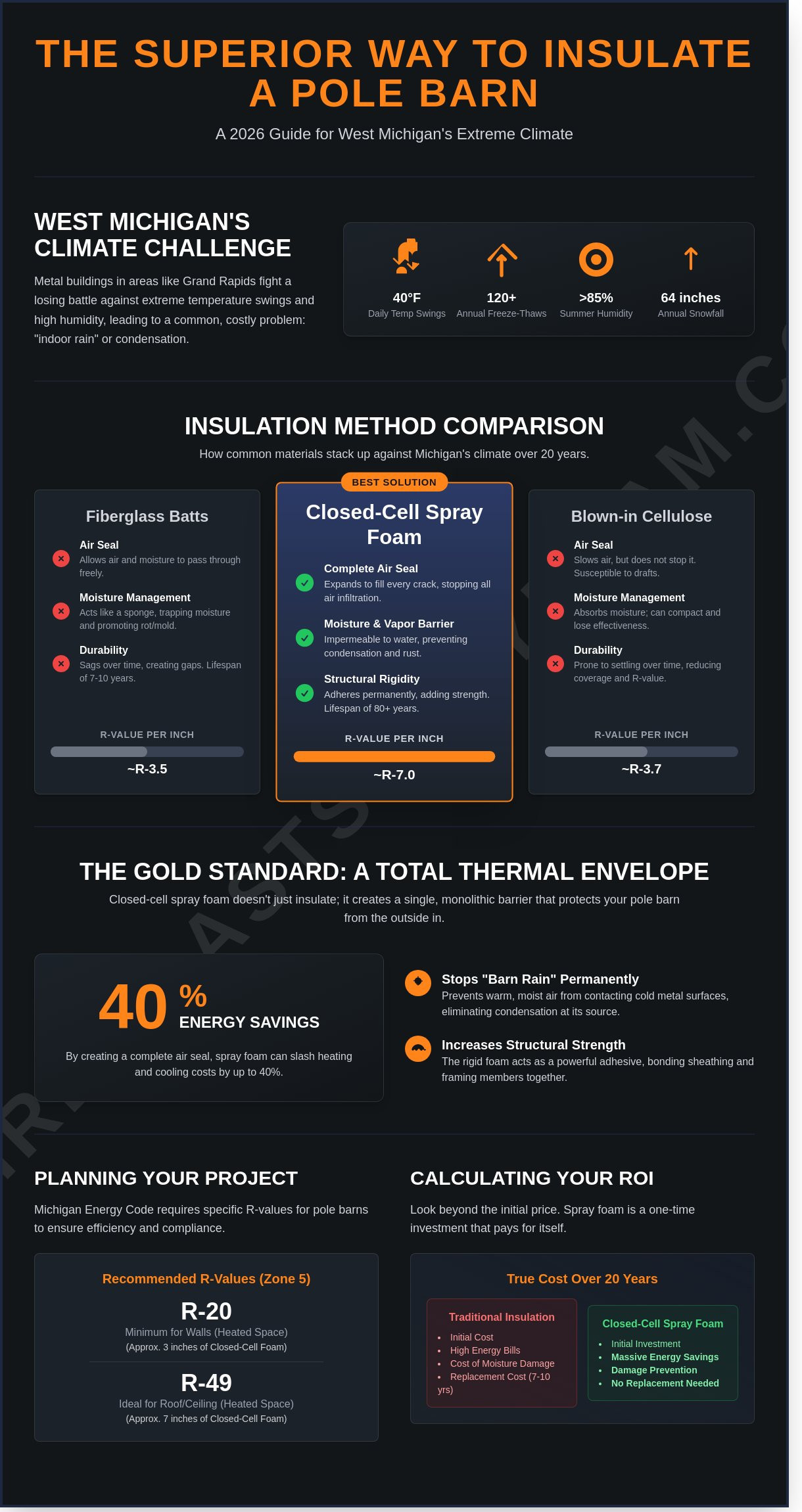
Owning a pole barn in Grand Rapids means fighting a constant battle against the elements. Metal buildings are efficient to build, but they’re notorious for thermal instability. Determining the best way to insulate a pole barn requires a deep understanding of Michigan’s Zone 5 climate requirements. In West Michigan, we deal with extreme temperature swings that often reach 40 degrees in a single day. This volatility forces owners to prioritize air sealing and moisture management alongside high R-values. Without a proper system, your investment becomes a giant refrigerator in January and a sauna in July.

One of the most common complaints our team hears from Kent County residents is the phenomenon of “barn rain.” This happens when moisture-laden air from Lake Michigan enters the building and hits the cold metal roof. It condenses instantly. You’ll see drips falling from the ceiling even when it’s sunny outside. Proper building insulation stops this by preventing warm, humid air from ever touching those cold steel surfaces. We’ve found that the best way to insulate a pole barn in this region involves creating a seamless barrier that addresses both heat transfer and vapor movement.

Building codes in Ottawa and Kent Counties have become significantly stricter as of 2024. For post-frame structures, the Michigan Uniform Energy Code now often requires R-values ranging from R-20 to R-49 depending on whether the space is conditioned. We ensure every project meets these specific 2026 standards to protect your property’s long-term value and ensure your structure stays legal. Following these rules isn’t just about compliance; it’s about ensuring your heating system doesn’t have to work double shifts during a Lake Effect blizzard.

The Physics of Condensation in Metal Buildings

Condensation occurs when air reaches its dew point. In a metal barn, the steel skin acts as a thermal bridge, rapidly transferring cold temperatures to the interior components. Traditional fiberglass often fails here because it allows air to pass through, leading to hidden mold growth behind the blankets. Our approach focuses on stopping the air movement that carries moisture, rather than just slowing down heat loss. Ventilation alone won’t solve this if the interior air remains humid.

Why Grand Rapids Weather Demands More Than Standard Insulation

West Michigan experiences over 120 freeze-thaw cycles annually. These cycles cause building materials to expand and contract, which can pull traditional batts away from the frame over time. During our humid summers, which often see levels above 85 percent, metal barns without air-tight seals become breeding grounds for rust and corrosion. The thermal envelope is the continuous barrier of insulation and air sealing that separates the conditioned interior of your pole barn from the unpredictable West Michigan elements.

Comparing Pole Barn Insulation Methods: What Actually Works?

Selecting the right material for your West Michigan pole barn isn’t just about the initial price tag. In Grand Rapids, where we face 64 inches of annual snowfall and sub-zero January nights, your insulation has to work harder than it would in a milder climate. Most owners look at three main options: fiberglass batts, blown-in cellulose, and spray foam. While the first two are common, they often carry hidden costs like sag, mold growth, and the eventual need for total replacement within 7 to 10 years.

The U.S. Department of Energy provides a detailed overview of different Types of Insulation, but metal buildings present unique challenges that standard residential guides might overlook. Because pole barns lack the traditional tight envelope of a home, air infiltration is your biggest enemy. Finding the best way to insulate a pole barn requires looking at how these materials handle moisture and temperature swings over a 20 year horizon.

Fiberglass Batts vs. Spray Foam

Fiberglass is often the go-to for DIY projects, but it acts like a giant sponge for Michigan’s high humidity. When warm air from your heated shop hits the cold metal siding, condensation forms. Fiberglass batts don’t stop this air movement; they just trap the moisture against your wood girts. This leads to rot and a 15% loss in thermal efficiency within the first few seasons. In Fruitport and surrounding areas, our team frequently sees batts that have sagged under their own weight, leaving massive uninsulated gaps at the top of the walls. Spray foam eliminates this by adhering directly to the substrate, leaving no room for air or water to hide.

Reflective Foil and Bubble Wrap: Myth vs. Reality

Many builders suggest bubble wrap or reflective foil as a cheap fix. These products are radiant barriers, designed to reflect heat away in the summer. They do very little to keep heat inside during a Michigan winter. A single layer of reflective foil typically offers an R-value of less than R-2. If you’re planning to run a furnace or wood stove in your workshop, you’ll find that foil alone can’t prevent the massive heat loss through conduction. For a truly comfortable space, you can request a quote to see how a professional seal compares to these temporary fixes. Relying on bubble wrap in a heated barn often results in utility bills that are 40% higher than necessary.

At -10°F, the performance gap widens. While traditional materials allow cold air to seep through every staple hole and seam, spray foam creates a monolithic barrier. This total building health approach ensures your structure remains dry and your energy costs stay predictable, regardless of what the lake effect throws at us. Choosing the best way to insulate a pole barn means prioritizing a material that won’t degrade when the thermometer drops.
Best Way to Insulate a Pole Barn in Grand Rapids, Michigan (2026 Guide)

Why Closed-Cell Spray Foam is the Gold Standard for Michigan Barns

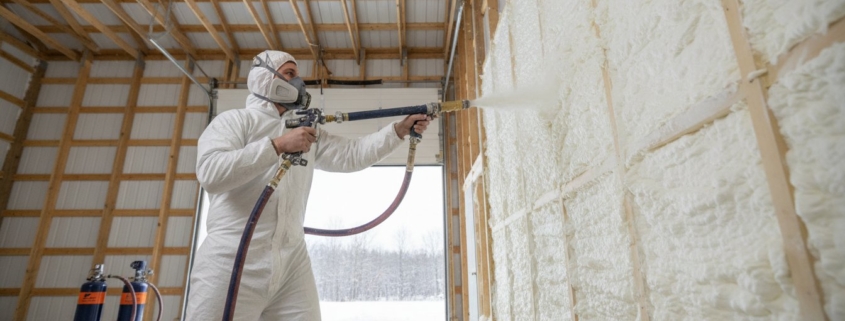
Closed-cell spray foam isn’t just another option for your outbuilding; it’s the definitive solution for the harsh West Michigan climate. When you’re searching for the best way to insulate a pole barn, you have to look at the dual performance of closed-cell technology. Unlike traditional materials, this foam provides a high R-value of approximately 7.0 per inch while simultaneously creating a 100% air seal. Our team applies the foam directly to the interior metal skin, which effectively eliminates the dew point. By moving the temperature transition inside the foam itself, we prevent moisture from condensing on the cold metal. This process stops the “sweating” that leads to premature rust and mold in Grand Rapids structures.

Beyond thermal control, this material offers a level of durability that other products can’t match. Closed-cell foam is incredibly dense and moisture-resistant, making it an ideal choice for the humid summers and snowy winters we experience along the Third Coast. It also acts as a formidable barrier against pests. Field mice and rats commonly found in rural Kent County can’t nest in or easily chew through the rigid structure of the foam, which keeps your walls clean and intact for the life of the building.

Total Air Sealing: The Secret to Efficiency

Air leaks can account for up to 40% of a building’s total heat loss. In a post-frame build, traditional insulation often leaves gaps at the base plates, corners, and where the roof meets the walls. Our spray foam expands rapidly to fill every nook and cranny, creating a seamless thermal envelope. This is especially vital for stopping drafts around large overhead garage doors and the eaves, where lake-effect winds tend to penetrate. An airtight seal is more critical than a high R-value for stopping condensation because it prevents warm, moist air from ever reaching the cold exterior metal panels. While exploring different Types of Insulation, many owners realize that only spray foam offers this level of comprehensive protection.

Structural Reinforcement and Longevity

The rigid nature of closed-cell foam does more than just keep you warm; it actually strengthens your barn. Once the foam cures, it bonds the metal panels and wooden girts into a monolithic structure. This bond can increase the racking strength of a building by up to 300%, providing extra stability during heavy snow loads or high-wind events. It also significantly reduces building noise, eliminating the “wind rattle” common during Lake Michigan storms. For Fruitport property owners, this is a permanent, “one-and-done” investment. The foam won’t sag, settle, or lose its R-value over time, ensuring that the best way to insulate a pole barn today remains effective for the next 50 years.

Planning Your Project: Costs, R-Values, and ROI

Investing in your outbuilding requires looking past the initial invoice. The best way to insulate a pole barn involves weighing the upfront price against a decade of utility bills. While traditional materials might seem cheaper on day one, closed-cell spray foam typically pays for itself within 5 to 7 years through reduced energy consumption. In West Michigan, where temperatures swing from 90 degrees in July to sub-zero in January, a high-performance thermal envelope is a financial safeguard. Our team focuses on the 10-year cost of ownership, showing clients how a sealed building prevents the structural rot and moisture damage that often plague cheaper insulation methods.

ROI and Energy Savings in the Second Coast

Michigan winters are brutal on propane tanks and electric grids. Owners in Kent and Ottawa counties often report a 45% drop in heating costs immediately after our crew seals their barn. By 2026, federal tax credits under the Energy Efficient Home Improvement Credit provide up to $1,200 annually for weatherization upgrades. Beyond monthly savings, a fully conditioned pole barn increases total property appraisal value by approximately 6% to 8%. It transforms a simple storage shed into a year-round workspace or a protected vehicle gallery that attracts premium buyers.

Preparation Checklist for Homeowners

Success starts before we pull the rig into your driveway. To ensure a flawless application, our team requires a 3-foot clear perimeter around all interior walls. This space allows our technicians to maintain the correct spray angle for uniform thickness. We also monitor specific environmental factors:

  • Surface Temperature: Metal substrates must be at least 40 degrees Fahrenheit for the foam to bond permanently.
  • Moisture Control: We never spray on damp metal; we coordinate with the West Michigan weather forecast to ensure your building is bone-dry.
  • Substrate Cleanliness: Walls should be free of heavy dust, oils, or peeling paint that could compromise the airtight seal.

Finding a quality contractor insulation specialist in the Grand Rapids area means looking for more than just a low bid. A reputable specialist will provide a detailed R-value target based on your barn’s use. For heated shops, we recommend a minimum of R-19 in the walls and R-30 in the ceiling. Ensure your chosen pro is licensed, insured, and carries specific liability coverage for spray foam application. This protects your investment and ensures the job meets Michigan’s 2026 building codes. If you’re ready to secure your structure, you can request a precision quote from Third Coast Spray Foam today.

The Third Coast Way: Professional Pole Barn Insulation in Fruitport

Living on the “Third Coast” means facing 80 percent humidity in the summer and sub-zero wind chills off Lake Michigan in the winter. We’ve spent years perfecting our approach to these specific conditions. The best way to insulate a pole barn in Fruitport or Grand Rapids isn’t just about sticking some fiberglass between the girts. It’s about a complete thermal strategy that accounts for moisture drive and massive temperature swings. Our team manages the entire lifecycle of your project. We start with rigorous site preparation to ensure the substrate is clean and dry. We finish with a final thermal imaging check to verify every square inch meets our standards.

This commitment to “Sealing the Envelope” ensures your barn functions as a healthy, dry system rather than just a cold storage box. When we seal a structure, we aren’t just adding R-value. We’re creating a permanent air barrier that stops the “stack effect” from pulling heat out of your roof. This holistic approach to home and barn health protects your equipment from rust and your wallet from skyrocketing utility bills.

Our Specialized Equipment and Local Team

Professional results require professional tools. We don’t use the low-pressure canisters found at big-box stores. Those DIY kits often lead to 20 percent less yield and inconsistent chemical mixes that can fail within a few seasons. Our local crew utilizes high-output, heated rigs that maintain precise ratios for a perfect cure every time. We take immense pride in serving Muskegon, Ottawa, and Kent Counties with a level of precision that national chains can’t match. If you’re ready to see the difference a professional rig makes, visit Third Coast Spray Foam for a free site evaluation.

Your Next Steps to a Dry, Warm Barn

Planning for the 2026 season starts now. We’ve seen material costs fluctuate by 12 to 15 percent year-over-year, so securing your spot early is a smart financial move. The best way to insulate a pole barn is to do it once and do it right. During a Third Coast consultation, we provide a transparent, no-nonsense estimate. We don’t use high-pressure sales tactics. We simply measure your structure and explain the science behind the application. Our schedule for next year is already filling up with property owners who want their workshops ready before the first frost. Get your free pole barn insulation quote today and ensure your investment is protected for decades to come.

Maximize Your Barn’s Performance and Value

Building a pole barn in Grand Rapids represents a significant financial commitment. You’ve learned that applying closed-cell spray foam is the best way to insulate a pole barn because it creates a rigid thermal envelope that stops 99% of air infiltration. This high-density material provides an R-value of roughly 7 per inch, which is essential for managing the 80% humidity levels common in West Michigan. Since 2013, our team has helped local owners slash their heating costs by up to 50% while reinforcing the building’s structural integrity. Based in Fruitport, we focus on precision applications that prevent the condensation and moisture buildup that often ruin metal structures over time. You don’t have to settle for a drafty, inefficient space when a permanent solution is available right here in your backyard.

Protect your investment and get a professional pole barn insulation quote from Third Coast Spray Foam. We look forward to helping you create a space that stays comfortable for decades to come.

Frequently Asked Questions About Pole Barn Insulation

What is the absolute best way to insulate a pole barn in Michigan?

Closed-cell spray foam is the most effective solution for Michigan pole barns because it provides a total air seal and a high R-value of 7 per inch. This material stops the biting Grand Rapids winter winds from penetrating your walls while simultaneously preventing summer heat gain. It’s the only product that addresses the three main challenges of metal buildings: heat loss, air infiltration, and moisture buildup.

Will spray foam cause my metal pole barn to rust?

No, spray foam actually prevents rust by eliminating the condensation that forms when warm air meets cold metal. By applying foam directly to the steel, our team creates a protective barrier that keeps moisture away from the substrate. This process can extend the life of your metal panels by 25 percent compared to uninsulated structures that allow moisture to sit against the metal.

How much does it cost to spray foam a 30×40 pole barn in Grand Rapids?

The cost to insulate a 30×40 pole barn with 2 inches of closed-cell foam generally ranges from $4,800 to $7,500. This estimate depends on your wall height and whether you choose to insulate the roof deck or a flat ceiling. While the upfront cost is higher than traditional materials, the 45 percent average savings on monthly energy bills helps the system pay for itself within 5 to 7 years.

Can I use fiberglass batts if I have a vapor barrier?

You can install fiberglass batts, but they often struggle to perform in the humid Michigan climate. Even with a 6-mil poly vapor barrier, air gaps allow moisture to reach the fiberglass, causing it to sag and lose 50 percent of its R-value over time. When looking for the best way to insulate a pole barn, spray foam remains the superior choice because it’s the only material that won’t hold water or degrade.

Should I insulate the ceiling or the roofline of my pole barn?

Insulating the roofline is the better option if you want to maximize your storage space or keep the entire structure at a consistent temperature. If you have a drop ceiling and don’t need to heat the attic area, insulating the ceiling is more efficient because it reduces the volume of air your furnace needs to warm. Both methods effectively seal the thermal envelope, but roofline application prevents ice dams during heavy February snowfalls.

How long does the spray foam process take for a standard barn?

Our crew typically completes a standard 1,200 square foot pole barn in 1 to 2 business days. We spend the first 3 hours carefully masking your windows, doors, and floors to ensure a clean finish. The foam dries and cures almost instantly, so you can resume your projects or move your vehicles back inside within 24 hours of the application being finished.

Is closed-cell or open-cell foam better for a Michigan pole barn?

Closed-cell foam is the only recommended option for Michigan pole barns due to its moisture resistance and structural density. Open-cell foam acts like a sponge in high-humidity environments, which can lead to wood rot in your framing girts. Closed-cell foam also adds significant rigidity to your barn, helping it withstand wind loads of up to 100 miles per hour during intense spring storms.

Do I need to vent my pole barn if it is spray foamed?

You don’t need ridge or soffit vents once you’ve created a sealed thermal envelope with spray foam. Traditional venting actually works against your insulation by allowing expensive heated air to escape through the roof. If you’re running engines or high-moisture equipment inside, we recommend a simple mechanical exhaust fan to manage air quality without compromising the structure’s energy efficiency.

Disclaimer

Information provided is for general educational purposes. Individual needs and circumstances vary. Speak to an experienced professional before relying on the information given here.
How to Insulate a Pole Barn in Grand Rapids, MI: The Professional Guide

Imagine walking into your Grand Rapids workshop on a Tuesday morning in November only to find your $5,000 table saw covered in a fine layer of rust because the ceiling is “sweating” again. It’s a common sight across West Michigan, where a 30 degree temperature swing in a single day turns uninsulated metal buildings into literal rain chambers. Learning how to insulate a pole barn correctly isn’t just about comfort; it’s about protecting your tools and vehicles from the relentless humidity of the Lake Michigan shoreline.

You already know that a thin sheet of steel is a poor defense against a brutal Michigan winter. We believe your outbuilding should be as functional as your home, providing a dry, climate controlled environment for your hobbies or business. In this guide, our team at Third Coast Spray Foam will show you the most effective methods to stop condensation and slash your heating bills by up to 50 percent. We will break down the mechanics of air sealing, explain why traditional fiberglass often fails in metal structures, and provide a clear roadmap to creating a year-round usable space.

Key Takeaways

  • Discover why creating a continuous thermal and air barrier is essential for protecting metal buildings from the unique heat transfer challenges of the West Michigan climate.
  • Learn exactly how to insulate a pole barn by comparing traditional materials against high-performance solutions that eliminate the common failures of fiberglass batts.
  • Explore the professional process for sealing the building envelope, including how to properly address girts and purlins to eliminate costly thermal bridging.
  • Master the science of the dew point to stop building “sweat” and moisture buildup, ensuring your structure remains dry and mold-free in every season.
  • Identify the critical factors to look for in a professional quote to ensure your Grand Rapids or Fruitport project delivers a permanent return on investment.

Understanding Pole Barn Insulation Needs in West Michigan

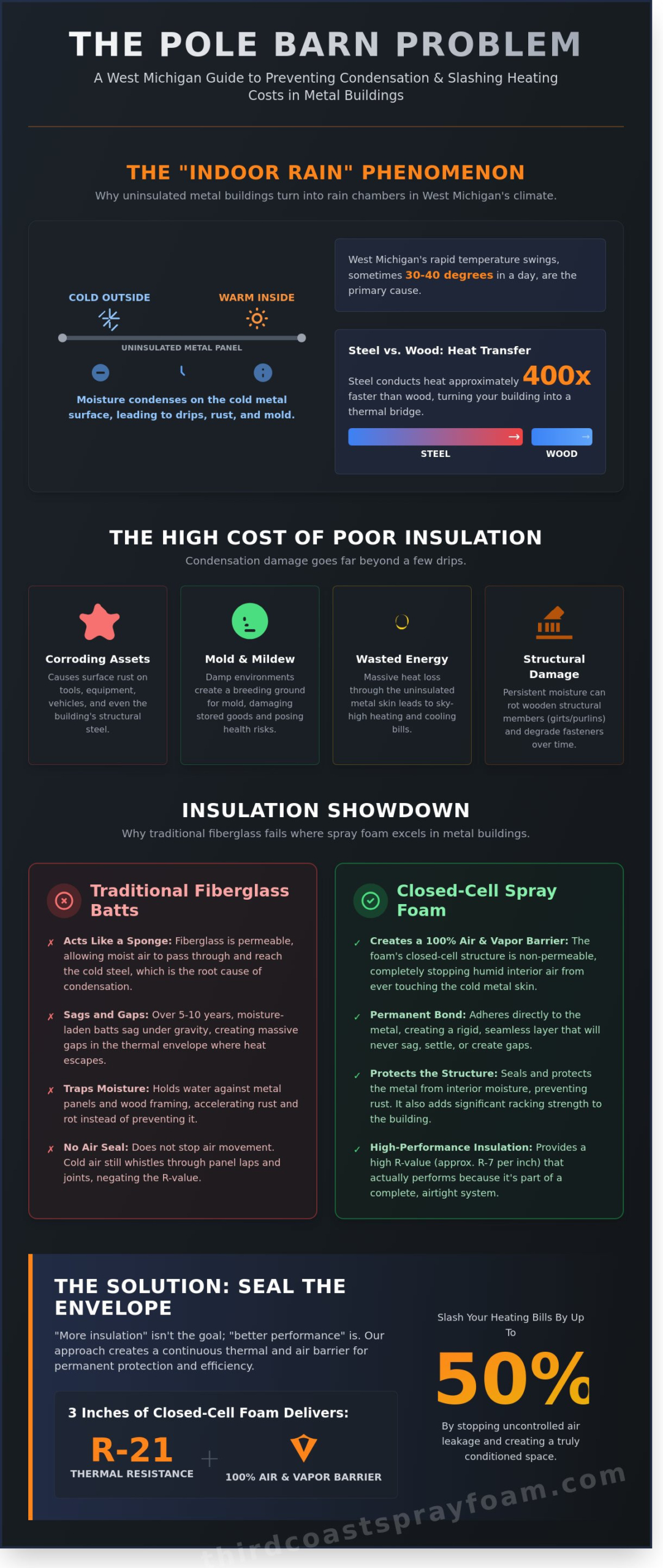
In West Michigan, where temperatures can swing 40 degrees in a single afternoon, understanding how to insulate a pole barn is about more than just comfort. It is about building survival. Unlike a traditional wood-frame house, a metal building acts as a massive thermal bridge. Steel conducts heat approximately 400 times faster than wood. This means your building’s exterior skin is constantly transferring the freezing Lake Michigan winds directly to your interior space. To stop this, we must create a continuous thermal and air barrier. This barrier separates the metal skin from the interior climate, preventing the two from ever interacting.

Effective insulation requires a deep dive into building insulation principles to ensure the structure remains dry and efficient. In Grand Rapids and surrounding areas, we operate within Climate Zone 5 and 6. These zones demand specific strategies because of our high humidity and extreme winter lows. While many owners focus solely on R-value, which measures thermal resistance, agricultural structures require a heavy emphasis on air-sealing. Without a proper air seal, even the thickest insulation will fail as cold air whistles through the laps and joints of the metal panels.

The “Indoor Rain” Phenomenon

Condensation in a metal building is often called “indoor rain” because it literally drips from the ceiling. When warm, moist air inside the barn touches the cold metal panels, it reaches its dew point instantly. This moisture leads to surface rust on structural steel and provides a breeding ground for mold in stored hay or drywall. In 2023, our team inspected several sites where expensive classic cars and tractors suffered thousands of dollars in corrosion damage due to simple ceiling drips. Our “Sealing the Envelope” philosophy at Third Coast Spray Foam addresses this by ensuring humid air never reaches the cold metal surface. We create a permanent, airtight bond that eliminates the gap where condensation forms.

Michigan Building Codes and R-Values

Michigan Building Codes for Kent and Ottawa Counties distinguish between unconditioned agricultural buildings and heated workspaces. For a heated pole barn, the 2015 Michigan Energy Code often points toward R-values like R-19 for walls and R-49 for ceilings. However, a high R-value is useless if it isn’t air-tight. In a pole barn, “more insulation” isn’t the goal; “better performance” is. Consider these local standards:

  • Agricultural Use: Often exempt from strict R-value mandates, but requires moisture control to prevent structural rot.
  • Residential/Commercial Use: Must meet specific Zone 5 requirements, often requiring a minimum of R-13 to R-20 in the walls.
  • The Air Seal Factor: 3 inches of closed-cell spray foam provides roughly R-21 while simultaneously creating a 100% air and vapor barrier.

When you are researching how to insulate a pole barn, remember that residential fiberglass batts often fail in these environments. They sag over time and trap moisture against the metal, which accelerates rust. Our team focuses on materials that stay in place for the life of the building. We prioritize the long-term health of your structure by using methods that treat the barn as a holistic system. This approach provides the peace of mind that your equipment, livestock, or workshop remains protected regardless of the Michigan weather.

Comparing Insulation Methods: Why Traditional Batts Fail in Metal Buildings

Choosing the right material is the most critical decision you’ll make when researching how to insulate a pole barn. While a lower price tag on a roll of fiberglass might look tempting, the physics of a metal building often turn that “saving” into a costly mistake. Metal is an excellent conductor of heat. In a typical 40×60 pole barn, temperature swings can cause the steel to sweat profusely. If your insulation can’t handle that moisture, it’s going to fail. We focus on results that last 30 years, not just 30 days.

The Problem with Fiberglass Batts

Fiberglass is a permeable material, which means it allows air and water vapor to pass right through it. In a damp barn environment, these batts act like a giant sponge. Gravity is a constant enemy here. Within 5 to 10 years, heavy, moisture-laden batts often sag away from the roofline. This creates massive gaps in your thermal envelope. This leads to “ghosting,” where dark patterns of condensation and dust form on your metal panels. Even worse, the Department of Energy on insulation notes that R-value decreases significantly when materials become compressed or wet. Trapped moisture against steel creates a breeding ground for mold, which can compromise the air quality of your entire shop. Common failures include:

  • Loss of R-value due to moisture compression
  • Sagging caused by gravity and water weight
  • Promotion of rust on the interior of metal panels
  • Air infiltration that bypasses the insulation entirely

Foam Board and DIY Kits

Rigid foam board is a step up, but it’s rarely a complete solution for a pole barn. A standard 2,400 square foot building has hundreds of linear feet of seams between the panels and the girts. If you don’t seal every single junction with specialized tape or canned foam, air will bypass the board entirely. We often see folks try to save money with small DIY spray foam canisters. These kits often lack the precise temperature control and 1,000 PSI pressure needed for a proper chemical bond. This “false economy” results in a 25% loss in thermal efficiency compared to professional applications. For a true thermal break, you need the high-pressure delivery systems our team uses to ensure the foam adheres permanently to the substrate without peeling or shrinking.

Closed-cell spray foam remains the gold standard because it serves three purposes at once. It provides a high R-value of approximately 7 per inch, acts as a total vapor barrier, and adds significant structural integrity. In fact, studies show closed-cell foam can increase the racking strength of your walls by up to 300%. It fills every nook and cranny, leaving no room for condensation to form against the metal. When you’re looking at long-term protection for your investment, the initial cost of spray foam is offset by the decades of energy savings and structural preservation it provides. It’s the only way to truly seal the envelope and stop the cycle of moisture damage for good. Our goal is to give you peace of mind that your barn will stay dry through every Michigan season. Knowing how to insulate a pole barn correctly means looking past the initial invoice and focusing on the total cost of ownership over the life of the building.

How to Insulate a Pole Barn in Grand Rapids, MI: The Professional Guide

Step-by-Step: The Professional Process for Insulating a Pole Barn

Success in any project depends on a rigorous, repeatable process. At Third Coast Spray Foam, we view every job as a technical challenge that requires a specific sequence of actions to achieve a 100% airtight seal. Learning how to insulate a pole barn isn’t just about owning a spray gun; it’s about understanding the chemistry of the substrate and the mechanics of the structure. We don’t take shortcuts because we know that a single gap can lead to moisture buildup and structural rot over time.

Preparing the Structure

We begin by cleaning the metal skin. Metal is non-porous, so any dust, oil, or moisture will prevent the foam from bonding. If the metal temperature is below 50 degrees Fahrenheit, we use specialized heaters to warm the building. Moisture is the biggest enemy of adhesion. We use industrial moisture meters to ensure the surface is dry before the first lift is applied. Our crews spend roughly 15% of the total project time masking electrical panels, plumbing runs, and windows. We cover the concrete floors with heavy-duty poly to prevent permanent overspray damage, ensuring your shop looks as clean as it did when we arrived.

The Application Technique

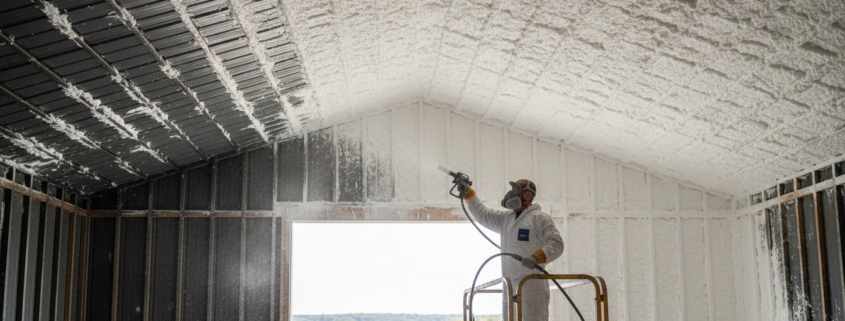
Applying closed-cell foam is a science. We apply the foam in lifts, which are layers typically 1 to 1.5 inches thick. This allows the heat from the chemical reaction to dissipate properly. During the expansion process, the foam can reach internal temperatures of 200 degrees Fahrenheit. Managing this heat is vital for the structural integrity of the insulation. If the foam is applied too quickly, it can lose its R-value or even pull away from the wall. For a detailed comparison of how these materials perform, you can reference the Department of Energy’s guide to insulation types.

We pay special attention to the girts and purlins. These metal components act as thermal bridges, pulling cold air from the outside directly into your workspace. By wrapping these elements in 2 inches of closed-cell foam, we break that bridge. We also prioritize the rim joist area. This is the critical junction where the wall meets the foundation. Sealing this gap can reduce air leakage by 30% or more, creating a true thermal envelope that stops condensation in its tracks. This holistic approach is why professional application is superior to DIY kits. Understanding the mechanics of how to insulate a pole barn ensures you get the most out of your investment.

The final phase involves a rigorous inspection. Our technicians use infrared thermal imaging to scan for any voids or thin spots in the foam. We then trim any excess material around doors and windows to ensure a flush finish for your interior metal or wood liners. This attention to detail ensures your pole barn is durable, efficient, and comfortable for decades. We take pride in the “straight-shooter” approach, giving you a result that’s as solid as the building itself. Once the trimming is complete, the structure is ready for immediate use or the installation of finish materials.

Solving the Sweating Problem: Preventing Condensation and Mold

Metal buildings are notorious for “raining” inside, even when the sun is shining. This phenomenon occurs because of a simple scientific principle called the dew point. In the context of a metal barn, the dew point is the specific temperature where moisture in the air transforms into liquid water upon contact with the cold steel skin. Our team at Third Coast Spray Foam sees this constantly across West Michigan. When you learn how to insulate a pole barn correctly, you move this thermal bridge outside the structure. By applying closed-cell spray foam directly to the metal, the warm, humid interior air never reaches the cold exterior surface. This prevents the physical process of condensation from ever starting.

Eliminating the Dew Point

Visualizing this process is simple. Imagine a cold soda can on a humid July day; it sweats because the air is warmer than the surface of the aluminum. Spray foam acts like a high-performance koozie for your entire building. For West Michigan owners, the ceiling is the primary culprit, with 90% of condensation complaints originating from dripping roof panels. Two inches of closed-cell foam creates a seamless air seal that eliminates these cold spots entirely. It doesn’t just slow down the moisture; it stops the physical reaction by ensuring the interior surface stays at a consistent, controlled temperature.

Understanding how to insulate a pole barn involves more than just adding R-value. You must address the “breathability” myth. Many people believe a building needs to “breathe” through its walls, but in a metal structure, this is a recipe for disaster. Air-tight construction is the gold standard for durability. Traditional fiberglass batts allow air to pass through, which traps moisture against the metal. Closed-cell spray foam is its own vapor barrier once it reaches a thickness of 1.5 inches. Our 2-pound density foam provides a Class II vapor retarder rating, ensuring your structure stays dry for decades without the need for flimsy plastic sheeting.

Ventilation and Air Quality

Once you’ve sealed the envelope, you have total control over your environment. This is where “total home health” comes into play, especially if your barn is located near your primary residence or used as a workshop. A sealed building requires mechanical ventilation to maintain air quality and prevent stagnant conditions. We recommend systems like mini-splits or Heat Recovery Ventilators (HRVs) to swap stale air for fresh air without losing your thermal efficiency. This protects your investment from the “musty barn smell” caused by persistent humidity.

Proper air-sealing protects your tools, vehicles, and the structural integrity of the barn itself. In a 4,000-square-foot pole barn, a properly sized ventilation system can keep humidity levels below the 50% threshold where mold thrives. This creates a stable environment that feels as comfortable as your living room. By focusing on a holistic system rather than just a collection of walls, you ensure your barn remains a functional, healthy space for the long term.

Stop the rain inside your building by learning more about our pole barn insulation services today.

Choosing the Right Partner for Your Grand Rapids Pole Barn Project

Grand Rapids and Fruitport residents know that West Michigan weather is unforgiving. Our region experiences humidity levels that often climb above 80 percent in the summer, followed by sub-zero winters that turn metal buildings into refrigerators. When you are researching how to insulate a pole barn, local expertise is the most critical factor. A contractor from a different climate might not understand how Lake Michigan moisture interacts with steel siding. Our team understands the specific dew point shifts that occur in Kent and Ottawa counties. We design our insulation systems to handle these 40-degree temperature swings that happen in a single 24-hour period.

A professional quote should provide more than just a bottom-line price. You need to see the technical specifics to ensure your investment is protected. A high-quality proposal from Third Coast Spray Foam includes:

  • Specified Thickness: We typically recommend at least 2 inches of closed-cell foam for Michigan walls to hit the necessary thermal break.
  • Targeted R-Value: Our closed-cell foam delivers an R-value of 7 per inch, providing a total of R-14 or higher where it matters most.
  • Substrate Preparation: We include detailed cleaning of the metal panels to ensure a 100 percent bond, preventing the foam from delaminating over time.
  • Air Sealing: We focus on the gables, base plates, and corner trim where air leakage is most prevalent.

The Third Coast Difference

Our team takes a no-nonsense approach to every project. We don’t use “flash and batt” techniques or cheap fiberglass that eventually sags and traps moisture against your steel. Instead, we use professional-grade closed-cell spray foam. This material is dense and rigid, adding up to 300 percent more racking strength to your pole barn structure. This structural reinforcement is vital for buildings that face heavy Michigan snow loads and high wind gusts. We focus on “Sealing the Envelope,” a holistic method that treats the building as a single, airtight system. If you are ready to stop the drips for good, you can Get a Pole Barn Insulation Quote from our local specialists.

Investing in Your Property

Insulating your barn is not just about comfort; it is a strategic financial move. Converting a cold storage shed into a conditioned, usable space can increase your property’s resale value by an average of 12 percent based on recent West Michigan real estate trends. You are upgrading the building from a simple shell to a high-performance workshop or hobby space. This is a permanent, 25-year solution that eliminates the risk of rust and wood rot caused by internal “rain.”

Property owners who seal their building envelope often see an immediate 40 percent reduction in heating costs during the winter months. This efficiency pays for the installation over time while protecting your vehicles, tools, and equipment from moisture damage. You deserve the peace of mind that comes from a dry, stable environment. Don’t let your barn sweat through another Michigan winter. Contact us to secure your building for the long haul.

Protect Your Investment with Professional West Michigan Insulation

Your pole barn is more than just a metal shell; it’s a significant investment that deserves protection from West Michigan’s unpredictable 4-season climate. Traditional fiberglass batts often fail in these structures because they trap moisture against metal panels, leading to rust and mold within 5 to 10 years. By prioritizing air sealing and a complete thermal envelope, you eliminate the sweating issues that plague standard builds. Learning how to insulate a pole barn correctly means choosing high-performance spray foam that stops 99% of air infiltration.

Based in Fruitport, Michigan, our team specializes in the “total home health” approach to ensure your building remains dry and energy-efficient year-round. We apply technical expertise to every project, treating your shop or garage with the same precision as a primary residence. Don’t settle for a drafty space that costs a fortune to heat during a Grand Rapids winter. When selecting a professional for your project, it’s essential to understand the key factors that separate qualified specialists from general contractors. Our comprehensive guide on hiring an insulation contractor in Grand Rapids provides the detailed criteria you need to evaluate expertise, licensing, and long-term performance guarantees.

Request Your Free Pole Barn Insulation Estimate Today

Take the first step toward a more comfortable, durable building that stands up to everything the Lake Michigan shoreline throws its way.

Frequently Asked Questions

Is spray foam the best way to insulate a pole barn in Michigan?

Yes, spray foam is the most effective solution for Michigan pole barns because it creates a seamless air seal that eliminates condensation. When considering how to insulate a pole barn in our region, you must account for 90% humidity in the summer and sub-zero winters. At Third Coast, we see temperatures swing from -10 to 95 degrees Fahrenheit annually. Spray foam handles these extremes by bonding directly to the metal, preventing moisture-laden air from hitting cold steel.

How much does it cost to insulate a pole barn in Grand Rapids?

Most pole barn insulation projects in Grand Rapids range from $1.50 to $4.50 per square foot of sprayed surface area. This price varies based on whether you choose open-cell or closed-cell foam and the specific depth required for your building’s use. A standard 30×40 pole barn with 12-foot walls typically requires an investment between $4,000 and $9,000. While the upfront cost is higher than fiberglass, the 15% to 50% reduction in monthly energy bills helps the system pay for itself.

Do I need a vapor barrier if I use spray foam in my pole barn?

You don’t need a separate vapor barrier when you install at least 2 inches of closed-cell spray foam. This thickness naturally acts as a Class II vapor retarder, preventing moisture from migrating through the walls. Our team focuses on sealing the envelope completely to ensure no moisture reaches the metal panels. This single-step process saves you the $0.50 per square foot cost of installing plastic sheeting and prevents the common sweating issues found in traditional builds.

Can I insulate my pole barn myself with a DIY kit?

You can use a DIY kit, but these portable tanks often cost 30% more per board foot than a professional application. Maintaining a consistent 1:1 chemical ratio is difficult without a heated, high-pressure rig, leading to a 15% failure rate in DIY applications. If the chemicals don’t mix perfectly, the foam can pull away from the metal or produce lingering odors. We recommend professional installation to ensure a permanent bond and a lifetime warranty on the product’s performance.

Will insulating my pole barn stop the ceiling from dripping?

Spray foam stops ceiling drips immediately by preventing warm, moist air from contacting the cold metal roof. This process eliminates the dew point, which is the exact temperature where water vapor turns into liquid. In a typical uninsulated Michigan barn, you’ll see hundreds of drips per hour during a spring thaw. By applying foam directly to the underside of the roof deck, we ensure the interior surface stays warm, keeping your equipment and floor 100% dry.

How thick should spray foam be in a Michigan pole barn?

For most Michigan pole barns, we recommend 2 inches of closed-cell spray foam on the walls and roof. This thickness provides an R-value of approximately 13 to 14 while creating a structural bond and a moisture barrier. If you’re using open-cell foam, you’ll need 3 to 5 inches to achieve similar thermal performance. This specific depth is designed to handle the 40-degree temperature drops common in Grand Rapids winters, keeping your heating system from running constantly.

What happens if I insulate my pole barn with fiberglass batts?

Using fiberglass batts often leads to trapped moisture and metal rust within 3 to 5 years of installation. Fiberglass is porous, so it allows humid air to pass through and condense against the cold metal skin. Once the insulation gets wet, it loses 40% of its R-value and begins to sag under the weight of the water. This creates a breeding ground for mold and accelerates the corrosion of your pole barn’s structural steel or wood girts.

Does pole barn insulation help in the summer heat?

Learning how to insulate a pole barn correctly helps you stay cool because spray foam blocks up to 95% of radiant heat transfer. During a 90-degree Michigan summer day, an uninsulated metal building can reach internal temperatures of 110 degrees. Spray foam acts as a thermal break that stops the sun’s energy from radiating through the metal panels. This keeps your shop or storage space 15 to 20 degrees cooler, allowing you to work comfortably without an expensive cooling system.

Disclaimer

Information provided is for general educational purposes. Individual needs and circumstances vary. Speak to an experienced professional before relying on the information given here.