
The most affordable insulation on paper often becomes the most expensive burden on your respiratory health. We all know the frustration of watching heating bills climb while Muskegon winds whistle through drafty walls in older Grand Rapids homes. It’s common to struggle with musty smells or mold concerns in basements and rim joists. This guide compares spray foam vs blown insulation for walls Michigan homeowners use to ensure their homes remain energy-efficient and allergen-free.
You’ll discover how these materials perform under the 2026 Michigan energy codes, which require an R-20 value for wood-frame wall cavities. We will explain how the right choice can reduce your monthly utility bills by up to 30% and provide a permanent seal against outdoor pollutants. By the end, you’ll know which system offers the best protection for your family’s health and your home’s structural integrity.
Key Takeaways
- Understand why standard R-values fail against the “wind-wash” effect and how to stop lake-effect winds from penetrating your wall cavities.
- Learn how to protect your family’s respiratory health by selecting insulation that blocks outdoor allergens and prevents the growth of mold.
- Compare the long-term moisture resistance and energy efficiency of spray foam vs blown insulation for walls Michigan homeowners need to meet 2026 standards.
- Discover how professional air sealing provides permanent structural benefits for pole barns and older homes while significantly lowering monthly utility costs.
R-Value vs. Air Sealing: Why Traditional Materials Struggle in Michigan Walls
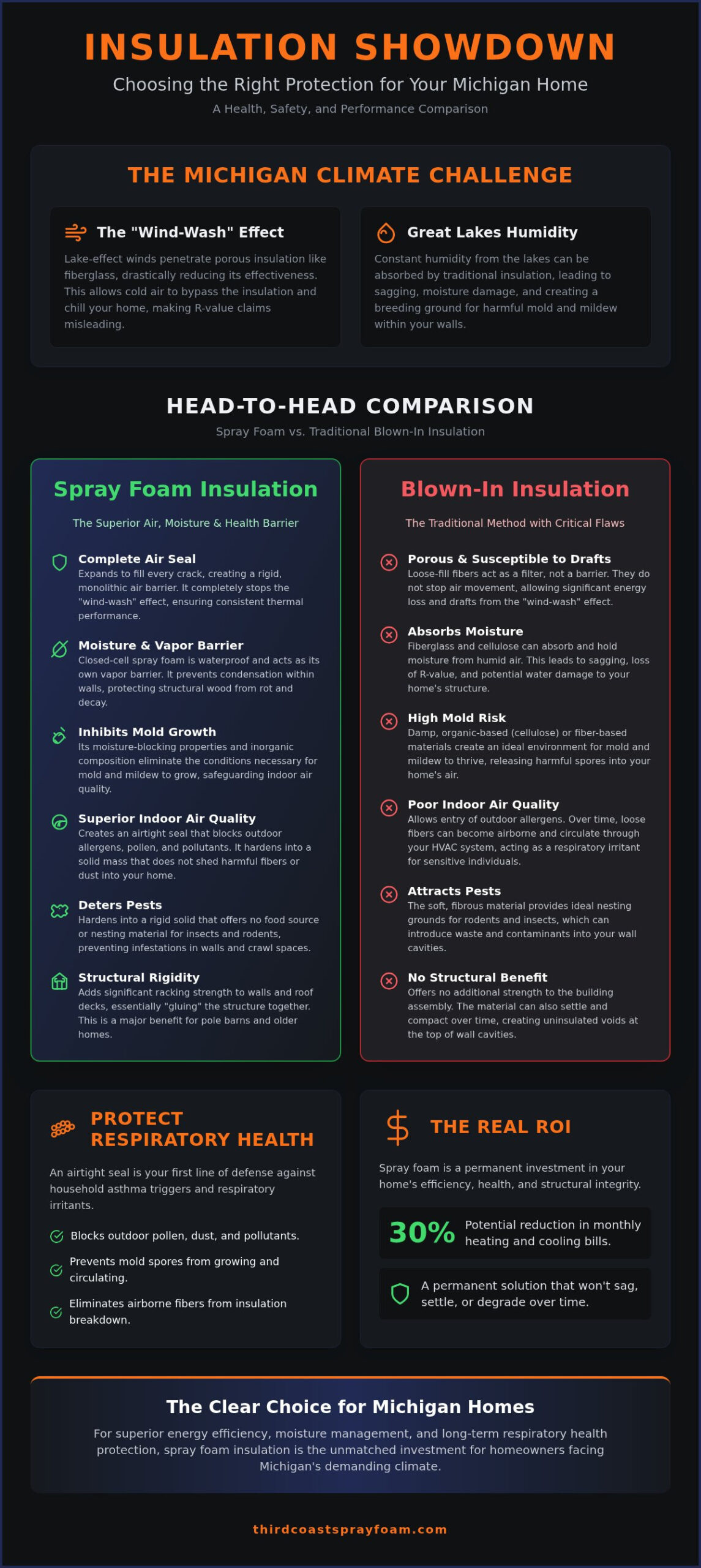
In Michigan, a material’s R-value only tells half the story. While this metric measures thermal resistance, it doesn’t account for air movement. Traditional materials like fiberglass are porous; they act like a filter rather than a barrier. When lake-effect winds hit your home, they create a “wind-wash” effect. This occurs when cold air penetrates the wall cavity and bypasses the insulation entirely. In the debate of spray foam vs blown insulation for walls Michigan homeowners often find that blown-in materials still allow significant air infiltration compared to a truly airtight seal.
Choosing closed cell spray foam provides a rigid, impermeable shield that blown-in alternatives can’t match. It expands to fill every micro-crack, stopping drafts at the source. When evaluating spray foam vs blown insulation for walls Michigan projects require a solution that handles both temperature and air movement simultaneously. This is vital for maintaining consistent comfort in Grand Rapids or Lansing where winter winds are relentless.
The Moisture Trap: Managing Lake Michigan Humidity in Your Walls
Our proximity to the Great Lakes means humidity is a constant factor. Fiberglass and some blown-in materials absorb this moisture over time. When insulation gets damp, it sags and creates gaps, leaving your walls unprotected. This damp environment becomes a breeding ground for mold and mildew, which can severely impact your family’s respiratory health.
Condensation often forms inside wall cavities when warm indoor air meets cold exterior siding during a Muskegon winter. Because spray foam acts as a built-in vapor barrier, it prevents this moisture from reaching your home’s structural wood. This protection ensures your indoor air quality remains high and your home’s frame stays free from rot.
Indoor Air Quality: How Insulation Choice Impacts Respiratory Health
Your choice between spray foam vs blown insulation for walls in Michigan homes affects more than just the thermostat. Traditional blown-in materials often consist of loose-fill fibers that can become airborne over time. These microscopic particulates circulate through your HVAC system, potentially irritating the lungs of sensitive family members. Conversely, spray foam hardens into a solid mass that doesn’t shed dust or fibers into your living space. By sealing every gap, it effectively blocks outdoor pollutants, seasonal pollen, and Lake Michigan allergens from entering your home. A properly sealed building envelope serves as the primary defense against household asthma triggers by eliminating the infiltration of outside irritants. While professional installation is required to manage volatile organic compound (VOC) emission rates during the curing process, the long-term result is a cleaner, more stable indoor environment.
Mold Prevention and Pest Control in West Michigan Homes
Pests like mice and insects frequently nest in traditional blown-in materials, leaving behind waste that compromises air quality. Spray foam offers no food value or easy nesting grounds for these intruders. This durability is especially critical when considering crawl space insulation. Without a proper seal, the “stack effect” pulls mold spores and damp air from the ground up into your living areas. If your current insulation is old or contaminated, professional insulation removal is a necessary step to restore a healthy atmosphere. When comparing spray foam vs blown insulation for walls Michigan residents should prioritize these health-centric benefits. If you’re concerned about your home’s air quality, scheduling a professional assessment can help identify hidden respiratory triggers.
Calculating the Real ROI: Is Spray Foam Worth the Investment?
Determining the value of spray foam vs blown insulation for walls Michigan homeowners choose involves looking beyond the initial quote. In Grand Rapids and Lansing, where heating and cooling account for nearly half of a home’s energy use, upgrading to spray foam can reduce monthly utility bills by up to 30%. Unlike traditional materials that may sag or lose effectiveness due to moisture, spray foam is a permanent investment. It also adds significant structural rigidity to pole barns and older residential frames, essentially “gluing” the structure together. To help manage costs, the 2026 Energy Efficient Home Improvement Credit allows you to claim 30% of material costs, capped at $1,200 annually.
The Third Coast Approach: Why Professional Installation Matters
Selecting between spray foam vs blown insulation for walls Michigan projects requires a nuanced understanding of where each material excels. We often see the consequences of DIY foam kits, which carry high failure rates and health risks. If the chemical mix isn’t perfect, it can lead to lingering off-gassing and poor expansion, compromising your indoor air quality. Professional application ensures a safe, fully cured barrier that protects your respiratory health. While blown-in insulation remains a strategic and cost-effective choice for many Michigan attics, wall cavities almost always require the superior air-sealing properties of foam. Working with a local contractor who understands West Michigan building codes and our unique humidity ensures your home meets the R-20 wall requirements for 2026.
Securing Your Home’s Future and Your Family’s Health
Choosing the right material is a long-term commitment to your home’s structural integrity and your family’s respiratory health. We’ve explored how the choice of spray foam vs blown insulation for walls Michigan residents prioritize often comes down to permanent air sealing and moisture management. While blown-in materials offer a budget-friendly path for specific attic upgrades, only spray foam provides the airtight seal needed to stop lake-effect drafts and prevent the growth of mold. Since 2013, our team has specialized in health-focused moisture control for neighbors in Grand Rapids, Muskegon, and Holland. By prioritizing indoor air quality now, you’re investing in a home that remains comfortable and efficient through every unpredictable season.
Ready to protect your property? Get Your Free Insulation Estimate in Fruitport, MI and take the first step toward a more secure, energy-efficient future.
Frequently Asked Questions
Is spray foam insulation safe for people with asthma or allergies?
Professionally installed spray foam is safe for individuals with respiratory sensitivities once it’s fully cured. When evaluating spray foam vs blown insulation for walls Michigan homeowners find that foam creates a superior seal against outdoor pollutants and pollen. This barrier also prevents moisture buildup, which stops the growth of mold and mildew that can severely irritate your lungs and trigger asthma symptoms.
How does Michigan humidity affect fiberglass insulation vs. spray foam?
Fiberglass tends to absorb moisture from Michigan’s high humidity, which leads to sagging and significant gaps in your thermal barrier. This moisture retention often results in mold growth and wood rot within your wall cavities. Spray foam remains unaffected by humidity and serves as a vapor barrier, keeping your structural wood dry and protecting your home’s respiratory health from damp-related triggers.
Can I install spray foam over existing blown-in insulation in my walls?
We recommend a full insulation removal before applying spray foam to existing walls. Spraying over old, loose-fill materials prevents the foam from adhering properly to the wall studs and sheathing, which ruins the airtight seal. Removing the old material also eliminates decades of trapped dust, pests, and allergens, ensuring your new insulation system supports a healthy indoor environment.
What are the 2026 R-value requirements for Michigan residential walls?
The 2026 Michigan energy code requires wood-frame walls in Climate Zone 5 to meet an R-20 cavity value or R-13 cavity plus R-5 continuous insulation. Climate Zone 6 requirements are stricter, often needing R-20 cavity plus R-5 continuous insulation. When comparing spray foam vs blown insulation for walls Michigan code compliance depends on achieving these specific thermal benchmarks while maintaining a healthy, moisture-free environment.
Disclaimer
Information provided is for general educational purposes. Individual needs and circumstances vary. Speak to an experienced professional to get the correct information for your situation.