
Imagine walking into your pole barn on a humid Michigan morning only to find “indoor rain” dripping off the rafters onto your vehicles or tools. This “sweating” isn’t just a nuisance; it’s a clear sign that your building is losing the battle against moisture. You’ve likely noticed the musty smells or visible mold growth on structural supports that follow these rapid temperature swings. It’s a common struggle for local property owners, but installing professional spray foam insulation for metal roofs provides the airtight seal needed to stop this cycle for good.
We believe that a dry interior is about more than just protecting equipment; it’s about maintaining high indoor air quality and preventing the respiratory health risks associated with mold spores. Discover how spray foam insulation eliminates metal roof sweating, prevents mold growth, and provides superior thermal protection for Michigan structures. This guide explores how closed cell spray foam creates a bone-dry interior, shields your family from environmental triggers, and helps you secure long-term energy savings through modern efficiency standards.
Key Takeaways
- Learn why Michigan’s rapid temperature swings cause metal roofs to “sweat” and how to stop this moisture from damaging your structural supports.
- Understand why closed cell spray foam insulation for metal roofs is the gold standard for creating a permanent air seal and adding structural integrity.
- Discover how eliminating condensation protects your respiratory health by preventing the growth of black mold and mildew within your indoor environment.
- See why traditional fiberglass batts and reflective wraps often fail in metal buildings, frequently trapping moisture that leads to hidden corrosion.
- Explore the critical role of professional installation and humidity monitoring in ensuring a safe, long-lasting thermal barrier for your property.
The “Sweating” Problem: Why West Michigan Metal Roofs Need Advanced Insulation
Metal roofs are highly durable, but they suffer from a significant physical flaw: they are excellent conductors of heat. This property creates a “thermal bridge” where the outside temperature easily transfers to the interior surface. When warm, humid indoor air hits that cold metal, it reaches its dew point and transforms into liquid water. This process, commonly known as “sweating,” causes a steady drip of condensation that can saturate everything inside your building. Using professional spray foam insulation for metal roofs is the most effective way to break this thermal bridge and stop the dripping permanently.
The damage from a sweating roof goes far beyond a few puddles on the floor. Constant moisture exposure weakens structural wood supports and causes metal fasteners to rust prematurely. More importantly, this damp environment is a breeding ground for black mold and mildew. These fungi release spores into your indoor air, which can lead to serious respiratory health issues like asthma flare-ups or chronic allergies. By installing a seamless vapor barrier, you aren’t just protecting your equipment; you are securing the health of everyone who enters the building.
To better understand how this technology creates a superior roofing environment, watch this helpful video:
The Science of Thermal Bridging on Metal Surfaces
Metal conducts heat much faster than wood or masonry. In an uninsulated building, the roof deck stays nearly the same temperature as the air outside. On a chilly morning, that metal is freezing. When the sun comes up and warms the interior air, that air holds moisture. As soon as that moist air touches the cold metal, it condenses. Traditional ridge vents often fail to solve this because they don’t address the surface temperature of the metal itself. Spray foam insulation solves this by adhering directly to the metal, moving the dew point away from the surface and eliminating the air gap where moisture forms.
Regional Impact: From Muskegon to Grand Rapids
West Michigan faces unique weather challenges due to lake-effect humidity. Whether you are in Muskegon or Grand Rapids, the moisture levels coming off Lake Michigan are consistently high. Our region experiences rapid temperature swings where a 30 degree drop at night is common. These conditions accelerate moisture buildup, making high-quality spray foam insulation for metal roofs a necessity rather than a luxury. For many property owners, specialized pole barn insulation serves as the primary defense against the rot and respiratory risks caused by our local climate. We focus on creating a completely sealed building envelope that keeps the Michigan elements outside where they belong.
Closed Cell Spray Foam: The Gold Standard for Metal Roof Systems
High-performance buildings in Michigan require materials that work as hard as the owners do. Closed cell spray foam delivers an impressive R-value of approximately R-7 per inch, which is significantly higher than most traditional options. This density doesn’t just block heat; it creates a permanent chemical bond that makes the insulation an actual part of the metal structure. When we apply spray foam insulation for metal roofs, we are effectively fusing a high-performance thermal shield to the building’s exterior skin.
Many property owners worry that applying foam might cause their roof to rust. The reality is the exact opposite. Because closed cell foam is hydrophobic, it repels water and prevents oxygen from reaching the metal surface. Without oxygen or moisture, the oxidation process that leads to rust cannot occur. This protection extends the life of your metal panels by shielding them from the corrosive effects of condensation that typically plague uninsulated structures.
Beyond moisture control, the hardened nature of closed cell foam adds incredible structural rigidity. Large metal spans on pole barns can sometimes flex or rattle in Michigan’s high winds. Once the foam cures, it acts like a structural glue that reinforces the panels, reducing noise and increasing the overall strength of the roof system. This added stability is a primary reason why this material is considered the premium choice for local agricultural and commercial buildings.
Why Closed Cell Outperforms Open Cell on Metal
While open cell foam is useful in some residential applications, it’s a risky choice for metal roofs. Open cell is vapor-permeable, meaning it can allow moisture to pass through its cell structure. If it isn’t perfectly installed, it can actually trap humidity against the metal, leading to the very mold growth and respiratory health issues you’re trying to avoid. Our closed cell spray foam guide provides deeper technical specs on why vapor-impermeable barriers are essential for maintaining healthy indoor air quality in metal buildings.
Adhesion and Longevity
Proper adhesion is the foundation of a successful project. We start by ensuring the metal is free from heavy grease or loose rust, allowing the foam to grip the surface effectively. As the material is applied, it expands into every corrugation, fastener head, and seam to eliminate air leaks. Professional spray foam application creates a monolithic seal that functions as a single, continuous barrier against air and moisture infiltration. If you’re looking for a permanent solution to protect your structure, our Closed Cell Spray Foam Insulation provides the durability and peace of mind you need for the long haul.
Beyond Thermal Comfort: Protecting Indoor Air Quality and Respiratory Health
While the structural benefits of spray foam insulation for metal roofs are undeniable, the impact on your indoor air quality is perhaps the most critical advantage for long-term property use. When a metal roof “sweats,” it creates a localized microclimate of high humidity. This moisture isn’t just a threat to your rafters; it’s the primary catalyst for the growth of black mold and mildew. These fungi colonize rapidly on damp surfaces, and once established, they release millions of microscopic spores into the air you breathe every day.
The presence of these spores is directly linked to a range of respiratory health issues. For many Michigan residents, a damp building can lead to increased asthma flare-ups, persistent coughing, and severe allergic reactions. By creating a dry, conditioned environment, you effectively eliminate the environmental triggers that compromise your physical well-being. A building that remains bone-dry regardless of the external humidity is a building that supports the health of its occupants rather than undermining it.
Superior air sealing also provides a secondary health benefit by acting as a high-performance filter for your structure. Traditional insulation methods often leave gaps where outdoor pollutants, vehicle exhaust, and seasonal allergens can seep into your workspace or home. Professional spray foam creates a continuous air barrier that keeps these contaminants outside. This leads to a significant reduction in indoor dust mites and pollen, providing a cleaner environment for those with sensitive respiratory systems.
Eliminating the Breeding Ground for Mold
Mold is an opportunistic organism that requires only 24 to 48 hours of consistent moisture to begin colonizing a surface. In an uninsulated metal building, the daily cycle of condensation provides an endless supply of “food” for these colonies. By applying spray foam insulation for metal roofs, you remove the moisture source entirely. For a truly holistic approach to property maintenance, many owners choose to pair this with crawl space insulation. This combination seals the building from both the top and bottom, preventing ground moisture and roof condensation from ever entering your living or working space.
Respiratory Health and VOC Management
We understand that many owners have concerns regarding the chemicals used in modern insulation. The key to safety lies in professional execution. Unlike DIY kits, which can suffer from improper mixing and lingering odors, we use professional-grade, low-VOC high-performance foams. Our team follows strict ventilation protocols during and after the application to ensure that all Volatile Organic Compounds are safely managed. This specialized approach ensures that once the foam is cured, it remains an inert, stable material that contributes to a healthy indoor environment for decades to come.
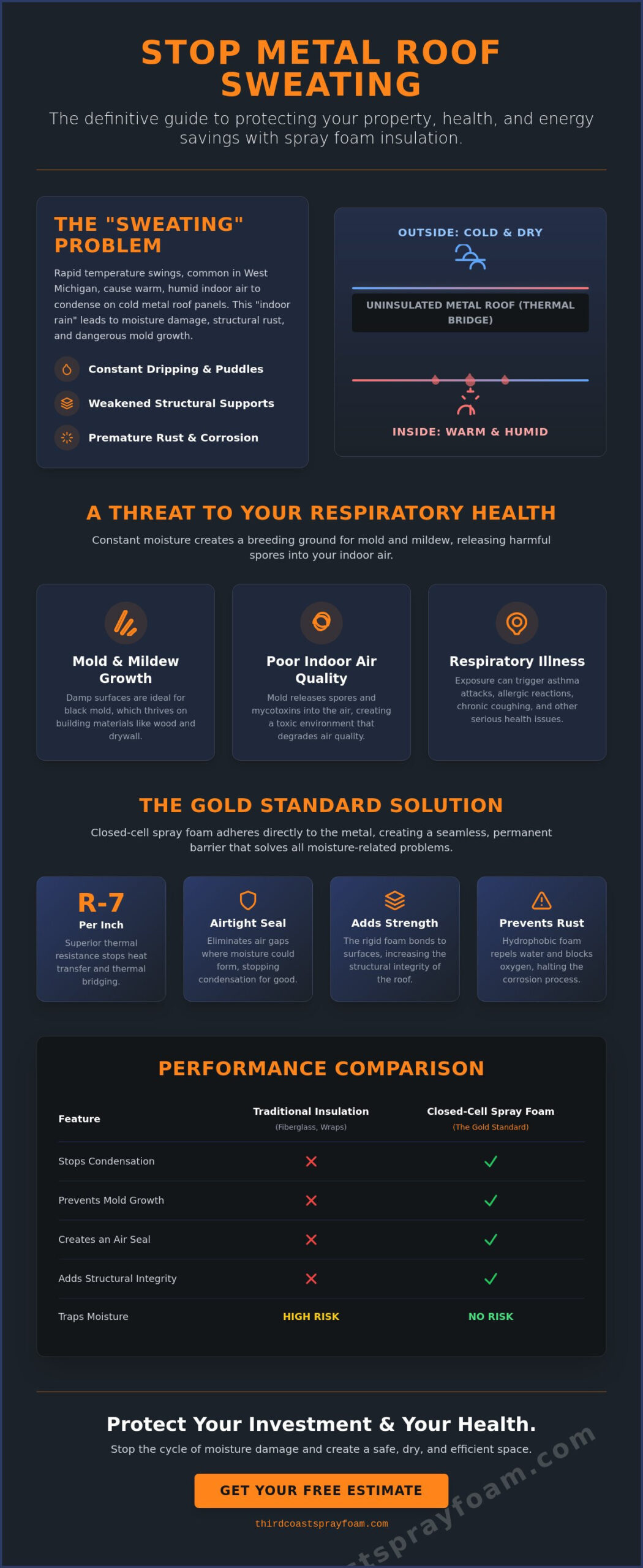
Comparing the Options: Why Traditional Insulation Fails on Metal
Many property owners initially look for the most affordable way to insulate their structures, often turning to materials designed for traditional wood-framed homes. However, metal buildings operate under different physical rules. Using spray foam insulation for metal roofs addresses the root cause of moisture, whereas traditional options often hide the problem until it becomes a structural or health crisis. Choosing the wrong material can actually accelerate the very issues you’re trying to prevent.
The “DIY trap” is another common hurdle. Small retail kits often lack the precise temperature controls and high-pressure delivery systems needed for a perfect chemical cure. This frequently leads to poor adhesion on metal surfaces, leaving gaps where condensation can still form. Improperly mixed foam can also result in lingering odors and a failed thermal barrier. A professional application ensures a stable, inert material that provides a permanent return on investment through energy savings and the total prevention of mold remediation costs.
The Failure of Fiberglass on Metal
Fiberglass batts are a common choice, but they are fundamentally incompatible with raw metal surfaces. Because fiberglass is porous, it allows humid air to pass through it easily. When that air hits the cold metal roof, it condenses into water. The fiberglass then acts like a giant sponge, trapping that moisture against the metal and your structural wood. This leads to hidden rust and the rapid growth of mold colonies. These colonies release spores that circulate through your building, directly impacting your respiratory health and indoor air quality. Fiberglass also suffers from the “chimney effect,” where air bypasses the batts through small gaps, rendering the insulation nearly ineffective. Third Coast Spray Foam explicitly does not offer fiberglass insulation because it fails to provide the air seal required for the Michigan climate.
Reflective Barriers vs. Air Sealing
Reflective “bubble” wrap is another frequent alternative, but it’s often misunderstood. While these products can reflect radiant heat from the sun during summer, they offer almost zero protection against convective heat loss. In a Michigan winter where temperatures can plummet to -10°F, you need a high R-value to keep your interior warm. Reflective barriers don’t stop the air movement that causes condensation and “sweating” on the underside of your roof. Professional spray foam provides both the high R-value and the airtight seal necessary to keep your heating bills low and your indoor environment healthy. You can even offset the cost of this permanent solution by utilizing the energy efficient home improvement credit. If you want to protect your property and your health, our Closed Cell Spray Foam Insulation is the only choice that delivers a bone-dry interior year-round.
Professional Installation: Securing Your Michigan Structure
The most advanced materials on the market only perform as well as the hands that install them. While the benefits of spray foam insulation for metal roofs are clear, achieving a permanent air seal requires a deep understanding of Michigan’s environmental variables. Our team doesn’t just spray foam; we manage a complex chemical reaction that must be perfectly timed and balanced to ensure your building remains healthy and structurally sound for decades. Expert execution is what transforms a simple service into a lifelong investment.
We also stand by our “clean site” promise. Our team uses professional-grade protective coverings to shield your vehicles, equipment, and floors from any potential overspray. We treat your property with the same respect we give our own, leaving you with nothing but a high-performance thermal barrier. Prioritizing spray foam insulation for metal roofs is a pragmatic decision that protects both your financial investment and your family’s health. Don’t let another season of “indoor rain” damage your structure or compromise your air quality.
The Third Coast Difference in West Michigan
We take immense pride in serving our neighbors across Grand Rapids, Lansing, and Muskegon. Our local expertise allows us to anticipate the specific humidity challenges that come with living near the lakeshore. We view every project as a holistic system, ensuring that our process protects your indoor air quality and structural integrity. By choosing a local partner, you’re investing in a team that understands why a bone-dry interior is non-negotiable for Michigan property owners. Our commitment to quality means we never cut corners on site preparation or safety protocols.
What to Expect on Installation Day
Our process is designed to be transparent and efficient, minimizing disruption to your daily operations. We follow a strict protocol to ensure the highest standards of safety and performance:
- Step 1: Surface Inspection and Cleaning: We begin by verifying that the metal roof deck is dry and free of contaminants. This ensures the foam achieves the maximum chemical bond required for long-term adhesion.
- Step 2: Precision Application: Our technicians apply closed-cell foam to the exact specified thickness. We constantly monitor ambient temperature and humidity levels throughout the day, as even slight local variations can impact the foam’s density and R-value.
- Step 3: Quality Assurance and Health-Safety Walkthrough: Once the application is complete, we conduct a final check to ensure the monolithic seal is perfect. We also verify that our ventilation protocols have maintained a safe environment, prioritizing your respiratory health from the moment we leave the site.
Choosing a professional path ensures your structure is protected from the corrosive effects of moisture and the health risks of mold growth. If you’re ready to secure your property with a reliable, high-performance solution, our specialists are here to help you build a safer and more efficient environment.
Secure Your Structure and Your Health
Protecting your Michigan property is a long-term commitment that requires the right materials. We have explored how professional spray foam insulation for metal roofs creates a permanent air seal that eliminates condensation and stops the growth of toxic mold. By choosing a high-performance vapor barrier, you aren’t just saving on energy bills; you’re actively safeguarding your respiratory health and the structural integrity of your building. A dry interior is the foundation of a safe, productive workspace or storage environment that lasts for decades.
Our team has provided expert installation for Grand Rapids and Muskegon since 2013. We specialize in closed-cell moisture prevention and maintain strict health-focused air quality standards on every job site to ensure your safety. It’s time to trade the musty smells and dripping rafters for a clean, dry, and efficient interior that stands up to our local climate. Get Your Free Metal Roof Insulation Estimate in West Michigan and take the first step toward a healthier indoor environment. We look forward to providing the reliable, permanent protection your property deserves.
Frequently Asked Questions
Does spray foam cause metal roofs to rust or corrode?
No, professional spray foam actually protects your roof from corrosion. Because closed-cell foam is hydrophobic and creates an airtight seal, it prevents oxygen and moisture from reaching the metal surface. Since oxidation requires both moisture and air, the foam effectively halts the rusting process. This protection extends the lifespan of your metal panels compared to uninsulated structures.
What is the best type of spray foam for a metal roof?
Closed-cell spray foam is the superior choice for all metal roofing systems in Michigan. It provides a higher R-value of approximately R-7 per inch and acts as a built-in vapor barrier. Unlike open-cell foam, it is vapor-impermeable. This is essential for preventing the condensation that leads to mold growth and respiratory health issues in humid environments.
Can I spray foam the underside of my metal roof myself?
We strongly advise against using DIY kits for metal roof projects. These kits often lack the pressure and temperature controls required for a proper chemical cure, which can lead to poor adhesion or lingering odors. Professional installation of spray foam insulation for metal roofs ensures the material is inert and safe, protecting your indoor air quality from the start.
How thick should spray foam be on a metal roof in Michigan?
A thickness of 2 inches of closed-cell foam is the professional standard for most Michigan structures. This depth provides an R-value of approximately R-14 and creates a complete vapor barrier to stop condensation. This thickness meets the requirements to prevent sweating while maximizing the thermal efficiency of your pole barn or commercial building.
Will spray foam stop my pole barn roof from sweating?
Yes, spray foam is the only permanent solution to stop a metal roof from sweating. By adhering directly to the metal, it eliminates the air gap where warm, moist air would otherwise meet the cold roof surface. This removes the dew point entirely, ensuring your interior stays bone-dry regardless of the humidity levels outside.
Is spray foam safe for indoor air quality and my family’s health?
Yes, professional spray foam improves indoor air quality by preventing the growth of black mold and mildew. By stopping moisture buildup, it eliminates the spores that trigger asthma and other respiratory health issues. Our team uses low-VOC materials and follows strict ventilation protocols to ensure your indoor environment is safe and healthy for your family.
How long does spray foam insulation last on a metal building?
Spray foam is designed to last for the entire lifespan of your building. Unlike fiberglass batts that sag, settle, or trap moisture over time, hardened closed-cell foam remains dimensionally stable. It stays bonded to the metal permanently, providing consistent thermal protection and air sealing without the need for future maintenance or replacement.
Can spray foam be applied to a metal roof that already has some rust?
Yes, spray foam can be applied to metal with surface rust, provided the surface is properly prepared. We inspect the roof to ensure the rust is stable and not structural. If the metal is clean and free of loose debris, the spray foam insulation for metal roofs will grip the surface and seal it off from the oxygen needed for further corrosion.
Disclaimer
Information provided is for general educational purposes. Individual needs and circumstances vary. Speak to an experienced professional to get the correct information for your situation.