
If your Grand Rapids brick home feels drafty despite the thermostat being set to seventy, could the very walls meant to protect you be harboring invisible moisture and mold? You aren’t alone in feeling that persistent West Michigan chill or noticing a faint, musty scent in the basement. Many local homeowners assume these are just unavoidable “old house” quirks, but specialized spray foam insulation for brick homes Grand Rapids offers a permanent solution to these structural and health-related frustrations.
We believe a home should be a sanctuary for your family’s health, not a source of respiratory concern. This guide explains how professional closed cell spray foam protects masonry from West Michigan moisture while drastically improving indoor air quality. We’ll walk through the current 2026 HFO-compliant standards, show you how to stack the 30% federal tax credit with local DTE and Consumers Energy rebates, and explain why an airtight seal is your best defense against mold growth. Discover how to create a warm, draft-free environment that supports both your physical comfort and your long-term financial well-being.
Key Takeaways
- Understand why brick’s porous nature creates a “hard sponge” effect and how to stop moisture migration within your walls.
- Learn why professional spray foam insulation for brick homes Grand Rapids is the most effective way to eliminate drafts and lower monthly utility costs.
- Discover the direct connection between airtight sealing and improved respiratory health by preventing mold growth and blocking outdoor allergens.
- Navigate 2026 energy standards and maximize your investment by stacking federal tax credits with local utility rebates from DTE or Consumers Energy.
- Identify why Closed Cell Spray Foam is the superior choice for brick structures because of its high R-value and integrated vapor barrier.
The Unique Challenges of Insulating Brick Homes in West Michigan
Brick homes are a staple of Grand Rapids architecture, known for their timeless aesthetic and structural durability. However, these masonry structures present significant thermal challenges that modern siding materials don’t share. Brick possesses high thermal mass, meaning it absorbs and stores heat or cold for extended periods. Selecting the right spray foam insulation for brick homes Grand Rapids requires an understanding of how this masonry interacts with our local weather patterns. During a biting West Michigan winter, your exterior brick walls become massive ice blocks that radiate cold directly into your living space. This forces your heating system to work overtime to combat the “cold wall” effect.
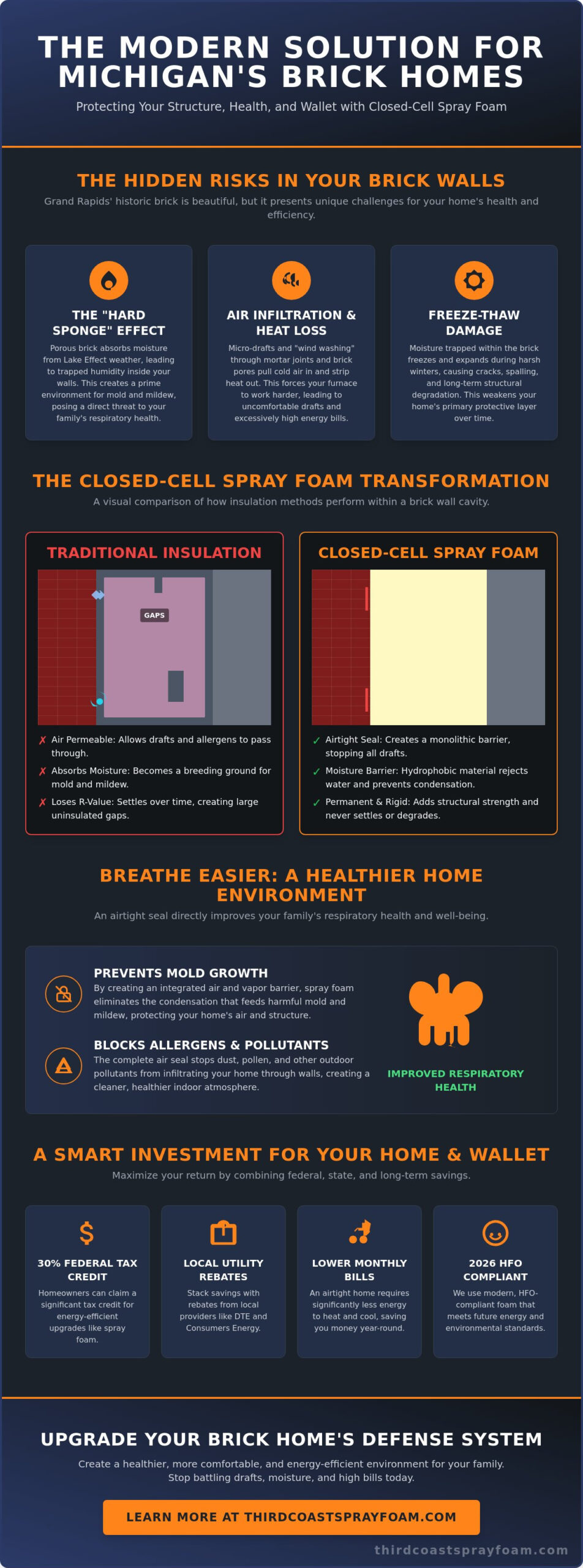
To understand why your home feels drafty, you have to look at the material itself. Brick is essentially a hard sponge. It is a porous material that naturally breathes and absorbs moisture from the environment. In our region, the constant influx of Lake Effect moisture means your brick walls are often saturated with humidity. When traditional insulation materials are used in these wall cavities, they fail to provide a true air seal. Over time, these materials can settle, creating large gaps that allow cold air and moisture to bypass the insulation entirely.
To better understand this concept, watch this helpful video:
Understanding Brick Porosity and Air Infiltration
Air doesn’t just enter through windows; it migrates through every mortar joint and microscopic fissure in the brick face. This phenomenon, known as air infiltration, carries outdoor pollutants and allergens into your home. When wind hits the side of a brick house, it causes “wind washing,” where cold air flows through the porous brick and strips heat away from the interior. Spray foam insulation solves this by filling every void, creating a monolithic barrier that stops micro-drafts at the source. This is far more effective than surface-level fixes like caulking, which fail to address the core thermal bridging issues within the wall itself.
The West Michigan Climate Factor
Grand Rapids experiences extreme humidity fluctuations that put immense stress on masonry. Our local freeze-thaw cycle is particularly brutal. Moisture trapped inside the brick can freeze, expand, and cause the brick to crack or spall over time. Professional spray foam insulation for brick homes Grand Rapids provides more than just a high R-value. It acts as a critical air barrier that manages moisture levels. By keeping the interior side of the brick warmer and dryer, we prevent the condensation that often triggers mold and mildew growth. This protection is vital for maintaining healthy indoor air quality and protecting the respiratory health of everyone in the household.
How Closed Cell Spray Foam Protects Brick Structures
Brick is an incredibly durable material, but it isn’t a complete barrier against the elements. Traditional insulation methods, such as fiberglass batts, often fail in these environments because they are air-permeable. When humid Michigan air passes through fiberglass, it reaches the cold interior face of the brick and condenses into liquid water. This moisture retention leads to mold growth that can compromise your family’s respiratory health. Using Closed Cell Spray Foam Insulation prevents this by creating a seamless, hydrophobic barrier that rejects liquid water and air alike. It’s a proactive way to ensure your indoor environment remains dry and safe.
Beyond moisture control, the rigid nature of closed-cell foam provides a physical benefit called “rack strength.” As it cures, the foam bonds to the masonry and the interior framing, essentially gluing the structure together. This is a significant advantage for older properties where mortar may have weakened over decades. It’s a permanent investment in the structural integrity of your home. If you’re considering Closed Cell Spray Foam for your renovation, you’re choosing a solution that works with the building’s physics rather than against them.
Closed Cell vs. Open Cell for Brick
While we offer both types of insulation, closed-cell is the specific recommendation for exterior brick walls. Open-cell foam is vapor-permeable, meaning it allows humidity to pass through its structure. In a brick home, this could lead to moisture getting trapped against the interior wall. Additionally, brick wall cavities are often narrow. Closed-cell foam provides a much higher R-value per inch, typically ranging from R-6.0 to R-7.0, allowing us to achieve superior thermal performance in tight spaces. This makes spray foam insulation for brick homes Grand Rapids the most efficient choice for local residents who want to maximize energy savings without sacrificing wall space.
Eliminating the “Dew Point” Inside Your Walls
Every wall has a dew point; the specific temperature where air can no longer hold its water vapor, causing it to turn into condensation. In uninsulated brick homes, this point often falls right on the interior drywall or inside the wall cavity itself. This hidden moisture is the primary trigger for mildew and structural rot. By installing a high-performance barrier, we move the dew point outside the living space. This keeps your wall assembly dry and your indoor air clean. When insulating historic buildings, it’s vital to manage these moisture dynamics to prevent long-term decay. Our team ensures that your home’s envelope is sealed tightly, protecting both the brick and your respiratory health from the dangers of interstitial condensation.
Improving Indoor Air Quality and Respiratory Health with Proper Sealing
Many homeowners view insulation solely as a way to lower utility bills. While cost savings are significant, the most profound impact of spray foam insulation for brick homes Grand Rapids is actually on the health of the people living inside. Traditional homes with porous brick exteriors often act as unintended filters for outdoor pollutants. Without a proper air seal, your walls allow dust, vehicle exhaust, and industrial particulates to seep into your living spaces. We treat your home as an integrated system where the building envelope serves as the first line of defense for your lungs.
Drafty rooms do more than just cause discomfort. They create rapid temperature swings that can disrupt sleep and put unnecessary stress on the body’s respiratory system. By creating a consistent thermal boundary, we eliminate the cold spots where condensation typically forms. This stability is a vital component of a healthy indoor environment, ensuring that your heating and cooling systems can maintain a steady, comfortable climate without constant contamination from the outside air.
Mold Prevention and Environmental Safety
Mold requires three things to thrive: moisture, a food source, and the right temperature. As we established, brick’s “hard sponge” nature provides a constant supply of moisture. Traditional organic insulations like cellulose or the paper backing on fiberglass provide the food. By installing an inert, inorganic material like closed cell spray foam, we remove the environment mold needs to survive. Breathing in mold spores from damp brick cavities can lead to chronic coughing, wheezing, and severe asthma triggers. Our professional installation process uses modern, HFO-based blowing agents that meet the federal safety standards effective as of January 1, 2025. This ensures that once the foam is cured, it remains a non-toxic, stable component of your home’s structure that won’t support fungal growth.
Respiratory Health and Allergen Control
West Michigan is beautiful, but our seasonal pollen counts can be a nightmare for those with allergies. An airtight seal does more than stop the wind; it creates a controlled environment where your HVAC system can effectively filter the air. This is especially critical for seniors and young children in Grand Rapids whose respiratory systems are more sensitive to environmental triggers. When we seal the microscopic gaps in your brickwork, we stop the “chimney effect” that pulls allergens from the outside into your bedrooms.
Managing indoor humidity is another key factor for long-term wellness. High humidity levels in older brick homes encourage dust mite populations, which are a leading cause of indoor allergies. By sealing the gaps that allow humid air to enter, we keep your home’s relative humidity in a healthy range. It’s about more than just being warm. It’s about the confidence that every breath your family takes is clean and safe. This holistic approach to spray foam insulation for brick homes Grand Rapids ensures your property remains a sanctuary for physical health and comfort.
The Installation Process: Retrofitting Brick Homes in Grand Rapids
Retrofitting an existing masonry structure requires a surgical approach to ensure the building’s envelope is sealed without compromising its historic character. When we perform spray foam insulation for brick homes Grand Rapids, our process begins with a deep dive into the home’s specific anatomy. We look for moisture patterns that could lead to mold growth and evaluate the condition of the existing wall cavities. It isn’t just about adding R-value; it’s about correcting decades of thermal inefficiency while protecting the structural integrity of your property.
Assessing the Wall Cavity and Rim Joists
In many West Michigan brick-and-beam homes, the most significant energy loss occurs at the rim joist. This area, where the wooden floor framing meets the brick foundation, is often a major source of air infiltration. We prioritize Rim Joist Insulation because sealing this gap prevents the “stack effect” from pulling cold basement air and potential allergens into your living spaces. If our assessment reveals old, sodden fiberglass or cellulose, we perform a complete Insulation Removal to ensure the new foam bonds directly to a clean, dry surface. We utilize high-resolution thermal imaging cameras to identify specific thermal bridges and hidden air leaks within your masonry walls before we begin. This data-driven approach ensures we address the unique needs of your specific home layout.
What to Expect on Installation Day
A typical Grand Rapids brick home retrofit is an intensive but efficient process. Most residential projects are completed within one to two business days, depending on the square footage and the complexity of the wall cavities. Before the first gallon of foam is sprayed, we meticulously prep your home. We cover floors, furniture, and personal belongings with protective plastic sheeting to maintain a pristine indoor environment and prevent any dust from settling in your living areas.
Safety is our top priority. During the application of Closed Cell Spray Foam Insulation, we require residents and pets to vacate the premises for a specific curing period, typically 24 hours. This ensures that the HFO-based foam becomes completely inert and safe for re-entry. Our technicians monitor ventilation throughout the process to protect your home’s indoor air quality. We treat the exterior brick facade with extreme care; if injection is required, we use small, strategically placed access points that are later sealed to match your existing mortar. Once the installation is complete, we perform a thorough cleanup and a final walkthrough to verify the air seal. If you’re ready to secure your home’s future, schedule a professional assessment of your brick structure today. This proactive step ensures your property remains a healthy, mold-free environment for your family.
Choosing Third Coast Spray Foam for Your Brick Home Upgrade
Our team doesn’t just install insulation; we engineer indoor environments that promote long-term wellness. Choosing spray foam insulation for brick homes Grand Rapids is a significant investment in your property’s future. It requires a partner who understands the nuances of local masonry and the unique environmental stressors of West Michigan. We’ve built our reputation on a foundation of local reliability and technical precision. Every project we undertake is viewed through a holistic lens, ensuring your home’s thermal envelope works as a single, integrated system to protect your family’s health and comfort.
We believe that a home’s structural integrity is inseparable from the well-being of its occupants. That’s why we prioritize a health-first approach. We don’t just fill gaps; we eliminate the moisture pathways that lead to mold growth and respiratory irritation. By choosing a specialist who understands the specific challenges of brick structures, you’re opting for a permanent solution that pays dividends in both air quality and energy savings for decades to come.
Local Expertise in Grand Rapids and Beyond
Our crews have spent years working within the diverse neighborhoods of Grand Rapids, Muskegon, and Holland. We understand the specific architectural styles found in Kent County, from historic brick manors to mid-century masonry builds. Each of these structures has a different moisture profile and framing layout. Our experience allows us to navigate these complexities without damaging the aesthetic value of your brickwork. For a deeper dive into the technical specifications of our primary solution, you can explore our detailed guide on closed cell spray foam.
A Holistic Approach to Home Wellness
A healthy home starts from the ground up. While insulating your brick walls is a critical step, true protection often requires integrating crawl space insulation and encapsulation with your wall retrofits. This multi-layered strategy prevents damp soil odors and soil gases from migrating upward into your bedrooms. Our dedication to improving the respiratory health of our neighbors drives us to use only HFO-compliant materials that meet the federal safety standards updated in 2025. We take immense pride in our craft because we know a mold-free home is a safer home for seniors, children, and everyone in between.
Securing your property against West Michigan’s moisture is a pragmatic decision for your family’s physical and financial future. We offer comprehensive energy and health assessments to identify the specific vulnerabilities in your brick structure. Let us help you eliminate the musty odors and drafty rooms that have plagued your home for years. Reach out to us to schedule your consultation and take the first step toward a healthier, more efficient indoor environment.
Securing Your Brick Home’s Future and Your Family’s Health
Your brick home is a significant part of your legacy, but it shouldn’t come at the cost of your daily comfort or respiratory health. We’ve explored how the unique porosity of masonry requires a specialized air-sealing strategy to manage West Michigan’s moisture. By choosing spray foam insulation for brick homes Grand Rapids, you aren’t just lowering your utility bills; you’re creating a permanent barrier against mold, allergens, and drafts. This is a pragmatic investment in the long-term structural and financial well-being of your property.
Since 2013, we’ve served as local West Michigan experts dedicated to health-conscious air quality solutions. Our expertise in closed cell foam and crawl space encapsulation ensures that every corner of your property is protected from the ground up. You deserve the confidence that comes with a warm, dry, and healthy indoor environment. Don’t let another season of high bills and musty odors compromise your standard of living. It’s time to take control of your home’s performance and ensure your indoor air is as clean as possible.
Get Your Free Insulation & Home Health Estimate Today. We look forward to helping you make your home the sanctuary it was always meant to be.
Frequently Asked Questions
Is spray foam safe for older brick homes in Grand Rapids?
Yes, spray foam is safe and highly beneficial for older brick homes when installed by experienced professionals. We use modern HFO blowing agents that comply with the 2025 federal standards. These products are inert once cured, which means they don’t off-gas or compromise your indoor air quality. By sealing the building envelope, we prevent the “chimney effect” that pulls pollutants from old basements into your living areas.
Will insulating my brick walls cause the brick to crumble or spall?
No, professional installation actually helps prevent spalling by managing moisture correctly. Spalling occurs when water gets trapped inside the brick and freezes. Closed cell foam acts as a vapor barrier, keeping interior humidity away from the brick face. This prevents the freeze-thaw cycles from causing structural damage. We move the dew point outside the wall assembly, which keeps the masonry drier and more stable over time.
How much can I save on energy bills by insulating my brick home?
Homeowners often see a significant reduction in monthly utility costs after installing spray foam insulation for brick homes Grand Rapids. While exact savings vary based on your home’s layout, the combination of air sealing and high R-values reduces the load on your HVAC system. You can also stack a $1,200 federal tax credit with local utility rebates, such as the $800 DTE Energy insulation rebate, to lower your initial investment costs.
Does spray foam insulation help with indoor allergies and asthma?
Yes, spray foam is a powerful tool for improving respiratory health. By creating an airtight seal, it blocks outdoor allergens like West Michigan pollen and dust from entering your home. It also eliminates the damp environments where mold and dust mites thrive. This results in cleaner indoor air, which is vital for family members who struggle with asthma or chronic respiratory sensitivities.
How long does the installation process take for a brick house?
Most residential brick home retrofits are completed within one to two business days. The timeline depends on the total square footage and whether we are performing additional services like crawl space encapsulation or insulation removal. We prioritize a clean, efficient workspace to minimize disruption to your routine. Residents typically need to vacate for 24 hours during the spray and curing process to ensure maximum safety and air quality.
Can spray foam be installed in a brick home without removing the drywall?
Yes, we can often insulate existing brick walls without a full drywall tear-out. We use specialized injection techniques through small, strategically placed access points that are easily repaired. We also target critical areas like the rim joist and attic, which provide massive improvements to your home’s thermal performance without disturbing your interior finishes. This approach allows us to seal the building envelope while keeping your renovation costs manageable.
What is the difference between open and closed cell foam for brick walls?
Closed cell foam is the superior choice for exterior brick walls because it serves as a built-in vapor barrier. Unlike open cell foam, which is vapor-permeable, closed cell rejects moisture and prevents it from reaching your interior framing. It also offers a higher R-value per inch, which is essential for the narrow cavities often found in older masonry. This choice ensures long-term structural integrity and a mold-free indoor environment.
Is there a tax credit for spray foam insulation in Michigan?
Yes, the 2026 federal 25C tax credit allows Michigan homeowners to claim 30% of their insulation material costs, up to a maximum of $1,200 annually. You can claim this using IRS Form 5695. Additionally, local residents can often stack this with utility-specific incentives. For example, the 2026 DTE Energy program offers an insulation rebate of up to $800, making professional spray foam insulation for brick homes Grand Rapids a more accessible investment for local families.
Disclaimer
Information provided is for general educational purposes. Individual needs and circumstances vary. Speak to an experienced professional to get the correct information for your situation.