What if the musty smell in your crawl space is more than just an annoying old-house quirk, but a direct threat to your family’s respiratory health? Most homeowners in our region are all too familiar with the bite of lake-effect winters and the skyrocketing heating bills that follow. It’s frustrating to pay a premium for comfort only to deal with persistent drafts and aggravated seasonal allergies. When searching for the residential spray foam contractors West Michigan families can rely on, the focus should extend beyond simple R-values to the actual quality of the air your children breathe every day.
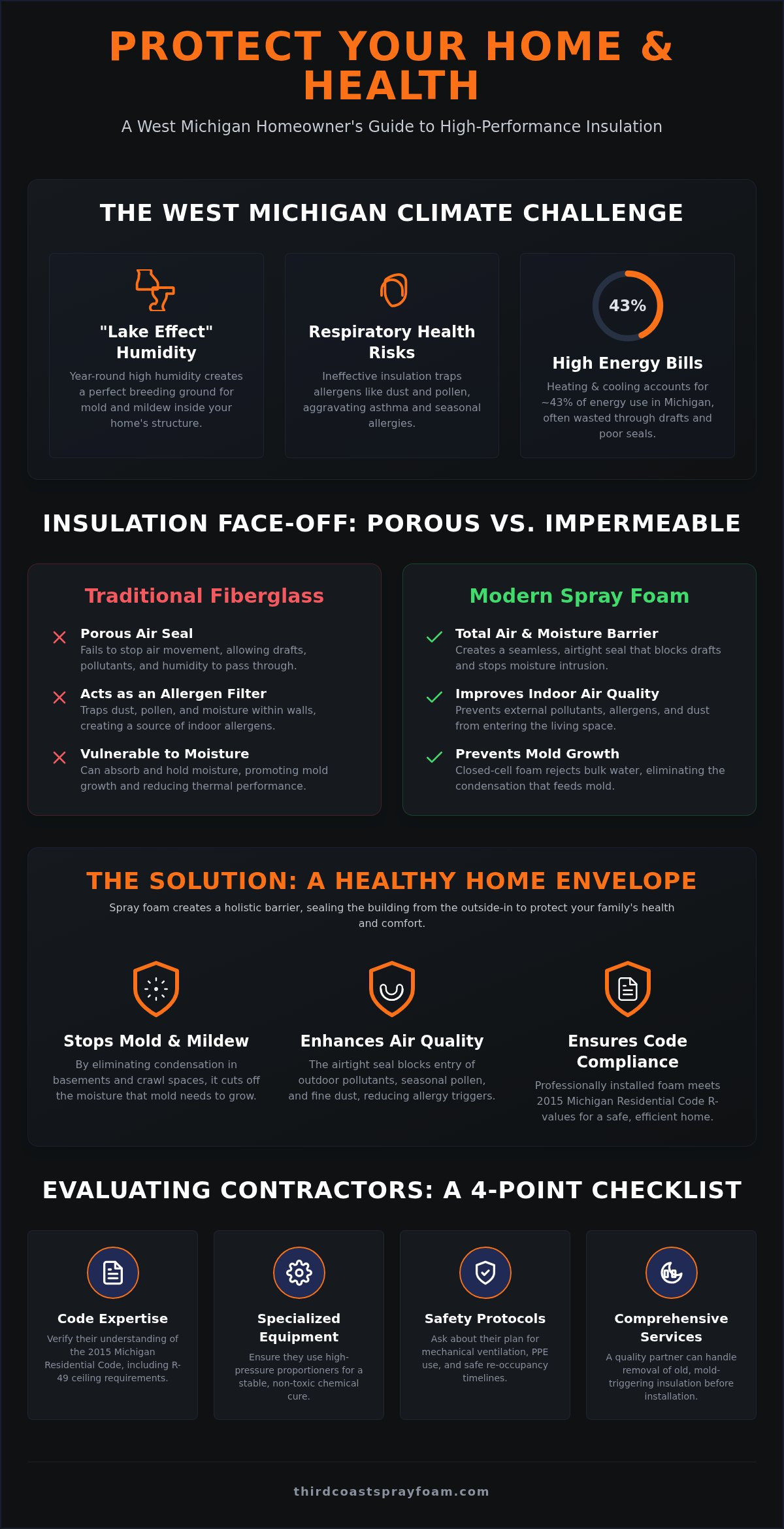
We understand that your home is a sanctuary, not just a structure. This guide will show you how to choose an insulation partner that uses a holistic approach to protect your indoor air quality while slashing your energy consumption. Since heating and cooling account for approximately 43% of a home’s total energy use in Michigan, the right seal is a financial and physical necessity. We’ll explore how professional sealing prevents mold growth and helps you meet the 2015 Michigan Residential Code. By the end, you’ll know exactly how to secure a permanent insulation solution that keeps your home healthy, dry, and efficient for the long haul.
Key Takeaways
- Understand how a total air and moisture barrier protects your family’s respiratory health by preventing the growth of mold and mildew triggers.
- Learn why specialized equipment and local code expertise are essential criteria when evaluating the residential spray foam contractors West Michigan families trust with their homes.
- Discover the specific challenges of “Lake Effect” humidity and how crawl space encapsulation creates a dry, healthy foundation for your living space.
- Identify the critical differences between open and closed-cell foam to ensure your insulation project provides maximum thermal resistance and structural integrity.
- Gain insights into achieving a permanent energy-saving solution that lowers utility bills while maintaining a stable, pollutant-free indoor environment.
The Link Between West Michigan Insulation and Respiratory Health
Living along the West Michigan lakeshore brings unique environmental challenges that extend far beyond heavy winter snow. The “Lake Effect” is a year-round phenomenon that drives high humidity levels into homes in Muskegon, Grand Haven, and surrounding coastal communities. When this excess moisture penetrates your home, it creates a perfect breeding ground for mold and mildew. Spray foam insulation serves as a total air and moisture barrier, stopping the cycle of condensation that often leads to structural damage and respiratory irritants. By creating a seamless seal, this technology prevents the damp, heavy air from settling into your wall cavities and floor joists.
Many homeowners are surprised to learn that traditional insulation materials like fiberglass can actually degrade indoor air quality over time. Because fiberglass is porous, it doesn’t stop air movement; instead, it acts as a giant filter that traps dust, pollen, and moisture. These trapped particles can eventually become a source of allergens right inside your walls. When you work with experienced residential spray foam contractors West Michigan families can trust, the goal is to establish a “healthy home envelope.” This holistic approach seals the building from the outside in, ensuring that external pollutants and humidity stay outside where they belong.
Preventing Mold and Mildew in West Michigan Basements
Basements and crawl spaces are often the primary source of air quality issues in Michigan homes. We use closed-cell spray foam in these areas because it is high-density and rejects bulk water. This material prevents warm, humid air from making contact with cold foundation walls, which eliminates the condensation that triggers mold spores. Integrating professional crawl space insulation is a vital step in protecting both your home’s structural integrity and the health of the air circulating through your living rooms.
Improving Indoor Air Quality (IAQ) Through Air Sealing
True air quality management starts with a controlled environment. Stopping drafts isn’t just about maintaining a steady temperature; it’s about blocking the entry of unconditioned air that carries outdoor pollutants. By creating an airtight seal, we help West Michigan families reduce the presence of asthma triggers like seasonal pollen and fine dust. This level of precision ensures that your HVAC system can effectively manage the air you breathe, rather than constantly fighting against the unfiltered air leaking in from the outside.
How to Evaluate Residential Spray Foam Contractors in West Michigan
Selecting the right team for your home improvement project is a decision that impacts your family’s health and financial security for decades. When vetting residential spray foam contractors West Michigan homeowners should prioritize technical expertise over the lowest bid. A professional contractor must demonstrate a thorough understanding of the 2015 Michigan Residential Code, which mandates specific thermal resistance levels like R-49 for ceilings in Climate Zone 5. However, meeting these numbers is only possible if the contractor uses high-pressure proportioners. This specialized equipment ensures the chemicals are mixed at the precise temperature and ratio required for a stable, non-toxic cure.
Safety protocols are equally critical during the installation process. A reliable installer will have a clear plan for mechanical ventilation to protect your indoor air quality while the material is being applied. According to a CDC report on chemical exposures, proper management of the work site and the use of personal protective equipment are essential for a safe and successful installation. You should also look for a partner who offers comprehensive services like insulation removal. Removing old, moisture-laden fiberglass is often the first step in eliminating existing mold triggers before installing a new, healthy barrier.
Key Questions to Ask Your Insulation Installer
Before signing a contract, ask about their specific experience with closed cell spray foam in local residential projects. Inquire about their re-occupancy timeline. A professional will explain the curing phase and how they ensure the home is safe for your family to return. If you have concerns about existing odors in your basement, ask how their encapsulation process addresses sub-floor moisture. If you want to ensure your project is handled with this level of care, you can connect with our team to discuss your specific home health goals.
Understanding R-Value and Local Michigan Codes
While R-value measures thermal resistance, it doesn’t account for air leakage. In Ottawa, Kent, and Muskegon counties, a high R-value is meaningless if drafts are still pulling in humid lake air through the rim joists. We focus on achieving a total air seal that complements the R-value requirements. This dual approach is the only way to ensure long-term energy efficiency and respiratory health in our unique climate. Balancing these technical requirements ensures your home remains a stable, pollutant-free environment regardless of the weather outside.
Why Third Coast Spray Foam is the Trusted Choice for Michigan Families
At Third Coast Spray Foam, our commitment to West Michigan begins at our home base in Fruitport. We’ve spent years serving families from Grand Rapids to Muskegon, building a reputation as residential spray foam contractors West Michigan residents can trust for both technical precision and neighborly service. We don’t just spray foam; we engineer solutions that address the specific moisture and temperature swings of our region. This includes specialized pole barn insulation and comprehensive home sealing that treats your property as a single, integrated system.
Our Health-First Installation Process
We believe a healthy home starts with a clean slate. Our process often begins with the professional removal of old, contaminated insulation that may be harboring years of dust, rodent waste, or mold spores. Once the area is clear, we apply our closed or open-cell foam with surgical precision. We pay special attention to rim joists and box sills, which are notorious for allowing foundation drafts and outdoor pollutants into your living space. By sealing these critical gaps, we eliminate the entry points for allergens and moisture, directly supporting your family’s respiratory well-being.
Maximizing Your Investment and Energy Credits
Investing in high-quality insulation is a pragmatic choice for your long-term financial health. According to industry data, proper air sealing and insulation can reduce heating and cooling costs by up to 30%, providing a steady return on investment through lower monthly utility bills. Additionally, our professional-grade installations often qualify for the energy efficient home improvement credit, which can provide a federal tax credit of up to $1,200. When you’re ready to secure your home’s structural integrity and improve your indoor air quality, we invite you to schedule a professional assessment to see the difference a health-first approach makes.
Invest in a Healthier, More Efficient Home Today
Your home should be a place where you can breathe easy, free from the threats of mold spores and outside pollutants. We’ve seen how the right insulation strategy does more than lower your utility bills; it creates a controlled environment that supports your family’s respiratory health. By prioritizing a total air and moisture barrier, you’re making a permanent investment in your property’s structural integrity. Selecting the right residential spray foam contractors West Michigan families trust requires looking for those who prioritize safety protocols and high-performance equipment over the lowest price.
Third Coast Spray Foam has served Grand Rapids, Muskegon, and Holland for over a decade. As a locally owned team based in Fruitport, we take pride in helping our neighbors achieve a mold-free, energy-efficient living space. Whether you need to seal a drafty rim joist or encapsulate a damp crawl space, our expertise in moisture barriers ensures lasting results. It’s time to stop fighting the lake-effect humidity and start enjoying a more stable, comfortable home environment.
Get Your Free Insulation Estimate in West Michigan
Taking action now ensures your home remains a sanctuary for years to come. We look forward to helping you protect your family’s well-being and your home’s value.
Frequently Asked Questions
Is spray foam insulation safe for my family and pets?
Spray foam insulation is completely safe for families and pets once the material has finished its curing process. During installation, our teams use high-pressure proportioners to ensure a precise chemical reaction that results in an inert, stable product. By sealing out external pollutants and allergens, the foam actually improves your home’s safety by enhancing the indoor air quality you breathe every day. It’s a permanent solution that won’t degrade or release particles like traditional materials.
How long does it take for spray foam to cure before we can re-enter the home?
Most residential projects require a 24-hour waiting period before you and your pets can safely re-enter the living space. This window allows the foam to complete its chemical transition and ensures that any initial odors are fully ventilated. When working with residential spray foam contractors West Michigan residents should always verify the specific re-occupancy timeline. We prioritize safety by using mechanical ventilation to manage air exchange throughout the entire application and curing phase.
Does spray foam insulation really prevent mold in Michigan crawl spaces?
Professional spray foam application is one of the most effective ways to prevent mold growth in Michigan’s damp crawl spaces. Closed-cell foam acts as a high-performance moisture barrier that prevents humid air from condensing on cold foundation surfaces. By eliminating this condensation, we remove the primary trigger for mold spores and mildew. This proactive approach protects your home’s structural integrity while ensuring that musty smells and respiratory irritants don’t migrate into your main living areas.
What is the difference between open-cell and closed-cell foam for a residential home?
The primary difference lies in the density and moisture resistance of the materials. Closed-cell foam is a dense, rigid product that rejects bulk water and provides a superior vapor barrier, making it ideal for flood-prone areas or basements. Open-cell foam is lighter and expands more, which is excellent for filling large attic cavities and providing sound dampening. Both types offer significant energy savings, but we typically recommend closed-cell for West Michigan areas where moisture control is the top priority.
Disclaimer
Information provided is for general educational purposes. Individual needs and circumstances vary. Speak to an experienced professional to get the correct information for your situation.