
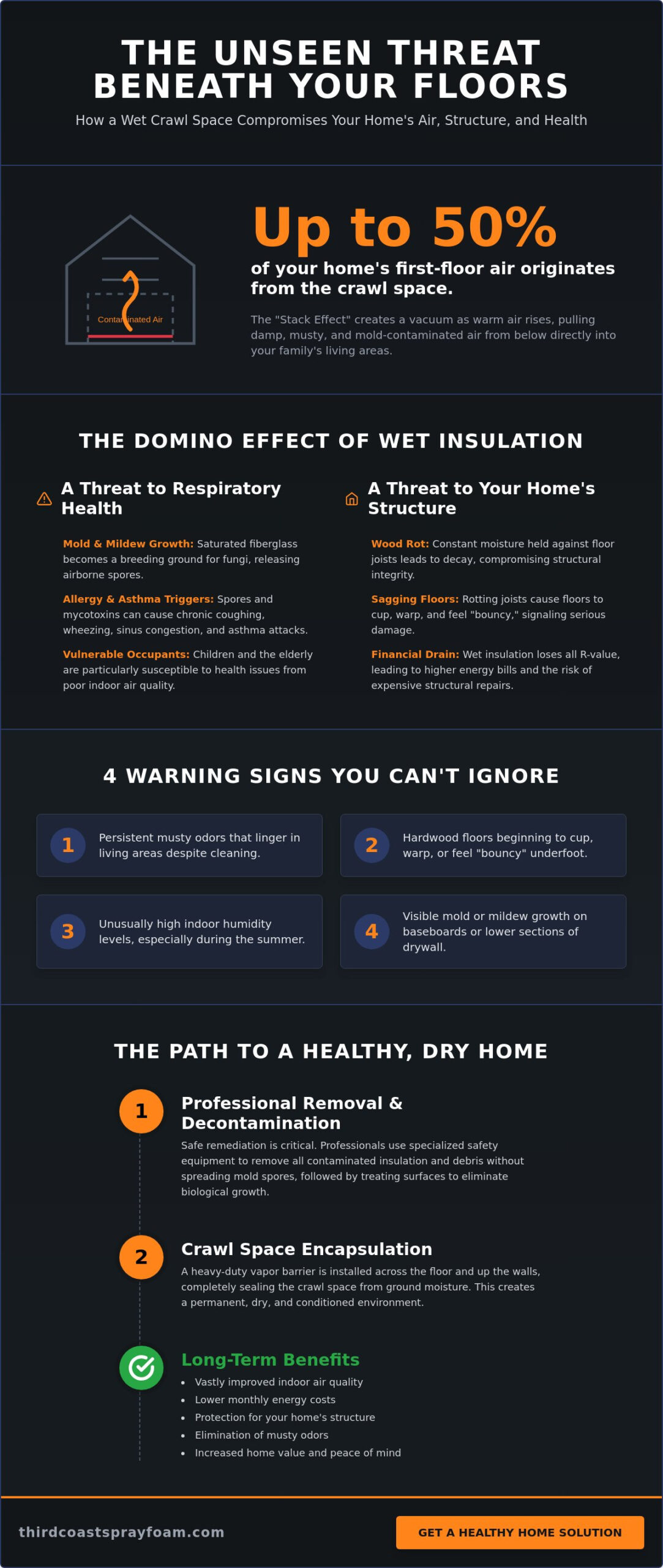
Did you know that up to 50% of the air you breathe on your home’s first floor originates directly from your crawl space? When moisture traps itself in fiberglass batts, that dark and cramped area beneath your feet becomes a breeding ground for mold and mildew. It’s completely normal to feel anxious when musty odors start drifting into your living rooms; it’s a sign that your home’s “lungs” are struggling. You want a solution that prioritizes your family’s respiratory health, and often, that starts with removing wet insulation from crawl space areas before the damage spreads to your floor joists.
We understand that dealing with a damp foundation feels like a daunting task, but addressing contaminated materials is a vital necessity for maintaining a healthy indoor climate. This guide provides the critical steps to safely identify and clear out moisture-laden debris while protecting your property’s long-term value. You’ll learn how to eliminate persistent odors and improve your indoor air quality. By the end, you’ll see exactly how a clean, dry crawl space leads to a more secure home and lower monthly energy bills through professional sealing and moisture control.
Key Takeaways
- Understand how the “Stack Effect” pulls contaminated air and musty odors from your foundation directly into your family’s living areas.
- Learn why the West Michigan climate makes wet fiberglass a significant risk for structural wood rot and sagging floor joists.
- Discover why removing wet insulation from crawl space environments requires specialized safety equipment to prevent the spread of harmful mold spores.
- Identify the professional decontamination steps necessary to restore your home’s indoor air quality and protect your respiratory health.
- Explore how crawl space encapsulation creates a permanent, conditioned zone that prevents future moisture disasters and lowers your monthly energy costs.
Why Wet Crawl Space Insulation is a Health Emergency
Fiberglass batts are often the default choice for insulation, but in a damp environment, they behave like a massive sponge. This material is made of thin glass shards that trap air to provide thermal resistance; however, those same pockets easily trap water, dirt, and organic debris. Once fiberglass becomes saturated, it loses its R-value and creates a perfect habitat for biological growth. This isn’t just a matter of reduced efficiency. It’s a direct threat to your home’s ecosystem and your family’s safety.
We see the results of the “Stack Effect” in homes across West Michigan every day. As warm air rises through your home and escapes through the attic, it creates a vacuum that pulls replacement air from the lowest point of the structure. This means the air from your foundation, often carrying microscopic contaminants, is constantly being drawn into your bedrooms and kitchen. If you’re considering removing wet insulation from crawl space areas, it’s because you’ve likely realized that your family is breathing whatever is growing beneath them.
To better understand how moisture impacts this area and the steps involved in remediation, watch this helpful video:
We’ve found that many homeowners hope wet insulation will eventually dry out on its own. This is a dangerous myth. Fiberglass is highly porous, and once it’s soaked, the weight of the water causes the material to compress and sag. This physical breakdown is permanent. Even if the moisture eventually evaporates, the insulation remains a dense, matted mess that has trapped mold spores and bacteria deep within its fibers. Without a proper vapor barrier to manage ground moisture, the cycle of dampness continues until the material is physically removed.
The Link Between Crawl Space Mold and Respiratory Health
Airborne mold spores are significant triggers for asthma attacks and chronic seasonal allergy symptoms. When these spores circulate through your living space, they can cause persistent coughing, wheezing, and sinus congestion. Children and seniors are particularly vulnerable to these environmental triggers, as their respiratory systems may be more sensitive to poor air quality. Mycotoxins are toxic secondary metabolites produced by fungi that can linger in porous materials and continue to impact health even after a mold colony appears dormant. When humidity stays high, it also invites dust mite proliferation, which further degrades the indoor air quality for everyone in the home.
Identifying the Warning Signs in Your Living Area
You don’t always need to crawl into the dark to know there’s a problem. Persistent musty odors that linger despite deep cleaning are the most common indicator of a moisture issue. You might also notice physical changes in your home’s structure, such as hardwood floors that begin to cup or “bounce” when you walk on them. High indoor humidity levels during the summer can also signal that your foundation is saturated and needs attention. In advanced cases, you may even see visible mold growth creeping up your baseboards or the lower sections of your drywall, indicating that removing wet insulation from crawl space is no longer optional.
The Hidden Dangers of Saturated Insulation in West Michigan
West Michigan’s climate is notoriously hard on residential foundations. Between the heavy spring snow melt and the dense summer humidity rolling off Lake Michigan, crawl spaces are under constant assault from moisture. When your insulation becomes saturated, it stops acting as a thermal barrier and starts acting as a catalyst for structural failure. This water-logged material holds moisture directly against your wooden floor joists, leading to wood rot and eventually sagging floors that compromise your home’s structural integrity. Removing wet insulation from crawl space environments is often the first step in stopping this decay before it requires expensive reconstruction; while this focuses on interior remediation, maintaining exterior elements is also vital, and Airlift Concrete Experts provides specialized leveling for brick steps and sinking concrete.
Beyond structural concerns, wet insulation is a heavy financial drain. Fiberglass relies on dry air pockets to provide R-value; however, when those pockets fill with water, the material becomes a conductor rather than an insulator. You’ll likely notice your heating bills climbing during our freezing winters because your furnace is fighting to warm a floor that’s essentially being cooled by a wet blanket. If you suspect your home is losing energy through its foundation, professional insulation removal is the most pragmatic way to reset your home’s efficiency and stop the waste of energy.
Michigan’s Humidity and the Dew Point Problem
During a humid Grand Rapids summer, warm air enters through traditional foundation vents and hits the cooler surfaces under your home. This causes the air to reach its dew point, resulting in condensation that drips onto your insulation. Uninsulated cold water pipes exacerbate this “drip effect,” essentially raining on your fiberglass batts from above. We’ve found that traditional vented crawl spaces often fail in the Great Lakes region because they introduce more moisture than they remove. As the EPA reminds us, the key to mold control is moisture control, and that begins with managing these condensation cycles.
Rodent Infestation and Biohazards
Saturated insulation is more than just a mold risk; it’s a primary attraction for pests. Mice and rats seek out damp fiberglass because it’s easy to tunnel through, and dangerous spiders often thrive in these undisturbed, moisture-rich settings. For expert help identifying such risks, Mosquito Assassin Pest Control LLC provides comprehensive pest management solutions. This creates a significant health hazard, as pests can introduce biohazards like hantavirus and leptospirosis into the material. As these pests live and die within your floor system, they leave behind secondary odors and decay that are eventually pulled into your living areas. Removing wet insulation from crawl space areas is the only way to fully decontaminate these zones and restore the safety of your home’s indoor air quality.
Professional vs. DIY: The Risks of Removing Contaminated Material
Disturbing saturated fiberglass is a high-risk activity that many homeowners underestimate. When you pull down a wet batt, you aren’t just moving old material; you’re releasing millions of mold spores and microscopic glass shards into a confined space. Without professional containment, these spores quickly find their way into your floor joists and eventually your HVAC system. This creates a persistent cycle of respiratory issues for everyone in the home. As detailed in the EPA guide on mold and moisture, preventing the spread of these airborne contaminants is the most critical step for maintaining healthy indoor air quality.
Safety starts with the right equipment. Professionals utilize full Tyvek suits, P100 respirators, and sealed eye protection to prevent skin contact and the inhalation of bio-aerosols. You also have to consider the “Hidden Mess” often found behind the batts. Saturated insulation frequently hides rodent carcasses, concentrated droppings, and pockets of urine. Handling these biohazards without industrial-grade protection can expose you to dangerous pathogens. Removing wet insulation from crawl space areas requires a level of precision and safety that goes far beyond a standard weekend project.
Waste management is another area where DIY efforts often fail. We’ve seen many cases where well-meaning homeowners trail contaminated debris through their kitchens and living rooms while trying to carry it outside. Our team follows a systematic bagging process where each section of insulation is sealed within the crawl space itself. This ensures that no mold spores or pest waste can escape into your clean living areas during the transition from the foundation to the disposal truck.
The High Cost of DIY Mistakes
DIY projects often lead to accidental cross-contamination. If you don’t seal your floor vents properly, the dust and mold spores released during the removal process will settle deep in your ductwork. Inadequate cleaning is another common pitfall. If the wood isn’t properly treated after the fiberglass is gone, mold will immediately regrow on your new materials. Additionally, the physical strain of working in low-clearance Michigan foundations shouldn’t be underestimated. It’s a cramped, dark, and exhausting environment that leads to frequent injuries for those who aren’t trained for the specific rigors of the job.
Why Professional Removal is a Safer Investment
We use negative air machines equipped with HEPA filtration to scrub the air while we work. This creates a pressure barrier that keeps contaminants from entering your home’s “breathing zone.” We also apply industrial-grade antimicrobial treatments that are far more effective than over-the-counter sprays. Finally, we handle the proper disposal of hazardous bio-waste according to local Muskegon regulations. This ensures that contaminated material is moved safely from your property to a licensed facility. This holistic approach protects both your home’s structural integrity and your family’s long-term physical well-being.
Step-by-Step: How to Safely Remove and Decontaminate
Safety and containment are the two pillars of a successful remediation project. Before we touch a single batt of fiberglass, we establish a strict containment barrier. This involves sealing every floor vent and access point to ensure that the dust and spores disturbed during the process don’t migrate into your living areas. Removing wet insulation from crawl space environments is a surgical task that requires precision. We work in small sections, immediately placing saturated material into 6-mil polyethylene bags and sealing them before they ever leave the foundation. This prevents the cross-contamination that often occurs when debris is carried through a home unprotected.
Once the old material is gone, we perform a detailed inspection of the underlying structure. We focus heavily on the sill plates and rim joists, looking for hidden wood rot that wet fiberglass often masks. If the wood is still holding moisture, we deploy industrial-grade dehumidifiers and high-velocity air movers. You can’t effectively treat wood that’s still saturated; it must be dry to properly absorb antimicrobial agents. We use moisture meters to confirm the wood has reached an acceptable level before moving to the decontamination phase. If you’ve discovered moisture under your floors, you can schedule a professional crawl space inspection to assess the extent of the damage.
The Decontamination Protocol
Cleaning the wood is just as important as removing the debris. We apply EPA-registered antimicrobial solutions to every inch of exposed wood to kill remaining mold colonies. We don’t just spray and walk away. Our team hand-scrubs areas with visible mold staining to ensure the solution penetrates deep into the wood grain, which preserves the structural integrity of your floor joists. After the treatment dries, we perform a final HEPA vacuuming of the entire floor. This removes the fine, settled dust and spores that standard vacuums would simply blow back into the air, ensuring your home’s “breathing zone” remains clean and safe.
Assessing the Rim Joists
The rim joist is the most common point of air and moisture leakage in Michigan homes. During our inspection, we check for “soft” wood or discoloration that indicates long-term water intrusion. If the wood is compromised, it may require structural reinforcement before new insulation is installed. Properly addressing these leaks is a vital part of a holistic moisture control strategy. You can learn more about How to Properly Insulate Rim Joists in Grand Rapids to see how we seal these critical transition points. Removing wet insulation from crawl space areas is only half the battle; ensuring the perimeter is airtight prevents the cycle of dampness from starting all over again.
Beyond Removal: Preventing Future Moisture Disasters
Removing wet insulation from crawl space areas is only the first phase of a permanent solution. If you simply replace old fiberglass batts with new ones, you’re essentially setting a timer for the next moisture disaster. Fiberglass is an absorbent material that cannot survive the high humidity levels typical of West Michigan foundations. To truly protect your home’s structural integrity and your family’s respiratory health, you must shift your focus toward creating a controlled, conditioned environment. This means moving away from traditional vented systems that invite damp air and choosing materials that actively repel moisture.
We recommend a holistic approach that treats the foundation as an integrated part of your home’s HVAC system. This involves sealing out the elements and ensuring that the air beneath your feet is as clean and dry as the air in your living room. By eliminating the environmental triggers that lead to mold growth, you safeguard the indoor air quality for everyone in the household. After removing wet insulation from crawl space foundations, the goal is to ensure that the replacement materials don’t provide a foothold for future mold or mildew colonies.
The Power of Crawl Space Encapsulation
Encapsulation is the process of transforming a dirty, damp crawl space into a clean, dry zone. This begins by installing a heavy-duty vapor barrier over the floor and walls to block the constant rise of ground moisture. We also seal foundation vents to stop the entry of humid Michigan air, which is the primary cause of summer condensation. This system effectively isolates your home from the earth, preventing the “Stack Effect” from pulling dampness and spores into your bedrooms. You can find more details in our guide on Crawl Space Insulation in Grand Rapids & West Michigan: A Health-First Guide.
Why Closed-Cell Spray Foam is the Permanent Solution
When it comes to insulation, closed-cell spray foam is the gold standard for foundation work. Unlike fiberglass or open-cell foam, closed-cell material is “un-floodable” because its dense structure doesn’t allow water to penetrate. It adheres directly to your foundation walls and rim joists, creating a built-in vapor barrier that prevents condensation from forming on cold surfaces. This eliminates the dampness that triggers mold outbreaks and degrades your respiratory health. For a deeper look at why this material is a superior investment, check out our Closed Cell Spray Foam in Grand Rapids: The West Michigan Homeowner’s Guide.
To maintain this dry environment, a permanent dehumidification system is essential. This ensures that even during the most humid Grand Rapids summers, the air beneath your home stays at a safe, consistent level. This long-term monitoring is the final step in securing your home against the financial and physical risks of moisture damage.
Take Control of Your Home’s Environmental Health
Addressing the damp conditions beneath your home is a vital step in protecting your family’s respiratory health and your property’s structural integrity. We’ve explored how the “Stack Effect” pulls contaminants into your living areas and why the West Michigan climate makes traditional fiberglass a liability. Successfully removing wet insulation from crawl space areas isn’t just about clearing out debris; it’s about breaking the cycle of moisture and mold growth for good. By transitioning to a conditioned space with encapsulation and closed-cell spray foam, you ensure a permanent investment in your home’s durability and efficiency.
Our team of local West Michigan specialists provides expert removal and decontamination services designed with a health-first perspective. We utilize advanced safety protocols and industrial-grade solutions to restore your indoor air quality and give you peace of mind. You don’t have to live with musty odors or the fear of hidden wood rot any longer. Protect your home’s air quality—Schedule a professional crawl space inspection today. We are here to help you create a cleaner, safer, and more stable environment for your family.
Frequently Asked Questions
Can I just leave wet insulation to dry on its own?
No, you cannot leave wet insulation to dry on its own because fiberglass batts act like a sponge that permanently loses its thermal properties once saturated. The material becomes a breeding ground for mold and bacteria within 24 to 48 hours. Even if the moisture eventually evaporates, the compressed fibers remain matted and continue to trap harmful spores that degrade your indoor air quality and threaten your family’s respiratory health.
How much does it cost to remove wet crawl space insulation in Michigan?
The cost for removing wet insulation from crawl space areas in Michigan varies based on the size of the foundation and the level of contamination. Factors such as the presence of animal waste or advanced mold growth require specialized safety equipment and disposal protocols. While every project is unique, investing in professional removal ensures that hazardous materials are handled safely without cross-contaminating your home’s living areas or HVAC system.
Is wet fiberglass insulation toxic?
While fiberglass itself is a physical irritant to the skin and lungs, it becomes a significant biohazard when it remains wet. The saturated material provides the perfect environment for mold, mildew, and bacteria to thrive. These biological contaminants can release mycotoxins and spores into your home’s “breathing zone.” This creates a toxic environment that often leads to chronic coughing, wheezing, and other severe respiratory health issues for vulnerable residents.
What happens if I don’t remove wet insulation from my crawl space?
If you don’t address the problem, the moisture trapped against your floor joists will lead to wood rot and significant structural instability. Additionally, removing wet insulation from crawl space environments is necessary to stop the “Stack Effect” from pulling musty odors and allergens into your bedrooms. Neglected insulation also attracts rodents and wood-boring insects, which use the damp material as a nesting ground and introduce further biohazards into your home.
Can wet insulation cause mold in my upstairs living room?
Yes, moisture from your foundation can definitely lead to mold growth in your upstairs living room. As warm air rises, it pulls damp, spore-laden air from the crawl space into your walls and flooring. This increases the overall humidity in your home, which allows mold to flourish on baseboards, drywall, and even furniture. Managing foundation moisture is a critical component of maintaining a healthy and safe indoor environment for your family.
How do I know if my crawl space insulation is wet without going down there?
You can often identify a moisture problem by paying attention to changes in your home’s environment. Persistent musty odors that won’t go away with cleaning are a primary warning sign. You might also notice that your hardwood floors are beginning to cup or feel “bouncy” when you walk on them. High indoor humidity levels during a Michigan summer are another strong indicator that your foundation is saturated and needs a professional inspection.
Does insurance cover the removal of wet insulation?
Insurance coverage for insulation removal typically depends on the underlying cause of the moisture. If the damage resulted from a sudden, accidental event like a burst pipe, many policies will cover the remediation costs. However, damage caused by long-term seepage or a lack of maintenance is often excluded. We recommend reviewing your specific policy or speaking with your agent to determine if your crawl space situation qualifies for a claim.
What is the best insulation to replace wet fiberglass with?
Closed-cell spray foam is the superior choice for replacing old fiberglass in a foundation environment. Unlike traditional batts, closed-cell foam is dense and does not absorb water, making it essentially “un-floodable.” It adheres directly to foundation walls and rim joists to provide a built-in vapor barrier that prevents condensation. This permanent solution eliminates the dampness that causes mold and helps you maintain a stable, healthy indoor climate year-round.
Disclaimer
Information provided is for general educational purposes. Individual needs and circumstances vary. Speak to an experienced professional to get the correct information for your situation.