
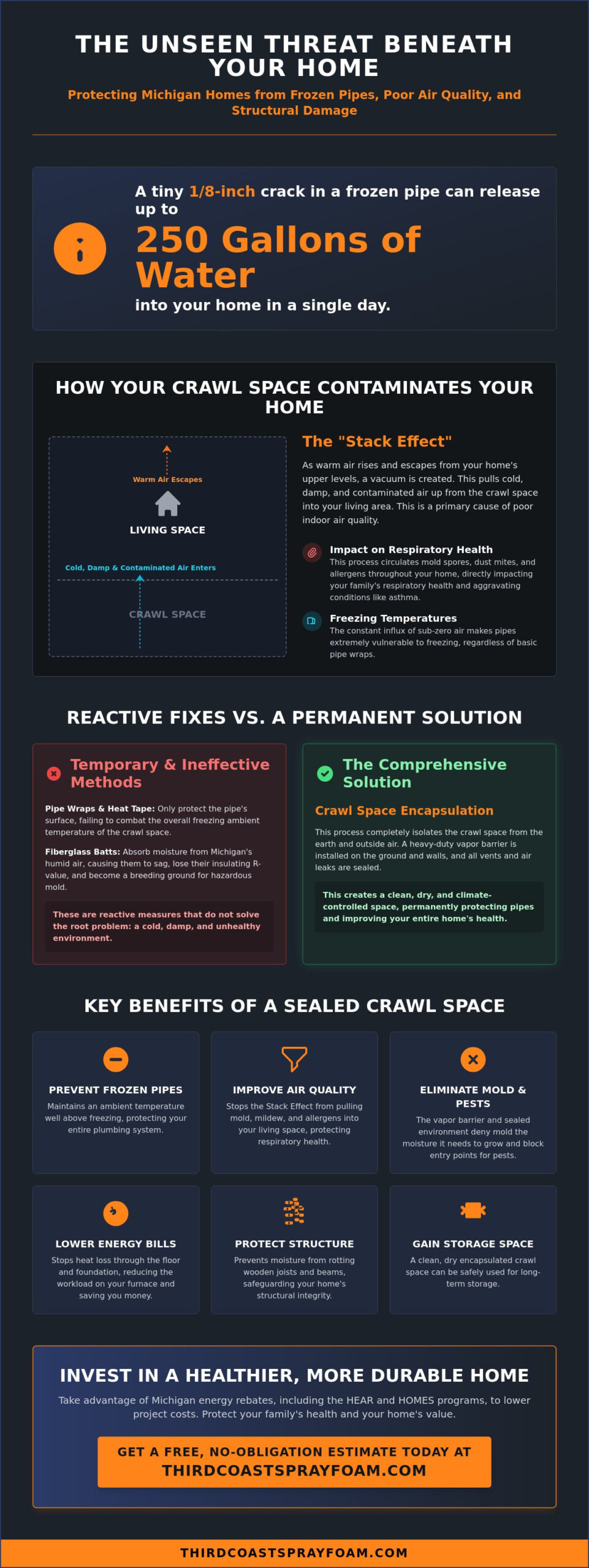
Did you know that a tiny one-eighth inch crack in a frozen pipe can dump up to 250 gallons of water into your home in a single day? For many residents, preventing frozen pipes in crawl space Michigan winters is a source of constant anxiety as the temperatures drop. You’re likely tired of watching your energy bills climb while worrying about the musty smells and poor air quality that drift up from your floorboards. It’s frustrating to feel like you’re losing money and comfort to a part of your home you rarely even see.
We’re here to show you that a warm, dry crawl space is a vital investment in your family’s long-term physical and financial well-being. This guide will teach you how to protect your home from burst pipes while significantly improving your indoor air quality and respiratory health. We’ll preview the latest 2026 Michigan Residential Code requirements, explain how state-administered rebates like the HEAR and HOMES programs can lower your project costs, and detail why crawl space encapsulation is the most effective way to ensure a mold-free environment. By the end of this article, you’ll have a clear roadmap to a more efficient, secure, and healthy home.
Key Takeaways
- Learn why shifting from localized pipe wraps to a comprehensive strategy for preventing frozen pipes in crawl space Michigan homes provides superior protection during sub-zero temperature drops.
- Understand the “Stack Effect” and how sealing your crawl space prevents mold spores and allergens from migrating into your living area and impacting your family’s respiratory health.
- Discover how crawl space encapsulation creates a permanent climate-controlled system that stabilizes temperatures and eliminates the moisture that leads to structural decay.
- Identify how professional air sealing and rim joist insulation can significantly lower utility bills by stopping the heat loss that forces your furnace to work overtime.
- Find out how to leverage 2026 Michigan energy rebates to invest in a healthier, more durable home environment with expert local solutions.
Why Michigan Winters Are Brutal on Crawl Space Plumbing
Michigan winters don’t just feel cold; they create a physical vacuum in your home. This is known as the “Stack Effect.” As warm air rises and escapes through your upper floors and attic, it pulls frigid, sub-zero air into your crawl space through every tiny gap, vent, and crack. This constant influx of freezing air makes preventing frozen pipes in crawl space Michigan homes a significant challenge for even the most diligent homeowners. Standard winterization methods, like dripping faucets or basic pipe wraps, often aren’t enough when the thermometer hits the negatives for days on end during a polar vortex.
Our unique Lake Effect moisture adds another layer of complexity. High humidity levels in the Great Lakes region can saturate porous materials, leading to the rapid degradation of traditional insulation. When insulation becomes damp, its R-value plummets, leaving your plumbing completely exposed. This damp environment also serves as a breeding ground for mold and mildew. These contaminants don’t stay under your floor; they enter your living space through the same Stack Effect that pulls in the cold air. This can compromise your indoor air quality and trigger respiratory health issues for your family. A frozen pipe isn’t just a plumbing risk; it’s often a symptom of a home environment that’s struggling to stay healthy and dry.
To better understand this concept, watch this helpful video:
The Physics of Thermal Bridging and Air Infiltration
Concrete foundation walls are excellent conductors of cold. They act as a “heat sink,” pulling warmth away from the interior space and transferring it to the frozen ground outside. This process is called thermal bridging. It effectively turns your foundation into a giant ice pack that surrounds your plumbing. Additionally, unsealed rim joists allow for “wind wash,” where moving air strips heat directly from the crawl space. Simple foam pipe sleeves often fail here because they only protect the pipe’s surface. They can’t combat the overall sub-freezing temperatures within the entire cavity. Without a continuous thermal barrier, your pipes are at the mercy of the external climate.
Identifying Vulnerable Pipe Locations in Your Foundation
Not all pipes are at equal risk. Plumbing located near exterior vents or poorly sealed access doors is usually the first to go. We often see “dead legs,” which are sections of pipe that don’t see frequent water flow, freeze first because the water remains stagnant. Pipes running along the rim joist area are particularly vulnerable. Without proper rim joist insulation or crawl space encapsulation, these pipes sit in a direct path of incoming arctic air. Remember that a crack as small as one-eighth of an inch in a pipe can leak up to 250 gallons of water per day. Finding these weak points before the first freeze is essential for protecting your property and your peace of mind.
The Best Strategies for Preventing Frozen Pipes in Crawl Space Michigan
Many homeowners rely on hardware store foam sleeves or electric heat tape as their primary defense. While these tools are common prevent frozen pipes strategies, they are often insufficient for the extreme cold of a West Michigan winter. These are reactive measures that don’t address why the crawl space is freezing in the first place. For long-term security, we must shift the focus from insulating the individual pipe to insulating the entire space. By controlling the environment, you ensure that the ambient temperature stays well above the freezing point, regardless of how low the mercury drops outside.
Why Traditional Fiberglass Batts Fail in Michigan Crawl Spaces
Fiberglass batts are a frequent culprit in crawl space failures. In our humid climate, these batts absorb moisture like a sponge. Once damp, fiberglass loses its ability to trap heat, and the weight causes the material to sag away from the subfloor. This creates “cold pockets” where frigid air can circulate directly around your plumbing lines. Beyond the thermal failure, sagging fiberglass becomes a prime nesting ground for rodents. Their dander and waste can enter your home’s air supply, leading to musty odors and potentially aggravating respiratory health conditions for those living above. If you notice your insulation is drooping, it’s time to consider a more permanent solution.
The Power of Closed Cell Spray Foam for Pipe Protection
Closed cell spray foam is the gold standard for preventing frozen pipes in crawl space Michigan homes. Unlike traditional materials, this foam expands to fill every crack and crevice, creating a seamless air and thermal barrier. It offers a high R-value per inch, which is critical when space is limited. Because it’s water-resistant, it won’t degrade or support mold growth even in damp conditions. This protects your home’s structural integrity while keeping the air you breathe clean and safe. By sealing the rim joists and foundation walls with this professional-grade material, you effectively bring the crawl space into the conditioned envelope of your home. This approach also helps you meet the updated Michigan Residential Code requirements, which now mandate higher R-values for crawl space walls to ensure maximum energy efficiency.
If you’re tired of worrying about burst pipes every time a winter storm hits, it might be time to evaluate your crawl space insulation with a local specialist.
Beyond Freezing: How Crawl Space Health Impacts Your Family
While preventing frozen pipes in crawl space Michigan winters is a primary goal for property maintenance, the implications of a plumbing failure extend far beyond water damage. A pipe that freezes and then thaws often develops hairline fractures. These slow, hidden leaks can saturate wooden floor joists and subflooring long before you notice a puddle. This constant moisture creates a localized environment with high relative humidity, which is the perfect fuel for biological growth. Protecting your pipes is, in many ways, the first step in protecting your family’s respiratory health.
The Connection Between Burst Pipes, Humidity, and Mold
When a pipe leaks or condensation builds up on cold metal surfaces, mold colonies can establish themselves in as little as 24 to 48 hours. In Michigan, we frequently see species like Cladosporium and Penicillium thriving in damp foundation spaces. These molds are opportunistic. They consume the organic cellulose in your home’s wooden structure, leading to rot and instability. As these colonies grow, they release microscopic spores into the air. Because of the Stack Effect we discussed earlier, these spores are pulled upward through floor penetrations and into your living areas. If you’re breathing in air from a damp crawl space, you’re likely exposing your family to environmental triggers that can cause long-term health issues.
Improving Respiratory Health Through Professional Air Sealing
A healthy home requires a controlled indoor environment. Professional air sealing and crawl space encapsulation do more than just stop the cold; they create a barrier against allergens, dust, and outdoor pollutants. By sealing the rim joists and floor gaps, we stop the migration of contaminated air into your kitchen and bedrooms. This is particularly vital for occupants with asthma or existing respiratory conditions. We use professional-grade materials that are designed to be durable and low in volatile organic compounds (VOCs). This ensures that the solution itself doesn’t contribute to poor air quality. To determine if your foundation is affecting your well-being, look for these common symptoms of an unhealthy crawl space:
- Persistent musty or “earthy” odors in the lower levels of your home
- Indoor relative humidity levels consistently staying above 50 percent
- Visible dark spotting or fuzzy growth on floor joists or insulation
- Aggravated allergy or asthma symptoms that improve when you leave the house
- Cupping or warping of hardwood flooring on the first floor
Addressing these issues early prevents the need for costly insulation removal and structural repairs later. A dry, sealed space is a permanent investment in both your property’s integrity and your family’s physical safety.
Crawl Space Encapsulation vs. Traditional Insulation
Comparing traditional insulation methods to encapsulation is like comparing a light jacket to a fully insulated, windproof parka. While exposed fiberglass or foam sleeves attempt to protect individual components, they leave the foundation vulnerable to the brutal drafts we experience in West Michigan. Encapsulation is a comprehensive strategy for preventing frozen pipes in crawl space Michigan homes because it transforms the area into a conditioned part of the building. This shift in strategy ensures that your plumbing is never exposed to the sub-zero air that causes catastrophic bursts. It’s a permanent solution that replaces the cycle of temporary, “band-aid” plumbing fixes with a robust building envelope.
What is Encapsulation and How Does It Stop the Freeze?
The process involves three main components: a heavy-duty vapor barrier, closed cell spray foam on the foundation walls, and a dedicated dehumidification system. This creates a sealed envelope that traps the natural thermal energy from the earth, which typically remains between 50 and 55 degrees Fahrenheit. By keeping the crawl space at this consistent temperature, you eliminate the need for localized pipe heating like heat tape or electric wraps. The system works as a holistic unit to keep the space dry and warm. Crawl space encapsulation is the gold standard for Michigan foundation protection and long-term respiratory health.
Traditional insulation often has a short lifespan in damp environments. Exposed fiberglass batts can sag or lose their thermal resistance within five to ten years as they absorb moisture and harbor pests. In contrast, a professionally installed encapsulation system is designed for durability, often lasting 20 years or more with minimal maintenance. This longevity ensures that your indoor air quality remains high, as there are no degrading materials to release fibers or dust into your home’s ventilation. By choosing a system that prioritizes both temperature control and moisture management, you’re investing in the structural integrity of your entire property.
Evaluating the Long-Term ROI of a Sealed Foundation
Investing in a sealed foundation offers a much higher return than the recurring costs of emergency plumbing repairs. West Michigan properties with encapsulated crawl spaces often see an increase in resale value because buyers prioritize energy efficiency and a healthy indoor environment. You can also leverage the energy efficient home improvement credit and other state-administered rebates like the HOMES or HEAR programs to offset the initial investment. These programs provide significant financial support, with some Michigan households eligible for thousands of dollars in weatherization assistance.
Beyond tax incentives, the daily savings on utility bills are immediate. A sealed crawl space stops the “Stack Effect” from pulling cold air into your home, which can reduce your heating costs by 15 percent or more. This prevention of structural rot and costly plumbing emergencies makes encapsulation a pragmatic choice for any homeowner focused on long-term security. If you’re ready to upgrade your home’s defense against the winter, consult with our team about crawl space encapsulation to see how we can protect your family and your pipes.
Protecting Your West Michigan Home with Third Coast Spray Foam
At Third Coast Spray Foam, we recognize that preventing frozen pipes in crawl space Michigan winters requires more than just a quick fix. It requires a deep understanding of our regional climate and the specific stresses it places on a home’s foundation. Whether you are in Fruitport, Grand Rapids, or Muskegon, your home faces unique challenges from Lake Effect moisture and sudden temperature drops. Our team prioritizes a health-first approach. We ensure that every project not only protects your plumbing but also safeguards your indoor air quality and respiratory health. By focusing on the entire building envelope, we eliminate the root causes of freezing and mold growth. This provides a permanent solution that simple plumbing repairs or temporary wraps cannot match.
We take immense pride in our role as a trusted advisor for West Michigan homeowners. Navigating Michigan’s updated building codes, such as the 2026 requirements for increased R-values in crawl spaces, can be complex. Our expertise ensures your home meets these standards while maximizing energy efficiency. We don’t just install insulation; we provide a system designed for durability and performance in climate zones 5 and 6. We focus on the long-term physical and financial well-being of our clients, ensuring your investment stands up to the harshest polar vortex.
Local Expertise from Grand Rapids to Muskegon
Our roots in the West Michigan community run deep. We understand that a property in Muskegon faces different moisture levels than one in Grand Rapids. This regional knowledge allows us to tailor our services, from residential crawl space encapsulation to pole barn insulation, to ensure maximum protection. We maintain a transparent, no-fluff communication style because we believe you deserve clear, honest answers about your home’s structural health. Our team treats every project as an integrated system. We focus on how each component, from the rim joist insulation to the vapor barrier, works together to keep your environment safe and dry.
Schedule Your Free Crawl Space Inspection Today
The first step toward a warmer, healthier home is a professional evaluation. During our inspection, we use advanced diagnostic tools like thermal imaging and moisture meters to pinpoint exactly where cold air and dampness are entering your foundation. We look for the “cold pockets” and thermal bridges that make preventing frozen pipes in crawl space Michigan so difficult. Our installation process is clean and efficient. We adhere to strict safety protocols to ensure your family’s well-being is never compromised during the removal of old materials or the application of new foam. Don’t wait for the next sub-zero forecast to discover a burst pipe or a mold problem. Contact Third Coast Spray Foam today to schedule your inspection and secure your home’s future.
Secure Your Home Against the Next Michigan Winter
A resilient home begins with a foundation that can withstand the harshest Great Lakes weather. By shifting your focus from localized plumbing fixes to a comprehensive building envelope strategy, you achieve more than just preventing frozen pipes in crawl space Michigan winters. You create a controlled environment that stabilizes temperatures and stops the migration of mold spores and allergens into your living areas. This holistic approach is essential for protecting your family’s respiratory health and ensuring your property remains structurally sound for decades to come.
As a local Fruitport business with over 10 years of experience, we’ve seen how professional crawl space encapsulation transforms homes from Grand Rapids to Muskegon and Lansing. We specialize in health-conscious solutions that prioritize your long-term physical and financial security. Don’t leave your home’s integrity to chance when the next polar vortex arrives. Protect your Michigan home; get your free crawl space inspection from Third Coast Spray Foam today! We are ready to help you build a more efficient, mold-free, and secure environment for your loved ones.
Frequently Asked Questions
Do I really need to heat my crawl space in Michigan to prevent frozen pipes?
No, you don’t need to add an active heat source if the area is properly encapsulated. Encapsulation traps the natural thermal energy from the earth, which stays between 50 and 55 degrees Fahrenheit. This method is a much safer and more efficient way of preventing frozen pipes in crawl space Michigan winters than relying on expensive, high-maintenance heaters that can fail during a power outage.
Is spray foam insulation safe for my family’s respiratory health?
Yes, professional-grade spray foam is safe for your family once it has fully cured. We use high-quality materials with low volatile organic compounds (VOCs) to ensure your indoor air quality remains high. By sealing out outdoor pollutants and dust, this insulation actually helps protect your respiratory health by creating a cleaner, more controlled environment within your living space.
How much does crawl space encapsulation cost in West Michigan?
Project costs vary based on the square footage of your foundation and the current condition of your insulation. While we provide custom quotes for every home, Michigan residents can often offset their investment through state-administered programs. The HOMES and HEAR rebate programs can cover a significant portion of energy efficiency upgrades, making a healthier, more durable home more accessible for many households.
Can I just use a space heater in my crawl space during a polar vortex?
Using a space heater in a crawl space is a significant fire hazard and is not a recommended solution. It’s a temporary fix that fails to address the air leaks and thermal bridging causing the freeze. A permanent investment in rim joist insulation or full encapsulation is a far more reliable and secure way to manage temperatures during extreme weather events.
Will insulating my rim joists really help my pipes from freezing?
Yes, insulating your rim joists is one of the most effective steps in preventing frozen pipes in crawl space Michigan homes. This area is often the primary entry point for frigid air. By sealing these gaps with closed cell spray foam, you stop the “wind wash” effect that strips heat from your plumbing. It’s a critical component of a holistic building envelope strategy.
What are the first signs that my crawl space pipes are starting to freeze?
A sudden drop in water pressure or a complete lack of flow from a single faucet is usually the first warning sign. You might also notice frost forming on the exterior of exposed pipes or a slight bulging in the metal. Catching these symptoms early is vital. It allows you to take action before a hairline crack leads to major water damage and mold growth.
Does crawl space encapsulation help with mold and allergies?
Yes, encapsulation is a primary defense against mold and environmental allergens. By controlling humidity and sealing out damp earth, you eliminate the moisture that mold colonies need to thrive. This prevents spores from being pulled into your home through the Stack Effect. This process significantly improves your air quality and reduces triggers for asthma and other respiratory health conditions.
How long does it take for Third Coast Spray Foam to insulate a crawl space?
Most residential projects are completed within one to three days. The exact timeline depends on the scope of work, such as whether we need to perform insulation removal of old, damp materials before installing new foam. We prioritize a clean and efficient installation process. Our goal is to provide a permanent solution with minimal disruption to your daily life.
Disclaimer
Information provided is for general educational purposes. Individual needs and circumstances vary. Speak to an experienced professional to get the correct information for your situation.