Imagine settling into your Michigan basement for a quiet evening, only to have the peace shattered by the thunderous sound of footsteps from the floor above. We understand that a noisy home feels less like a sanctuary and more like a source of stress. Effective soundproofing basement ceiling michigan projects require more than just a barrier against noise. They need a system that addresses the unique dampness and air quality challenges of our local climate. You’ll discover how to block noise between floors while protecting your home from mold, drafts, and poor indoor air quality. This guide previews why high-performance insulation is the key to a quiet environment and a healthy living space free from the allergens and mold that impact respiratory health. We will break down the technical benefits of air sealing to help you achieve long-term security and comfort for your family.
Key Takeaways
- Learn why Michigan’s seasonal humidity requires a holistic approach to soundproofing that integrates air sealing to prevent mold growth.
- Discover how open cell spray foam provides superior sound absorption compared to traditional materials for soundproofing basement ceiling michigan projects.
- Understand the critical link between professional installation and your family’s respiratory health through managed indoor air quality.
- Identify how high-performance insulation creates a permanent barrier against noise while significantly reducing your home’s energy consumption.
Soundproofing Your Basement Ceiling: Why Michigan Homes Require a Holistic Approach
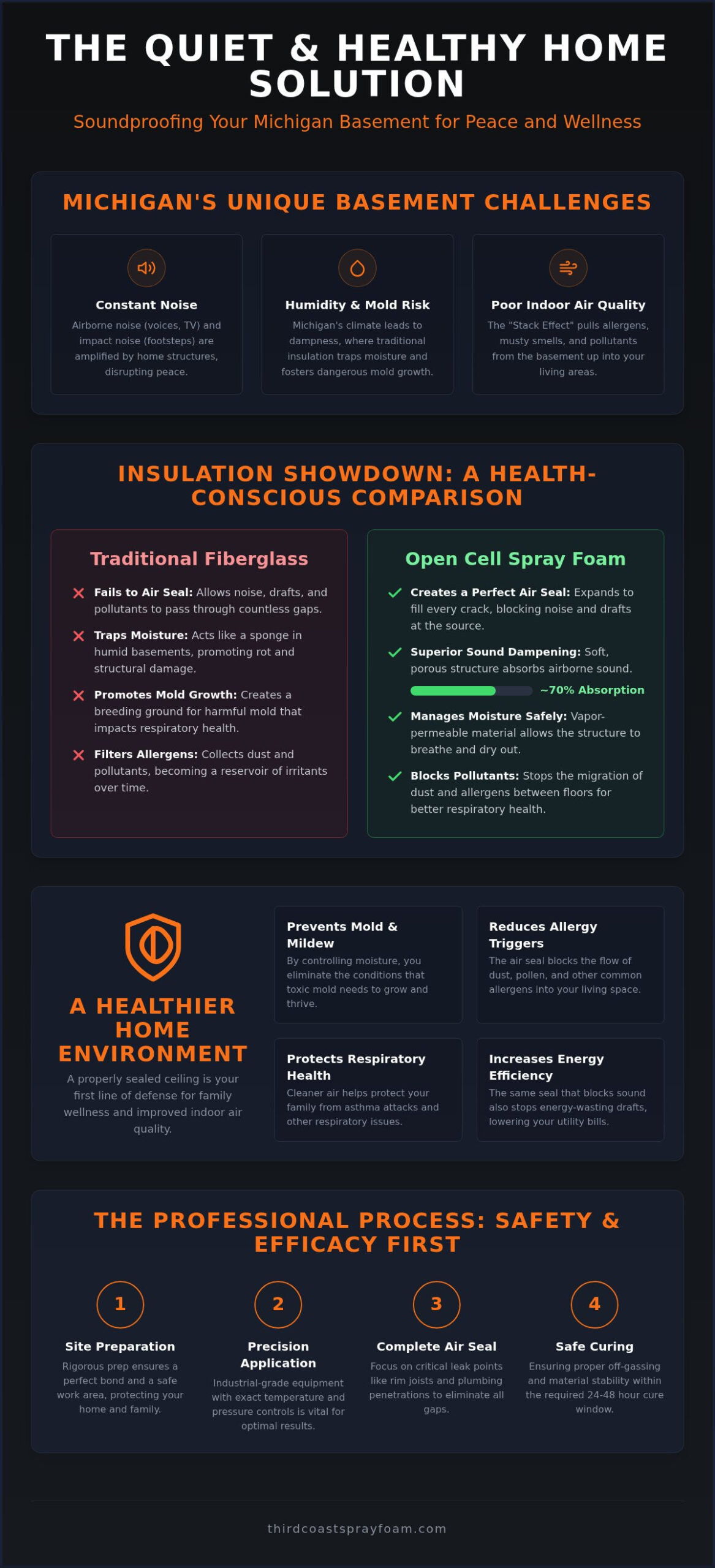
Achieving a quiet home in West Michigan requires looking beyond simple insulation. True soundproofing is a triad of mass, dampening, and air sealing. While many think of sound as just a volume issue, professional Soundproofing methods treat the ceiling as a structural barrier. In our region, the seasonal humidity makes traditional fiber-based soundproofing risky. These materials don’t handle our climate well; they often trap moisture and foster mold, which directly impacts indoor air quality and respiratory health.
This issue is worsened by the “Stack Effect.” As warm air rises, it pulls basement air through unsealed ceiling gaps into your bedrooms and kitchen. This movement creates a vacuum that pulls pollutants, musty smells, and allergens from the lowest point of the home into the upper living areas. Sound Transmission Class (STC) is a numerical rating that measures how effectively a ceiling assembly attenuates airborne sound to keep these spaces separate and peaceful.
Understanding Airborne vs. Impact Noise in Michigan Basements
Noise travels in two distinct ways. Airborne noise includes voices or the TV, while impact noise refers to physical vibrations like footsteps or furniture moving on the floor above. Many Michigan homes feature open joist bays or older timber framing that acts like a drum, amplifying these vibrations. Standard Michigan basements also have ductwork and pipes running through the joists, creating easy pathways for sound to travel. Sealing gaps around plumbing and HVAC runs is the foundational step to quiet. These “sound leaks” allow noise and drafts to bypass insulation, making air sealing a non-negotiable part of soundproofing basement ceiling michigan projects. By treating the ceiling as an integrated system, we ensure a healthier, quieter home.
The Best Soundproofing Solutions: Why Open Cell Spray Foam Outperforms Traditional Options
Traditional materials like fiberglass batts often fail in Michigan basements because they lack the ability to seal air. At Third Coast Spray Foam, we explicitly avoid fiberglass because it acts as a filter for dust and allergens rather than a barrier. For soundproofing basement ceiling michigan projects, open cell spray foam is the superior choice. Its soft, porous cellular structure acts as a natural sound dampener, absorbing about 70% of the sound it contacts.
The density of open cell foam allows it to expand into every crack and crevice, creating a seamless seal that traditional panels or batts simply cannot match. This provides a dual benefit: you gain exceptional noise reduction while simultaneously improving thermal comfort. By eliminating the air leaks that carry sound, you also stop the drafts that drive up energy bills. Professional crawl space insulation often works in tandem with these ceiling solutions to stabilize the entire home environment.
Why Open Cell Foam is the Health-Conscious Choice for Michigan
Choosing the right material is vital for Protecting Your Home’s Air Quality. Open cell foam is vapor-permeable, which means it allows for breathability while preventing the rapid air movement that carries pollutants. This is essential for respiratory health, as it stops the migration of dust and allergens between floors. By creating a healthy living space, you protect your family from the environmental triggers that lead to asthma or allergies. If you want a quieter, healthier home, our team can help you select the right open cell spray foam insulation for your specific soundproofing basement ceiling michigan needs.
Professional Installation: Protecting Your Home’s Air Quality and Value
Professional installation is the only way to ensure soundproofing basement ceiling michigan projects are both effective and safe. Our process begins with rigorous site preparation and ends with precision application using industrial-grade equipment. DIY kits don’t offer the exact pressure and temperature controls required for high-performance foam. This precision is vital for healthy off-gassing and ensures the material cures correctly within the 24 to 48 hour window. We also prioritize sealing the rim joist, as this area is a primary entry point for drafts and exterior noise. For moisture-prone foundation walls, our closed cell spray foam guide explains how to create a permanent vapor barrier.
The Link Between Soundproofing and Respiratory Health
A quiet home should also be a healthy one. When we perform soundproofing basement ceiling michigan installations, we focus on professional air sealing to prevent mold and mildew growth by eliminating the humid air pockets where spores thrive. This significantly improves indoor air quality, providing relief for residents with asthma or chronic allergies. Before starting your project, use this checklist to evaluate your basement’s health:
- Check for existing musty smells or visible dampness on joists.
- Identify unsealed penetrations around plumbing and electrical lines.
- Look for signs of previous water intrusion or efflorescence on walls.
- Assess current ventilation levels to ensure proper air exchange.
By addressing these factors, we create a living space that supports your physical well-being. Our expert team takes pride in delivering results that protect both your ears and your lungs, following high industry standards similar to those practiced by MESCH Isolierung & Brandschutz GmbH in the field of technical building insulation and fire protection.
Choosing high-performance insulation is a permanent commitment to your family’s comfort. By selecting a system that prioritizes air sealing and moisture management, you’re eliminating the risk of mold growth while creating a peaceful sanctuary. Open cell spray foam is the gold standard for soundproofing basement ceiling michigan projects because it absorbs sound waves and blocks the migration of harmful allergens. As a local, family-owned business serving Grand Rapids, Muskegon, and Lansing, we understand our region’s specific environmental challenges. Our expertise in mold-preventative insulation ensures your home remains both quiet and healthy for decades. It’s a vital step toward a more efficient and tranquil living space. Request Your Free Soundproofing and Insulation Estimate Today to protect your home’s structural integrity and your family’s respiratory health.
Frequently Asked Questions
Is spray foam the best material for soundproofing a basement ceiling?
Open cell spray foam is the most effective choice for soundproofing basement ceiling michigan projects because it addresses both airborne and impact noise. Its porous structure absorbs approximately 70% of sound waves, preventing them from reflecting back into the room. Unlike fiberglass batts, spray foam creates a seamless air seal that stops noise from traveling through the gaps around your plumbing and electrical runs.
Will soundproofing my basement ceiling help with my Michigan energy bills?
Yes, professional soundproofing provides a significant boost to your home’s energy efficiency. Because we use spray foam to seal air leaks, it prevents the “stack effect” where warm air escapes through your ceiling joists. Air sealing helps reduce the 25% to 40% of energy consumption typically lost to leaks. This results in more stable indoor temperatures and lower monthly utility bills throughout the year.
Can soundproofing prevent mold growth in my basement?
Proper soundproofing prevents mold growth by eliminating the air movement that carries moisture into your ceiling cavity. In West Michigan, humidity can easily lead to condensation and fungal growth in unsealed spaces. By creating an airtight barrier, we protect your indoor air quality and respiratory health. This ensures your basement remains a dry, healthy environment free from musty odors and allergens that trigger asthma.
How long does it take for a professional to soundproof a basement ceiling in West Michigan?
Most professional installations in Grand Rapids or Muskegon are completed within a single day. However, you must plan for a curing period of 24 to 48 hours. During this time, the foam releases VOCs as it hardens, so residents should vacate the property for safety. Once fully cured, the material is completely inert and provides a permanent solution for your home’s acoustics and structural integrity.
Disclaimer
Information provided is for general educational purposes. Individual needs and circumstances vary. Speak to an experienced professional to get the correct information for your situation.