
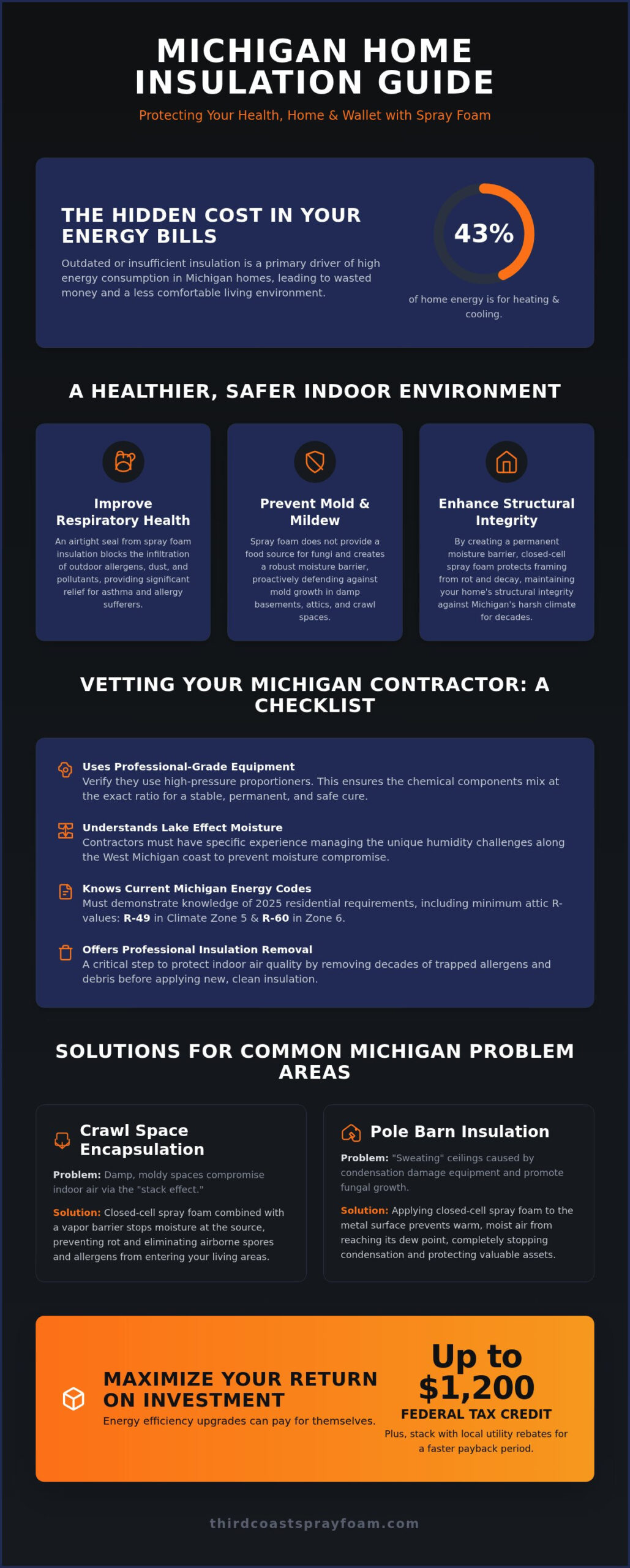
Did you know that heating and cooling account for approximately 43% of your home’s total energy use here in Michigan? If you’re tired of watching your hard-earned money vanish through a drafty attic or dealing with persistent respiratory issues caused by dusty, outdated materials, you aren’t alone. Many homeowners are looking toward the long-term benefits of spray foam insulation Michigan provides, especially as we face the rigorous standards of the 2026 energy codes. Choosing the right partner to seal your home is about more than just temperature; it’s about protecting your family’s health and ensuring your structure remains a sanctuary against the elements.
In this 2026 guide, we’ll show you how to evaluate local professionals based on their technical expertise and their understanding of our unique Lake Effect moisture challenges. You’ll discover how to identify contractors who prioritize indoor air quality by preventing mold and mildew growth, rather than just filling a gap. We’ll also break down how the right installation can help you qualify for federal tax credits of up to $1,200, ensuring your investment in a healthier, more efficient home pays off immediately. From solving pole barn condensation to lowering your monthly bills, we’ve got you covered.
Key Takeaways
- Learn how to vet Michigan contractors by verifying their technical equipment and their specific experience managing the unique Lake Effect humidity found along the West Michigan coast.
- Understand how professional insulation removal and airtight sealing improve respiratory health by eliminating old allergens and preventing mold growth in crawl spaces and attics.
- Discover the long-term benefits of spray foam insulation Michigan families rely on to create a permanent moisture barrier and a more stable, comfortable indoor climate.
- Identify why closed cell spray foam is the essential solution for stopping condensation on pole barn ceilings and protecting the structural integrity of your agricultural buildings.
- Learn how to maximize your project savings by stacking 2026 federal tax credits with local utility rebates for a faster return on your energy efficiency investment.
Evaluating Spray Foam Insulation Contractors in Michigan
Finding the right professional in West Michigan requires looking beyond a simple quote. Our region faces unique challenges from Lake Effect humidity that can compromise a building’s integrity if not managed correctly. Spray foam insulation is a complex chemical system that demands precision during application. One of the primary benefits of spray foam insulation Michigan homeowners value is the ability to create a seamless air and moisture barrier. However, this result only happens when a contractor uses professional-grade high-pressure proportioners to ensure the components mix at the exact ratio for a stable, permanent cure.
You should also prioritize contractors who offer professional insulation removal. Leaving behind old, dusty fiberglass or cellulose often traps decades of allergens, moisture, and debris. Removing these materials before applying new foam is a critical step for protecting your indoor air quality and ensuring the new seal bonds directly to a clean substrate. This holistic approach prevents the “sandwiching” of pollutants between your new insulation and the home’s framing.
Essential Qualifications for Michigan Contractors
A qualified specialist must demonstrate deep knowledge of the 2025 Michigan Energy Code. Residential requirements currently demand minimum attic R-values of R-49 in Climate Zone 5 and R-60 in Zone 6. When interviewing contractors, ask about the specific foam brands they utilize and their safety protocols regarding curing times. It’s vital that they understand regional moisture loads to help you choose between open cell and closed cell options for your specific project needs.
The Link Between Insulation and Respiratory Health
Traditional insulation materials often act like a giant air filter, trapping dust and outdoor pollutants that eventually circulate through your living space. By creating an airtight seal, spray foam effectively blocks the infiltration of seasonal allergens and particulate matter. This creates a controlled indoor environment that provides significant relief for asthma and allergy sufferers. Because the material doesn’t provide a food source for fungi, it serves as a proactive defense against the mold and mildew growth that often triggers respiratory distress in damp Michigan basements and attics.
Michigan-Specific Solutions: From Pole Barns to Crawl Spaces
Michigan’s climate is notoriously hard on structures. Between the intense humidity of the summer months and the heavy “Lake Effect” snow in winter, moisture management is a constant battle for property owners. Closed cell spray foam serves as the superior moisture barrier for our high-humidity zones. Unlike traditional materials that absorb water, closed cell foam’s dense structure prevents liquid penetration and vapor drive. This is one of the primary benefits of spray foam insulation Michigan homeowners rely on to maintain structural integrity over decades.
Protecting Your Foundation with Crawl Space Encapsulation
A damp crawl space is a breeding ground for mold and mildew. Because of the “stack effect,” the air in your crawl space eventually migrates upward into your living areas. This means your family’s respiratory health is directly linked to the conditions under your floorboards. Utilizing crawl space insulation combined with a heavy-duty vapor barrier stops moisture at the source. This encapsulation process doesn’t just prevent structural rot; it creates a clean, dry environment that significantly reduces the presence of airborne spores and allergens.
Pole Barn and Rim Joist Performance
Agricultural buildings face their own set of challenges, specifically the “sweating” ceiling phenomenon. This happens when warm, moist air hits a cold metal surface, leading to condensation that can damage equipment and promote fungal growth. Proper pole barn insulation requires a contractor who understands specific dew points to prevent this moisture buildup. Similarly, insulating rim joists is an effective way to eliminate basement drafts in Grand Rapids. Sealing these gaps prevents frozen pipes and keeps your floors warm. Since these upgrades often qualify for federal tax credits for insulation, it’s a pragmatic choice for both your comfort and your wallet. If you’re noticing cold spots or damp smells, a professional site assessment can help identify the best moisture-blocking strategy for your specific layout.
Maximizing ROI: Costs, Rebates, and Choosing Your Partner
Investing in your home’s thermal envelope is a decision that impacts your finances for decades. While traditional materials often sag or lose effectiveness due to moisture, closed cell spray foam remains structurally stable and maintains its R-value indefinitely. When evaluating the long-term benefits of spray foam insulation Michigan homeowners should look at total lifecycle costs. A properly sealed home can reduce heating and cooling needs by up to 30%, providing a much higher return on investment than cheaper, temporary fixes that require frequent replacement.
Leveraging the Energy Efficient Home Improvement Credit
Your 2026 tax return can significantly offset the cost of your project through the Energy Efficient Home Improvement Credit. This federal incentive allows you to claim 30% of the project cost, up to $1,200 annually. To ensure you qualify for the energy efficient home improvement credit, our team provides the necessary R-value certifications and manufacturer statements. Keeping these documents is vital for proving your upgrades meet the strict 2025 Michigan Energy Code standards during tax season.
The Process of Professional Insulation Removal
Before installing new foam, we prioritize a clean slate. Professional insulation removal is the essential first step for improving indoor air quality, especially in older West Michigan homes. We safely eliminate rodent waste, mold spores, and legacy dust that have accumulated over years. This process protects your respiratory health by ensuring these pollutants aren’t sealed into your walls or attic permanently. Once the space is decontaminated, the new spray foam bonds directly to your structure, creating the healthy, airtight environment your family deserves.
The Third Coast difference is rooted in our health-first, expert-led approach. We don’t just spray foam; we engineer integrated systems that protect your home from moisture while optimizing air purity. Whether you’re preparing a new build or retrofitting a legacy barn, our team ensures every inch of your property is sealed for maximum durability and comfort. We take pride in being a trusted local partner, helping our neighbors achieve the security and pragmatism of a well-insulated home.
Secure Your Michigan Home for the Long Term
Choosing the right insulation partner is a decision that protects your property’s structural integrity and your family’s respiratory health. As we’ve explored, the technical expertise of your contractor is what stands between a successful seal and persistent moisture issues. By selecting a specialist who understands our unique Lake Effect climate and prioritizes professional insulation removal, you’ll fully realize the benefits of spray foam insulation Michigan homeowners value most. This includes permanent energy savings, a significant reduction in seasonal allergens, and a proactive defense against mold and mildew growth.
Since 2013, our team has served as West Michigan’s health-focused air quality and mold prevention experts. We take immense pride in providing pragmatic, durable solutions for neighbors in Grand Rapids, Muskegon, Holland, and throughout the region. Don’t let another winter pass with high bills and drafty rooms. It’s time to invest in a healthier, more efficient indoor environment that lasts a lifetime. Request Your Free West Michigan Insulation Estimate today and take the first step toward a more secure home.
Frequently Asked Questions
What is the best type of spray foam for Michigan homes?
The best type of spray foam depends on the specific application, but closed cell foam is often the preferred choice for Michigan’s harsh winters and high humidity. It provides a higher R-value per inch and acts as a built-in vapor barrier, which is essential for managing Lake Effect moisture in basements and crawl spaces. Open cell foam is an excellent, cost-effective alternative for interior walls and attic ceilings where sound dampening and high expansion are the primary goals.
How much does spray foam insulation cost in Michigan?
The total cost for professional installation varies based on the size of your home, the type of foam selected, and whether professional insulation removal is required. While the initial investment is higher than traditional materials, the long-term benefits of spray foam insulation Michigan families experience include significantly lower utility bills and increased home value. Most residents find that the energy savings and 2026 federal tax credits help the system pay for itself over time.
Can spray foam insulation help with my allergies and respiratory health?
Yes, spray foam can significantly improve respiratory health by creating a permanent air seal that blocks outdoor allergens like pollen, dust, and particulate matter. Unlike fiberglass, which can act as a filter for pollutants, spray foam fills every crack and crevice to prevent these irritants from entering your living space. This controlled indoor environment is especially beneficial for asthma sufferers, as it also prevents the growth of mold and mildew that often triggers breathing issues.
Does spray foam insulation prevent mold in Michigan crawl spaces?
Spray foam insulation is a primary defense against mold when used as part of a comprehensive crawl space encapsulation system. By applying closed cell foam to foundation walls, we create a thermal and moisture barrier that prevents warm, humid air from condensing on cold surfaces. This eliminates the damp conditions that mold spores need to thrive, protecting your home’s structural integrity and ensuring the air circulating into your upper floors remains clean and dry.
Is spray foam insulation worth the investment compared to fiberglass?
Spray foam is a superior long-term investment because it provides both insulation and air sealing in a single application. Fiberglass batts often sag over time or lose effectiveness if they become damp; however, spray foam remains structurally stable for the life of the building. When you factor in the potential 30% reduction in heating and cooling costs, the improved indoor air quality, and the prevention of structural rot, the value far exceeds the performance of traditional materials.
Disclaimer
Information provided is for general educational purposes. Individual needs and circumstances vary. Speak to an experienced professional to get the correct information for your situation.