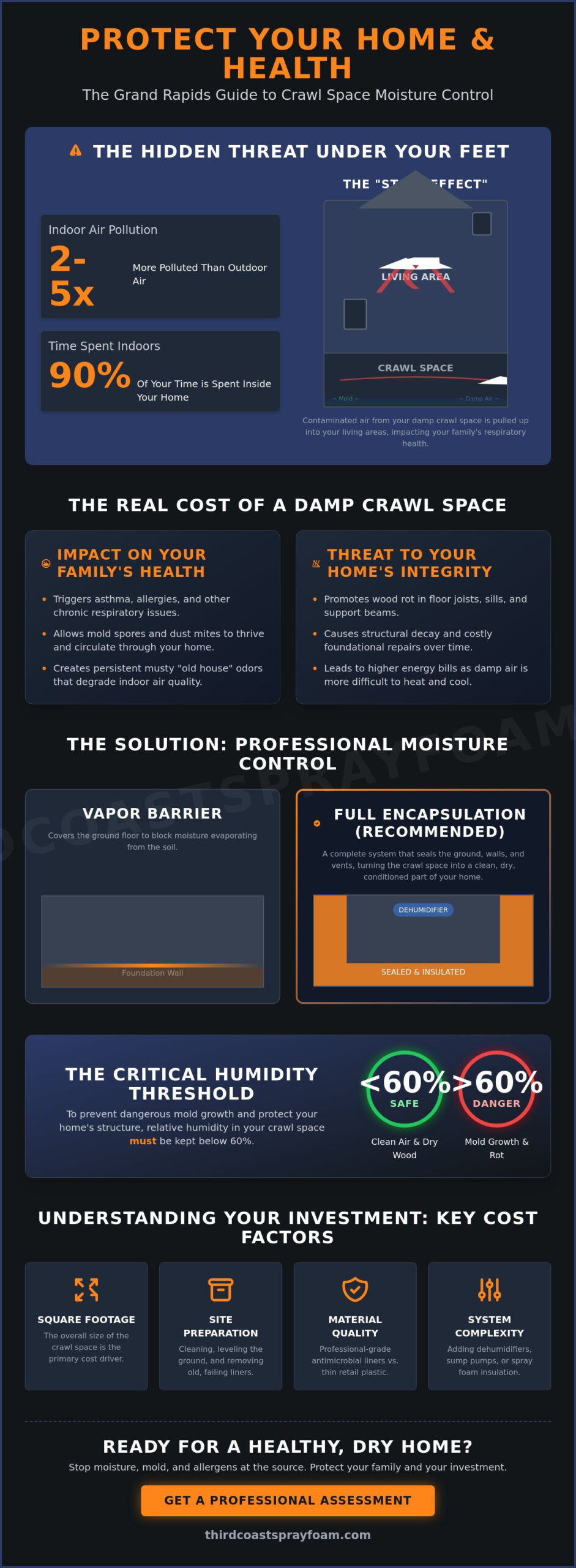
Did you know that the air inside your West Michigan home can be two to five times more polluted than the air outside? According to the Healthy Homes Coalition of West Michigan, most residents spend up to 90% of their time indoors, often breathing air that is circulated directly from a damp, unsealed crawl space. If you’ve noticed a persistent musty “old house” smell or your family is struggling with unexplained respiratory issues, your home’s environment might be the culprit. Understanding the crawl space vapor barrier cost Grand Rapids homeowners face in 2026 is the first step toward reclaiming your indoor air quality and protecting your family’s health.
It’s frustrating to deal with high energy bills and the constant worry of mold growth in the dark corners of your foundation. You want a solution that lasts. We understand the unique environmental challenges of our region and believe that a dry home is a healthy home. This guide explains the real investment required for professional moisture control and how a Class 1 vapor retarder meets Michigan’s strict residential energy codes. We will provide a clear overview of regional pricing trends, additional system upgrades like dehumidifiers, and the essential health benefits of keeping ground moisture where it belongs: outside your living space.
Key Takeaways
- Learn how the “Stack Effect” pulls damp air and allergens from your foundation into your living areas, directly impacting your family’s respiratory wellness.
- Discover the specific factors that determine the crawl space vapor barrier cost Grand Rapids homeowners should plan for in 2026, including square footage and site preparation.
- Understand why maintaining humidity levels below 60% is critical to preventing rapid mold growth and protecting your property’s structural integrity.
- Compare the long-term durability of professional-grade antimicrobial membranes against standard retail plastic liners to ensure a permanent moisture solution.
- Gain insights into why professional installation using high-performance materials is the most effective way to secure a dry, odor-free home in the West Michigan climate.
What is a Crawl Space Vapor Barrier and Why is it Essential in Grand Rapids?
Installing a high-density, antimicrobial membrane is the foundation of modern moisture control. Often referred to as a vapor barrier, this material is engineered to block moisture from migrating out of the soil and into your home’s structure. In West Michigan, where our proximity to the Great Lakes creates a humid, lake-effect climate, these barriers serve as a critical defense system. Without this protection, ground moisture constantly evaporates into the crawl space, saturating wooden floor joists and creating a breeding ground for mold. This isn’t just a structural concern; it’s a significant health risk.
Because warm air rises through your home and escapes through the attic, it creates a vacuum known as the “Stack Effect.” This process pulls replacement air from the lowest point of the house: the crawl space. If that space is damp and filled with mold spores, those pollutants are sucked directly into your bedrooms and kitchen. This is why understanding the crawl space vapor barrier cost Grand Rapids homeowners encounter is vital for those prioritizing respiratory health.
To better understand this concept and the potential investment involved, watch this helpful video:
The Difference Between a Vapor Barrier and Full Encapsulation
While often used interchangeably, these terms represent different levels of protection. A standard vapor barrier installation focuses on covering the earth floor to stop rising moisture. In contrast, Crawl Space Encapsulation is a holistic system that transforms the area into a clean, dry environment. This typically includes sealing foundation walls, insulating the rim joist with spray foam, and adding a dehumidifier. Because encapsulation treats the crawl space as a conditioned part of the home, it is a higher-tier investment compared to a basic barrier.
Why Grand Rapids Homes are Specifically At Risk
Kent County is home to a vast amount of older housing stock built with dirt-floor crawl spaces and porous masonry. These designs are susceptible to West Michigan’s high water tables and heavy seasonal precipitation. When temperatures swing, condensation forms rapidly beneath the rim joist, leading to hidden wood rot and structural decay. When researching the crawl space vapor barrier cost Grand Rapids residents should expect, it’s vital to consider these regional factors. Controlling these variables prevents environmental triggers that lead to asthma and respiratory allergy flare-ups.
Breaking Down Crawl Space Vapor Barrier Costs in West Michigan
Determining the exact crawl space vapor barrier cost Grand Rapids residents can expect involves more than just measuring square footage. While national averages might suggest a low entry point for materials, those figures rarely account for the high-performance membranes required to withstand Michigan’s damp climate. Cost drivers typically fall into three categories: the grade of the material, the amount of site preparation needed, and the complexity of the installation itself. We’ve seen that cutting corners on material quality often leads to system failure within just a few years, forcing homeowners to pay for the same job twice.
Cheap, retail-grade plastic often degrades and becomes brittle. Professional-grade antimicrobial liners are a permanent investment in your home’s structural and respiratory health. When we evaluate a project, we look at the total system. This includes how the barrier interacts with your foundation walls and rim joists to create a truly dry environment. Investing in a robust system now prevents the need for expensive structural repairs later.
Material Grades: From 6-mil to 20-mil Liners
Many big-box stores sell 6-mil polyethylene sheeting. While this might meet the absolute minimum building code, it’s insufficient for long-term health and durability. Thin plastic is easily punctured by rocks or during routine maintenance. Once a barrier is breached, moisture and soil gases bypass the system entirely. For homes intended for storage or those with high moisture levels, we recommend reinforced 12-mil or 20-mil liners. These high-density materials are nearly impossible to tear and feature antimicrobial coatings to prevent fungal growth on the liner itself. Choosing a thicker material is a proactive way to mitigate the health effects of crawl space moisture, such as asthma triggers and persistent allergies.
Labor and Prep Work: What You Are Actually Paying For
The most significant portion of your investment goes toward the labor required to transform a neglected space. Grand Rapids homes often have decades of accumulated debris, old fiberglass insulation, or even animal waste. Installing a liner over this contamination is ineffective. Proper prep work involves:
- Removing wet or moldy insulation that traps odors and bacteria.
- Leveling the soil to prevent water pooling beneath the liner.
- Mechanically fastening the barrier to the foundation walls for a permanent hold.
- Sealing all seams with specialized waterproof tape to block vapor.
Navigating the tight, low-clearance spaces common in our local neighborhoods is physically demanding work. It requires specialized safety gear and precision to ensure every corner is airtight. If your current crawl space feels damp or smells musty, a professional crawl space encapsulation assessment can help identify the right material grade for your specific foundation. Investing in expert installation ensures the barrier remains functional for decades, providing a much higher return on your health and home value.
The Real Cost of Neglect: Health, Mold, and Respiratory Safety
Neglecting a damp foundation is a gamble with your family’s indoor air quality. While many homeowners view moisture control as a structural luxury, the reality is that your crawl space acts as the “lungs” of your home. Because of the stack effect we discussed earlier, nearly half of the air you breathe on the first floor originates from the space beneath your feet. In Kent County, where indoor air can be two to five times more polluted than outdoor air, an unsealed foundation becomes a direct pipeline for allergens and soil gases. When evaluating the crawl space vapor barrier cost Grand Rapids residents face, it’s essential to weigh that expense against the high price of medical bills or professional mold remediation.
Moisture is the primary catalyst for environmental health hazards. When relative humidity in a crawl space exceeds 60%, it triggers a biological explosion of mold and mildew. These fungi don’t just sit on the surface of your joists; they release microscopic spores that permeate your entire living environment. By the time you notice a musty odor in your hallway, the air quality has already been compromised. Installing a professional-grade barrier is a proactive health strategy that stops this cycle before it begins.
Preventing Mold Spores and Mycotoxins in Your Home
Mold spores are more than just simple irritants. Certain species common in West Michigan crawl spaces produce mycotoxins, which are toxic chemical byproducts that can cause severe inflammatory responses. These toxins travel through floor penetrations, electrical outlets, and your HVAC system, circulating through every room in the house. We prioritize high-density, antimicrobial liners because they provide a physical and chemical shield against these pathogens. A properly sealed barrier ensures that these biological triggers remain trapped in the soil rather than entering your respiratory system.
Impact on Long-Term Respiratory Health
A dry foundation is critical for anyone living with asthma, chronic obstructive pulmonary disease (COPD), or severe seasonal allergies. High humidity doesn’t just foster mold; it also creates a thriving environment for dust mites, which are one of the most common triggers for respiratory distress. By maintaining a controlled, low-humidity environment, you significantly reduce the concentration of these allergens. Beyond the physical health benefits, there is a profound sense of security that comes with knowing your home’s foundation is clean and dry. This emotional peace of mind is the ultimate return on investment for any homeowner committed to a healthy living space.
Factors That Shift Your Grand Rapids Vapor Barrier Quote
Every home in West Michigan is unique, which means a generic estimate rarely provides the full picture. When calculating the crawl space vapor barrier cost Grand Rapids homeowners should budget for, several variables come into play. While square footage is the baseline, it isn’t a linear calculation. A larger footprint might offer better economies of scale for materials, but it also requires more precision in sealing long runs of seams. Conversely, a very small, cramped space often increases labor costs because technicians have limited room to maneuver, slowing down the installation of the antimicrobial membrane.
Accessibility is a major factor in our local housing stock. If a technician has only 18 inches of clearance to move, the labor hours required to properly seal seams and fasten the membrane to the foundation walls will naturally increase. Integration with other structural components is equally vital. A vapor barrier works most effectively when combined with high-performance crawl space insulation, which prevents heat loss and further stabilizes the indoor environment. We often recommend looking at these solutions as a single, integrated system to maximize your home’s energy efficiency and respiratory safety.
Local Climate Factors: Dealing with West Michigan Humidity
Our proximity to Lake Michigan creates a specific set of environmental challenges. The high summer humidity levels in Grand Rapids can cause significant condensation on cold surfaces beneath your home. This often leads to “sweating” on rim joists, where moisture accumulates and triggers wood rot. Our regional clay soils are also notorious for poor drainage. This soil type holds water against the foundation, increasing the hydrostatic pressure that forces vapor through porous masonry. A local specialist understands how to assess these drainage patterns and determine if additional moisture management is needed before the barrier is laid.
Existing Damage and Remediation Needs
We never recommend covering existing mold growth with a new liner. Doing so traps moisture against the wood and allows fungal colonies to thrive in a dark, stagnant environment. This neglect can lead to a buildup of mycotoxins that eventually find their way into your living quarters via the stack effect. If your crawl space has existing mold, standing water, or animal waste, these must be professionally remediated first. A comprehensive health and safety inspection is the only way to ensure your foundation is ready for a permanent seal. If you’re ready to see how these factors apply to your foundation, schedule a professional crawl space evaluation to get a precise, health-focused quote.
Professional Installation: Why Third Coast Spray Foam is the Local Choice
Choosing a partner for your home’s foundation requires a balance of technical skill and local accountability. At Third Coast Spray Foam, we don’t just install liners; we engineer long-term solutions for West Michigan families. Our team is owner-operated and deeply familiar with the unique architectural challenges of Kent County. When you evaluate the crawl space vapor barrier cost Grand Rapids homeowners face, it’s important to choose a specialist who views your home as a complete system. We prioritize a health-first approach that transforms damp, neglected spaces into clean, dry environments.
Our solutions are built around high-performance, antimicrobial liners. These materials are specifically selected for their durability in Michigan’s shifting seasons. To provide the ultimate level of protection, we often integrate our vapor barrier installations with closed cell spray foam on the rim joists. This creates a continuous thermal and moisture envelope. It effectively stops ground vapor while preventing the condensation that leads to hidden wood rot and structural decay.
Our Health-First Approach to Moisture Control
We believe that indoor air quality is the most important metric of our success. Our installation process is meticulous. We focus on sealing every seam, pillar, and wall penetration with specialized mechanical fasteners and waterproof tapes. This level of detail is what prevents the upward migration of mold spores and soil gases into your living areas. We don’t just leave you with a new liner; we educate you on how to maintain your new crawl space environment. Our goal is to empower you with the knowledge to keep your home’s foundation healthy for decades to come.
Get Your Custom Quote for a Healthier Michigan Home
A “phone estimate” can’t account for the specific drainage issues or clearance levels of your foundation. We provide detailed, on-site assessments to ensure your quote is accurate and comprehensive. During our visit, we can also discuss how your project may qualify for the Energy Efficient Home Improvement Credit. This federal incentive helps homeowners offset the cost of making their homes more energy-efficient and secure. If you’re ready to reclaim your home’s air quality and structural integrity, contact Third Coast Spray Foam for a professional crawl space evaluation.
Secure Your Home’s Future with a Dry Foundation
Protecting your family from the “Stack Effect” and rising soil gases starts with a commitment to a dry foundation. We have explored how a high-performance antimicrobial liner acts as a permanent shield, preventing the humidity that triggers mold growth and respiratory distress. While the crawl space vapor barrier cost Grand Rapids homeowners encounter depends on specific site conditions, the return on investment is measured in both energy savings and long-term peace of mind. You don’t have to settle for musty odors or poor indoor air quality when a professional solution is within reach.
Third Coast Spray Foam provides local Grand Rapids expertise with health-focused installation standards. We are specialists in high-performance antimicrobial liners that are designed to handle West Michigan’s unique environmental challenges. Our team is ready to help you transform your crawl space into a clean, integrated part of your home’s structural system. Request a Professional Crawl Space Evaluation & Quote today to take the first step toward a healthier living environment. You deserve a home that supports your well-being and stands strong for decades.
Frequently Asked Questions
Is a 6-mil vapor barrier enough for a Grand Rapids crawl space?
A 6-mil barrier is the absolute minimum required by building codes, but it’s rarely sufficient for long-term respiratory health in West Michigan. These thin liners are prone to tearing and punctures during routine maintenance or storage. Once breached, the barrier allows soil gases and moisture to bypass the system. We recommend reinforced 12-mil or 20-mil antimicrobial liners to ensure a permanent seal against the damp conditions common in Kent County.
How long does a professional vapor barrier installation take?
Most professional installations in our area take one to two days to complete. The timeline depends heavily on the size of your foundation and the amount of preparation required. If we need to remove old insulation or debris before laying the antimicrobial membrane, it might extend the project slightly. Our team prioritizes precision during the sealing process to ensure every seam is airtight, which is critical for improving your home’s indoor air quality.
Will a vapor barrier stop the musty smell in my house?
Yes, a professionally installed barrier is the most effective way to eliminate musty “old house” odors. These smells are caused by ground moisture and mold spores rising through the floor via the stack effect. By sealing the earth floor with a high-density liner, you block the source of the odor. This results in a fresher-smelling home and a significant reduction in environmental triggers for those with asthma or allergies.
Can I install a crawl space vapor barrier myself to save money?
While you can purchase plastic sheeting at retail stores, DIY installations often fail to provide a complete seal. Professional-grade antimicrobial liners are much heavier and require specialized tapes and mechanical fasteners to remain secure. Improperly sealed seams allow moisture to continue evaporating, which can lead to hidden mold growth beneath the plastic. For a permanent health ROI, professional installation ensures the system functions as a holistic moisture defense.
Does a vapor barrier help lower my West Michigan energy bills?
Yes, controlling crawl space moisture can lead to lower monthly utility costs. Damp air is much harder for your HVAC system to heat or cool than dry air. By reducing the humidity levels beneath your home, your furnace and air conditioner don’t have to work as hard to maintain a comfortable temperature. When you factor in the crawl space vapor barrier cost Grand Rapids homeowners pay, the long-term energy savings help offset the initial investment.
What is the difference between a vapor barrier and encapsulation?
A vapor barrier primarily covers the ground to block rising moisture. Encapsulation is a more comprehensive system that includes sealing foundation walls, insulating the rim joists, and often adding a dehumidifier. While a barrier is a great first step for moisture control, full encapsulation treats the crawl space as a conditioned part of the home. This provides the highest level of protection for your respiratory health and your home’s structural integrity.
How often should a crawl space vapor barrier be replaced?
A professional-grade, high-density liner should last 20 years or more if it’s not physically damaged. Retail-grade 6-mil plastic often becomes brittle and fails within five to seven years. We use reinforced, antimicrobial materials designed for durability in the West Michigan climate. Regular inspections are recommended to ensure the seals remain intact and that no new water issues have developed that could compromise your indoor air quality.
Does a vapor barrier prevent mold from growing on my floor joists?
It is a critical component in preventing mold growth on wooden floor joists. Mold thrives when relative humidity exceeds 60%. By blocking ground moisture from evaporating into the air, the barrier keeps humidity levels much lower. This prevents the fungal colonies that produce harmful mycotoxins from taking hold. When considering the crawl space vapor barrier cost Grand Rapids residents face, remember that preventing wood rot is much cheaper than structural remediation.
Disclaimer
Information provided is for general educational purposes. Individual needs and circumstances vary. Speak to an experienced professional to get the correct information for your situation.