
Did you know that up to 50% of the air you breathe in your living room actually originates in your crawl space? For many Michigan families, that air carries more than just a musty odor; it brings in moisture, mold spores, and unwanted visitors. You’ve likely spent years fighting recurring infestations of spiders or crickets, only to find they keep coming back. It’s frustrating to feel like your home isn’t the healthy sanctuary it should be.
This guide explains how to achieve lasting pest control through crawl space encapsulation. We’ll show you how sealing this area creates a permanent barrier against pests while drastically improving your home’s air quality and respiratory health. We’ll look at how professional vapor barriers and air sealing create a dry, healthy environment that protects your family’s long-term well-being and physical health.
Key Takeaways
- Learn how maintaining humidity levels below 60% removes the primary environmental triggers that attract pests and sustain mold growth in Michigan homes.
- Discover the efficacy of pest control through crawl space encapsulation, which utilizes 20-mil vapor barriers to create a physical block against burrowing insects.
- Understand how the “Stack Effect” impacts your indoor air quality and how sealing your foundation prevents mold spores and allergens from reaching your living areas.
- Identify the long-term benefits of a dry crawl space, including the protection of structural wood from rot and significant improvements to your family’s respiratory health.
The Connection Between Crawl Space Moisture, Pests, and Respiratory Health
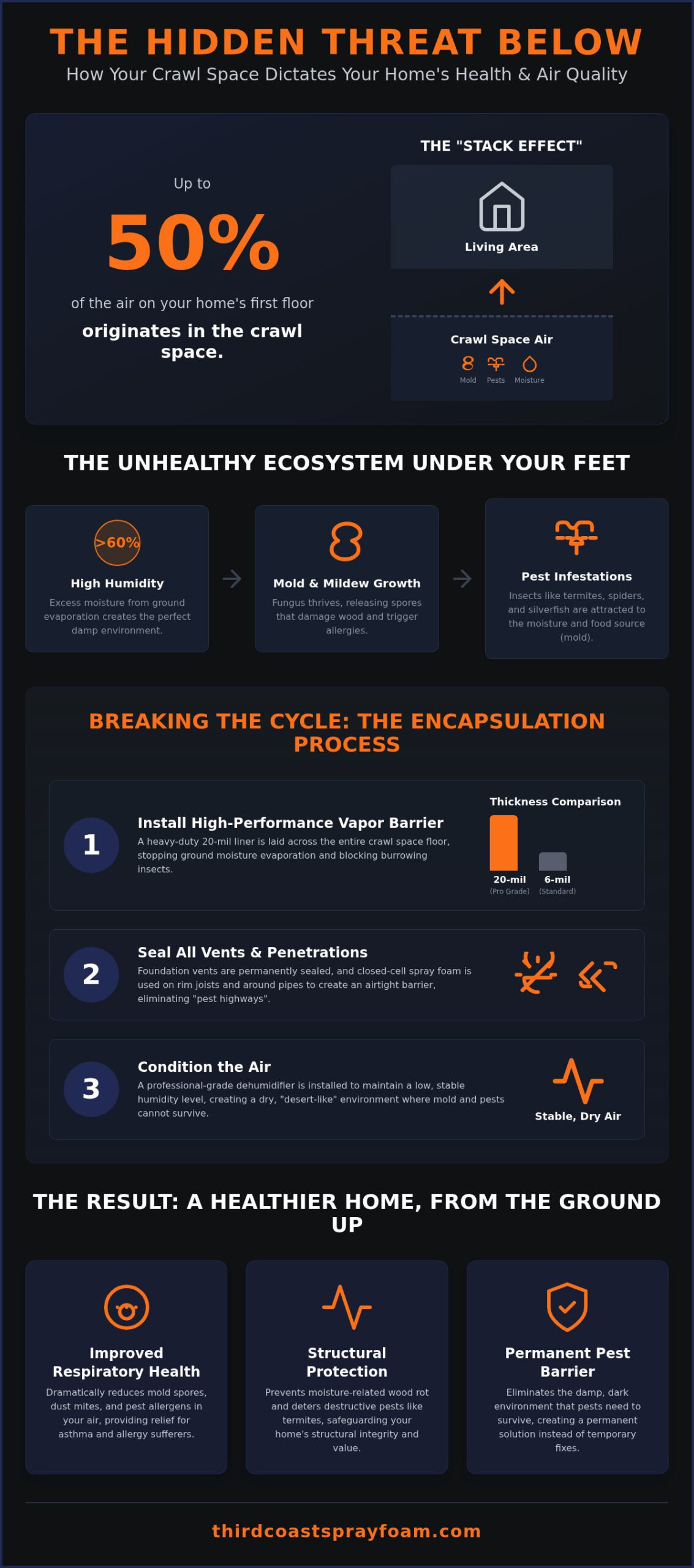
High humidity in a crawl space acts as a biological welcome mat. When relative humidity levels exceed 60%, it creates an ideal breeding ground for biological growth and wood-destroying organisms. This environment serves as the foundation of a self-sustaining ecosystem beneath your feet. Achieving effective pest control through crawl space encapsulation depends on breaking this cycle; encapsulation disrupts the pest life cycle by permanently controlling relative humidity and eliminating the moisture required for survival.
Your home acts like a chimney through a process known as the “Stack Effect.” Warm air rises and escapes through upper levels, pulling air from the lowest points upward to replace it. Since up to 50% of the air on your first floor originates in the foundation area, mold spores and pest allergens don’t stay hidden. They’re constantly circulated into your living space. For family members with asthma or chronic allergies, these airborne irritants can trigger significant respiratory distress and long-term health complications.
How Damp Environments Invite Unwanted Guests into West Michigan Homes
West Michigan’s climate creates unique challenges for homeowners from Muskegon to Lansing. Local pests such as termites, spiders, and silverfish are naturally drawn to the cool, damp darkness under your floorboards. Once established, mold and mildew growth provides a consistent food source for these primary pests, creating a thriving colony. This synergy doesn’t just threaten your home’s structural integrity; it fills your indoor air with pollutants. Pest droppings and decaying organic matter become microscopic irritants that directly compromise your family’s respiratory health.
How Encapsulation Works: A Technical Barrier for Pest Control
Achieving effective pest control through crawl space encapsulation requires a multi-layered approach that transforms a damp cavity into a controlled environment. We start by installing a high-performance, 20-mil vapor barrier across the floor. This heavy-duty material is significantly more durable than standard 6-mil plastic. It prevents ground moisture from evaporating and creates a physical block that stops burrowing insects from entering through the soil.
Sealing foundation vents is equally critical. Open vents allow humid Michigan air and crawling insects to enter your home freely. By closing these openings and adding professional dehumidification, we maintain a dry, desert-like environment where pests cannot survive. As demonstrated in the Advanced Energy research on closed crawl spaces, conditioning this area is the most effective way to eliminate moisture-related issues and the biological triggers that attract pests.
Sealing the Entry Points: From Foundation Walls to Rim Joists
We use closed-cell spray foam to seal the rim joists, creating an airtight, rigid barrier that pests cannot penetrate. This is a vital component of crawl space insulation because it stops air leaks and blocks the “pest highways” created by plumbing and electrical penetrations. Our process ensures lasting pest control through crawl space encapsulation by focusing on the technical details where pests typically find entry. Unlike DIY kits that don’t provide a permanent seal, professional-grade materials ensure a seamless barrier that protects your structural integrity and indoor air quality. Our team is ready to help you create a healthier home environment through professional sealing and moisture control.
Long-Term Benefits for West Michigan Homeowners: Health, Safety, and Savings
Securing your home’s foundation provides a permanent solution for both structural protection and family wellness. Long-term pest control through crawl space encapsulation effectively prevents wood rot and deters termite damage, which are common risks in Michigan’s high-humidity climate. This structural preservation ensures your home remains safe and valuable for decades. Beyond the physical structure, the most significant gain is the improvement in indoor air quality. When you eliminate the damp conditions that allow mold and mildew to thrive, you remove the primary environmental triggers for respiratory stress and asthma.
We believe that a healthy home starts from the ground up. Achieving lasting pest control through crawl space encapsulation provides a peace of mind that reactive treatments simply cannot match. It transforms a source of anxiety into a clean, conditioned space that supports your family’s physical health. While these structural and health advantages are the primary drivers, homeowners should also consider the financial incentives available. We encourage you to check your eligibility for the energy efficient home improvement credit to help offset the cost of these vital upgrades.
The Third Coast Approach: Professional Encapsulation in Grand Rapids and Beyond
Our team understands the specific challenges posed by West Michigan’s regional soil and lake-effect humidity. We focus on health-first installations that prioritize environmental safety and clean air for every client. Whether you’re in Grand Rapids, Muskegon, or Holland, we are committed to providing expert solutions that secure your foundation. Reach out to our local specialists to secure your home’s long-term health and protect your family from the risks of a damp crawl space.
Secure Your West Michigan Home for the Future
A dry foundation is the most critical step you can take to protect your family’s health and your property’s value. By addressing moisture at its source, you eliminate the biological triggers for mold and the environmental conditions that attract unwanted visitors. Achieving lasting pest control through crawl space encapsulation isn’t just about stopping bugs; it’s about creating a permanent shield for your home’s air quality. Our expertise in moisture and pest barrier systems ensures your living space remains free from allergens and respiratory irritants. We take a health-focused approach to every installation in Grand Rapids and the surrounding areas. It’s time to invest in the cleaner, safer indoor environment that your family deserves. Get Your Free Crawl Space Encapsulation Estimate in West Michigan today and breathe easier knowing your foundation is professionally secured.
Frequently Asked Questions
Does crawl space encapsulation attract termites?
No, encapsulation doesn’t attract termites; it makes your home less appealing to them. Termites and other wood-destroying organisms require moisture to survive. By installing a heavy-duty vapor barrier and controlling humidity, you remove the damp conditions they need. Professional installation also includes a “termite inspection gap” to ensure local pest control experts can still monitor your foundation walls for activity.
How long does crawl space encapsulation last in Michigan’s climate?
When installed by a professional using high-performance 20-mil vapor barriers, an encapsulation system can last 20 years or more. Michigan’s freeze-thaw cycles and high humidity from Lake Michigan demand durable materials like closed-cell spray foam and reinforced polyethylene. This is a permanent investment in your home’s structural integrity, protecting your foundation from Muskegon to Lansing for decades without needing frequent repairs.
Will encapsulation improve my home’s smell and air quality?
You’ll notice a significant improvement in air quality and the disappearance of musty odors. Since much of your indoor air rises from the foundation, sealing this area stops mold spores and pest allergens from entering your living space. This is a critical step for improving respiratory health and preventing the growth of mildew that often causes that classic musty smell in West Michigan homes.
Can I still access my crawl space after it has been encapsulated?
You can still access your crawl space easily for maintenance or storage. In fact, the area becomes a much cleaner and more comfortable environment for any plumbing or electrical work. We install access doors and ensure the vapor barrier is durable enough to withstand occasional foot traffic. Achieving pest control through crawl space encapsulation actually makes these necessary inspections safer and more pleasant for homeowners.
Is a dehumidifier always necessary with crawl space encapsulation?
A dedicated dehumidifier is almost always necessary to maintain a healthy indoor environment in Michigan. While the vapor barrier blocks ground moisture, a dehumidifier actively regulates the air’s moisture content to keep relative humidity below 60%. This is the final step in ensuring long-term pest control through crawl space encapsulation, as it prevents the damp conditions that allow mold and pests to return.
Disclaimer
Information provided is for general educational purposes. Individual needs and circumstances vary. Speak to an experienced professional to get the correct information for your situation.