
What if the biggest risk in a crawl space project is treating the liner as the whole solution? If you’re weighing crawl space encapsulation DIY vs professional, it’s reasonable to focus on materials and labor. But durable moisture control starts with understanding the whole space. A barrier installed without addressing existing dampness, mold, or other moisture sources may leave the underlying problem unresolved.
A damp crawl space can also affect indoor air quality. Mold and mildew may contribute to respiratory symptoms, so it’s important to look beyond what’s visible on the ground. This guide compares the work, materials, and risks of DIY and professional encapsulation, including how moisture and insulation conditions factor into the decision. You’ll learn what to check, which questions to ask, and when a professional view of the space may help you choose a next step for your West Michigan home.
Key Takeaways
- Encapsulation involves more than laying down a vapor barrier. Check what preparation and follow-up are proposed, and whether the plan accounts for moisture sources and insulation.
- Use the crawl space encapsulation DIY vs professional comparison to weigh hands-on work against the value of understanding the space as a whole.
- Unresolved dampness can contribute to mold or mildew and may affect indoor air quality. Consider respiratory concerns when assessing crawl space conditions.
- For a West Michigan home, note what you can observe and what remains uncertain. Choose a next step based on the specific crawl space rather than assuming one solution fits every home.
Crawl Space Encapsulation DIY vs. Professional: What Does the Work Involve?
A crawl space is part of the home’s structure, not an isolated storage area. Crawl space conditions can include moisture concerns, so encapsulation means considering how moisture enters and remains in the space. A vapor barrier may be part of the approach, but laying one down alone doesn’t necessarily resolve the source of dampness or address the rest of the crawl space.
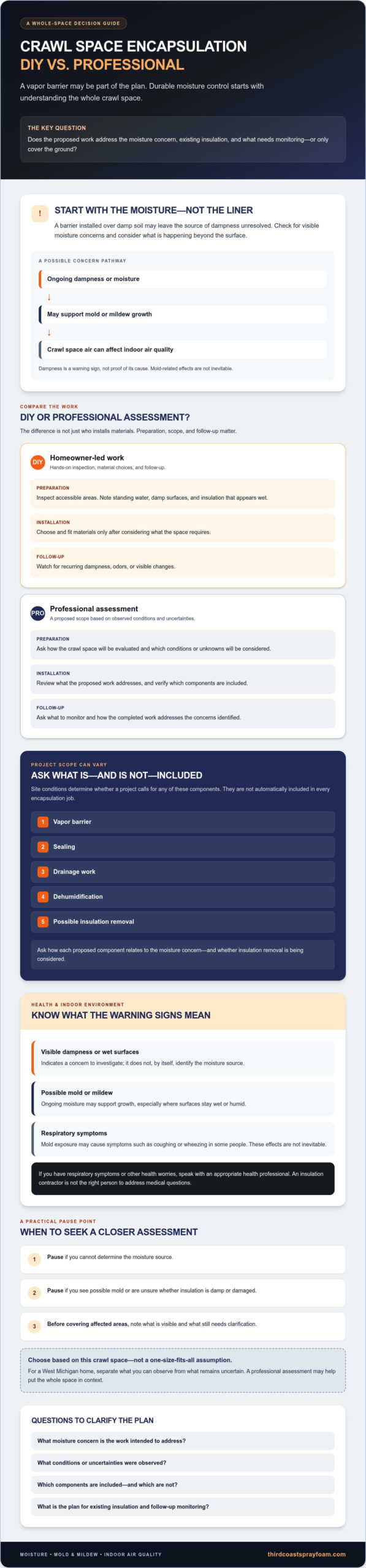
The choice in crawl space encapsulation DIY vs professional comes down to more than who installs the materials. Preparation, the scope of work, and follow-up all matter. Before choosing an approach, consider whether you can identify the moisture concern, check the condition of existing insulation, and determine what the proposed work will and won’t address. For example, professional teams like Subfloor Ventilation Sydney focus on removing excess moisture and improving airflow to prevent dampness and mold from lingering beneath the building structure.
For a visual example of a homeowner-led project, watch this video:
What can a crawl space encapsulation project include?
Site conditions determine whether a project calls for a vapor barrier, sealing, drainage work, or dehumidification. Don’t assume these components are included in every encapsulation job. Ask for a clear description of the proposed work, including how it relates to the moisture concern and whether insulation removal is being considered. Third Coast Spray Foam provides crawl space encapsulation and insulation removal; confirm which specific components are included in a proposed scope. For more on insulation and crawl space conditions, see our West Michigan crawl space insulation guide.
| Project stage | Homeowner-led work | Professional assessment |
|---|---|---|
| Preparation | Inspect accessible areas and note visible concerns, such as standing water, damp surfaces, or insulation that appears wet. | Ask how the crawl space will be evaluated and which conditions or uncertainties will be considered. |
| Installation | Choose and fit materials only after considering what the space requires. | Review a proposed scope based on observed conditions, and verify which components are included. |
| Follow-up | Watch for recurring dampness, odors, or visible changes. | Ask what to monitor and how the completed work addresses the concerns identified. |
DIY or Professional Encapsulation: Compare Moisture, Mold, and Indoor Air Risks
A new barrier can cover damp soil without resolving why the crawl space is damp. Ongoing moisture may support mold or mildew growth, especially where surfaces stay wet or humid. The U.S. Environmental Protection Agency explains the connection between moisture and mold in its guide to the dangers of mold and moisture.
“Dampness is a warning sign, not proof of its cause; identify where moisture is coming from before choosing how to address it.” That distinction matters when weighing crawl space encapsulation DIY vs professional. Crawl space air can affect indoor air quality, and mold exposure may cause symptoms such as coughing or wheezing in some people, according to the EPA. These effects aren’t inevitable, and an article can’t diagnose a health concern. If you have respiratory symptoms or other health worries, speak with an appropriate health professional.
When should a homeowner pause DIY work and seek an assessment?
Pause if you can’t determine the moisture source, see possible mold, or aren’t sure whether existing insulation is damp or damaged. Before covering affected areas, identify what is visible and what still needs clarification. A professional assessment may help you understand the crawl space as a whole rather than focusing only on the surface you can see.
If insulation is part of the concern, learn about the insulation removal and replacement process before deciding what work may be relevant. For persistent uncertainty about encapsulation, consider discussing your crawl space conditions with a contractor who provides crawl space encapsulation. A qualified health professional, not an insulation contractor, is the right person to address medical questions.
How West Michigan Homeowners Can Choose the Right Encapsulation Next Step
West Michigan crawl spaces don’t all face the same conditions. Use what you can observe to guide the next step, but don’t assume a solution that worked in another home will suit yours. Whether you’re in Grand Rapids, Lansing, Muskegon, Holland, Allegan, Kalamazoo, or Grand Haven, start by connecting visible moisture and insulation concerns with the work being proposed.
- Observe: Note standing water, damp surfaces, musty odors, visible mold or mildew, and insulation that appears wet or damaged.
- Identify uncertainties: Consider whether you know where moisture is coming from and whether the insulation’s condition is clear.
- Compare scope: Ask what work is proposed, what it addresses, and which components are included. Don’t assume drainage, sealing, or dehumidification is part of every encapsulation project.
- Choose a next step: If key conditions remain unclear, seek an assessment before covering surfaces or settling on a plan.
This sequence can help clarify whether homeowner-led work is manageable or whether you’d benefit from a professional view of the crawl space. Third Coast Spray Foam provides crawl space encapsulation and insulation removal. These are relevant services to discuss, not a promise that a particular component or removal will be needed or included in every project.
What to ask before hiring a crawl space professional
Ask how the contractor evaluates moisture sources, existing insulation, and possible mold or mildew concerns. Clarify what work is included, what conditions could change the scope, and how the completed work will be checked. If you’re comparing proposals, use the same questions for each one so you can understand what each plan addresses and what it leaves out. If crawl space improvements are part of a broader whole-home renovation, consulting specialized remodeling resources like groupremod.com can help you plan structural and living space updates effectively.
If you’re a local homeowner considering your options, you can contact Third Coast Spray Foam to discuss a crawl space project.
Choose a Crawl Space Plan That Fits Your Home
The right choice in crawl space encapsulation DIY vs professional depends on how clearly you understand the moisture source, existing insulation, and work the space needs. A vapor barrier alone may not address every condition. Look beyond the visible surface, and consider how dampness or mold may affect indoor air quality without assuming a particular health outcome.
West Michigan crawl spaces vary, so a careful assessment can help you compare a homeowner-led project with a professional scope based on your home. Third Coast Spray Foam is based in Fruitport and serves communities across West Michigan, including Grand Rapids, Lansing, Muskegon, Holland, Allegan, Kalamazoo, and Grand Haven. The company provides crawl space encapsulation and professional insulation removal. The specific work needed depends on the conditions found.
Talk with Third Coast Spray Foam about your crawl space and discuss a practical next step. Share what you’ve noticed, such as dampness or insulation that appears damaged, and ask which services may be relevant to your space.
Frequently Asked Questions
Can I encapsulate my crawl space myself?
Yes, you can take on crawl space encapsulation yourself if you can safely access the area and understand what work it needs. The crawl space encapsulation DIY vs professional decision should account for more than placing a vapor barrier. First consider moisture sources, existing insulation, and signs of mold or mildew. If those conditions are unclear, pause and get an assessment before covering them.
Is professional crawl space encapsulation better than DIY?
Not automatically. The better option depends on the crawl space and your ability to identify its needs. DIY may suit a project with clear conditions and a manageable scope. A professional assessment can help when moisture sources, insulation condition, or the right combination of work is uncertain. Compare proposed scopes carefully, and ask what’s included rather than assuming every encapsulation project uses the same components.
Can crawl space moisture or mold affect indoor air quality?
Yes, moisture can encourage mold or mildew, and spores or other particles from an affected crawl space may influence indoor air quality. Some people may experience respiratory irritation, coughing, or wheezing, but exposure doesn’t affect everyone the same way. Dampness alone doesn’t confirm mold or identify its source. If you have health concerns, consult an appropriate health professional.
When should I call a professional about crawl space moisture?
Consider an assessment if you find recurring dampness, standing water, visible mold or mildew, musty odors, or insulation that appears wet or damaged, especially when you can’t determine the cause. Homeowners in Grand Rapids, Lansing, Muskegon, Holland, Allegan, Kalamazoo, and Grand Haven can discuss crawl space encapsulation or insulation removal with a local provider. Ask what the assessment and proposed work cover.
Disclaimer
Information provided is for general educational purposes. Individual needs and circumstances vary. Speak to an experienced professional to get the correct information for your situation.