
Imagine waking up to another January morning in West Michigan only to find a massive ice dam tearing at your gutters while your upstairs bedrooms feel like an icebox. It’s a frustrating cycle many of us face, especially when traditional insulation fails to stop the rapid heat loss that fuels these structural headaches. You want a home that stays warm without sending your utility bills through the roof or triggering your family’s seasonal allergies. This is where closed cell spray foam for attics Michigan homeowners are choosing becomes a vital upgrade for the 2026 season.
We understand that your home is your most significant investment, and protecting it requires a professional, system-based approach. This guide reveals how high-performance air sealing protects your roof’s integrity and drastically improves your indoor air quality by blocking the moisture and dust that often thrive in vented attic spaces. We’ll explore the latest R-49 and R-60 state energy requirements, federal tax credits, and the local utility rebates available to help you achieve a healthier, more efficient home environment that lasts for decades.
Key Takeaways
- Understand how 2026 building codes prioritize air sealing to stop the “stack effect” from pulling pollutants into your living space.
- Learn how the high R-value and Class II vapor retarder properties of closed cell spray foam for attics Michigan residents rely on prevent structural rot and mold.
- Compare the moisture permeability of insulation types to ensure your unvented roof deck remains dry and structurally sound through Lake Michigan humidity.
- Discover the direct impact of attic sealing on respiratory health by blocking external allergens and eliminating the dew point where fungus grows.
- Recognize why a professional-led removal of old materials is essential to creating a clean, safe, and efficient thermal envelope.
Why Michigan Attics Require Closed Cell Spray Foam in 2026
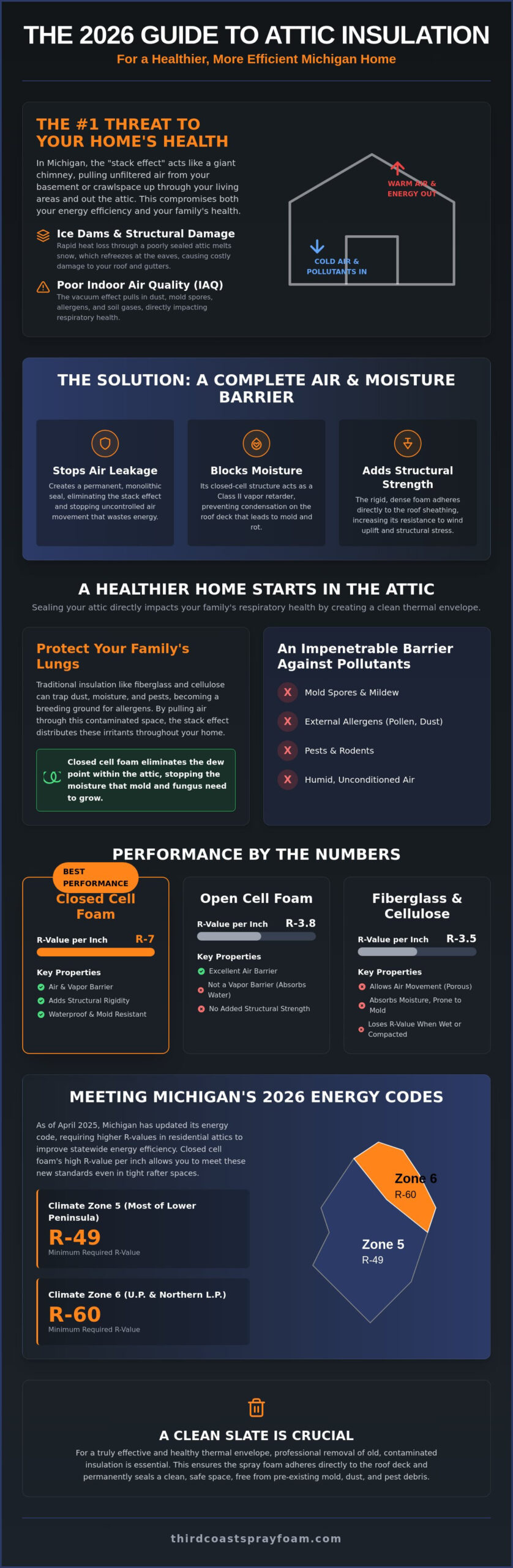
In West Michigan, your home often acts like a giant chimney through a process called the stack effect. Warm, conditioned air rises and escapes through your attic, which creates a vacuum that pulls in cold, unconditioned air from your basement or crawl space. This doesn’t just drive up your heating costs; it compromises your indoor air quality. This “make-up air” frequently carries dust, allergens, and soil gases directly into your living areas. To stop this cycle, closed cell spray foam for attics Michigan residents rely on creates a permanent air seal that traditional materials simply can’t match.
To better understand the risks of improper attic insulation, watch this helpful video:
Effective April 22, 2025, the Michigan Energy Code mandates higher standards for residential attics. In Climate Zone 5, which covers most of the Lower Peninsula, the minimum requirement is now R-49. For our neighbors in the Upper Peninsula and northern Lower Peninsula (Zone 6), that requirement jumps to R-60. Meeting these codes with bulky fiberglass is difficult in tight rafter spaces. Closed cell foam provides a compact, high-performance solution that satisfies these 2026 standards while protecting your roof’s structural integrity.
The Michigan Climate Challenge
Our local weather is notoriously volatile, with temperatures swinging from -10°F in the winter to 90°F with heavy lake-effect humidity in the summer. In coastal cities like Muskegon and Grand Haven, this moisture is a constant threat. Fiberglass batts are porous and allow humid air to reach the cold roof deck, where it condenses into liquid water. This trapped moisture is the primary cause of attic mold and wood rot. We see it every day: traditional insulation fails because it can’t stop the moisture movement that fuels fungal growth and respiratory triggers.
Defining Closed Cell Spray Foam for Homeowners
Closed cell foam is a distinct material known for its incredible density and rigid structure. Unlike open cell foam, the cells are completely closed and packed with a specialized blowing agent that enhances its thermal resistance. The Science of Performance: R-Value, Vapor Barriers, and Strength explains why this material is so effective, typically offering an R-value of R-7 per inch. This density allows us to achieve superior insulation in shallow Michigan rafters without sacrificing space. Closed cell foam is a high-density polyurethane barrier that provides a permanent seal against air and moisture.
The Science of Performance: R-Value, Vapor Barriers, and Strength
When we look at the engineering behind closed cell spray foam for attics Michigan homes require, the primary advantage is density. Unlike traditional materials that rely on trapped air pockets, closed cell foam is a rigid, medium-density plastic. It achieves an impressive R-value of approximately R-7 per inch. This high thermal resistance allows us to meet strict 2026 energy codes in shallow rafter spaces where blown-in insulation or fiberglass simply wouldn’t fit. By creating a continuous thermal envelope, we eliminate the gaps that allow heat to bypass your insulation entirely.
Achieving Superior Thermal Resistance
In the field, we distinguish between nominal R-value and effective R-value. Many materials claim a high R-value on the package, but they lose performance as soon as the wind blows or temperatures drop. Blown-in cellulose and fiberglass are porous; they allow air to move through them, which significantly reduces their actual efficiency during a harsh West Michigan winter. Closed cell foam provides its own air seal. This means the R-value you pay for is the performance you actually get, regardless of how hard the wind whips off the lake. It also stops thermal bridging, which occurs when heat travels through the wooden attic joists and rafters. By spraying over these structural members, we break that thermal bridge and keep your heat where it belongs.
A critical component of this performance is moisture management. Because closed cell foam acts as a Class II vapor retarder, it prevents humid indoor air from reaching the cold roof deck. This is a vital step in Respiratory Health and IAQ: The Hidden Benefits of Attic Sealing because it eliminates the conditions needed for mold growth. If you are concerned about existing moisture issues, you might consider professional insulation removal to start with a clean, dry slate before applying new foam.
Structural Integrity and Longevity
Beyond heat and health, closed cell foam provides a physical upgrade to your roof. Its rigid nature essentially “glues” the roof deck to the rafters. This increases the wind uplift resistance of your home, which is a major benefit during the severe thunderstorms and high-wind events common in our region. While traditional materials often sag, settle, or compressed over time, this foam remains dimensionally stable. It won’t shift or lose its shape, ensuring your attic remains protected for the life of the structure. This permanence makes it a pragmatic investment for homeowners who value security and long-term property value.
Closed Cell vs. Open Cell: What is Best for Your Roof Deck?
Choosing the right material for your roof deck is a decision that impacts your home’s longevity and your family’s health. While some contractors suggest open cell foam for attic floors, the requirements change when we talk about the roof deck itself. In our region, closed cell spray foam for attics Michigan homeowners select is often dictated by the need for a built-in vapor barrier. Open cell foam is porous and has a high perm rating, which allows moisture to pass through it. In a cold climate like ours, this moisture can condense against the underside of your cold roof sheathing, leading to hidden rot and mold growth that compromises your indoor air quality.
The Battle Against Ice Dams
Grand Rapids winters are famous for heavy snow followed by quick thaws. When heat escapes through a poorly insulated roof, it melts the bottom layer of snow. That water runs down to the cold eaves and freezes, forming a dangerous ice dam. These dams can back up under your shingles and cause significant structural damage. By transitioning to an unvented “hot roof” design using closed cell foam, we keep the roof deck at a consistent temperature. It stops the freeze-thaw cycle at the source. This permanent solution protects your gutters and shingles while ensuring your home’s structural integrity remains intact during the harshest lake-effect storms.
Moisture Management and Permeability
Understanding perm ratings is essential for any West Michigan property owner. A perm rating measures how much water vapor can pass through a material. Open cell foam typically has a perm rating of over 10, making it vapor permeable. In contrast, closed cell foam acts as a Class II vapor retarder. This is a critical distinction for respiratory health. A damp attic is a breeding ground for mold spores that can eventually find their way into your home’s living spaces. By using closed cell foam, we eliminate the dew point where fungus thrives. It provides a dry, stable environment that protects both your roof sheathing from delamination and your family from airborne triggers.
While closed cell foam has a higher upfront cost than open cell or blown-in options, the long-term value is clear. You get more “insulation power” in shallow rafters because of its high density. It doesn’t require the extra space that open cell needs to reach modern R-value targets. This space efficiency, combined with its ability to strengthen the roof and block moisture, makes it the most pragmatic investment for a Michigan home. It’s a single application that addresses thermal loss, structural weakness, and environmental health in one step.
Respiratory Health and IAQ: The Hidden Benefits of Attic Sealing
The air you breathe inside your Michigan home is directly influenced by the condition of your attic. Because of the stack effect we discussed earlier, your house acts like a vacuum, pulling air from the lowest points and exhausting it through the top. This means that any dust, allergens, or fungal spores present in your attic are likely circulating through your bedrooms and living spaces. By choosing closed cell spray foam for attics Michigan families can effectively decouple their living environment from the harsh, unconditioned space above their heads. It’s a pragmatic step toward long-term respiratory wellness.
Eliminating Mold and Mildew Triggers
Condensation in a vented attic isn’t just a structural threat; it’s a significant health hazard. When warm, moist air from your kitchen or bathroom hits a cold roof deck, it reaches the dew point and turns into liquid water. This moisture fuels hidden mold growth on rafters and sheathing. These fungal colonies release spores that can cause persistent respiratory irritation, especially for children or those with pre-existing conditions like asthma. Closed cell foam’s moisture-resistant properties eliminate this condensation point entirely. By keeping the roof deck warm and dry, we remove the environmental triggers that allow mold to thrive. This creates a stable, hypoallergenic barrier that protects your family’s health as much as it protects your roof.
Improving Daily Breathability
Beyond mold, your attic often acts as a gateway for seasonal allergens. Traditional insulation like fiberglass or cellulose acts as a filter, trapping pollen and outdoor pollutants but eventually allowing them to sift down into your home. Air sealing with closed cell foam provides a total block against these particulates. This process creates a “sealed envelope” that prevents the infiltration of outdoor volatile organic compounds (VOCs) and fine dust. A properly sealed attic ensures that your home’s ventilation system can work as intended, providing filtered, clean air rather than pulling in contaminated air from the rafters.
Professional installation is vital for these health benefits. Our team ensures that the foam is applied at the correct temperatures and ratios to guarantee safe off-gassing and a perfect chemical bond. We take immense pride in this precision because we know that a job done right leads to a lifetime of better indoor air quality. If you are concerned about the air quality in your home, we recommend a professional attic assessment to identify potential health triggers and structural weaknesses.
Creating a healthier home environment requires looking at your property as an integrated system. When we address the attic, we aren’t just saving money on energy; we’re fundamentally changing the air chemistry of the building. This results in a home that feels fresher, smells cleaner, and provides a safer sanctuary for everyone inside.
Choosing a Local Expert: The Third Coast Spray Foam Process
Selecting the right team for your project is just as important as choosing the material itself. We believe that a successful installation is a collaborative effort between the homeowner and a specialist who truly understands our regional environment. When we install closed cell spray foam for attics Michigan homes require, we don’t just spray over existing problems. We treat your attic as a critical component of your home’s respiratory and structural health. Our process is designed to be transparent, logical, and focused on the long-term well-being of your family.
Professional Removal and Preparation
A common mistake in our industry is applying new foam directly over old fiberglass or cellulose. We strongly advise against this practice. Old insulation often harbors years of accumulated dust, pollen, rodent waste, and even dormant mold spores. Spraying over these materials traps those pollutants and prevents the foam from creating a perfect, airtight bond with the roof deck. Our team prioritizes a health-first approach by performing a complete insulation removal before we begin. We safely extract contaminated materials to ensure your indoor air quality is pristine from day one. Once the space is clean, we prep the rafters and sheathing to guarantee the polyurethane reaches its maximum adhesive strength.
The Local Advantage in West Michigan
Working with a Fruitport-based contractor provides a level of accountability that national chains can’t match. We live in the same communities we serve, from Muskegon to Grand Rapids. We understand exactly how lake-effect moisture impacts a roof deck. This local expertise allows us to customize every application for the specific orientation and age of your property. We take pride in our craft and stand behind every square foot we spray. Our goal is to position ourselves as your trusted advisor, helping you navigate the technical and financial aspects of your home’s upgrade.
The financial side of these projects is more accessible than ever in 2026. We help our clients by maximizing your Energy Efficient Home Improvement Credit, which can cover 30% of the project cost up to $1,200 annually. Additionally, we guide you through local utility incentives. DTE Energy currently offers an insulation rebate of $600, while Consumers Energy provides significant support through their Home Performance program. By stacking these rebates with federal credits, you can significantly offset the cost of a professional installation. We provide precise, health-focused estimates that account for these savings, ensuring your investment is as pragmatic as it is effective.
Installation day is a straightforward process. We handle the site prep, the precise application of the foam, and the necessary curing time with minimal disruption to your daily life. The result is a home that is quieter, cleaner, and structurally reinforced against whatever the Michigan climate brings next.
Secure Your Home’s Future with a Health-First Attic Strategy
Upgrading your home for the 2026 season is about more than just meeting the new R-49 or R-60 energy codes. It’s about creating a permanent barrier that protects your family’s respiratory health and your roof’s structural integrity. By choosing closed cell spray foam for attics Michigan residents can eliminate the moisture, mold, and allergen triggers that often hide in traditional, porous insulation. This system-based approach ensures your home remains a safe, efficient sanctuary regardless of the lake-effect humidity or freezing temperatures outside.
As a local Fruitport business, we’ve served as expert West Michigan installers since 2013. We don’t just apply insulation; we specialize in holistic home wellness, including Crawl Space Insulation and comprehensive attic health. Our team is ready to help you navigate the available 2026 federal tax credits and utility rebates to make this investment as pragmatic as possible. Request Your Free, Health-Focused Attic Insulation Estimate today and take the first step toward a more secure and breathable home. We look forward to being your partner in improving the standards of your living space.
Frequently Asked Questions
Is closed cell spray foam safe for my family’s respiratory health?
Yes, once the material is fully cured, it’s chemically inert and safe for all occupants in your home. Professional installation ensures the correct chemical ratios and ventilation during the application process to guarantee a safe environment. By creating an airtight seal, it actually helps protect respiratory health by blocking outdoor pollutants, pollen, and dust from entering your living spaces.
How much does it cost to spray foam an attic in Michigan?
The total investment for your project depends on the square footage of the attic, the complexity of the roof structure, and the thickness needed to meet 2026 energy codes. Retrofit projects typically include the professional removal of old, contaminated insulation to ensure a proper bond. We recommend a specialized assessment to determine the specific requirements and potential utility rebates for your property.
Can closed cell spray foam be applied over existing attic insulation?
No, we don’t recommend applying foam over old fiberglass batts or blown-in cellulose. The polyurethane requires a clean, solid surface to create the permanent airtight seal and structural bond that Michigan homes need. Removing old, dusty materials is also a critical step in eliminating hidden mold spores and improving your home’s overall indoor air quality.
Does closed cell spray foam prevent ice dams on Michigan roofs?
Yes, it’s one of the most effective solutions for stopping the freeze-thaw cycle that fuels ice dam formation. By insulating the underside of the roof deck, we keep the shingles at a consistent temperature and prevent heat from escaping. This stops snow from melting at the peak and refreezing at the cold eaves, which protects your gutters and shingles from structural damage.
What is the difference between open cell and closed cell spray foam for attics?
Closed cell foam is a high-density material that provides an R-value of R-7 per inch and acts as a Class II vapor retarder. Open cell foam is porous and allows moisture to pass through, which can lead to condensation issues on a cold roof deck. closed cell spray foam for attics Michigan homeowners choose is often preferred because it prevents moisture-related rot and mold growth in our humid climate.
How long does closed cell spray foam last in a Michigan climate?
This material is designed to be a permanent insulation solution that lasts for the life of the structure. Unlike traditional materials that sag, settle, or lose their R-value over time, closed cell foam remains dimensionally stable. It won’t shift or degrade despite the extreme temperature swings we experience in West Michigan, ensuring your energy savings remain consistent for decades.
Will spray foam insulation improve my home’s indoor air quality?
Yes, it significantly improves air quality by stopping the “stack effect” from pulling pollutants and allergens from the attic into your home. By creating a sealed envelope, you prevent the infiltration of outdoor triggers and eliminate the damp conditions where mold thrives. This results in a cleaner, more stable indoor environment that is much easier to keep filtered and fresh.
Does closed cell spray foam qualify for the federal energy tax credit in 2026?
Yes, qualifying insulation upgrades are eligible for the 25C Energy Efficient Home Improvement Credit. This federal incentive allows you to claim 30% of the project cost, up to $1,200 annually, on your taxes. Using high-performance closed cell spray foam for attics Michigan residents can stack this credit with local utility rebates from DTE or Consumers Energy to maximize their return on investment.
Disclaimer
Information provided is for general educational purposes. Individual needs and circumstances vary. Speak to an experienced professional to get the correct information for your situation.