
The most common insulation choice in Grand Rapids might actually be the primary reason your home feels drafty and your allergies flare up every winter. While traditional batt insulation is a standard sight in West Michigan attics, its inability to stop airflow often leads to the very problems you’re trying to avoid. We all want a cozy, healthy environment for our families; it’s discouraging to pay high utility bills while still dealing with cold spots and musty smells. You deserve a solution that protects your home’s structural integrity and your family’s respiratory health.
According to the EPA, properly sealing and insulating a home can save a homeowner an average of 15% on monthly energy costs. Our team at Third Coast Spray Foam will help you compare traditional fiberglass against modern alternatives to ensure your living space remains energy-efficient and mold-free. We’ll show you how to eliminate the gaps where moisture and allergens thrive by creating a complete thermal envelope. This article breaks down the mechanical failures of common batts and explores the permanent solutions that provide total home health and lasting peace of mind.
Key Takeaways
- Understand why traditional batt insulation often struggles with West Michigan’s lake-effect winds and how upgrading can better protect your home’s thermal envelope.
- Learn how to improve your indoor air quality and respiratory health by eliminating the “filter effect” that traps dust and outdoor pollutants within your walls.
- Discover the critical role of professional air sealing in preventing mold growth and condensation in vulnerable areas like basement rim joists.
- Compare the long-term ROI and performance of modern alternatives to ensure a drier, more energy-efficient environment for your family.
- Identify high-performance solutions, such as blown-in insulation, to achieve a holistic and health-conscious approach to total home comfort.
Understanding Batt Insulation in the West Michigan Climate
Batt insulation consists of pre-cut panels typically made from fiberglass or mineral wool. For decades, builders in Grand Rapids and Lansing have relied on these panels because they fit easily between standard wall studs. They’re a staple in the world of building insulation materials, providing a familiar solution for residential construction.
In our Great Lakes climate, R-value is the primary metric for thermal performance. Michigan energy codes often require R-13 to R-21 for exterior walls and up to R-38 or R-49 for attics. While these numbers look good on paper, their effectiveness depends entirely on the quality of the installation. Even small gaps can lead to drafts and moisture issues that compromise your indoor air quality.
To better understand how this material is typically installed, watch this helpful video:
The Anatomy of a Fiberglass Batt
Most batt insulation is manufactured using recycled glass, sand, and chemical binders. These materials are spun into thin fibers that trap air to slow heat transfer. You’ll find them in two main varieties:
- Kraft-faced batts: These feature a paper backing that acts as a vapor retarder, helping to manage moisture movement through the wall.
- Unfaced batts: These lack the paper backing and are often used in interior walls for sound dampening or in floors.
Manufacturers produce these in standard widths of 15.25 inches and 23.25 inches. These sizes are designed to fit snugly between 16-inch and 24-inch on-center framing, which are the standard measurements for most West Michigan homes built after 1950.
Why Michigan Homeowners Choose Batts (And Their Limitations)
The primary driver for choosing batts is the low initial material cost. They’re readily available at local retailers like Menards and Home Depot, making them the go-to for budget-conscious projects. However, the DIY-friendly nature of this material can be deceptive. If a batt is compressed around a wire or tucked too tightly into a corner, it loses its R-value immediately.
One major drawback is “thermal bridging.” Because fiberglass doesn’t stop air movement, heat can still escape through the wooden studs. This creates cold spots where condensation often forms. Over time, this trapped moisture leads to mold and mildew growth. For residents with asthma or allergies, this hidden mold can trigger significant respiratory health issues. At Third Coast Spray Foam, we view the home as a holistic system. While batts are affordable, they often fail to provide the total home health and airtight seal needed to combat Michigan’s 20-degree winter nights.
Respiratory Health and Air Quality: The Hidden Impact of Insulation
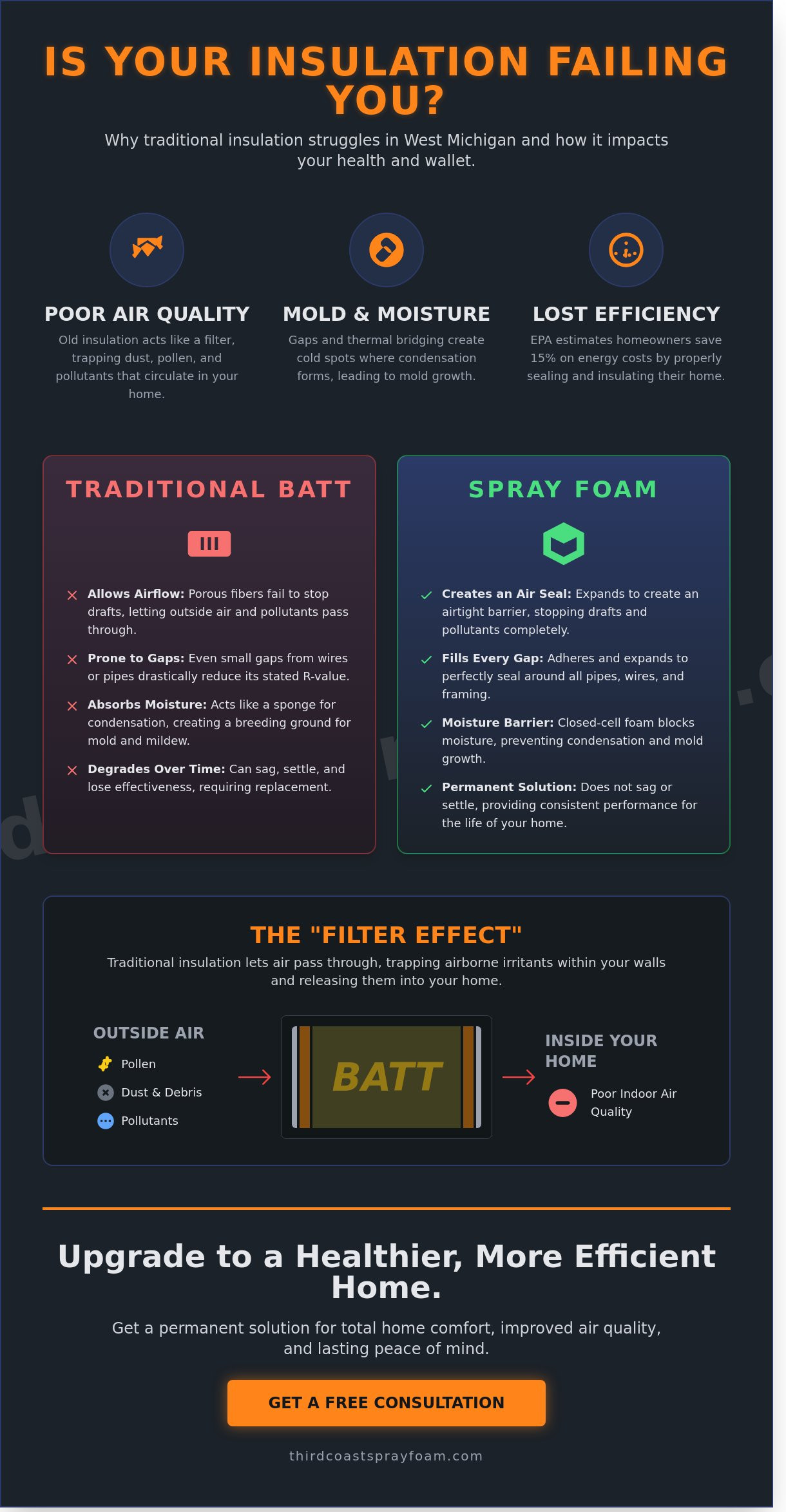
Your home’s insulation does more than regulate temperature; it acts as a primary barrier between your family and the outdoor environment. When you choose batt insulation, you’re installing a material that often functions like a giant air filter for your home. Because fiberglass is porous, it allows air to pass through its fibers. This “filter effect” means that various irritants get trapped within the material over time, including:
- Fine dust and particulate matter
- Seasonal pollen and allergens
- Outdoor pollutants and vehicle exhaust
- Pest dander and debris
These trapped particles don’t just stay tucked away in your walls. They can circulate back into your living space whenever the wind blows or your HVAC system cycles. According to data from the Asthma and Allergy Foundation of America, nearly 25 million Americans suffer from asthma, and poor indoor air quality is a primary trigger for respiratory distress. Even small gaps in the thermal envelope allow unfiltered air to bypass the material entirely. You can find detailed comparisons of material performance from the Department of Energy on insulation to see how different products impact your home’s seal. Our team focuses on eliminating these gaps to ensure your home remains a healthy sanctuary rather than a collection point for outdoor triggers.
Mold, Mildew, and Moisture Management
In coastal areas like Grand Haven and Muskegon, summer humidity levels frequently exceed 70%. Standard batt insulation cannot stop the movement of moisture-laden air into your wall cavities. When this warm, damp air hits a cooler surface inside the wall, it condenses into liquid water. This moisture gets trapped in the fiberglass fibers, creating a perfect breeding ground for mold. Once mold colonies form, their spores can easily enter your home’s ventilation system. This leads to chronic respiratory issues or allergic reactions that persist long after the seasons change.
Fiberglass Particles and Skin Irritation
Handling fiberglass requires professional-grade PPE because the tiny glass shards cause immediate skin irritation and can damage lung tissue if inhaled. As batts age or settle, they can release micro-fibers into the living space through electrical outlets or recessed lighting. Off-gassing refers to the release of volatile organic compounds (VOCs) from the chemical binders used in some insulation products into the indoor environment. To protect your family from these airborne risks, it’s a smart move to evaluate your current insulation levels with a professional who understands total home health.
Batt Insulation vs. Spray Foam: A Performance Comparison
Choosing between materials involves more than just looking at a price tag. While the initial installation cost of batt insulation is lower, the long-term return on investment favors spray foam due to its superior air-sealing properties. Homeowners in West Michigan often see a 15% to 20% reduction in monthly utility bills after upgrading. This is because traditional fiberglass doesn’t stop air movement. According to the Department of Energy’s guide to insulation types, fiberglass batts can leave gaps around wires, pipes, and electrical boxes. These small openings allow conditioned air to escape, forcing your HVAC system to work overtime during a Grand Rapids winter.
Air Sealing: The Missing Link in Comfort
R-value measures a material’s resistance to heat conduction, but it’s often a misleading metric if air can move freely through the product. In multi-story Michigan homes, this air movement creates a “chimney effect.” Warm air rises and escapes through the attic, while cold air is sucked in through the rim joists and basement. This constant cycle doesn’t just waste money; it drags in outdoor pollutants and allergens. By using closed cell spray foam, our team creates a total air barrier. This seal stops the draft and prevents the entry of moisture that leads to mold growth, directly supporting better respiratory health for your family. A sealed home environment is the first line of defense against the respiratory triggers often found in damp Michigan basements.
Longevity and Structural Integrity
The “sag factor” is a common issue we see in older homes across the region. Over 10 to 15 years, gravity and seasonal humidity cause traditional batt insulation to pull away from the wall studs. This physical degradation leaves uninsulated cold spots that lead to condensation and potential mildew issues. In rural areas like Allegan or Kalamazoo, fiberglass also becomes a prime nesting ground for rodents, which can compromise indoor air quality through waste and dander.
Spray foam doesn’t provide a food source or nesting material for pests. It stays exactly where it’s applied for the life of the building. When deciding between open vs closed cell foam, consider that closed-cell options also add structural rigidity to rim joists and pole barns. This added strength helps buildings withstand heavy snow loads and high lake-effect winds. Unlike batts, which can hold onto moisture and lose their effectiveness, spray foam remains a permanent, moisture-resistant solution that protects both your home’s structure and your family’s health.
Why Batts Often Fail in Grand Rapids and Lansing Homes
West Michigan winters are relentless. When 40 mph winds blow off Lake Michigan, they carry more than just lake-effect snow; they carry a massive amount of cold air that pushes directly through the porous fibers of batt insulation. Because fiberglass doesn’t provide an air seal, it functions like a giant air filter. Our team frequently sees this during Third Coast home energy audits. In many West Michigan homes we inspect, particularly in the Grand Rapids area, we find fiberglass that has turned grey or black. This isn’t just dirt; it’s a sign that your insulation is failing to stop air infiltration, allowing outdoor pollutants and allergens into your living space. When it’s time to address these issues, working with qualified spray foam companies near me who understand West Michigan’s specific climate challenges can make all the difference in achieving a truly sealed thermal envelope.
Heat loss often occurs through attic bypasses. These are hidden gaps around light fixtures, plumbing stacks, and top plates that sit beneath the insulation. While the batts might have a high R-value on paper, they do nothing to stop the stack effect where warm air escapes through these holes. This creates a vacuum that pulls cold, damp air in from your basement, compromising your indoor air quality and forcing your furnace to run 30% longer than necessary to keep up with the heat loss.
The Problem with “Tight” Modern Homes
Modern building codes require homes to be built tighter than ever. However, when batt insulation is paired with traditional plastic vapor barriers, it often creates a sweating effect inside the wall cavity. This trapped moisture is a primary breeding ground for mold and mildew. For families in West Michigan, this isn’t just a home maintenance issue; it’s a serious respiratory health concern. Mold spores can trigger asthma and other long-term sinus problems. True air management requires a material that seals the thermal envelope without allowing moisture to sit against your structural studs.
Rim Joists and Crawl Spaces: The Batt Danger Zone
We never recommend using fiberglass in Michigan crawl spaces or on rim joists. These areas are naturally prone to high humidity. Fiberglass acts like a sponge, soaking up ground moisture and holding it against your floor joists. This leads to wood rot and creates a musty environment that migrates up into your kitchen and living room. In a Michigan basement, the thermal envelope is the continuous boundary that separates your conditioned living space from the unconditioned earth and outside air. To protect your home’s foundation and your family’s health, professional crawl space encapsulation is the only reliable solution for moisture control.
Stop letting your heat escape through leaky insulation. Contact Third Coast Spray Foam today for a comprehensive energy audit of your West Michigan home.
Beyond the Batt: High-Performance Solutions for Your Home
Third Coast Spray Foam provides high-performance insulation strategies that transform West Michigan homes into efficient, healthy sanctuaries. While traditional batt insulation served as the industry standard for decades, modern building science reveals that it often falls short in our unique climate. For many Grand Rapids homeowners, blown in insulation offers a superior alternative for attic retrofits. This method fills every structural gap and void, effectively eliminating the thermal bypass issues that occur when batts are improperly cut or installed around wiring and pipes.
We don’t simply layer new material over the old. Our team prioritizes the professional removal of degraded batt insulation to protect your family’s well-being. Over time, fiberglass can trap significant amounts of dust, rodent waste, and seasonal moisture. This creates a hidden breeding ground for mold and mildew. These biological pollutants directly compromise your indoor air quality and can lead to serious respiratory health issues for occupants. By extracting these contaminants, we reset your home’s hygiene levels before installing new, clean materials.
Our Professional Installation Process
Our team focuses on air sealing first and R-value second. A high R-value provides little benefit if unconditioned air leaks through your ceiling and carries heat away. As a dedicated local contractor, we ensure every project adheres to the 2021 Michigan Energy Code requirements specific to Kent and Ottawa County. We manage the safe removal of contaminated or moldy fiberglass using high-powered, HEPA-filtered vacuum systems. This specialized process prevents airborne spores and fiberglass particulates from migrating into your living spaces, ensuring your respiratory health remains protected during and after the project.
Investing in Your Home’s Future
Upgrading your thermal envelope is a strategic investment in both financial stability and physical comfort. You can qualify for the energy efficient home improvement credit through 2026, which offers a tax credit of up to 30 percent of the project cost, capped at $1,200 annually for weatherization. This incentive makes it easier to move away from temporary fixes and toward a permanent, lifetime insulation solution.
Choosing the right materials ensures your home remains a fortress against harsh Michigan winters and humid summers. It’s about more than just lower utility bills; it’s about the peace of mind that comes from a dry, mold-free environment. Contact Third Coast Spray Foam today to schedule your free energy assessment. We’ll help you secure a healthier, more efficient Michigan home for years to come.
Invest in Your Home’s Total Health and Performance
Choosing the right insulation for your West Michigan property is a decision that impacts your family’s respiratory health and your monthly budget. While traditional batt insulation remains a common sight in older Grand Rapids attics, it often lacks the air-sealing capabilities needed for our humid summers and freezing winters. Gaps in these fiberglass batts allow moisture to accumulate, which frequently leads to mold growth and poor indoor air quality. The Department of Energy states that air leakage can account for as much as 40% of a home’s total heating and cooling costs. The Third Coast team specializes in the expert removal of old fiberglass and the precision application of mold-preventing spray foam. We focus on sealing the thermal envelope to create a permanent barrier against allergens and energy loss. With our local Grand Rapids expertise, we help you transition from a drafty house to a high-performance home that stays dry and comfortable year-round. Take the first step toward a safer and more efficient living space today.
Get Your Free High-Performance Insulation Estimate in West Michigan
Frequently Asked Questions
Is batt insulation safe for my family’s respiratory health?
Fiberglass batt insulation can pose risks to your family’s respiratory health if the tiny glass fibers become airborne during installation or due to air movement. The American Lung Association notes that these fibers can cause lung irritation and skin rashes. Because batts don’t create an airtight seal, they allow outdoor pollutants and allergens to enter your living space. This reduces indoor air quality and can trigger asthma symptoms for sensitive residents.
Can I install fiberglass batt insulation over old insulation?
You can technically install new batt insulation over old material, but our team rarely recommends it. Layering often traps moisture between the two levels, creating a breeding ground for mold spores that compromise your indoor air quality. If the original insulation is compressed or dirty, adding more won’t fix the underlying air leaks. In 2022, the Department of Energy stated that air sealing must occur before adding insulation.
Why does my home still feel drafty even though I have R-38 batts in the attic?
Your home feels drafty because R-value only measures heat resistance, not air infiltration. Fiberglass batts act like a filter rather than a barrier. They allow cold West Michigan air to pass through the material at a rate of several hundred cubic feet per minute. Without a proper air seal, your R-38 batts can’t stop the convective loops that pull heat out of your rooms and leave you feeling chilled.
How long does fiberglass batt insulation last in a Michigan climate?
While manufacturers suggest a 100 year lifespan, fiberglass batts in Michigan often lose effectiveness after 15 to 20 years. Our humid summers and freezing winters cause the material to sag and lose its loft. When batts settle by just 1 inch, they lose roughly 20 percent of their R-value. This degradation creates gaps in your thermal envelope, leading to higher energy bills and diminished comfort as the material ages.
What is the best alternative to batt insulation for a wet crawl space?
Closed-cell spray foam is the superior alternative for damp crawl spaces because it acts as a vapor barrier and won’t absorb water. Unlike traditional fiberglass materials, spray foam won’t sag when exposed to 60 percent or higher humidity levels common in Michigan. It seals the rim joists and floor joists completely. This prevents the stack effect from pulling moldy, damp air from the earth up into your family’s breathing zone.
Does batt insulation protect against mold and mildew?
No, fiberglass does not protect against mold and it often facilitates growth by trapping moisture and dust. The organic dust that collects on the glass fibers provides a food source for mold colonies when humidity exceeds 50 percent. Because the material is porous, it can’t prevent the condensation that occurs when warm indoor air hits cold exterior surfaces. This leads to hidden mold growth that harms your home’s structural integrity.
Can I get a tax credit for replacing my old batt insulation with spray foam?
You can claim a federal tax credit for up to 30 percent of your insulation project costs through the Energy Efficient Home Improvement Credit. Under the Inflation Reduction Act of 2022, homeowners can receive a maximum annual credit of $1,200 for weatherization upgrades. This includes both the materials and the air sealing work required to install spray foam. It’s a pragmatic way to offset the investment while improving your home’s health.
How much does it cost to have professional insulation removal in Grand Rapids?
Professional insulation removal in the Grand Rapids area typically ranges from $1.50 to $3.50 per square foot according to 2023 industry benchmarks. Total costs depend on the accessibility of your attic or crawl space and the condition of the material. If the insulation is contaminated by rodents or mold, disposal fees can increase the final price. Our team handles the entire process to ensure that hazardous particulates don’t enter your ventilation system.
Disclaimer
Information provided is for general educational purposes. Individual needs and circumstances vary. Speak to an experienced professional to get the correct information for your situation.