
Table of Contents
-
Living in Grand Rapids, MI: Climate Challenges for Your Home’s Health
-
Respiratory Health and Mold Prevention in West Michigan Homes
-
Crawl Space Encapsulation: A Critical Health Upgrade for Grand Rapids
Living in Grand Rapids, MI: Climate Challenges for Your Home’s Health
Living in Grand Rapids means experiencing the full range of a West Michigan climate, from hot, humid summers to frigid, lake-effect winters. While our proximity to the beautiful shores of Lake Michigan is a major benefit, this unique climate poses significant challenges to residential structures. The constant swings in temperature and humidity put immense stress on a home’s ability to maintain a stable, healthy indoor environment. This is where understanding your home’s "health envelope" becomes crucial.
A healthy home envelope is an airtight, well-insulated barrier that separates your indoor living space from the harsh outdoor elements. In the context of Grand Rapids’ weather, it must manage both heat flow and moisture. Unfortunately, traditional insulation materials like fiberglass batts often fall short. They can absorb moisture, sag over time, and fail to stop air leaks, leaving your home vulnerable to high energy bills, poor air quality, and potential mold growth.
Grand Rapids’ Geographic Profile and Home Durability
Situated in Kent County along the Grand River, our local topography and humid continental climate directly impact home durability. The high humidity levels during summer, combined with heavy snow loads in winter, create a constant battle against moisture intrusion. This moisture can stress foundations, saturate attic insulation, and lead to wood rot in the structural framing of your home. To protect your property, you need a robust thermal envelope—a continuous layer of insulation and air sealing that effectively stops the transfer of heat and moisture, even during West Michigan’s 90-degree summers and sub-zero winters.
The Connection Between Climate and Indoor Air Quality
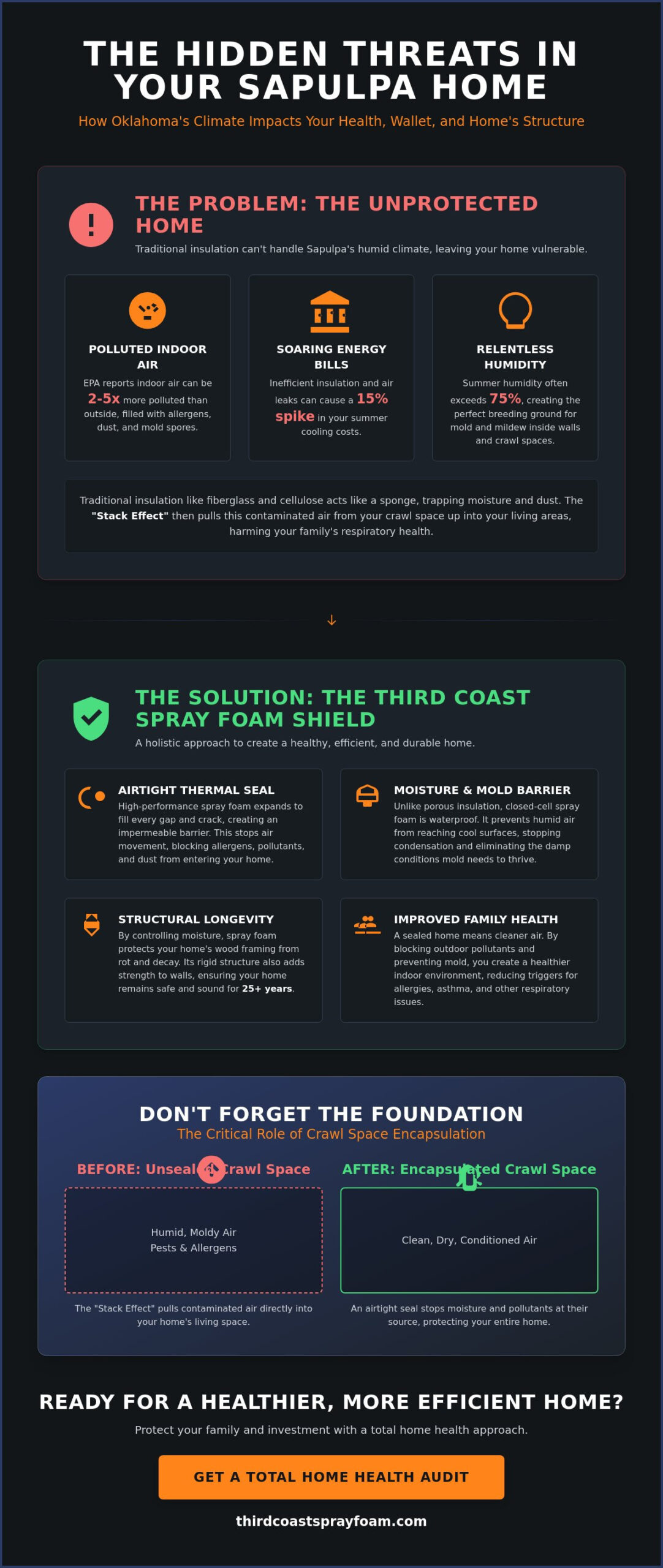
Your home’s structure is constantly breathing. Through a process called the "stack effect," warm air rises and escapes through the attic, pulling unconditioned air in through lower levels like the crawl space or basement. In Grand Rapids, this means your home is drawing in humid, pollen-laden summer air or dry, dusty winter air. These outdoor pollutants and allergens enter through countless tiny gaps and cracks in your home’s envelope.
This is why homeowners in our region should prioritize comprehensive air sealing over simply adding more R-value. While R-value measures an insulation’s resistance to heat flow, it does nothing to stop air leakage. A truly healthy home requires a complete air barrier to control what comes inside, protecting your family’s respiratory health year-round.
Respiratory Health and Mold Prevention in West Michigan Homes
There is a direct and undeniable link between the performance of your home’s insulation and your family’s respiratory health. In West Michigan, common environmental triggers like ragweed pollen, dust mites, and pervasive mold spores can easily infiltrate a poorly sealed home, aggravating allergies and asthma. The problem is often worst in the damp, humid seasons when condensation can form inside walls, attics, and crawl spaces.
This condensation provides the perfect breeding ground for mold. Our "Health-First" approach to insulation focuses on creating an airtight, moisture-impenetrable barrier. By controlling moisture, we eliminate the conditions mold needs to grow, creating a safer and healthier indoor environment for your family. (EPA guide to mold and moisture)
Managing Mold and Mildew in a Humid Environment
In older Grand Rapids properties, hidden mold is a common issue. A persistent musty smell, discoloration on walls, or warped floorboards can all be signs of a hidden moisture problem. Pay close attention to "sweating" pipes in the basement or dampness along the rim joists (where the home’s wood frame rests on the foundation). These are prime spots for condensation. High-performance insulation like closed-cell spray foam is a powerful solution because it is impermeable to moisture and prevents the dew point—the temperature at which condensation forms—from being reached on interior surfaces.
Protecting Your Family’s Air Quality
Creating an airtight home is one of the most effective ways to reduce indoor asthma and allergy triggers. Unlike traditional fiberglass batts, which can trap dust and allergens and act more like a dirty filter than a barrier, closed-cell spray foam creates a solid, seamless seal. This powerful barrier physically prevents particulate matter, pollen, and other outdoor pollutants from infiltrating your living space, leading to a dramatic improvement in indoor air quality.
High-Performance Insulation Solutions for Grand Rapids, MI
For West Michigan homes, closed-cell spray foam consistently outperforms traditional materials. Its rigid structure and moisture-blocking properties make it the ideal choice for our demanding climate. Furthermore, its superior air-sealing capabilities are especially beneficial for homes near high-traffic areas like US-131 or I-96, as it helps block both airborne pollutants and noise. For homes with old, contaminated, or underperforming insulation, professional removal is the first step toward better respiratory health, clearing the way for a modern, high-performance solution.
At Third Coast Spray Foam, we leverage our deep West Michigan expertise for every project. We apply the highest standards of excellence to ensure your Grand Rapids home is protected, efficient, and healthy.
Closed-Cell Spray Foam: The Gold Standard for Durability
In a region known for damp basements and high humidity, closed-cell spray foam is the gold standard. Because it does not absorb water, it’s the best choice for any area prone to moisture. It also adds significant structural rigidity to walls and roofs, a valuable benefit for West Michigan’s residential homes and agricultural buildings like pole barns. Its durability and performance provide a permanent solution to energy loss and moisture problems.
Attic and Rim Joist Optimization
Two of the most critical and often overlooked areas for energy loss and moisture intrusion are the attic and rim joists. Sealing the rim joists is essential for preventing cold floors and stopping damp, musty air from entering your basement or crawl space. In the attic, a combination of air sealing and proper insulation prevents heat loss in the winter and heat gain in the summer. While blown-in insulation is a common choice, spray foam offers a superior, airtight seal that provides unmatched performance for Grand Rapids attics.
Crawl Space Encapsulation: A Critical Health Upgrade for Grand Rapids
In many Michigan homes, the number one source of indoor air quality problems is a damp, vented crawl space. This dark, humid environment is a breeding ground for mold, mildew, and pests. Encapsulation is the process of completely sealing the crawl space with a heavy-duty vapor barrier and conditioning the air, transforming it from a liability into a clean, dry, and healthy part of your home. This process not only prevents mold but also protects your home’s structural joists from wood rot and reduces radon risks.
The 5-Step Encapsulation Process
-
Clean Out: All debris, old liner, and contaminated materials are removed.
-
Seal Vents & Gaps: Foundation vents are permanently sealed to stop humid outdoor air from entering. All gaps and cracks are sealed.
-
Install Vapor Barrier: A thick, durable vapor barrier is installed across the floor and up the walls, completely isolating the home from the damp earth.
-
Insulate Walls: The crawl space walls are insulated, typically with moisture-resistant closed-cell spray foam.
-
Condition the Air: A specialized, high-efficiency dehumidifier is installed to maintain optimal, low-humidity conditions year-round.
Health Benefits of a Sealed Foundation
A sealed and conditioned crawl space eliminates the breeding ground for dust mites, pests, and wood-destroying insects. More importantly, it stops the flow of unhealthy air into your home. According to the "50% Rule" of building science, nearly half of the air you breathe on the first floor originates from your crawl space or basement. By encapsulating, you are directly improving the air your family breathes every day.
- Health-First Guide: Crawl Space Insulation in Grand Rapids & West Michigan
Choosing the Right Insulation Contractor in Grand Rapids
When selecting a contractor, look for a team that prioritizes a holistic, "total home health" approach. A proper assessment should come before any installation, identifying all sources of air leakage and moisture. It’s also important to understand the return on your investment, which includes not only long-term energy savings but also potential benefits like the Energy Efficient Home Improvement Credit. As a local company, Third Coast Spray Foam brings a no-nonsense, health-first approach to Grand Rapids property owners, delivering permanent solutions tailored to our unique climate.
Questions to Ask Your Grand Rapids Installer
-
Do you provide a comprehensive air-sealing plan, or do you only focus on R-value?
-
What are your procedures for managing job site safety and protecting indoor air quality during and after installation?
-
Are you fully licensed, insured, and familiar with Grand Rapids building codes and Kent County requirements?
The Third Coast Difference: Quality and Community
Our commitment is to provide permanent, health-focused insulation solutions that stand up to West Michigan’s toughest weather. Our deep experience in this harsh climate means we know exactly how to solve the unique insulation and moisture challenges of Grand Rapids homes. We treat your property as a complete system, ensuring every component works together to create a safe, comfortable, and efficient environment. Ready to take the next step? Protect your Grand Rapids home and health today.
Disclaimer
Information provided is for general educational purposes. Individual needs and circumstances vary. Speak to an experienced professional to get the correct information for your situation.