
R13 Insulation in Grand Rapids, MI: Is the Standard Enough for Your Home?
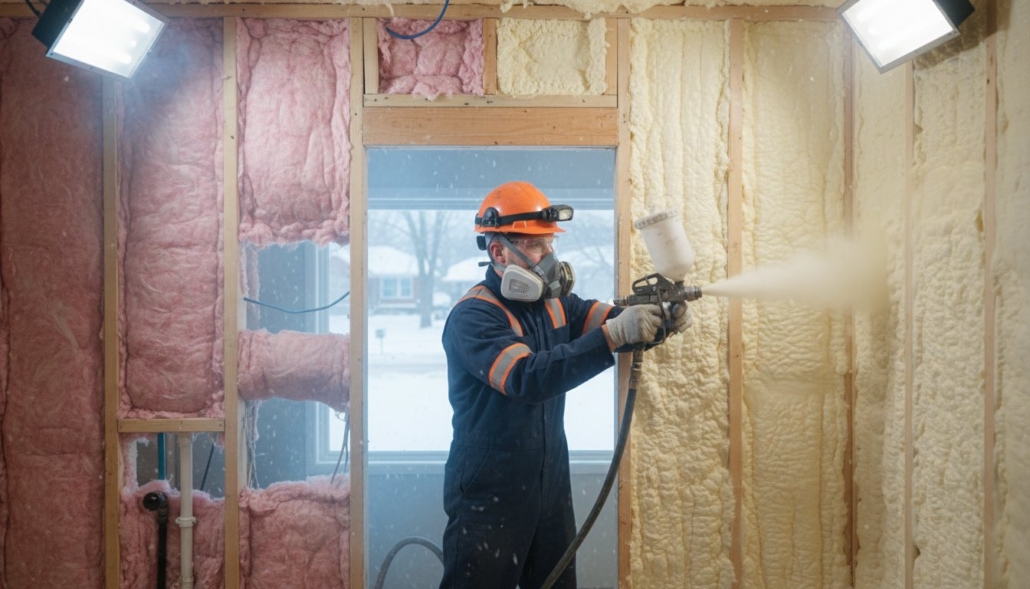
What if your R13 insulation isn’t cutting it? Many homeowners in Grand Rapids, MI, find themselves battling high winter heating bills and drafty rooms, even with insulation in place. You’re not alone in feeling frustrated by the cold air creeping in, especially when you thought you’d already taken the right steps to protect your home. In this article, we’ll uncover why R13 insulation is often viewed as the baseline for West Michigan homes and when it’s time to consider an upgrade to high-performance alternatives. You’ll discover the key factors influencing your home’s energy efficiency, learn how to achieve a draft-free environment, and understand whether you should hire a professional or tackle insulation yourself. Stay with us as we guide you toward a more comfortable, cost-effective home this winter.
Key Takeaways
- Understand the basics of R13 insulation and why it is the standard choice for 2×4 wall cavities in West Michigan homes.
- Learn how Michigan’s energy codes and climate factors influence whether R13 insulation is sufficient for your residence.
- Discover the performance differences between R13 fiberglass batts and spray foam insulation, including lifecycle costs and energy efficiency.
- Identify critical areas in your home where R13 insulation may fall short, particularly in basements and rim joists.
- Explore how a professional insulation audit can help you create a high-performance thermal envelope for long-term comfort and savings.
What is R13 Insulation? Understanding the Basics for West Michigan Homes
R13 insulation is a crucial component in the thermal resistance of homes, particularly those with 2×4 wall cavities. The ‘R’ in R-value signifies the material’s ability to resist heat flow, with R13 representing a standard thickness of 3.5 inches, tailored to fit these wall dimensions. This insulation type is predominantly made from fiberglass or mineral wool, both of which are effective in trapping air to create a thermal barrier. Due to its efficiency and compatibility, R13 insulation is frequently the most searched insulation option for residential retrofits.
The Anatomy of an R13 Batt
R13 insulation comes in two primary forms: faced and unfaced. Faced insulation has a kraft paper backing, providing an additional vapor barrier, while unfaced insulation lacks this feature, making it suitable for areas where moisture control is not as critical. Fiberglass, the most common material for R13 batts, effectively traps air within its fibers, enhancing thermal resistance. In Grand Rapids, residential construction typically employs standard batt dimensions of 15 inches by 93 inches, perfectly fitting the 2×4 wall cavities.
Why R13 is the Standard for 2×4 Walls
The physical limitations of a 3.5-inch wall cavity necessitate specific insulation standards. While higher R-values may seem appealing, simply ‘stuffing’ more insulation into a standard wall is not feasible. This could lead to compression of the material, which diminishes its effectiveness. R13 insulation emerged as the industry baseline for American homes due to its optimal balance of thermal resistance and space efficiency, making it the go-to choice for builders and homeowners alike.
Is R13 Enough for Grand Rapids? Michigan Energy Codes and Climate Realities
Grand Rapids, located in Michigan’s Climate Zone 5, faces unique insulation challenges due to the region’s harsh winters and variable humidity levels, especially influenced by Lake Michigan. As residents prepare their homes for the colder months, it’s crucial to understand whether R13 insulation meets the demands set forth by local energy codes and climate realities.
Michigan Energy Code Requirements for 2026
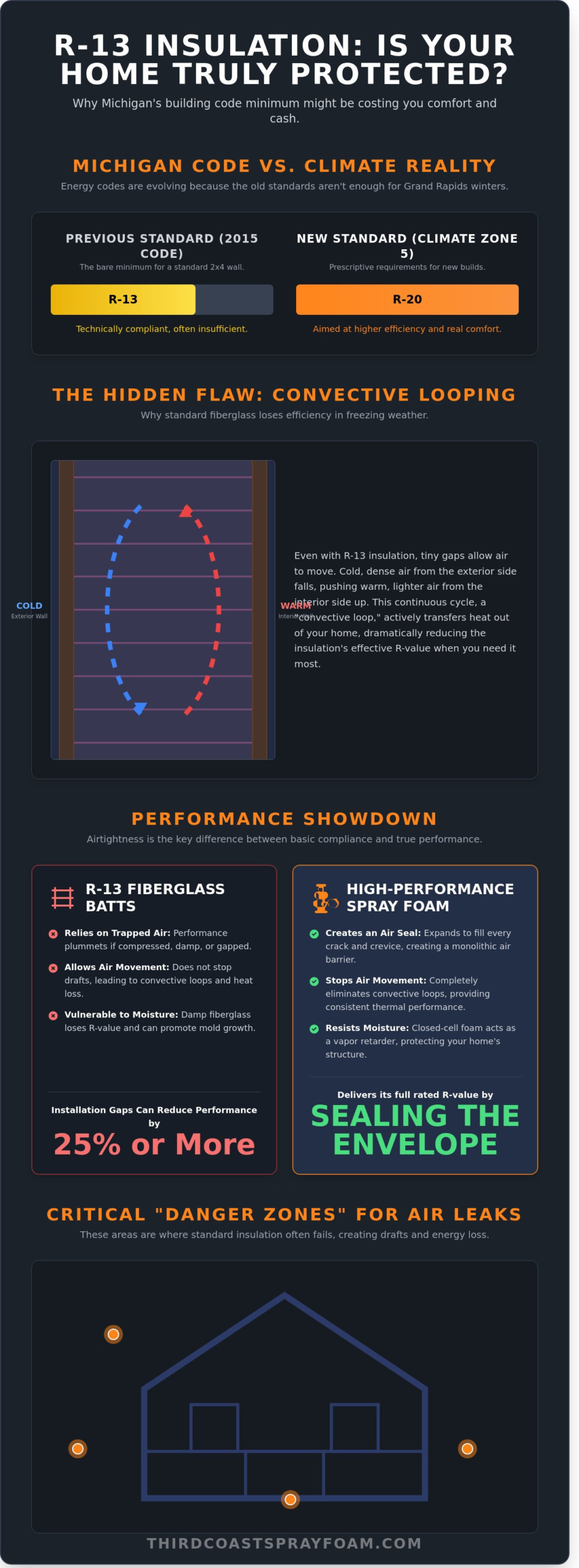
The Michigan Energy Code, updated in 2026, has specific prescriptive R-value requirements for exterior walls in Muskegon and Kent Counties. For new builds, the minimum requirement is R20, which reflects an understanding of the region’s cold climate. Existing home retrofits may still utilize R13 insulation, but this only satisfies the minimum energy code standard. The ‘U-factor,’ which measures the thermal performance of a building component, must also be considered. A lower U-factor indicates better insulating properties, meaning a wall assembly that incorporates R13 insulation may fall short in overall efficiency compared to higher R-values.
The Difference Between R-Value and Air Sealing
High R-values like R13 insulation may appear promising, but they can be rendered ineffective if air leaks are present. Air sealing is crucial for maintaining a home’s energy efficiency. Without proper sealing, cold air can infiltrate through gaps, leading to significant heat loss. Additionally, thermal bridging occurs when heat escapes through wall studs, undermining the R-value of fiberglass batts. This means that even homes equipped with new R13 insulation can feel drafty and uncomfortable during West Michigan winters, resulting in higher energy bills and reduced overall comfort.
Addressing these issues often requires a comprehensive approach that goes beyond simply meeting code. Homeowners should consider enhancements like professional spray foam insulation in Grand Rapids, which can improve air sealing and reduce thermal bridging. This not only boosts energy efficiency but also ensures a more comfortable living environment.
In summary, while R13 insulation is acceptable for some existing home retrofits, it may not provide the maximum comfort necessary for Grand Rapids residents during the cold winter months. Investing in higher R-value insulation options or enhancing air sealing measures is essential for achieving optimal energy performance. For personalized advice and solutions tailored to your home, reach out to our team today.
R13 Fiberglass Batts vs. Spray Foam: A Performance Comparison
When evaluating insulation options for your home, especially in Grand Rapids, MI, it’s crucial to compare R13 insulation fiberglass batts with spray foam. While DIY fiberglass installation may seem cost-effective, the lifecycle costs often tell a different story. Professional spray foam installation, while initially more expensive, provides long-term savings through reduced energy bills and enhanced durability. Additionally, homeowners who invest in high-performance insulation upgrades may be eligible for energy efficient home improvement credits in Grand Rapids, which can help offset the initial investment costs.
The Hidden Weaknesses of Fiberglass in West Michigan
Fiberglass batts have notable weaknesses, particularly in Michigan’s damp winters. One significant issue is the loss of R-value when fiberglass is compressed or exposed to moisture. A study from the U.S. Department of Energy indicates that wet fiberglass can lose up to 50% of its insulating effectiveness. This can lead to cold spots and drafts in your home.
Additionally, faced fiberglass batts can create a breeding ground for mold, especially in humid crawl spaces. Mold growth not only jeopardizes the structural integrity of your home but also your family’s health. Settling is another concern; over time, fiberglass can compress, creating cold spots at the top of wall cavities. This settling can reduce the overall effectiveness of your insulation, leading to increased energy costs during the frigid Michigan winters.
Why Spray Foam Outperforms Standard Batts
In contrast, spray foam insulation achieves a higher R-value per inch than fiberglass batts. Closed-cell spray foam typically offers an R-value of about 6 to 7 per inch, compared to R13 fiberglass batts, which lose effectiveness quickly. The custom fit of spray foam eliminates gaps around electrical outlets and plumbing, creating a seamless thermal envelope that fiberglass simply can’t match.
Moreover, closed-cell foam provides excellent moisture resistance, which helps to prevent mold growth and structural damage. For older homes in areas like Fruitport, this added structural reinforcement can be crucial. Spray foam not only insulates but also strengthens walls, making your home more resilient to the elements.
In summary, while R13 fiberglass batts may seem like a standard choice, the hidden weaknesses highlight the need for a more effective solution. Spray foam insulation not only addresses these concerns but also elevates your home’s energy efficiency and overall comfort.
Critical Areas Where R13 Often Fails in West Michigan Homes
While R13 insulation is often viewed as a standard choice for many homes, it falls short in several critical areas, particularly in the unique climate of West Michigan. Understanding these ‘danger zones’ can help homeowners make more informed decisions about insulation options that truly protect their homes from energy loss and moisture issues.
Rim Joists and Box Sills: The Draft Entry Points
Rim joists and box sills are notorious for being the primary source of energy loss in Michigan basements. These areas are often irregularly shaped, making it challenging to achieve a snug fit with standard fiberglass batts. The gaps created can let in cold air, leading to higher heating costs during the frigid winters. To combat this, air-sealing with foam insulation is essential; it provides a permanent solution that not only fills the gaps but also significantly enhances the overall thermal envelope of your home.
Crawl Spaces and Basements: Moisture vs. R-Value
The ‘stack effect’ in homes can exacerbate insulation issues. In West Michigan, cold, damp air from crawl spaces is drawn into living areas, affecting indoor comfort levels. Standard fiberglass insulation in these areas often absorbs moisture, turning into a ‘sponge’ that loses its R-value over time. This not only compromises energy efficiency, but it can also lead to mold growth and structural issues. A more effective solution is crawl space encapsulation, which not only provides superior insulation but also keeps moisture at bay, ensuring a healthier living environment.
In summary, relying solely on R13 insulation may not be enough to protect your home from the unique challenges posed by West Michigan’s climate. By focusing on critical areas such as rim joists, box sills, and crawl spaces, homeowners can make informed decisions about insulation that lead to long-term comfort and cost savings.
For a comprehensive assessment of your home’s insulation needs, contact our team today. We can help you seal the envelope and enhance your home’s energy efficiency.
Beyond the Minimum: Creating a High-Performance Thermal Envelope
At Third Coast Spray Foam, we understand that R13 insulation may meet minimum standards, but true energy efficiency and comfort require a more robust solution. Our team is dedicated to delivering what we call “Total Home Health” for residents of West Michigan. This begins with a professional insulation audit to identify gaps in R-value and ensure your home is performing at its best.
During our insulation audits, we perform a thorough evaluation of your home’s current insulation. This involves checking not only the R-value of existing materials but also inspecting for air leaks, moisture issues, and overall thermal performance. Understanding these factors is crucial; even small gaps can lead to significant energy loss, affecting your comfort and increasing utility bills.
Choosing spray foam insulation over conventional R13 products offers a compelling long-term return on investment. Spray foam provides superior air sealing, which not only enhances comfort but also reduces energy consumption by up to 50% compared to traditional fiberglass batts. Over the lifespan of your home, this translates into substantial savings on heating and cooling costs, making it a wise financial decision. Furthermore, homeowners who upgrade to high-performance insulation may qualify for energy efficient home improvement credits, providing additional financial incentives for making these smart investments.
Think of insulation not just as a temporary fix but as a permanent structural investment in your home’s integrity and efficiency. Quality insulation directly correlates with the durability and performance of your home, ensuring you enjoy a comfortable living environment year-round.
Why Third Coast Chooses Spray Foam Over Fiberglass
Our commitment to high-performance, air-sealing solutions drives us to favor spray foam insulation. While we don’t sell fiberglass batts, we do offer a superior alternative that lasts a lifetime. Spray foam fills gaps and creates a seamless barrier against air infiltration, which is critical in Michigan’s fluctuating climate. Our local expertise ensures that we understand the unique challenges posed by our weather, allowing us to provide tailored solutions for our clients.
How to Get a Custom Insulation Audit in West Michigan
Getting started with Third Coast Spray Foam is simple. Schedule your free insulation audit by visiting our website. During your professional site visit, you can expect a comprehensive assessment of your home’s insulation needs, with detailed recommendations tailored to your specific situation. Don’t wait to improve your home’s comfort and efficiency. Get Your Free Insulation Estimate in Fruitport, MI today!
Take Control of Your Home’s Comfort Today
R13 insulation may meet basic energy codes, but it often falls short in the demanding climate of Grand Rapids. As we’ve explored, understanding the limitations of R13 is crucial for ensuring your home remains energy-efficient and comfortable. With options like spray foam insulation available, you can create a robust thermal envelope that addresses common weaknesses found in traditional materials.
Don’t let drafts and high energy bills disrupt your peace of mind. When searching for foam insulation near me in Grand Rapids and West Michigan, it’s essential to find a contractor who understands the unique challenges of our climate. Stop the drafts and start saving—schedule your free West Michigan insulation estimate today! Our expert team specializes in air-sealing and enhancing thermal performance throughout Muskegon, Ottawa, and Kent Counties. Trust us for no-nonsense, professional installation that delivers lasting results. Together, let’s improve your home’s efficiency and comfort for years to come.
Frequently Asked Questions
Is R13 insulation good for exterior walls in Michigan?
R13 insulation can be effective for exterior walls in Michigan, particularly in areas with moderate climates. However, Michigan’s cold winters may necessitate higher R-values for optimal energy efficiency. Many homeowners in colder regions opt for R15 or R19 insulation, which provides better thermal resistance. Always consider local building codes and climate conditions when choosing insulation for your home.
What is the difference between R13 and R15 insulation?
The primary difference between R13 and R15 insulation lies in their thermal resistance values. R15 insulation offers better insulation performance due to its higher R-value, making it more effective in preventing heat loss. R15 is typically thicker than R13, which may require adjustments in wall framing. Choosing between the two depends on your specific insulation needs and local climate conditions.
Can I use R13 insulation in my crawl space?
Yes, R13 insulation can be used in crawl spaces, but it’s essential to ensure proper installation to maximize its effectiveness. If your crawl space is vented, using R13 unfaced insulation can help mitigate moisture issues. However, for unvented crawl spaces, consider using R19 or higher to better meet energy efficiency standards and prevent heat loss.
Does R13 insulation stop air drafts?
While R13 insulation helps to reduce heat transfer, it doesn’t completely stop air drafts. Proper air sealing is crucial to eliminate drafts effectively. This involves sealing gaps and cracks around windows, doors, and other penetrations. Combining R13 insulation with comprehensive air sealing can significantly improve your home’s comfort and energy efficiency.
How many inches thick is R13 fiberglass insulation?
R13 fiberglass insulation is typically 3.5 inches thick. This thickness allows it to fit snugly between standard 2×4 wall studs. When installed correctly, R13 insulation provides a balance of thermal resistance and space efficiency, making it suitable for various applications, including interior walls and some exterior walls.
What happens if I compress R13 insulation into a smaller space?
Compressing R13 insulation into a smaller space reduces its R-value and thermal performance. Insulation relies on air pockets to provide effective thermal resistance, and compression diminishes these pockets. This can lead to increased heat transfer, reduced energy efficiency, and potential comfort issues in your home. Always install insulation according to manufacturer guidelines to ensure optimal performance.
Is faced or unfaced R13 better for West Michigan homes?
Faced R13 insulation is often preferable for West Michigan homes, as the vapor barrier helps prevent moisture accumulation within walls. This is especially important in areas with high humidity or where moisture issues are common. However, unfaced R13 can be used in specific applications, such as unvented crawl spaces. It’s crucial to evaluate your specific situation and consult with a local insulation expert.
Why is my home still cold if I have R13 insulation in the walls?
If your home feels cold despite having R13 insulation, several factors may be at play. Common issues include air leaks around windows and doors, inadequate insulation in other areas, or thermal bridging through structural elements. Conducting a thorough energy audit can help identify the root cause, allowing you to implement necessary solutions for improved comfort and energy efficiency.
Disclaimer
Information provided is for general educational purposes. Individual needs and circumstances vary. Speak to an experienced professional before relying on the information given here.


Leave a Reply
Want to join the discussion?Feel free to contribute!