
Did you know that the air circulating in your living room often originates in the dark corners of your attic? For many homeowners, a drafty attic isn’t just a source of high heating bills; it’s a hidden contributor to persistent allergy symptoms and poor indoor air quality. If you’re struggling with ice dams or shivering through winter, your outdated material likely fails to meet the current 2026 R-60 code requirements. Investing in professional blown in attic insulation Michigan services is about more than just warmth. It’s a strategic move to secure your home’s structural integrity and your family’s respiratory health.
We understand the frustration of rising utility costs and the worry that comes with mold growth in hidden spaces. This guide explores how a holistic approach to insulation prevents moisture buildup and creates a stable, healthy environment. You’ll learn about the latest 2026 Energy Efficient Home Improvement Credit and how the right system safeguards your well-being and financial security for years to come.
Key Takeaways
- Learn how meeting the 2026 R-60 code requirements prevents the “stack effect” from pulling pollutants from your basement into your living areas.
- Discover why professional blown in attic insulation Michigan services must include air sealing to effectively stop the movement of moisture-laden air.
- Understand the health benefits of choosing borate-treated cellulose to provide natural mold resistance and superior moisture management for your home.
- Find out how to utilize the 2026 Energy Efficient Home Improvement Credit to offset the cost of a holistic insulation system that protects your respiratory health.
Blown-In Insulation and the Michigan Climate: Why R-Value Matters for Health
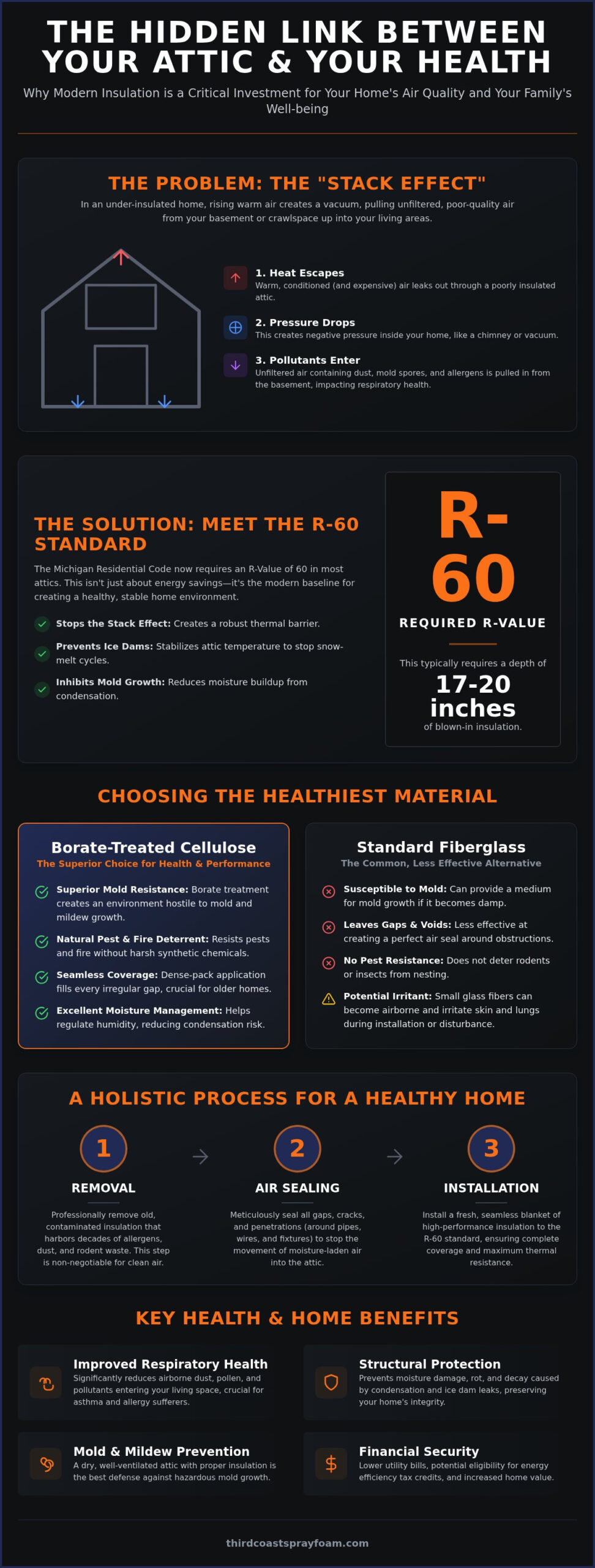
Understanding your home’s thermal resistance isn’t just about comfort; it’s the first step toward a healthier living environment. The R-Value measures how well a material resists heat flow, which is vital for Michigan’s Zone 5 and 6 climates. When your attic is under-insulated, it triggers the “stack effect.” It happens as conditioned air escapes through the roof, creating a vacuum that pulls cold, unfiltered air from your basement into your living areas. This cycle frequently introduces dust and outdoor pollutants that directly impact your family’s respiratory health.
To better understand how this material is applied, watch this helpful video:
As of April 13, 2026, the updated Michigan Residential Code sets a higher bar for efficiency. For most modern attics, the new standard is R-60. This isn’t just a suggestion for saving money; it’s the baseline for modern efficiency. By meeting this standard with blown in attic insulation Michigan, you create a robust thermal barrier that keeps conditioned air where it belongs.
Preventing Ice Dams and Moisture Buildup in West Michigan Homes
In West Michigan, lake-effect snow and rapid temperature shifts frequently cause ice dams. These heavy blocks of ice force water under your shingles, leading to attic leaks that foster mold and mildew growth. Even if you aren’t in Texas, the standards set by experts like Mike and Mike Roofing show how critical a well-installed roof is to preventing such moisture issues. Thermal bypasses around plumbing stacks and light fixtures allow heat to escape, which melts snow and fuels this cycle. These moisture issues are primary triggers for respiratory irritants and long-term structural damage. Achieving R-60 insulation depth of approximately 17 to 20 inches effectively stabilizes attic temperatures to protect indoor air quality and prevent these hazardous conditions.
Cellulose vs. Blown-In Fiberglass: Choosing for Respiratory Health
Selecting the right material for blown in attic insulation Michigan projects requires looking beyond thermal performance. While fiberglass is a common choice, cellulose often provides a tighter fit around irregular framing in older West Michigan homes. We prioritize borate-treated cellulose because it offers natural fire and pest resistance without relying on harsh synthetic chemicals. This borate treatment also creates a hostile environment for mold growth. It’s a pragmatic choice for homeowners who value both durability and health. You can learn more about Seal and Insulate with ENERGY STAR guidelines to see how these materials fit into a total home strategy.
Before adding new material, we must address what’s already there. Old, dusty insulation often harbors decades of accumulated allergens, rodent waste, and moisture. Leaving this contaminated material in place compromises your indoor air quality. Professional removal ensures a clean slate, effectively eliminating respiratory triggers before we install fresh, high-performance layers. This step is non-negotiable for a truly healthy attic system.
Managing Indoor Air Quality and Mold Prevention
High-quality blown-in materials create a seamless blanket across your attic floor. This coverage reduces the drafts that carry outdoor pollen and pollutants into your living space. At Third Coast Spray Foam, we select materials that don’t support mildew growth. This focus is a critical safeguard for family members living with asthma or chronic allergies. Unlike traditional batts, blown-in cellulose fills every gap to prevent the air movement that leads to condensation. For a deeper dive into material selection, check out our blown-in insulation pillar. If you’re ready to improve your home’s air, our team can help you choose the right insulation system for your specific needs.
The Professional Installation Process: Air Sealing and Ventilation
Professional blown in attic insulation Michigan installation is a comprehensive system that begins with air sealing. Simply adding material without addressing hidden gaps is a missed opportunity for both health and efficiency. We prioritize sealing to stop the movement of moisture-laden air from your home into the attic. Common leaks occur at top plates, recessed light fixtures, and plumbing stacks. These gaps act as small chimneys, pulling allergens and dust from building materials into your living space while inviting the condensation that fuels mold growth.
In West Michigan cities like Grand Haven or Muskegon, the high humidity and heavy snow loads make attic ventilation a technical necessity. Our installation process ensures proper baffle placement to keep air flowing freely from the soffits to the ridge vents. This intentional design prevents stagnant, moist air from getting trapped, which protects your roof deck from wood rot and keeps respiratory irritants from accumulating in your home.
Maximizing Your 2026 Energy Credits and Home Value
A professional installation ensures you meet the strict criteria for the Energy Efficient Home Improvement Credit. Before blowing in new material, we perform an attic audit to identify existing mold colonies or structural compromises. This proactive approach ensures your home is safe before it’s sealed. By choosing professional blown in attic insulation Michigan services, you guarantee that your attic system is an integrated barrier that supports your family’s respiratory health and enhances your property’s long-term value.
Secure Your Home’s Health and Efficiency for the Years Ahead
Securing your home’s structural integrity and your family’s well-being requires a holistic approach to attic management. By prioritizing R-60 thermal resistance and professional air sealing, you effectively eliminate the moisture and pollutants that trigger respiratory issues. Investing in blown in attic insulation Michigan services ensures your property remains a sanctuary against extreme weather while maximizing the 2026 federal tax credits. As local West Michigan specialists, we use health-conscious installation techniques that prioritize indoor air quality and long-term durability. Our team is ready to provide the technical expertise and documentation assistance you need for this permanent investment. Request Your Free Health-Focused Attic Inspection Today and take the first step toward a more comfortable, mold-free home. We look forward to helping you protect your family and your property.
Frequently Asked Questions
Is blown-in insulation safe for people with asthma or allergies?
Yes, professional blown-in insulation is safe and often beneficial for those with respiratory sensitivities. We use borate-treated materials that naturally resist mold and pests without harsh chemical off-gassing. Unlike old, dusty batts, a seamless application of blown in attic insulation Michigan reduces the drafts that carry outdoor allergens into your living space. This creates a stable, cleaner environment for your family.
How much blown-in insulation do I need for my Michigan attic in 2026?
As of April 2026, the Michigan Residential Code requires attic insulation levels between R-49 and R-60. We recommend reaching the R-60 standard to maximize your home’s thermal resistance and indoor air quality. This typically requires a depth of 17 to 20 inches of material. Proper depth prevents the stack effect from pulling pollutants into your home while keeping your energy costs manageable.
Should I remove my old attic insulation before adding new blown-in material?
Professional removal is highly recommended if your existing material is dusty, moisture-damaged, or contaminated by pests. Adding new blown in attic insulation Michigan over old, dirty layers can trap allergens and mold spores in your home. We specialize in safe removal to ensure your new insulation sits on a clean, air-sealed surface. This process is essential for protecting your long-term respiratory health and structural integrity. For a look at how professional abatement and site preparation standards are applied in complex projects, you can discover TSIAC International and their expert guide.
Insulation itself doesn’t cause mold, but poor ventilation does. If your attic lacks proper airflow, moisture-laden air gets trapped and condenses on cold surfaces. This creates the perfect environment for mildew growth. We ensure proper baffle placement in cities like Grand Haven and Muskegon to maintain clear paths for air. Combining professional installation with air sealing is the most effective way to prevent moisture-related health issues.
Disclaimer
Information provided is for general educational purposes. Individual needs and circumstances vary. Speak to an experienced professional to get the correct information for your situation.