
Could insulation added to stop an attic draft create a fire hazard? It can if it covers a required clearance or touches a chimney assembly that needs space around it. In West Michigan, cold-weather heat loss can make insulating around chimney in attic spaces feel like an obvious fix. Start by identifying the chimney or flue and its requirements, not by filling every gap.
This guide explains what to inspect before changing insulation, how to plan air sealing without blocking required clearances, and why chimney-specific details must be checked against the assembly, manufacturer instructions, and local requirements. It also covers signs of condensation, mold, or contaminated insulation that can affect indoor air quality and respiratory comfort. The goal is a warmer, healthier attic without trading comfort for fire or moisture risks.
Key Takeaways
- Identify the chimney or flue assembly before changing attic insulation. Required clearance depends on the specific setup.
- Work in order: inspect the area, verify clearance requirements, then plan air sealing and insulation without bridging or hiding the clearance.
- Safe insulating around chimney in attic spaces means treating the chimney boundary as a safety priority, not simply filling a drafty gap.
- Staining, dampness, damaged materials, or mold are reasons to pause and assess the source. Moisture and airborne contaminants can affect indoor air quality and respiratory comfort.
Insulating Around a Chimney in an Attic Starts with Identifying the Assembly
Reducing heat loss around an attic chimney should not mean covering a clearance you have not identified. Before adding or moving insulation, determine what passes through the attic and preserve the separation required for that specific assembly. The goal is to address the attic boundary around the chimney, not to fill every visible gap.
Safe details vary. A masonry chimney, a factory-built chimney, and a vent assembly are not interchangeable, and the visible surface may not reveal every component. Insulating around chimney in attic spaces therefore starts with identification, not assumptions based on appearance or a measurement meant for a different setup.
For a visual example involving a chimney liner, watch this video. It shows one specific setup, so use it for context, not as a universal clearance guide.
What should you identify before insulating near a chimney?
Look for clues that distinguish masonry from factory-built components, and trace where the liner or flue runs. A masonry exterior does not necessarily show the liner inside. Metal sections may be part of a listed chimney or a separate vent, and the clearance requirements may differ. For a helpful breakdown of factory-built systems and how they differ from masonry, Home Safe Hearth & Chimney offers an in-depth guide to prefabricated chimneys.
Look for an identification label or model information and use it to find the assembly’s manufacturer instructions. Check the applicable local requirements for its clearance as well. General insulation materials information can explain material differences, but it cannot establish a safe clearance for your chimney.
If insulation hides the assembly, or you cannot establish its required separation, pause before disturbing or adding material. Identify the boundary first to avoid turning a heat-loss improvement into a fire or moisture concern.
How to Plan Attic Air Sealing and Insulation Around a Chimney
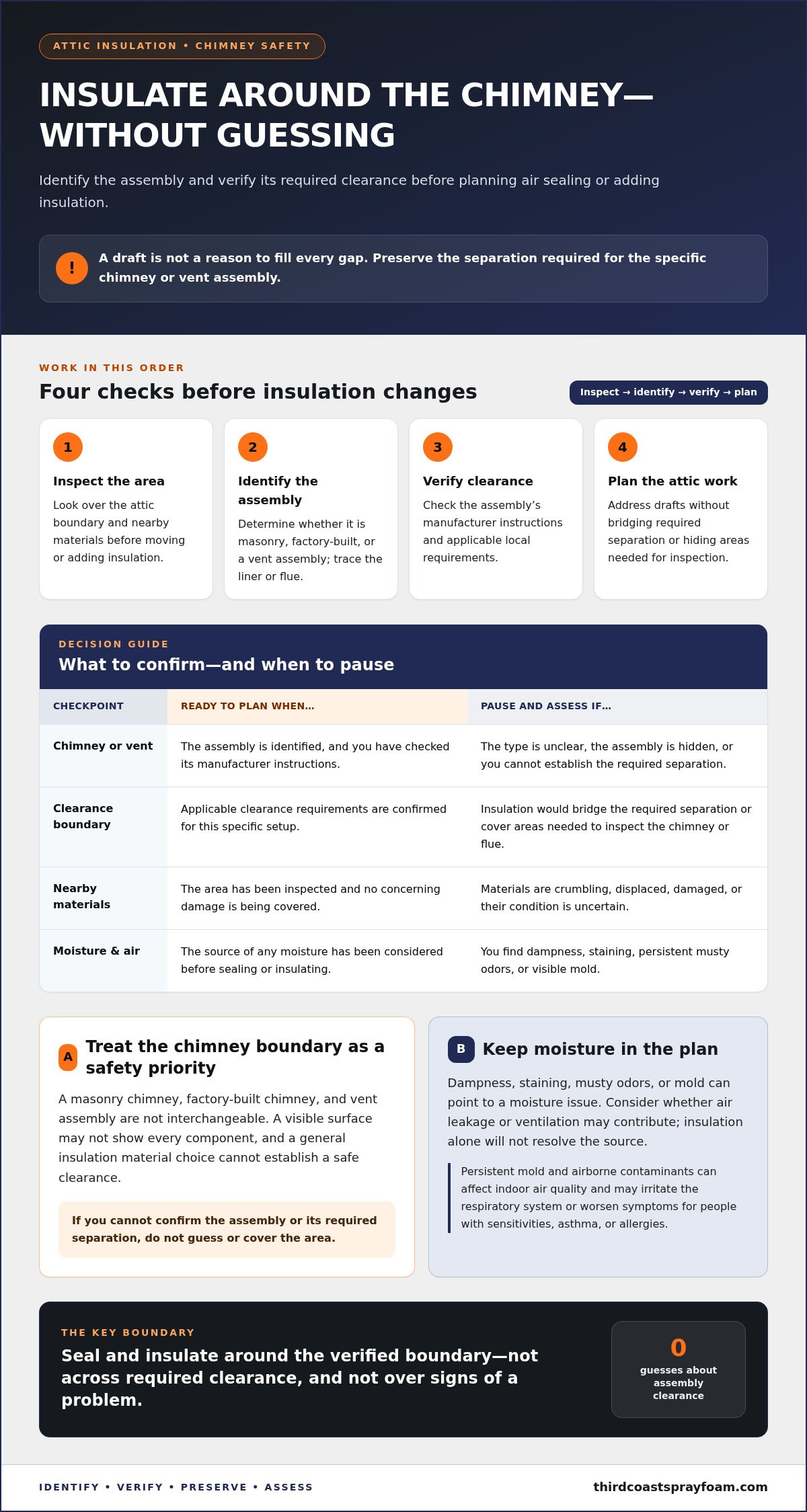
Once you have identified the assembly, work in a deliberate order: inspect the attic area, identify the chimney or vent, verify its required clearance, then plan air sealing and insulation. Do not let a draft rush the process. Safe insulating around chimney in attic spaces depends on the actual assembly, its instructions, and applicable local requirements.
How can you address drafts without blocking required clearance?
First, distinguish the source of the air leak. A gap at the attic boundary may allow indoor air to escape, while insulation placed near hot chimney components raises a separate clearance concern. An air-sealing detail used elsewhere in the attic may not be appropriate at this transition. Use only an approach that is suitable for the assembly. Do not bridge its required separation or cover areas needed to inspect the chimney and flue.
The International Code Council’s guidance discusses chimney and vent clearances, including the clearance to combustibles specified by the chimney manufacturer. Use the applicable instructions and local requirements to plan the work, rather than relying on a generic material choice or measurement.
Before adding insulation, look for dampness, staining, musty odors, or visible mold. Consider whether attic ventilation or household exhaust may be contributing to moisture. Persistent moisture can support mold growth; spores and other contaminants may affect indoor air quality and aggravate respiratory symptoms in some people. Address the moisture source instead of sealing or insulating over evidence of a problem.
For a wider view of attic insulation planning in West Michigan, see our Blown-In Insulation in Grand Rapids, MI: The Complete Attic Guide. If you’re planning broader attic insulation or removal, explore our attic insulation and removal services.
When to Stop and Get Help with Chimney Insulation in a West Michigan Attic
Some attic conditions call for a pause before insulation is added or moved. Stop if you cannot identify the chimney type, the required clearance is concealed, or nearby materials appear damaged. Use the same caution if you find staining, dampness, or mold. Insulation alone will not resolve the condition causing these signs.
What attic warning signs should homeowners take seriously?
- Unclear assembly or clearance: Do not guess at the chimney type or cover materials if you cannot establish the required separation.
- Damage near the chimney: Crumbling, displaced, or otherwise damaged materials need attention before the area is altered.
- Moisture or mold: Investigate visible dampness, staining, persistent musty odors, or mold instead of covering affected surfaces.
Moisture can come from different sources, including air leakage or ventilation issues. Understand what is causing it before sealing or insulating over affected materials. In West Michigan, seasonal temperature changes make attic moisture worth investigating, but the right response depends on the conditions in the home.
Mold and damp materials can affect indoor air quality. Airborne spores and other contaminants may irritate the respiratory system or worsen symptoms for people with sensitivities, asthma, or allergies. That does not establish the cause of anyone’s symptoms, but it is a reason to take persistent mold or musty odors seriously and address the underlying moisture.
For general background, see Closed Cell Spray Foam in Grand Rapids: The West Michigan Homeowner’s Guide. This is not a recommendation to apply foam at a chimney. Once chimney-specific concerns are addressed, professional attic insulation and removal can help improve comfort while keeping moisture conditions in view. For property owners tackling comprehensive whole-home improvements, regional specialists such as Underline Energy Concepts illustrate how roofing, insulation, and energy efficiency upgrades can be planned cohesively.
Make Your Attic Safer and More Comfortable
Safe insulating around chimney in attic spaces starts with identifying the assembly and preserving its required clearance. Plan air sealing and insulation around that boundary, not across it. If the chimney type or clearance is unclear, or you find damage, staining, dampness, or mold, pause and address the underlying concern before covering the area. Attic moisture deserves attention alongside heat loss because it can affect indoor air quality and respiratory comfort.
With chimney-specific safety accounted for, a well-planned attic can support more consistent home comfort. Third Coast Spray Foam is a Fruitport-based insulation contractor serving West Michigan, including Grand Rapids, Lansing, Muskegon, Holland, Allegan, Kalamazoo, and Grand Haven. The company installs blown insulation and spray foam and provides insulation removal. Explore professional attic insulation services to plan your next step toward a more comfortable home.
Frequently Asked Questions
Can insulation touch a chimney in an attic?
Only if the specific chimney or vent assembly’s instructions and applicable local requirements allow it. Clearances vary among masonry chimneys, factory-built chimneys, and vent assemblies, so do not assume insulation can safely touch a visible surface. Identify the assembly and its required separation first. If existing insulation hides the clearance or you cannot identify the assembly, pause before changing anything.
How do you insulate around a chimney in an attic safely?
Inspect the area, identify the chimney or vent assembly, verify its required clearance, and only then plan air sealing and insulation. Treat drafts at the attic boundary separately from insulation near hot components. Choose an approach suited to the assembly, and do not bridge the clearance or conceal the chimney’s condition. Check for moisture or mold before covering nearby materials.
What happens if attic insulation blocks a chimney’s required clearance?
Blocking required clearance can put combustible insulation or other materials too close to hot chimney components, increasing fire risk. It can also hide damage or make the chimney and surrounding materials harder to assess. Do not rely on a general measurement for a different assembly. If the clearance is covered or uncertain, stop and establish the assembly-specific requirements before proceeding.
Can moisture around an attic chimney lead to mold or affect indoor air quality?
Yes. Persistent dampness can encourage mold or mildew, and spores or other contaminants may affect indoor air quality and respiratory comfort, especially for people with sensitivities. Investigate staining, a persistent musty odor, or visible growth instead of insulating over it. In West Michigan communities including Grand Rapids, Lansing, Muskegon, Holland, Allegan, Kalamazoo, and Grand Haven, include moisture sources in your attic planning.
Disclaimer
Information provided is for general educational purposes. Individual needs and circumstances vary. Speak to an experienced professional to get the correct information for your situation.