
The thickest insulation isn’t automatically the right choice for a workshop. For insulating a workshop in Kent County, the right fit depends on the building’s structure, how you use the space, and how it manages air and moisture. A metal shop used year-round has different needs from a pole barn used mainly for storage. Drafts and condensation can affect comfort and create conditions that encourage mold and mildew.
Choosing a system can feel complicated, especially when indoor air quality matters. This guide compares spray foam and blown insulation, explains how air sealing and moisture management work together, and outlines what to expect from a professional evaluation. Spray foam must be installed properly: incorrect application can cause off-gassing or expansion damage, so professional installation by licensed technicians is required.
Key Takeaways
- When insulating a workshop in Kent County, start with how you use the space and how the building is constructed, not just a material name.
- Compare insulation options by where they fit, how they address air leakage, and how the workshop manages moisture.
- Plan for indoor air quality alongside comfort. Controlling moisture can help limit conditions that encourage mold and mildew.
- A project evaluation should account for the workshop’s condition and intended use. Professional installation is essential for spray foam.
What Should Kent County Workshop Insulation Achieve?
Cold drafts near the workbench, chilly mornings, and sticky summer afternoons can make a workshop uncomfortable. To choose insulation for a Kent County building, first consider how you use the space, how it is constructed, where air leaks, and whether there are signs of moisture. These factors work together as part of the building’s protective shell.
Insulation slows heat transfer, but indoor air quality also depends on moisture control and air movement. Before covering a damp area, look for water entry, condensation, or materials that stay wet. Address the source of moisture first to avoid trapping it behind new insulation. Persistent dampness can encourage mold and mildew. Mold spores and other airborne particles may affect indoor air and irritate some people’s respiratory systems. Consider air sealing alongside appropriate ventilation. The goal is a comfortable, well-managed workspace, not simply fewer drafts. For background on how materials contribute to energy efficiency and comfort, see this overview of Building insulation.
How workshop use changes insulation priorities
A workshop used regularly for repairs or hobbies needs dependable comfort during the hours people work there. Drafts around doors, wall joints, and roof transitions can make that harder to achieve. If tools or machinery create noise, sound transmission may also matter. The result depends on the complete wall or ceiling assembly, not insulation alone.
A storage workshop used occasionally may have different comfort priorities. In a metal shop, pay close attention to the building envelope and condensation risk on cool surfaces. The right approach also depends on whether moisture comes from leaks, damp materials, or activities inside the building.
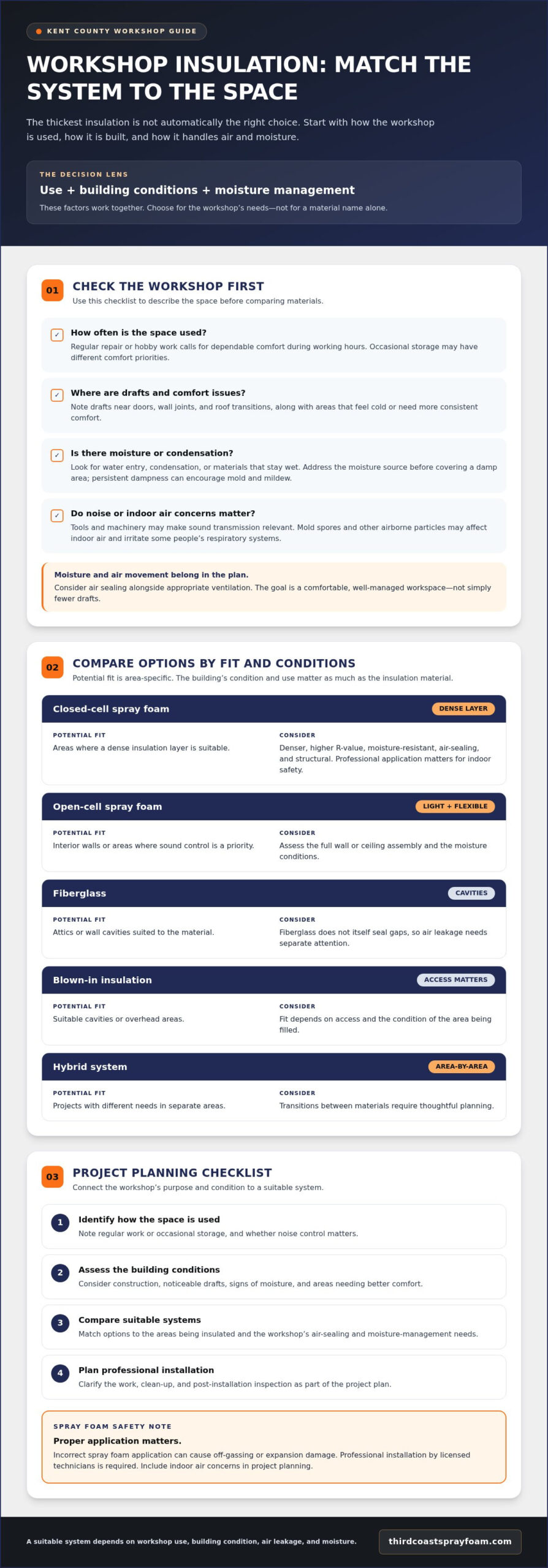
Before comparing materials, note where you feel drafts, where moisture appears, and which areas need more consistent comfort. This gives you a practical basis for matching thermal performance, air sealing, and moisture management to the building, instead of assuming every workshop needs the same system.
Compare Workshop Insulation Options for Comfort, Moisture, and Air Quality
Material choice affects more than temperature. Consider how each option fits the workshop and how installation will be managed around the people who use it. If anyone has respiratory sensitivities, make indoor air quality part of the project discussion. Also identify any damp areas before work begins so the insulation plan accounts for moisture conditions.
| Option | Potential fit | Indoor environment considerations |
|---|---|---|
| Closed-cell spray foam | Areas where a dense insulation layer is suitable | Moisture-resistant and air-sealing; professional application matters for indoor safety. |
| Open-cell spray foam | Interior walls or areas where sound control is a priority | Lighter and flexible; assess the full assembly and moisture conditions. |
| Fiberglass | Attics or wall cavities suited to the material | Doesn’t itself seal gaps, so air leakage needs separate attention. |
| Blown-in insulation | Suitable cavities or overhead areas | Fit depends on access and the condition of the area being filled. |
| Hybrid system | Projects with different needs in separate areas | Transitions between materials require thoughtful planning. |
Where closed-cell, open-cell, and other systems may fit
Closed-cell foam is denser, has a higher R-value, resists moisture, and is structural. Open-cell foam is lighter and flexible, making it better suited to interior walls and soundproofing. Fiberglass, blown-in insulation, or a hybrid approach may work in certain areas, depending on the building’s condition and how you use the space.
One common mistake is choosing a material based only on its name or expected insulation performance. The area being insulated, air leakage, moisture conditions, and how the workshop is used all matter. Spray foam needs particular care during installation: improper application can cause off-gassing or expansion damage. Professional installation by licensed technicians is required. Third Coast Spray Foam also includes clean-up and a post-installation inspection in its approach. Discuss occupancy and indoor air concerns during planning so you know what to expect from the project. Explore workshop insulation options from Third Coast Spray Foam.
Plan Professional Workshop Insulation in Kent County, Michigan
A clear plan connects the workshop’s daily purpose with the building’s condition and a suitable insulation system. For a Kent County project, work through these decisions in order:
- Identify how you use the space. Note whether people work there regularly, whether it mainly stores equipment, and whether noise control matters.
- Assess the building conditions. Consider its construction, noticeable drafts, signs of moisture, and which areas need better comfort.
- Compare suitable systems. Match options to the areas being insulated and the workshop’s air-sealing and moisture-management needs.
- Plan professional installation. Clarify the work, clean-up, and post-installation inspection as part of the project plan.
Local conditions matter. Third Coast Spray Foam brings more than 15 years of Michigan insulation experience to projects across West Michigan, including Grand Rapids, Lansing, Muskegon, Holland, Allegan, Kalamazoo, and Grand Haven. The company provides spray foam insulation, including closed-cell and open-cell options, as well as blown insulation for residential, commercial, and agricultural buildings. Project planning should account for Michigan’s seasonal changes and the workshop’s intended use, rather than treating every building as the same job.
What to expect from a project evaluation
A project evaluation connects your goals with the workshop’s construction and condition, helping shape a suitable system and transparent quote. The specific work depends on the building and project requirements. Third Coast Spray Foam’s approach includes professional installation, clean-up, and a post-installation inspection. For spray foam, correct application is essential: improper installation can cause off-gassing or expansion damage, so licensed professionals must perform the work.
This information is based on Third Coast Spray Foam’s own statements. A free, no-obligation quote is required to establish exact project details. Learn more about workshop insulation evaluations.
Set Your Workshop Up for Its Next Season
Before planning work, consider how you want the space to function through changing seasons. A workshop used regularly has different priorities from one used occasionally, and those priorities can guide the insulation plan. For insulating a workshop in Kent County, look beyond immediate warmth. Moisture and indoor air quality matter too, especially when people spend extended time inside.
Write down the problems you want to address, such as drafts, temperature swings, or damp conditions, and note how you use the space. Bringing these details to an evaluation helps focus the discussion on an approach suited to your building. It also helps identify whether air sealing, insulation, or moisture management should be part of the plan.
Request a free, no-obligation workshop insulation evaluation to discuss your building and the improvements you want to make.
Frequently Asked Questions
Can I install spray foam in my workshop myself?
No. DIY spray foam kits aren’t recommended because uneven application can leave gaps and provide inadequate sealing, and the process may create health risks. Improper installation can also cause off-gassing or expansion damage. Have licensed professionals handle the application and assess the workshop’s needs rather than attempting a do-it-yourself installation.
What is the difference between closed-cell and open-cell spray foam?
Closed-cell spray foam is denser, has a higher R-value, resists moisture, and is structural. Open-cell foam is lighter and flexible, and is better suited to interior walls and soundproofing. A workshop with interior partitions and sound concerns may have different priorities from one where moisture resistance is central. The right option depends on the building and how you use it.
What is a downside of spray foam insulation?
Improper installation can cause off-gassing or expansion damage. These outcomes aren’t inevitable, but professional installation by licensed technicians is required. The suitable approach depends on the workshop and its conditions. A free, no-obligation evaluation and quote are required to establish exact project details.
Is fiberglass or cellulose suitable for a workshop?
Either material may suit certain workshop areas, but neither is right for every building. Fiberglass can be a cost-effective choice for attics and wall cavities, while blown-in cellulose is suited to retrofits or adding to existing insulation. For workshops in Grand Rapids, Lansing, Muskegon, Holland, Allegan, Kalamazoo, and Grand Haven, the area being insulated and the building’s existing conditions shape the decision.
Disclaimer
Information provided is for general educational purposes. Individual needs and circumstances vary. Speak to an experienced professional to get the correct information for your situation.