
What if the coldest part of your sunroom isn’t the windows? In West Michigan, winter comfort depends on the entire enclosure: glass, walls, floor, ceiling, and the gaps that let warm air escape. Insulating a sunroom for winter use can help, but adding insulation before identifying the main source of heat loss may leave drafts and cold floors unresolved. A tighter room also needs a plan for moisture and fresh air, since condensation and trapped pollutants can affect mold risk and respiratory comfort.
This guide explains how to trace heat-loss paths, compare seasonal fixes with durable improvements, and identify where spray foam, blown insulation, or crawl space encapsulation may fit. It also covers ventilation, humidity, and condensation so you can plan for warmth without overlooking indoor air quality.
Key Takeaways
- Trace heat loss across windows, joints, walls, ceilings, and floors before choosing an improvement.
- For insulating a sunroom for winter use, weigh temporary draft-reduction measures against durable upgrades suited to the room’s construction.
- Consider the crawl space beneath the room when cold floors are a problem.
- Watch for condensation and persistent dampness, and plan ventilation alongside insulation to help protect indoor air quality and reduce mold risk.
Why a Sunroom Stays Cold in a West Michigan Winter
A sunroom can feel chilly even when the rest of the house is comfortable. In West Michigan, preparing one for winter means improving heat retention while addressing air leakage and moisture, not simply adding insulation to a single wall. The goal is a more comfortable space without creating damp conditions that can encourage mold or affect indoor air quality.
Large areas of glass can feel cold nearby, while gaps at joints let heated air escape and cold air enter. Uninsulated walls, ceilings, and floors can also lose heat. Thermal insulation slows heat transfer, but the whole enclosure matters: improving one surface may not resolve drafts or cold floors elsewhere.
Understanding how heat escapes your addition is the first step toward a warmer, more energy-efficient space during the freezing winter months.
How to identify the sunroom’s main heat-loss paths
On a cold day, check for drafts around doors, windows, and joints. Note which surfaces feel especially cold, and look for visible gaps or recurring condensation on glass and nearby materials. These clues can help you compare heat loss through the glazing with loss through opaque walls, the ceiling, the floor, or the connection between the sunroom and the house.
If the floor stays cold, consider what lies beneath it. A sunroom over a crawl space may need a broader look at both the floor and the space below. See this crawl space insulation guidance from Third Coast Spray Foam for more information. Persistent dampness or condensation also deserves attention before affected materials are covered. Looking at the whole enclosure helps pinpoint where insulating a sunroom for winter use may make the most difference while keeping moisture and respiratory comfort in view.
How to Insulate a Sunroom for Winter Use: A Practical Sequence
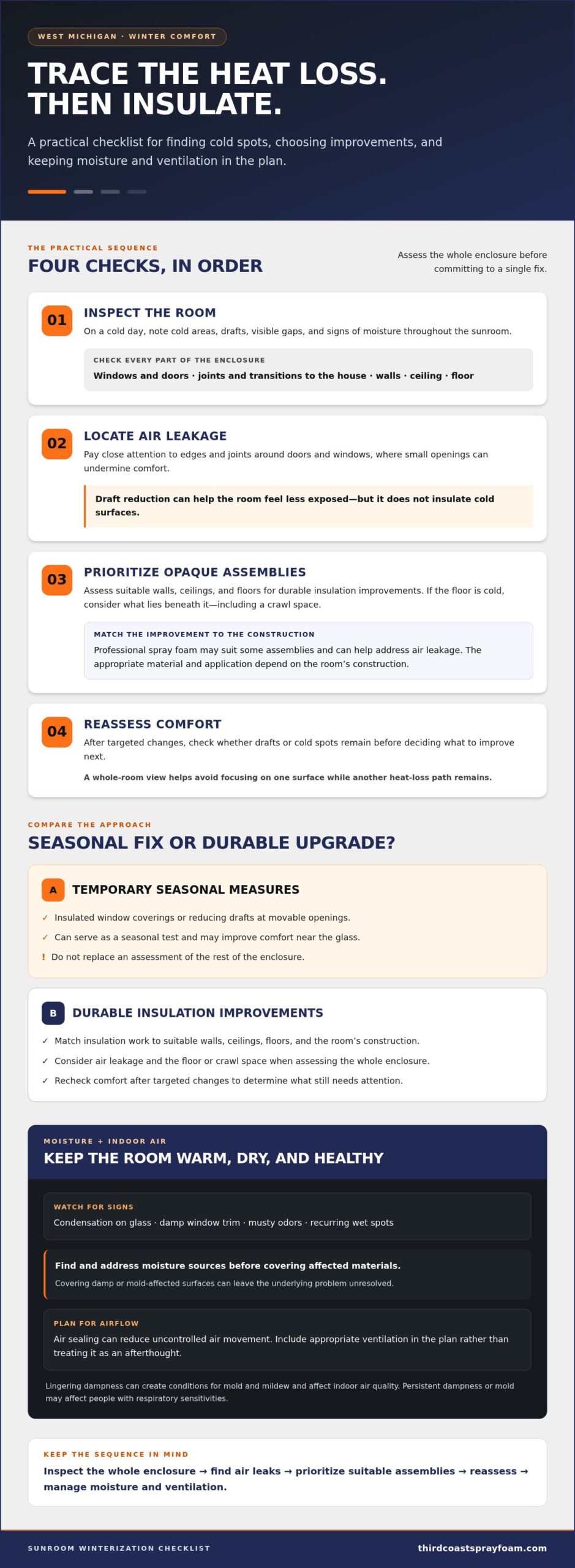
A measured approach helps you avoid spending effort on a surface that isn’t driving the discomfort. Use this sequence to prioritize improvements:
- 1. Inspect the room. Note cold areas, drafts, visible gaps, and signs of moisture. Check the walls, ceiling, floor, windows, doors, and transitions to the house.
- 2. Locate air leakage. Pay particular attention to joints and edges around doors and windows, where small openings can undermine comfort. Reducing drafts may make the room feel less exposed, but it won’t insulate cold surfaces.
- 3. Prioritize opaque assemblies. Assess suitable walls, ceilings, and floors for durable insulation improvements. Professional spray foam can suit some assemblies and help address air leakage. The appropriate material and application depend on the room’s construction.
- 4. Reassess comfort. After targeted changes, note whether cold spots or drafts remain before deciding what to improve next.
Which winterizing improvements should come first?
Temporary measures, such as insulated window coverings or reducing drafts at movable openings, can be a useful seasonal test. They may improve comfort near the glass, but they don’t replace an assessment of the rest of the enclosure. For a lasting plan, match insulation work to the assembly. Learn more about closed-cell spray foam as one option for suitable projects.
As you tighten the room, account for moisture and ventilation. The EPA’s guidance on moisture control explains why dampness should be addressed rather than covered. Third Coast Spray Foam provides spray foam insulation for residential spaces in West Michigan. Its insulation services include closed-cell and open-cell spray foam.
Keep a Winterized Sunroom Comfortable, Dry, and Healthy
Insulation and air sealing can make a sunroom more comfortable, but they also change how air moves through the space. Plan for moisture sources and appropriate ventilation alongside heat retention. Otherwise, damp air may linger on cold surfaces, creating conditions for mold and mildew and affecting indoor air quality.
How to reduce condensation, mold, and indoor air concerns
Condensation on glass, damp window trim, musty odors, and recurring wet spots are signs to investigate. Look for the source of moisture and address it before covering affected materials with insulation or finishes. Concealing damp or mold-affected surfaces can leave the underlying problem unresolved.
Persistent dampness or mold may affect people with respiratory sensitivities. Keep the room appropriately aired and avoid trapping moisture as you improve the enclosure. Because air sealing can reduce uncontrolled air movement, consider ventilation as part of the plan rather than treating it as an afterthought.
For insulating a sunroom for winter use, consider the assembly, air leakage, moisture conditions, and how the space will be ventilated. Suitable spray foam or other insulation approaches can form part of the plan, but the right choice depends on the room’s construction. Addressing the whole system supports comfort while helping protect the indoor environment.
Third Coast Spray Foam serves homeowners in Grand Rapids and communities across West Michigan. Its insulation services include professional spray foam, blown insulation, and crawl space encapsulation.
Plan a More Comfortable Sunroom for Winter
A warmer sunroom starts with understanding how the whole enclosure performs. Check for heat loss through glazing, air leaks, and under-insulated walls, ceilings, or floors before choosing improvements. Temporary draft reduction can help, while durable insulation work should suit the room’s construction. Include moisture and ventilation in the plan, too. Condensation and persistent dampness deserve attention before materials are covered, helping protect indoor air quality and reduce conditions that can support mold and mildew.
For insulating a sunroom for winter use, a project-specific plan can identify practical next steps. Third Coast Spray Foam is based in Fruitport and serves communities across West Michigan, including Grand Rapids, Lansing, Muskegon, Holland, Allegan, Kalamazoo, and Grand Haven. Its insulation solutions include professional closed-cell and open-cell spray foam, blown insulation, and crawl space encapsulation.
Explore Third Coast Spray Foam’s insulation solutions for your sunroom and take the next step toward a more comfortable space for the cold season.
Frequently Asked Questions
Can you use a sunroom in winter after insulating it?
Insulation can make a sunroom more comfortable in winter, but the result depends on the whole enclosure, including glazing, air leaks, walls, ceiling, and floor. Insulation alone may not make every sunroom suitable for regular winter use. In Grand Rapids, Lansing, Muskegon, Holland, Allegan, Kalamazoo, and Grand Haven, assess heat loss and moisture conditions before deciding which improvements the room needs.
What is the best way to insulate a sunroom for winter?
Start by identifying the main heat-loss paths before choosing materials. Check for drafts and cold surfaces, then assess the windows, opaque walls, ceiling, floor, and connections to the house. Temporary window coverings may improve comfort, while professional insulation work can address suitable assemblies. Insulating a sunroom for winter use also means considering air leakage, moisture, and ventilation together.
Can insulating a sunroom cause condensation or mold?
Insulation doesn’t automatically cause mold, but air sealing without considering moisture and ventilation can leave damp air or condensation unresolved. Watch for recurring moisture on windows, damp trim, musty odors, or persistent wet spots. Investigate the source before covering affected materials. Mold and persistent dampness may affect people with respiratory sensitivities, so include indoor air quality and ventilation in the improvement plan.
Should sunroom windows or walls be insulated first?
Neither should automatically come first. Start with observable drafts and cold areas, then compare the glazing with the walls, ceiling, floor, and joints. Window coverings may reduce discomfort near glass, but they don’t address heat loss through other parts of the enclosure. Prioritize improvements based on the room’s conditions, and match durable insulation work to the construction of each assembly.
Disclaimer
Information provided is for general educational purposes. Individual needs and circumstances vary. Speak to an experienced professional to get the correct information for your situation.