
When insulating a brick home in Eastown Grand Rapids, start by identifying the wall assembly, not just the brick you see. The exterior may be brick veneer over a framed wall or part of a solid masonry wall, and each assembly handles heat and moisture differently.
If you’re dealing with drafts, uneven temperatures, or rising energy use, it’s understandable to want a straightforward fix. But insulating before identifying the wall structure can increase the risk of trapped moisture, mold, and mildew. These conditions can also affect indoor air quality and respiratory comfort.
This guide explains how to investigate what’s behind the brick, compare practical insulation approaches, and include air sealing and moisture management in your plan. A careful assessment helps you choose work that supports comfort while protecting the structure and indoor environment.
Key Takeaways
- Identify the layers behind the brick before choosing an insulation approach. Solid masonry and brick veneer require different considerations.
- For insulating a brick home in Eastown Grand Rapids, compare wall insulation, attic improvements, and air sealing according to where you feel discomfort and what the structure can support.
- Look for water entry and other moisture sources before covering wall cavities. Insulation alone won’t fix dampness.
- Use a clear plan: note comfort concerns, assess the walls, address moisture, choose the work scope, then install. Investigate persistent musty odors or visible mold to find the source and protect indoor air quality.
Insulating a Brick Home in Eastown: Identify the Wall Before You Start
Eastown homeowners may want warmer, more comfortable rooms without creating hidden moisture problems in the walls. Before choosing insulation, identify the wall assembly: the layers between the indoor space and the exterior brick. The brick may be backed by a framed cavity, or masonry may make up more of the wall. These layers affect where insulation can go and how heat and moisture move through the structure.
The right retrofit depends on wall construction, moisture conditions, and project goals. For insulating a brick home in Eastown Grand Rapids, the visible brick alone can’t show what lies behind it. Insulation reduces heat transfer, as explained in Understanding Building Insulation, but the existing layers and their condition matter when selecting an approach. Poor moisture management can contribute to dampness, mold, or mildew, which may affect indoor air quality and respiratory comfort.
How to tell brick veneer from solid masonry
Brick veneer is an exterior layer of brick paired with another wall structure behind it. Solid masonry relies more directly on masonry for the wall. The exterior appearance alone doesn’t establish which assembly your home has. Brick patterns and visible details may offer clues, but they don’t confirm the layers.
Make a short record of what you can observe: wall and window details, interior finishes, drafts, and any signs of moisture such as staining or dampness. A professional assessment can identify the assembly and help determine whether the wall is suitable for insulation. Establishing the wall’s condition first helps prevent unresolved moisture from being covered and supports a plan for comfort and a healthier indoor environment.
How to Compare Insulation Options for an Eastown Brick Home
Choose the work by location and purpose, not by material alone. Wall insulation targets heat transfer through the walls, but may require access to the assembly. Attic improvements address heat loss through the upper part of the home and may involve less disruption to finished rooms. Air sealing targets gaps where air moves between indoors and outdoors, including around penetrations and at the rim joist. The best scope depends on where comfort problems occur and what the existing structure can safely support.
Insulation slows heat transfer, air sealing limits air movement, and moisture control manages water and vapor. They work together, but none replaces fixing water entry. Before covering a wall cavity, look for leaks, damp materials, or other moisture sources. Addressing these first helps reduce conditions that can support mold and mildew, which may affect indoor air quality and respiratory comfort. The National Park Service also discusses weatherization considerations for older buildings in its guide to Insulating Historic Buildings.
Which insulation approach fits the home’s existing conditions?
For insulating a brick home in Eastown Grand Rapids, spray foam and blown insulation are options to consider, not automatic choices. Their suitability depends on the wall or attic assembly, access, moisture conditions, and project goals. Third Coast Spray Foam installs closed-cell and open-cell spray foam, as well as blown insulation, for residential and commercial properties. The right application depends on the space and the conditions found during assessment.
| Approach | Potential benefit | Limitations and moisture considerations | Assessment needed |
|---|---|---|---|
| Spray foam in a suitable assembly | Can insulate and help limit air leakage. | Doesn’t repair water entry; placement must suit the wall’s drying and moisture conditions. | Confirm assembly, access, and moisture status. |
| Blown insulation in a suitable cavity or attic | Can add insulation where the space and access allow. | Doesn’t stop leaks or automatically air-seal gaps. | Check cavity or attic conditions and existing insulation. |
| Air sealing | Targets drafts and air pathways. | Doesn’t replace insulation or resolve bulk water intrusion. | Locate leakage paths and moisture sources. |
A project-specific insulation assessment can connect building conditions to a practical plan, including whether spray foam, blown insulation, or another part of the home should be the focus.
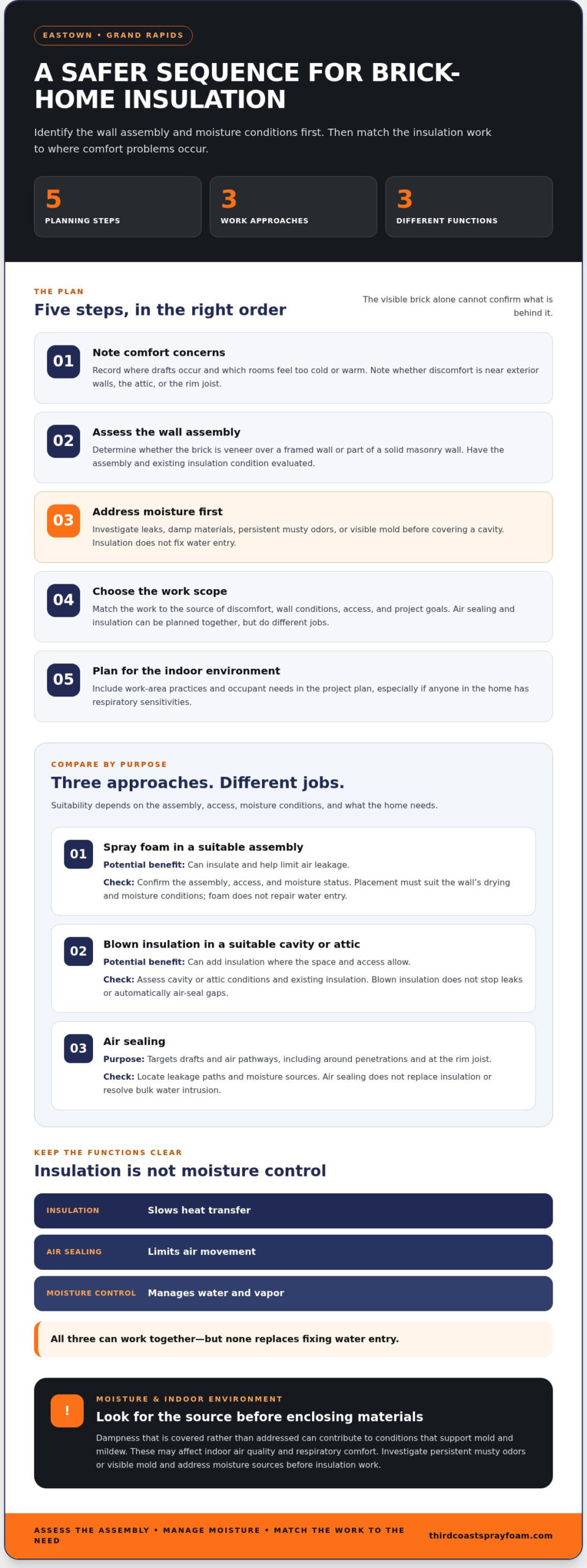
Plan Brick-Home Insulation in Eastown, Grand Rapids, Step by Step
A clear sequence helps prevent a comfort upgrade from hiding a moisture problem. For insulating a brick home in Eastown Grand Rapids, plan the work around the home’s needs and what its walls can safely support.
- Note comfort concerns. Record where drafts occur and which rooms feel too cold or warm. Note whether the issue is concentrated near exterior walls, the attic, or the rim joist to help focus the assessment.
- Assess the walls. Have the existing assembly and insulation condition evaluated before deciding whether work belongs in the walls, attic, or elsewhere.
- Address moisture first. Persistent dampness, musty odors, or visible mold call for investigating water entry or other moisture sources before covering a cavity. Insulation won’t fix a leak.
- Choose the scope. Match the work to the source of discomfort, wall conditions, and project goals. Air sealing and insulation can be planned together, but they serve different functions.
- Plan for the indoor environment. Include work-area practices and occupant needs in the project plan, especially if anyone in the home has respiratory sensitivities.
Protect indoor air quality before and after insulation work
Moisture management helps limit conditions that allow mold and mildew to grow. Addressing damp materials before they’re enclosed supports a cleaner indoor environment and can help reduce sources of airborne particles that may aggravate respiratory sensitivities. Insulation isn’t a mold treatment, so investigate visible growth and its moisture source rather than simply covering it.
Tell the project team about asthma, allergies, or other respiratory sensitivities during planning. Discuss how the work area will be managed, what safe work practices will be used, and how the home will be left ready for normal occupancy. After installation, watch for recurring dampness or musty odors, which may signal unresolved moisture.
Third Coast Spray Foam provides spray foam insulation, blown insulation, insulation removal, and crawl space encapsulation. Learn more about insulation planning and services.
Make Your Brick Home Upgrade With Confidence
A dependable insulation plan starts with the wall assembly, not the visible brick. Identify how the wall is built, check for moisture concerns before covering cavities, and match the work to where comfort is being lost. Insulation, air sealing, and moisture control address different parts of the home, so planning them together can help protect the structure and support better indoor air quality.
For insulating a brick home in Eastown Grand Rapids, a careful assessment can guide practical choices while keeping mold prevention and respiratory comfort in view. Third Coast Spray Foam provides professional spray foam, blown insulation, and insulation removal, along with crawl space encapsulation. The company serves homeowners and businesses in Grand Rapids, Lansing, Muskegon, Holland, Allegan, Kalamazoo, and Grand Haven.
Talk with Third Coast Spray Foam about your home’s insulation needs and plan your next step toward a more comfortable, well-considered home.
Frequently Asked Questions
Can you insulate a brick home from the inside?
Yes, interior insulation may be an option, but the right method depends on the wall assembly and its moisture conditions. First determine whether the brick is veneer over a framed wall or part of solid masonry. Then assess the wall for water entry and consider how the proposed insulation could affect drying. A project-specific plan helps balance comfort, preservation, and indoor air quality.
Does insulating a brick wall cause mold?
Insulation doesn’t automatically cause mold, but a poorly planned retrofit can contribute to moisture being trapped in a wall. Existing leaks, damp materials, or air carrying moisture into cold areas can increase the risk of mold and mildew. Address water entry before enclosing the wall, and investigate persistent musty odors or visible growth. Moisture-aware planning also supports healthier indoor air and respiratory comfort.
How do I know whether my Eastown home has brick veneer or solid brick walls?
The exterior brick alone can’t confirm the wall construction. Brick veneer is a brick exterior backed by another wall structure, while solid masonry relies more directly on masonry. Visible details may offer clues, but they aren’t conclusive. Note features around windows and walls, then arrange a professional assessment before choosing insulation. Identifying the assembly is an essential first step for an Eastown or other Grand Rapids home.
Should I insulate the attic or brick walls first?
Start by identifying where the comfort problem occurs and assessing the home’s insulation and air leakage. Attic improvements may be a practical first focus if the upper rooms are uncomfortable, while wall work may make sense when the walls are the concern and their assembly is suitable. Don’t cover damp areas. A whole-home assessment can help prioritize work without overlooking moisture or indoor air quality.
Disclaimer
Information provided is for general educational purposes. Individual needs and circumstances vary. Speak to an experienced professional to get the correct information for your situation.