How to Hire the Best Home Insulation Contractors in Grand Rapids, MI (2026 Checklist)
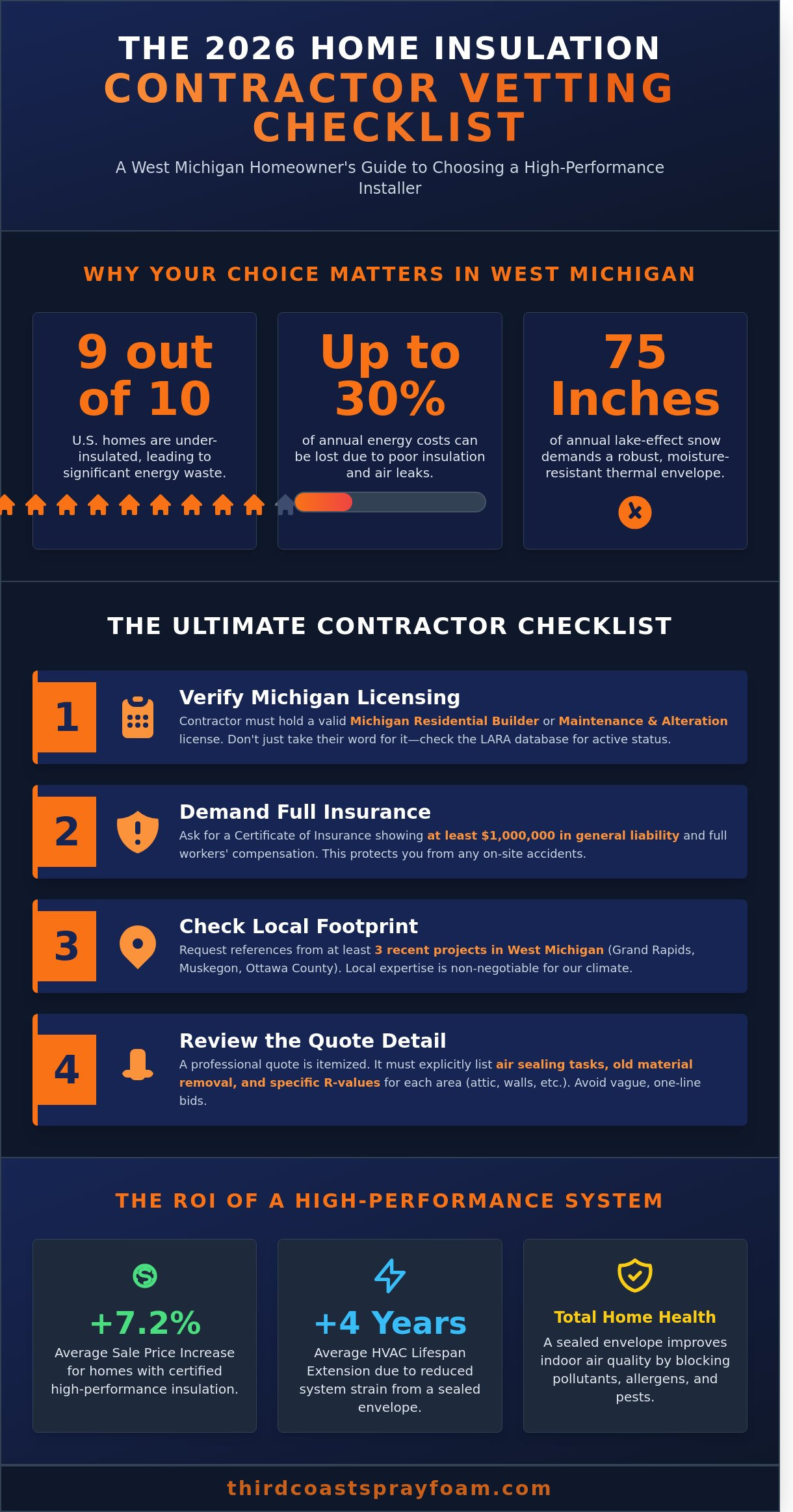
Did you know that 9 out of 10 existing homes in the United States are under-insulated, causing West Michigan residents to lose up to 30% on their annual energy costs? When you are searching for home insulation contractors in Grand Rapids, you aren’t just buying material; you’re investing in a thermal envelope that must withstand 75 inches of annual lake-effect snow. Our team knows that a poor choice leads to more than just drafts. It results in moisture problems and structural decay that can cost thousands to repair down the road.
You’ve likely spent winters wearing extra layers indoors because your upstairs is freezing while the main floor is stifling. It’s frustrating to deal with $450 monthly heating bills or the constant worry of ice dams damaging your roof. You deserve a home that feels consistent and secure. This guide provides a comprehensive 2026 vetting checklist to help you choose a professional who understands total home health. We’ll show you exactly how to identify high-performance installers who prioritize air sealing and permanent R-value over temporary, cheap fixes.
Key Takeaways
- Understand why West Michigan’s lake-effect humidity makes air sealing just as vital as R-value for maintaining your home’s thermal envelope.
- Learn how to vet home insulation contractors by verifying Michigan-specific licenses and the professional-grade equipment required for a precision install.
- Evaluate the long-term ROI of high-performance insulation to see how investing in quality materials now reduces your 10-year ownership costs.
- Identify common red flags, such as low-ball bids and contractors who ignore the “stack effect,” to protect your home from subpar workmanship.
- Discover the benefits of a “total home health” approach that prioritizes permanent comfort and energy efficiency for residents in Muskegon, Ottawa, and Kent Counties.
Why Choosing the Right Home Insulation Contractor in Grand Rapids Matters
In 2026, West Michigan homeowners face higher utility rates and more volatile weather patterns than ever before. Selecting the right home insulation contractors is no longer a simple matter of price shopping for the cheapest material. It is a critical decision that dictates the long term structural integrity and comfort of your property. In Grand Rapids, the “Lake Effect” creates a high-humidity environment that traditional insulation materials struggle to handle. When humidity levels exceed 60 percent, standard fiberglass batts often trap moisture, leading to a 28 percent reduction in thermal performance and potential mold growth within your walls.
Our team understands that a high R-value is only half the story. While R-value measures a material’s resistance to heat flow, it does not account for air movement. A home can have R-60 insulation in the attic and still feel drafty if the building envelope is not properly sealed. High-performance building envelope specialists focus on air sealing to stop the “stack effect,” which is the process where warm air escapes through the roof and pulls cold, damp air in through your crawlspace or rim joists. This distinction is why a specialist is a much safer investment than a general laborer who simply blows in loose-fill material without addressing the gaps.
The financial impact is measurable in our local market. Data from Kent and Ottawa county real estate transactions in 2025 showed that homes with certified high-performance insulation packages sold for an average of 7.2 percent more than homes with standard code-minimum installs. Investing in quality work from professional home insulation contractors provides immediate monthly savings and builds significant equity for the future.
The West Michigan Climate Factor
Weather patterns in 2026 have brought more frequent “flash freezes” and heavy, wet lake effect snow to our region. In coastal communities like Fruitport and Muskegon, these conditions are particularly harsh on homes. Traditional fiberglass often fails here because it allows moisture-laden air to pass through, causing attic condensation. This moisture eventually leads to ice dams, which caused over $14 million in property damage across Grand Rapids during the 2025 winter season. A robust thermal envelope prevents these temperature fluctuations from reaching your roof deck.
The Total Home Health Philosophy
We view your home as a holistic system rather than a collection of separate rooms. This “total home health” approach recognizes the direct link between your insulation and your indoor air quality (IAQ). When we focus on sealing the envelope, we aren’t just stopping heat loss; we are blocking outdoor pollutants, allergens, and pests from entering your living space. This is the gold standard for Grand Rapids homes. It ensures your HVAC system doesn’t have to work overtime, extending the life of your furnace by an average of 4 years while providing a quiet, draft-free environment for your family.
The Ultimate West Michigan Insulation Contractor Checklist
Choosing between different home insulation contractors in Grand Rapids requires more than a quick look at a price tag. Our West Michigan climate, where temperatures swing from 90 degrees in July to sub-zero in January, demands precision. A low-cost bid often hides missing licenses or inferior equipment that could compromise your home’s thermal envelope. It’s vital to vet every company through a local lens to ensure they understand our lake-effect humidity and seasonal shifts.
- Verify Michigan Licensing: Your contractor must hold a valid Michigan Residential Builder or Maintenance and Alteration license. Don’t just take their word for it. Check the LARA database to ensure their status is active.
- Demand Full Insurance: Ask for a Certificate of Insurance showing at least $1,000,000 in general liability and workers’ compensation. This protects you if an accident occurs on your property.
- Check Local Footprints: Request references from at least 3 projects completed within the last 12 months in Grand Rapids or Fruitport. Local contractors understand our specific moisture challenges and building codes.
- Review the Quote Detail: A professional estimate should never just say “install insulation.” It must list air sealing, old material removal, and specific R-values for each area of the home.
If you’re ready to see how a professional team handles these details, you can request a detailed site evaluation from our local experts.
Technical Vetting Questions to Ask
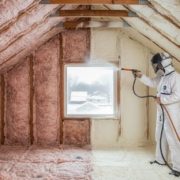
The right home insulation contractors will answer technical questions without hesitation. Ask if they offer both open and closed-cell spray foam. Open-cell is excellent for attic gables, but closed-cell is necessary for Michigan basements to provide a built-in vapor barrier. You should also ask how they treat rim joists and box sills. These areas account for roughly 20 percent of a home’s total air leakage. Finally, ensure they use high-powered industrial vacuums for old insulation removal. Tossing old fiberglass into trash bags spreads dust and allergens throughout your living space.
Equipment and Safety Standards
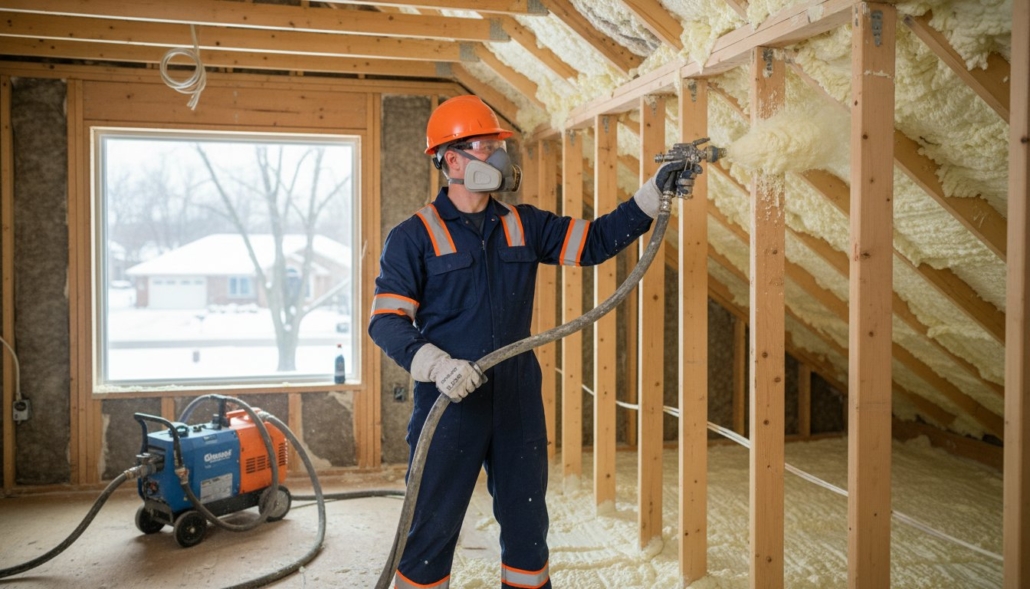
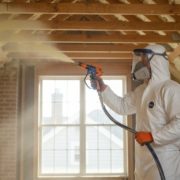
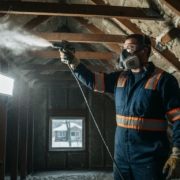
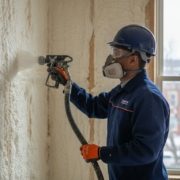
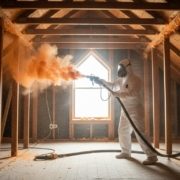
Equipment quality directly impacts the longevity of your investment. Professional contractors invest $75,000 or more in high-end proportioners, like Graco E-30 models, to maintain precise chemical temperatures. This ensures the foam cures correctly and stays odorless. DIY kits or low-end rigs often produce off-ratio foam that can shrink over time. Safety is equally vital. Your contractor must provide a clear timeline for occupant re-entry, which is typically 24 hours for spray foam projects. For attic blow-in jobs, they should use professional-grade machines that prevent the material from settling, maintaining a consistent R-49 or R-60 rating for decades.
Performance vs. Price: Evaluating Insulation Methods for MI Homes
Choosing between different insulation materials isn’t just about the initial quote. It’s a decision that dictates your home’s comfort and your bank account’s health for the next 25 years. Many home insulation contractors in West Michigan still rely on the “Fiberglass Fallacy,” the idea that standard pink batts are sufficient for our climate. In reality, fiberglass batts can lose up to 40% of their effective R-value when Grand Rapids temperatures drop below zero because they allow air to bypass the material. This creates cold spots and drives up your Consumers Energy or DTE bills.
The 10-year ownership cost is the metric that truly matters. While spray foam requires an upfront investment roughly 2.5 times higher than blown-in fiberglass, the return on investment is undeniable. Homeowners in Kent County typically report 15% to 30% savings on monthly utility costs immediately after a full envelope seal. Over a decade, these savings often surpass the initial cost of the upgrade, whereas cheaper materials continue to cost you money through energy waste and potential ice dam repairs.
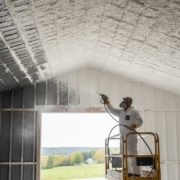
Specialized structures like pole barns require a different strategy than a standard residential attic. Metal buildings are prone to internal condensation that can cause structural rust within 12 years if not managed. We use closed-cell foam in these environments to create a seamless vapor barrier that prevents moisture from ever reaching the metal panels, a level of protection that blown-in materials simply cannot provide.
Spray Foam: The Permanent Air Seal
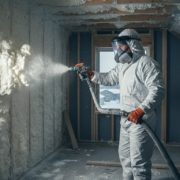
Closed-cell spray foam is the gold standard for total home health. It acts as a powerful vapor barrier, which is essential for flood-prone areas or high-humidity zones near Muskegon. Beyond thermal resistance, this material provides structural reinforcement, increasing wall racking strength by up to 300%. Professional installation is non-negotiable. Our team monitors precise chemical temperatures and mixing ratios to ensure the foam cures correctly, providing a permanent, airtight seal that won’t sag or settle over time.
Blown-In Solutions for Grand Rapids Attics
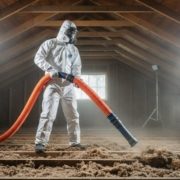
Blown-in cellulose is a strategic choice for restoring R-value in historic districts like Heritage Hill. Many of these homes, built between 1880 and 1920, have original insulation that has settled to a measly R-10. We use high-density cellulose to reach the 2026 recommended R-49 or R-60 levels. However, we never “just blow it in.” We prioritize air-sealing top plates first and installing attic baffles to maintain proper ventilation. This prevents the stagnant air that leads to mold growth and ensures your new insulation performs at its peak capacity.
Red Flags: How to Spot ‘Solar Cowboy’ Installers in West Michigan
Hiring the wrong team costs more than just the initial deposit. Low-ball bids from out-of-town crews often signal that they’re cutting corners on material quality or safety protocols. If a quote is 25% lower than every other local estimate, ask why. Usually, it’s because they aren’t using high-grade chemicals or they’re rushing the application. Proper spray foam requires a precise 1:1 ratio of chemicals heated to specific temperatures, often around 130 degrees Fahrenheit. When home insulation contractors get this wrong, the foam fails to cure. This leads to a permanent chemical odor and a compromised thermal seal that won’t pass a 2026 building inspection.
Verify that the company has a physical office in West Michigan rather than just a P.O. Box or a temporary rental. Crews traveling from out of state often lack knowledge of the specific humidity challenges found near Lake Michigan. They might disappear before the job is finished or fail to provide the required Michigan project history for warranty claims. A local contractor understands that our 30-degree temperature swings require specific density settings for open-cell and closed-cell products.
The Stack Effect and Your Foundation
Physics dictates how your home breathes. The Stack Effect describes how warm air rises and escapes through the attic, creating a vacuum that pulls freezing air in through the basement or crawl space. Many home insulation contractors ignore the foundation, but this is where the cycle begins. A reputable team will always prioritize the rim joists, which account for up to 15% of a home’s total air leakage. Don’t settle for a contractor who simply throws a 6-mil plastic tarp on the ground. True crawl space encapsulation requires a permanent seal to the walls to prevent moisture from rotting your floor joists.
Poor Communication and Lack of Transparency
Transparency is the hallmark of a professional. You should avoid any installer who won’t walk you through their R-value math. Michigan energy codes are strict, and you need to know exactly how many inches of foam are required to meet current standards. If they can’t provide a clear, written timeline for the removal of old fiberglass and the subsequent install, they’re likely overbooked and understaffed. This lead to “rush jobs” where safety masks aren’t worn and overspray ruins your personal belongings.
We believe in a straight-shooter approach. Our team provides a detailed breakdown of every cubic foot of material used and a firm schedule that we stick to. We treat your home like a holistic system, ensuring the “envelope” is sealed from the peak of the roof to the foot of the foundation. If you want a contractor who values precision over a quick buck, contact Third Coast Spray Foam for an honest assessment of your home’s needs.
Partnering with Third Coast Spray Foam for Total Home Health
Based in Fruitport, our team has served the Muskegon, Ottawa, and Kent County communities since 2013. We’ve built our reputation as leading home insulation contractors by focusing exclusively on high-performance spray foam and blown-in solutions. We skip fiberglass entirely. Fiberglass batts are porous and fail to stop air movement, which contributes to nearly 40% of a building’s energy loss. By specializing in materials that provide a true air seal, we ensure your investment provides permanent results and real comfort.
Our process is thorough and scientific. We don’t just add new material over old problems. We begin with the professional removal of aged, dusty, or pest-damaged insulation to create a clean slate. Once the area is prepared, we focus on precision air sealing. This step is critical for sealing the envelope and preventing the stack effect that pulls cold lake-effect air into your living spaces. We treat your property as a holistic system, prioritizing total home health rather than just filling gaps.
Why Local Expertise Matters for Your Pole Barn or Home
West Michigan weather presents unique challenges that out-of-state franchises often overlook. We frequently solve the sweating ceiling problem in local pole barns, where temperature differentials cause condensation that ruins equipment and structural wood. Residents rely on expert home insulation contractors to understand these Michigan-specific moisture issues. Our identity is rooted in the Third Coast. We never use subcontractors. Every specialist on your job site is a direct member of our team, ensuring the highest level of accountability and local reliability.
Next Steps for a More Comfortable Home
Preparing for your on-site assessment is a simple process. Just clear a path to your attic hatch, crawlspace, or rim joists so our team can perform a detailed visual inspection. We’ll help you maximize your project’s value by navigating 2026 energy credits and utility rebates. These incentives can significantly offset the cost of upgrading your thermal envelope. Our estimates are straightforward and data-driven, giving you a clear roadmap to a more efficient, durable property.
Take Control of Your West Michigan Home Comfort Today
Protecting your property starts with a commitment to quality over shortcuts. Choosing the right home insulation contractors means looking past the lowest bid to find a partner who understands the specific climate demands of Grand Rapids and the Lakeshore. We’ve spent over 10 years perfecting our craft; we use specialized, high-performance spray foam rigs that ensure every seal is airtight and permanent. By following our 2026 checklist, you can successfully avoid the “solar cowboy” installers who lack the technical expertise required for total home health. As a family-owned and operated business based right here in Fruitport, we treat your property with the neighborly care it deserves. We focus on long-term efficiency and structural durability, ensuring your investment pays off for decades. Don’t settle for drafts or high utility bills when a professional, localized solution is within reach. Our team is ready to help you lock in comfort and security for your family right now.
Get Your Free, No-Nonsense Insulation Estimate
You deserve a home that works as hard as you do, and we’re here to make that happen.
Frequently Asked Questions
How do I find a reputable insulation contractor in Grand Rapids?
You can identify reputable home insulation contractors in Grand Rapids by verifying their Michigan residential builder license and checking for a minimum of 50 local Google reviews with a 4.8 star average. Our team recommends asking for a thermal imaging report after the job is finished. This ensures the thermal envelope is completely sealed without gaps. Reliable professionals will always provide a written 10 year workmanship warranty to protect your investment.
What is the best type of insulation for a West Michigan home?
Closed-cell spray foam is the most effective choice for West Michigan homes because it provides a high R-value of 7.0 per inch and acts as a moisture barrier. Our region faces 40 degree temperature shifts in a single day during spring. Spray foam handles these fluctuations by creating an airtight seal that fiberglass cannot match. This prevents the common draft issues found in older Grand Rapids neighborhoods and keeps your home stable.
Is spray foam insulation worth the extra cost compared to fiberglass?
Spray foam is worth the initial investment because it typically lowers monthly heating and cooling costs by 30% to 50% over traditional fiberglass. While the upfront cost is higher, the ROI hits 100% within 5 to 7 years through utility savings. Fiberglass lacks air-sealing properties, meaning your furnace works 20% harder to maintain temperatures. Investing in foam creates a permanent solution that won’t sag or lose efficiency over 25 years.
How long does the home insulation installation process take?
A standard residential insulation project takes between 4 and 8 hours for a single attic or 2 full days for an entire home. Our crew arrives at 8:00 AM and typically finishes a crawl space encapsulation by 4:00 PM the same day. We use high volume proportioners to ensure the application is precise and efficient. You’ll be back in your home and enjoying improved comfort within 24 hours of the final spray.
Should I remove my old insulation before adding new spray foam?
You must remove old fiberglass or cellulose before applying spray foam to ensure a 100% airtight bond to the wood or masonry. Leaving old material traps 20 years of dust, allergens, and rodent waste against your new thermal barrier. Our team uses 150 foot industrial vacuums to clear the space entirely. This process ensures your home’s air quality improves and the new insulation performs at its maximum R-value without interference.
Can an insulation contractor help with condensation in my pole barn?
Our home insulation contractors specialize in pole barn solutions by applying 2 inches of closed-cell foam to eliminate condensation on metal roofs. This thickness prevents the interior air from reaching the cold metal surface, which stops “ceiling rain” instantly. We’ve successfully treated 200 plus outbuildings in Kent County to protect tractors and equipment from moisture damage. It’s the only way to keep a workspace dry during Michigan’s humid summers.
Are there energy tax credits available for Michigan homeowners in 2026?
Michigan homeowners can claim a federal tax credit of 30% for insulation costs, capped at $1,200 per year through the 2026 tax cycle. This credit applies to both materials and professional labor costs for sealing the building envelope. We provide detailed invoices that include the necessary manufacturer certification statements for your tax filings. Combining this with local utility rebates from Consumers Energy can save you an additional $250 on average.
Do you provide crawl space encapsulation in Muskegon County?
We provide comprehensive crawl space encapsulation and spray foam services to all residents in Muskegon County, including Norton Shores and Whitehall. Our team manages the entire process from debris removal to the installation of 20 mil vapor barriers. We’ve helped 85 homeowners in the Muskegon area eliminate damp odors and frozen floors since 2022. Every project includes a 100% satisfaction guarantee to ensure your home stays dry and healthy for years.
Disclaimer
Information provided is for general educational purposes. Individual needs and circumstances vary. Speak to an experienced professional before relying on the information given here.


Leave a Reply
Want to join the discussion?Feel free to contribute!