
Cold floors can start below the rooms you’re trying to warm. Crawl space encapsulation can help reduce drafts by sealing pathways for outside air and ground moisture, while insulation slows heat loss through the floor. For homeowners considering crawl space encapsulation to stop drafts, the distinction matters: encapsulation addresses air and moisture movement, while insulation resists heat transfer. Together, they target two different routes for cold to reach the living space.
If floors feel cold or indoor temperatures vary, it’s worth looking below the living space rather than simply turning up the thermostat. This article explains what encapsulation involves, how it differs from insulation, and how a planned system can help limit winter drafts and support warmer floors. It also explains how moisture control relates to indoor air quality, musty odors, and mold prevention, and why existing mold needs attention beyond sealing.
Key Takeaways
- Learn how a sealed crawl space and moisture barrier help limit outside air and ground moisture beneath your home.
- Understand the difference between insulation, which slows heat loss, and encapsulation, which helps control air and moisture movement.
- See how reducing cold-air leaks below the floor may help ease drafts and support warmer indoor temperatures.
- Find out why moisture control matters for musty odors and mold prevention, and when professional encapsulation may be a practical next step.
What Is Crawl Space Encapsulation?
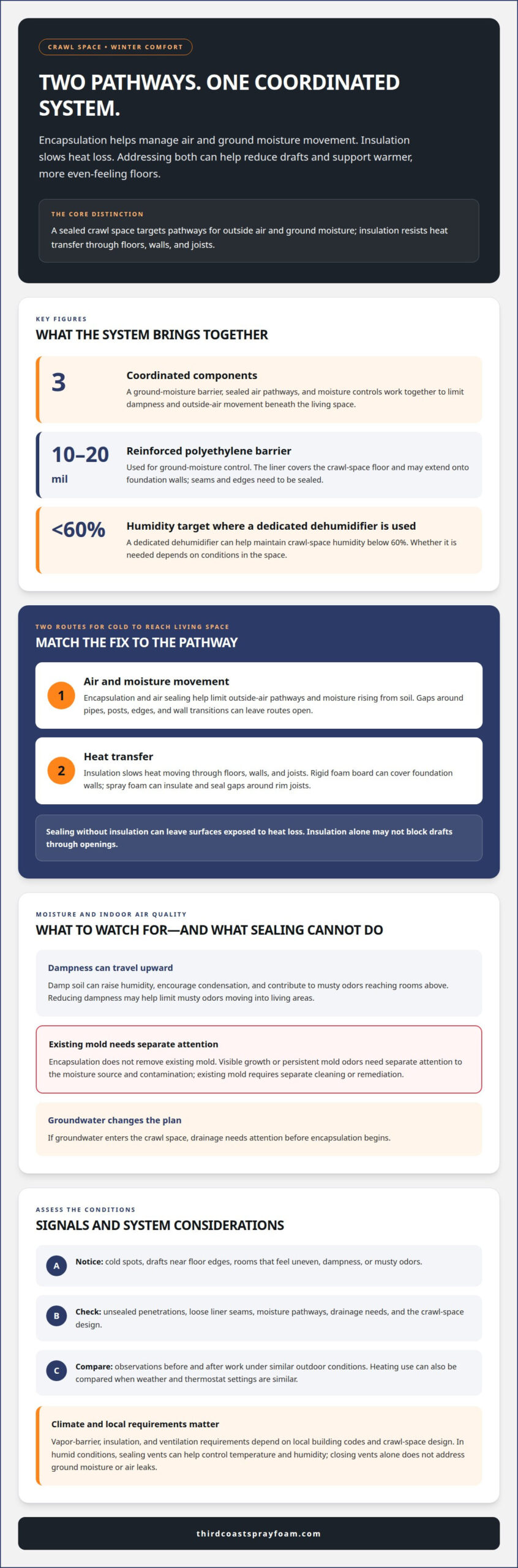
Crawl space encapsulation combines a ground-moisture barrier, sealed air pathways, and moisture controls. Together, these measures limit dampness and outside-air movement beneath the living space.
Crawl Space Moisture Barriers
A crawl-space moisture barrier is a continuous layer that slows water vapor rising from exposed soil. It matters because damp soil can raise humidity, encourage condensation, and contribute to musty odors reaching rooms above. Reinforced polyethylene barriers in the 10-20 mil range are used for ground-moisture control. If groundwater enters the crawl space, drainage needs attention before encapsulation begins.
Vapor Barrier Placement and Sealing
A vapor barrier covers the crawl-space floor and may extend onto foundation walls, limiting moisture movement through soil and masonry. Installers overlap the liner’s seams and seal them, then secure the material around edges and obstacles. Gaps around posts, pipes, or wall transitions can leave paths for moisture. Homeowners can assemble a basic system using reinforced polyethylene, seam tape, fasteners, and compatible sealant; insulation and spray foam address separate heat or air pathways.
Encapsulation Requirements and Climate Factors
Requirements for vapor barriers, insulation, and ventilation depend on local building codes and crawl-space design; there isn’t one set of requirements for every home. Climate also shapes the system: in humid conditions, sealing vents can help control temperature and humidity. A barrier and sealed vents may manage moisture in some spaces, while damper conditions may call for dehumidifiers. Where used, a dedicated dehumidifier can help maintain crawl-space humidity below 60%.
Differences between crawl space insulation and encapsulation
Insulation slows heat transfer; encapsulation also manages ground moisture and air movement. Depending on drafts, dampness, and where heat escapes, a crawl space may need either measure or both.
Air Sealing and Insulation Materials
Air sealing closes gaps that let outside air pass through the crawl space, while insulation slows heat moving through floors, walls, and joists. Both matter: sealing without insulation leaves surfaces exposed to heat loss, while insulation alone may not block drafts through openings.
Materials depend on the surface and the project. Rigid foam board can cover foundation walls, while spray foam can insulate and seal gaps around rim joists. Installers fit insulation to the targeted area and seal around edges and penetrations, keeping moisture control in view so damp conditions aren’t trapped against building materials.
Vents and Project Cost Comparisons
Vent treatment should match the crawl-space design, local code, and moisture-control plan. In humid conditions, sealing vents can help control temperature and humidity, but closing vents alone doesn’t address ground moisture or air leaks. A complete encapsulation plan considers these elements together.
Encapsulation generally involves more work than insulation and air sealing alone because it adds ground-moisture control and broader sealing. The scope depends on crawl-space size, existing conditions, drainage needs, and selected materials. Third Coast Spray Foam offers a free, no-obligation evaluation and quote for project details.
How crawl space encapsulation can reduce drafts and warm floors
Encapsulation limits cold-air infiltration beneath the foundation and seals routes toward floor cavities. With fewer pathways for outside air, floors lose less heat, helping indoor temperatures feel more even. For homeowners considering crawl space encapsulation to stop drafts, the key is addressing air movement and ground moisture together rather than relying on floor coverings alone.
For example, sealing gaps where pipes pass through framing can block a direct draft path. A continuous ground liner helps limit moisture rising into the crawl space, while insulation reduces heat transfer through floors or foundation walls. Crawl space encapsulation to stop drafts works as a coordinated system, so an unsealed edge can undermine the other components.
Assess changes by noting cold spots, drafts near floor edges, or rooms that feel uneven. Compare these observations before and after the work under similar outdoor conditions. Lower heating use may also indicate improved efficiency, but compare periods with similar weather and thermostat settings.
Indoor air quality offers another useful signal. Reduced dampness may lessen musty odors moving from the crawl space into living areas. Crawl space encapsulation to stop drafts doesn’t remove existing mold: visible growth or persistent mold odors need separate attention to the moisture source and contamination.
For a clearer assessment, have the crawl space checked for unsealed penetrations, loose liner seams, and moisture pathways. A complete crawl space encapsulation assessment can identify which parts need attention to address drafts and support warmer floors.
Third Coast Spray Foam: Crawl Space Encapsulation
Third Coast Spray Foam provides crawl space encapsulation for homes with persistent drafts, cold floors, or crawl-space moisture concerns. The service combines ground-moisture control and air sealing to address conditions that insulation alone may not resolve. Reducing dampness can also help limit musty odors moving into living areas. Existing mold requires separate cleaning or remediation; encapsulation alone doesn’t remove it.
Turn to crawl space encapsulation when drafts continue despite attention to the floor, or when dampness and uneven temperatures point to problems below the home. The right approach considers the crawl space as part of the home’s structure, not an isolated layer. Contact Third Coast Spray Foam to discuss crawl space encapsulation for your home.
Make the Next Step a Clear One
Cold floors and lingering dampness can make a home feel less comfortable, but the path forward starts with understanding what’s happening beneath it. A focused crawl-space assessment can help distinguish air leakage from moisture concerns and identify where the building envelope needs attention. That gives you a practical basis for deciding whether crawl space encapsulation to stop drafts fits your home, rather than treating every cold room the same way. Moisture management can also support a cleaner indoor environment, though existing mold needs separate remediation. If you’re ready to discuss the conditions in your crawl space and possible next steps, contact Third Coast Spray Foam. A well-informed decision is a solid first step toward a more comfortable home.
Frequently Asked Questions
Can Encapsulation Lower Energy Bills?
Encapsulation may lower heating costs when sealing and insulation reduce heat escaping through the floor. The effect depends on the home’s existing leakage, insulation, heating settings, and outdoor conditions. For example, a house with cold rooms above a drafty crawl space may use less energy to maintain comfort after those pathways are addressed, though bills also vary with weather and household use.
Does Encapsulation Stop Mold?
Encapsulation can help control conditions that support mold, but it doesn’t remove existing growth. Visible mold needs separate cleaning or remediation. Persistent musty odors or recurring dampness can signal that moisture remains. Addressing the source matters for indoor air quality, especially for occupants with respiratory sensitivities.
Will Encapsulation Make My Floors Warmer?
Encapsulation can help floors feel warmer by limiting cold-air movement below them and reducing heat loss through the floor assembly. The change depends on existing insulation and air leakage. If only one room feels cold, note whether it sits over the crawl space and whether nearby rooms have the same issue.
How does crawl space encapsulation reduce drafts in a house?
Encapsulation reduces drafts by limiting pathways that let outside air travel from the crawl space into floor cavities and rooms. Air can pass through openings around service penetrations or gaps between building materials. Sealing those routes helps keep cold crawl-space air from being drawn into the living area, particularly during cold-weather heating.
What causes drafts from a crawl space to enter living areas?
Gaps in the floor assembly, openings around plumbing or wiring, and unsealed edges can connect the crawl space to rooms above. Pressure differences between indoor and crawl-space air can pull outside air through those openings. Drafts may feel strongest near floor edges or utility penetrations; damp air can also carry musty odors indoors.
Disclaimer
Information provided is for general educational purposes. Individual needs and circumstances vary. Speak to an experienced professional to get the correct information for your situation.