
A vapor barrier alone may not be enough to protect hardwood floors. The cost of crawl space encapsulation for hardwood floor protection depends on the space’s size, existing moisture or water issues, sealing needs, and whether insulation or dehumidification is included. A site-specific evaluation determines the project scope and quote.
When hardwood boards start cupping, buckling, or feeling uneven, it’s natural to focus on the floor. But conditions beneath it matter too: excess moisture can contribute to mold and musty odors, and changes in moisture can affect wood flooring and other building materials. Understanding the project scope, the relationship between humidity and hardwood damage, and the distinct roles of insulation and dehumidification can help you decide what to address.
Key Takeaways
- Understand which site conditions shape an encapsulation quote, including water management and the amount of sealing required.
- Learn why moisture readings through the floor assembly matter when deciding what to do about cupped or buckled hardwood.
- Separate the roles of encapsulation, insulation, and dehumidification so the moisture-control plan addresses the right issues.
- See how managing crawl space conditions can also support cleaner indoor air and help limit the conditions that encourage mold and mildew.
1. Crawl space encapsulation and humidity reduction
For crawl space encapsulation for hardwood floor protection, the goal is to limit moisture moving from soil and outdoor air toward the floor structure. In vented crawl spaces, humid outside air can enter through foundation vents, while exposed soil releases moisture. The U.S. Environmental Protection Agency says plastic over dirt can help prevent ground moisture from entering; moisture can also move into other parts of a building and contribute to mold.
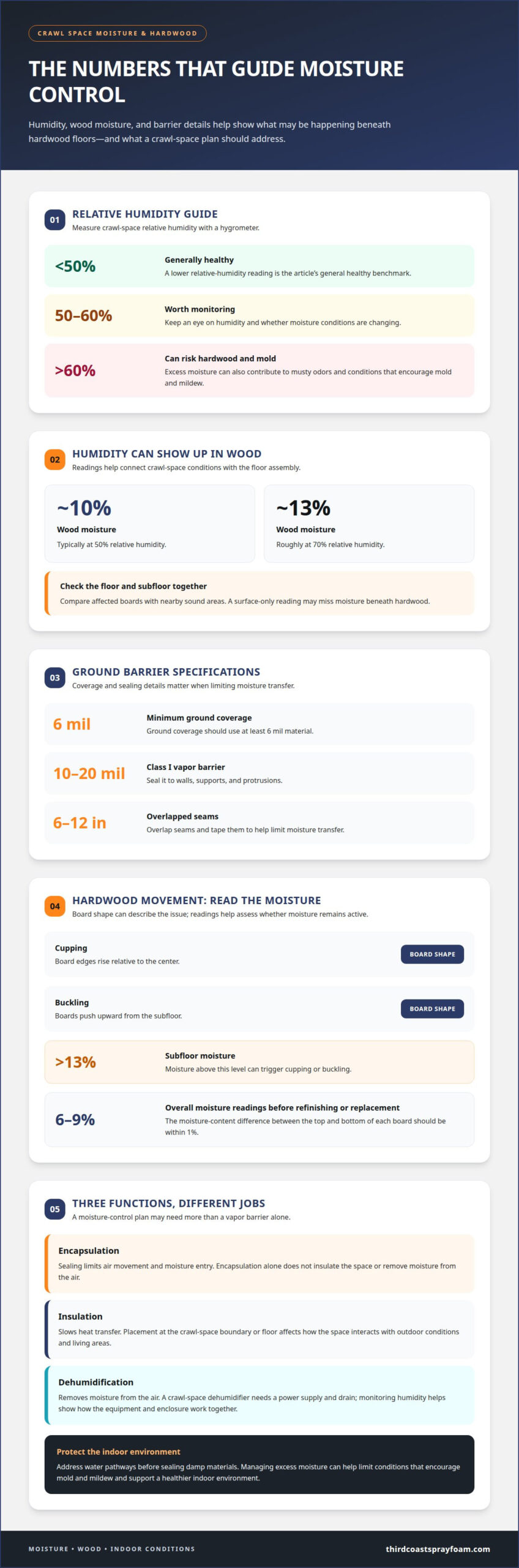
Measure crawl-space relative humidity with a hygrometer and wood moisture with a moisture meter. Below 50% relative humidity is generally healthy; 50% to 60% is worth monitoring, and above 60% can risk hardwood and mold. Wood typically holds about 10% moisture at 50% relative humidity and roughly 13% at 70%.
For crawl space encapsulation for hardwood floor protection, ground coverage should use at least 6 mil material. A Class I vapor barrier is described as 10 to 20 mil; seal it to walls, supports, and protrusions, with seams overlapped 6 to 12 inches and taped. Limiting moisture transfer helps reduce conditions that contribute to hardwood warping.
Local conditions, including moisture, drainage, and radon concerns, can influence a crawl-space plan. Compare proposed scopes by looking at what sealing and moisture-control work is included, along with warranty coverage and exclusions. Encapsulation does not itself cause wood rot or mold, but inadequate moisture management can leave damaging conditions in place. If radon is a concern, active ventilation may be needed. Dehumidifiers need power and a drain, and humidity may take several weeks to stabilize after installation.
2. Moisture-related hardwood cupping and buckling
Hardwood cupping and buckling are different signs of moisture-related movement. Cupping raises the edges of a board relative to its center; buckling pushes boards upward from the subfloor. Subfloor moisture above 13% can trigger either condition. The board pattern helps describe the damage, but moisture readings help identify whether moisture remains active below the floor.
Assess the hardwood and subfloor together. Compare moisture readings from affected boards with readings from nearby areas that appear sound, and note where the changes occur. A surface-only reading may miss moisture beneath the hardwood. Check for leaks and other indoor sources as well, since crawl-space work will not resolve water from plumbing or spills.
Give the wood time to respond after the moisture source is addressed. Drying beneath hardwood can cause boards to shrink, and other wooden supports may also change as conditions shift. Refinishing or replacing hardwood is recommended when overall moisture readings are between 6% and 9%, with the moisture-content difference between the top and bottom of each board within 1%. Those thresholds help avoid finishing a floor before its moisture balance settles.
Keep a simple record of locations and readings so changes can be compared over time. A small cupped area near an exterior wall, for example, may point to a localized moisture pathway, while widespread movement calls for a broader assessment. If measurements indicate the crawl space is contributing, crawl space encapsulation can address that moisture pathway.
3. Crawl space insulation and dehumidification
Encapsulation, insulation, and dehumidification serve different purposes in a crawl space. Sealing limits air movement and moisture entry, but encapsulation alone does not insulate the floor or foundation. Insulation slows heat transfer, while a dehumidifier removes moisture from the air. Considering these functions together helps avoid expecting a vapor barrier to solve temperature and humidity issues on its own.
Is encapsulation better than using a vapor barrier and dehumidifier alone? A sealed system can limit soil vapor and air exchange more effectively than a loose ground cover, while a dehumidifier manages moisture in the air. Insulation serves a separate purpose, so a complete plan may combine all three functions.
Insulation placement matters. Insulating the crawl-space boundary changes how the space interacts with outdoor conditions; insulating the floor affects heat transfer between the crawl space and living areas. The right approach depends on the home’s construction and moisture conditions. Sealing without addressing existing water entry can trap damp materials and create conditions that support mold and musty odors. Include water pathways in the plan.
A crawl-space dehumidifier needs a power supply and drain. It transfers 100% of its energy consumption into the space as heat, so its operation affects both moisture and temperature. Monitoring humidity after installation helps show whether the equipment and enclosure are working together. Air sealing can also limit air escaping from the crawl space, which may reduce energy bills.
For a coordinated assessment of crawl-space insulation and moisture control, plan your crawl-space project.
Third Coast Spray Foam: Crawl Space Encapsulation
Third Coast Spray Foam provides crawl space encapsulation to help manage moisture beneath hardwood floors. Consider this service when persistent dampness, musty odors, or moisture readings point to an issue below the home. Encapsulation helps limit ground moisture and air movement, supporting a more controlled space beneath the floors.
Encapsulation alone does not insulate the space or remove moisture from the air, so the right plan depends on the crawl space’s conditions. Existing water entry, insulation needs, and humidity all influence which measures should be combined. Managing excess moisture can also reduce conditions that encourage mold and mildew, supporting a healthier indoor environment.
To take a practical next step toward a drier crawl space and better hardwood protection, contact Third Coast Spray Foam for a free, no-obligation evaluation and quote.
Protect the Home From the Ground Up
Make decisions based on the whole home, not just the visible floor. A coordinated approach to crawl space encapsulation for hardwood floor protection considers the crawl space, wood structure, and indoor air as connected parts of the same system.
Excess moisture can encourage mold and mildew, which can affect indoor air quality. Reducing moisture helps limit the conditions that support their growth, an important consideration for people with respiratory sensitivities. A plan suited to the home can support a cleaner, more comfortable indoor environment.
For guidance on your next step, contact Third Coast Spray Foam. A sound plan can help you move forward with greater confidence in your home’s protection.
Frequently Asked Questions
What affects the cost?
Project cost depends on the crawl space’s size and access, existing water conditions, and the sealing required. Drainage work, insulation, and dehumidification can also affect the scope. For example, a space with standing water needs different preparation from one that requires only ground and boundary sealing. A site-specific evaluation helps determine what work the home needs.
Will encapsulation fix hardwood floors that are already cupped?
No. Encapsulation can help manage crawl-space moisture, but it will not flatten boards or repair finish damage. Address the moisture source and wood conditions first, then allow the floor to stabilize. Depending on its condition, hardwood may still need refinishing or replacement. For instance, cupping that persists after moisture conditions improve may require flooring work beyond crawl-space measures.
What crawl space humidity level is safe for hardwood flooring?
Relative humidity below 50% is generally considered healthy for a crawl space; readings from 50% to 60% warrant monitoring. Track readings over time rather than relying on a single measurement, especially through humid weather. Pair air readings with wood moisture measurements, since the floor’s response depends on moisture within the boards and subfloor, not humidity alone.
What are the signs that crawl space moisture is damaging hardwood floors?
Look for board edges rising above their centers, boards lifting from the subfloor, new gaps, or changes in floor level. A musty odor or visible mold or mildew near floor edges can indicate moisture concerns below. Compare affected areas with nearby flooring and note whether the changes worsen during humid periods. Damp indoor conditions can also affect air quality.
How much does crawl space encapsulation cost in the United States?
There is no single cost that applies to every home. The project scope, crawl-space access, moisture or water issues, sealing requirements, and any insulation or dehumidification work all affect the quote. Third Coast Spray Foam offers a free, no-obligation evaluation and transparent quote, with exact project details determined through that evaluation. These considerations apply to homes in Grand Rapids and across West Michigan, including Lansing, Muskegon, Holland, Allegan, Kalamazoo, and Grand Haven.
Disclaimer
Information provided is for general educational purposes. Individual needs and circumstances vary. Speak to an experienced professional to get the correct information for your situation.