
In West Michigan, the choice between insulation types isn’t just about the initial price tag; it’s a decision about the very air your family breathes. You’ve likely felt those icy drafts creeping through your baseboards during a Muskegon winter or worried about how attic dust and mold might be triggering your family’s allergies. It’s frustrating to feel like you’re overpaying for monthly utilities while your home remains uncomfortable and your indoor air quality suffers. We understand that you want a permanent solution that won’t settle or fail after a few seasons.
Deciding on the cost of spray foam vs blown-in insulation requires looking beyond the immediate quote to the long-term impact on your respiratory health and structural integrity. In this 2026 guide, we’ll compare these two popular methods to show you how they stack up against Michigan’s R-49 energy standards. You’ll learn how the right investment can slash your energy bills by up to 40 percent and create a sealed environment that prevents moisture buildup. We’ll also highlight how to maximize current federal tax credits and local utility rebates to make your home a safer, more efficient sanctuary for the long haul.
Key Takeaways
- Compare the upfront cost of spray foam vs blown-in insulation while learning how to leverage 2026 federal tax credits and local Michigan utility rebates to offset your investment.
- Understand the critical link between air sealing and respiratory health by discovering how to block attic dust, pollen, and mold spores from entering your living areas.
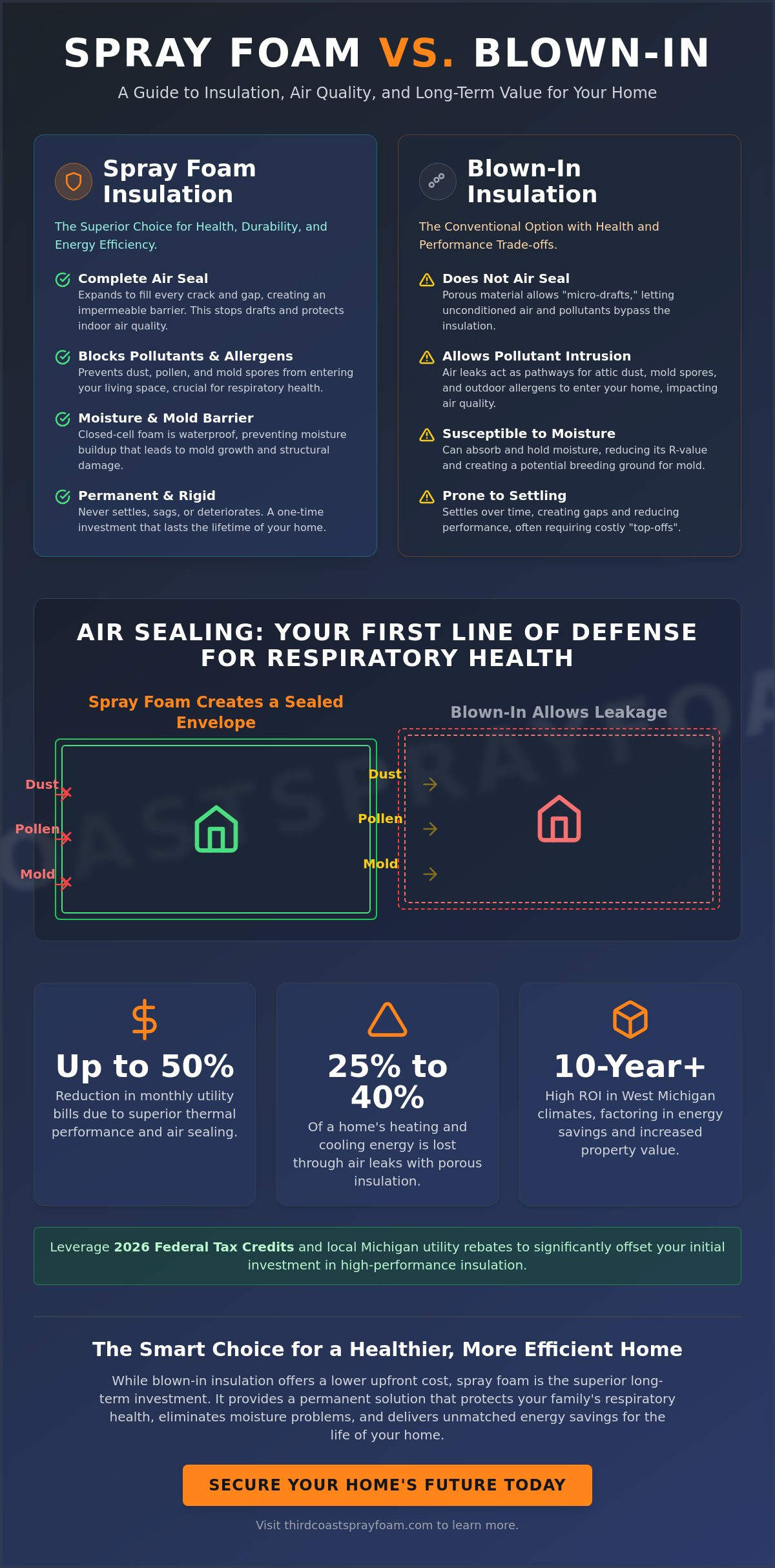
- Evaluate the 10-year ROI for West Michigan climates, where a high-performance thermal barrier can reduce monthly utility bills by up to 50 percent compared to settling materials.
- Identify when a simple insulation “refresh” is sufficient and when a complete “rebuild” is necessary to prevent structural damage from moisture and condensation.
- Discover why a health-first approach to insulation is the only way to ensure permanent indoor air quality and long-term comfort in Grand Rapids and Muskegon homes.
Analyzing the Upfront Cost of Spray Foam vs. Blown-In Insulation
When you start comparing quotes for your home project, the initial price difference often creates a moment of “sticker shock.” It’s a common reaction for West Michigan homeowners. Blown-in insulation is frequently viewed as the budget friendly choice because the materials are high volume and readily available. However, understanding the true cost of spray foam vs blown-in insulation requires a look at what actually goes into the installation process and the long term value of the materials used.
To better understand the differences between these two common methods, watch this helpful video:
Material Costs: Premium Chemicals vs. Recycled Fibers
Spray foam insulation relies on a sophisticated chemical reaction between two primary components that must be kept at precise temperatures. Because these chemicals are petroleum based, market rates in 2026 are influenced by global oil prices. This makes the raw material more expensive than traditional options. Conversely, blown-in cellulose is made primarily from recycled paper treated with fire retardants. It’s significantly cheaper to produce, but it lacks the structural and air sealing properties of foam. While the upfront material cost for cellulose is lower, it doesn’t offer the same protection against the moisture and mold that often plague West Michigan basements and attics.
Labor and Equipment Requirements
A professional spray foam rig is essentially a mobile laboratory. It requires a massive investment in specialized equipment, high pressure hoses, and certified technicians who understand the complex chemistry of the application. The installation requires strict safety protocols, including specialized ventilation and respiratory gear. Installing blown-in insulation is a much simpler mechanical process. It involves a machine that breaks up the material and blows it through a hose. While the labor for blown-in is less intensive and faster, it doesn’t provide the same permanent barrier against outdoor pollutants and allergens.
In many older homes across Grand Rapids and Muskegon, tight crawl spaces or complex attic layouts can dictate the final quote. Spray foam excels in these difficult areas because it expands to fill every nook. Blown-in materials often leave gaps that allow for micro-drafts. These gaps aren’t just energy wasters; they act as pathways for attic dust and mold spores to enter your living space. You should also consider the hidden costs of blown-in materials. They are prone to settling over time, which means you may need to pay for future top-offs to maintain your home’s thermal performance. Spray foam is a one time investment that stays exactly where it’s applied for the life of the structure.
Performance Beyond R-Value: Air Sealing and Respiratory Health
Air sealing is the process of eliminating the movement of air through building envelopes. While many homeowners focus solely on R-value, this number only measures a material’s resistance to heat flow. It doesn’t account for the air that physically moves through the material. When evaluating the cost of spray foam vs blown-in insulation, you must consider that blown-in materials like cellulose or fiberglass are naturally porous. They allow “micro-drafts” to bypass the thermal barrier. These tiny air currents carry more than just cold air; they transport attic dust, pollen, and outdoor pollutants directly into your living spaces.
According to the Department of Energy on insulation types, air leaks can account for 25% to 40% of a home’s heating and cooling energy use. Beyond the financial drain, these leaks create a direct link between your attic and your lungs. Spray foam acts as both insulation and an air seal in one step. It creates a monolithic barrier that blocks the entry of respiratory irritants. This is a critical distinction for families dealing with asthma or seasonal allergies in Grand Rapids and Muskegon. By sealing these gaps, you aren’t just saving money; you’re creating a controlled environment where your HVAC system can properly filter the air you breathe.
Managing Indoor Air Quality (IAQ)
A common issue in West Michigan homes is the “Stack Effect.” This happens when warm air rises and escapes through the attic, creating a vacuum that pulls air up from the crawl space or basement. If your home has traditional blown-in insulation, this cycle continues unabated. It brings damp air and soil gases from below into your bedrooms. Spray foam stops this vertical air movement, ensuring your home maintains a stable, dry environment. This reduction in the infiltration of outdoor allergens like ragweed and mold spores is a primary benefit for long term respiratory health.
Mold Prevention and Moisture Control
Our regional humidity levels demand proactive moisture management. Blown-in insulation can trap moisture against wooden joists if ventilation is insufficient, which often leads to fungal growth. Closed-cell spray foam serves as a powerful vapor barrier. It’s particularly effective for rim joists and basements where moisture infiltration is highest. By preventing condensation on cold surfaces, you effectively eliminate the environment mold needs to thrive. This protects both your home’s structural integrity and your family’s well-being. If you want to ensure your home remains a dry and healthy sanctuary, exploring a professional attic assessment is a great first step toward a permanent solution.
Calculating the Long-Term ROI in West Michigan’s Climate
West Michigan winters are notoriously harsh on homes with inadequate thermal barriers. In cities like Grand Rapids and Muskegon, the extreme temperature swings between January blizzards and humid July afternoons put immense pressure on your building’s envelope. When homeowners weigh the cost of spray foam vs blown-in insulation, they often look at the 10 year return on investment. Research into the cost of blown-in vs. spray foam insulation suggests that while the entry price for blown-in is lower, the performance gap widens significantly over time. Spray foam can lead to a 40 percent reduction in monthly energy costs, whereas blown-in insulation typically offers savings closer to 25 percent.
A major factor in this ROI calculation is the “settling factor.” Blown-in materials like cellulose or fiberglass are prone to compression and shifting over time. As these materials settle, they lose their R-value and leave gaps that allow heat to escape. This degradation doesn’t just waste energy; it forces your furnace to work overtime. Spray foam remains stable for the life of the structure. It doesn’t sag or create voids, which means the energy efficiency you pay for on day one is the same efficiency you’ll have 20 years later. This stability also protects your HVAC system. By maintaining a consistent temperature, you prevent the furnace burnout that often occurs during Michigan’s deep freezes.
Energy Bills and Monthly Savings
Older homes in West Michigan often suffer from a “furnace-on-repeat” cycle. This happens when heat escapes through the attic so quickly that the thermostat triggers the furnace every few minutes. Proper air sealing stops this cycle immediately. During our humid summers, this same barrier prevents outdoor moisture from infiltrating your home, reducing the load on your air conditioner. To help offset the initial investment, you should review our Energy Efficient Home Improvement Credit guide for details on current federal tax incentives and utility rebates that can lower your project costs.
Home Value and Resale Appeal
Modern home buyers are increasingly focused on energy performance and indoor health. During a home inspection, high-performance insulation stands out as a premium, maintenance-free upgrade. High-performance insulation can increase a home’s appraisal value by improving its HERS score. Beyond the financial appraisal, it offers peace of mind. Buyers appreciate knowing the home is protected against mold and respiratory irritants. By choosing a permanent solution, you’re investing in the long-term structural integrity and marketability of your property.
Application Guide: When to Choose Blown-In vs. Spray Foam
The specific area you are insulating often dictates whether the cost of spray foam vs blown-in insulation represents a luxury or a necessity. While we’ve discussed general savings and health benefits, the physical environment of your West Michigan home determines which material will actually perform. In a standard, dry attic with proper ventilation, blown-in insulation can serve as a cost effective “refresh” to bolster existing layers. However, when you are dealing with structural vulnerabilities or moisture prone zones, the performance gap becomes a matter of property maintenance and respiratory safety.
The Pole Barn Dilemma: Stopping the ‘Sweat’
Metal buildings in Michigan face a unique challenge known as “sweating.” When warm, moist indoor air hits a cold metal roof, it condenses into water droplets that rain down on your equipment and vehicles. Traditional blown-in insulation is effectively useless in these non-traditional structures. It cannot adhere to the metal and fails to provide the air tight seal required to stop condensation. Utilizing closed cell spray foam is the only reliable solution for pole barns. It creates a seamless thermal break that prevents rust, protects your inventory from water damage, and stops mold from growing on damp surfaces. This permanent barrier ensures your unconditioned building remains dry and structurally sound regardless of the humidity outside.
Rim Joists and Foundation Walls
Rim joists are the number one source of drafts in Michigan basements. These areas are where your home’s wooden frame meets the concrete foundation, creating dozens of irregular gaps and cracks. Blown-in insulation should never be used in these moisture prone areas. Loose fibers easily trap humidity against the wood, which creates a breeding ground for mold and mildew. Spray foam is the gold standard for sealing these irregular gaps because it expands to fill every tiny crevice. By sealing the rim joists, you stop the infiltration of damp earth smells and soil gases into your living space. This is a critical step for improving indoor air quality and protecting the respiratory health of everyone in the home.
Crawl spaces require a similar health conscious approach. While traditional loose fill methods were once common, they often lead to sagging materials and trapped moisture. We recommend crawl space encapsulation combined with foam to create a completely dry, controlled environment. If you are ready to eliminate drafts and protect your home from mold, you can request a professional West Michigan insulation quote to see which solution fits your structure. This targeted approach ensures you don’t spend money on materials that will eventually fail due to Michigan’s specific environmental pressures.
While our insulation services focus on West Michigan, those managing commercial projects or events that require temporary temperature-controlled environments can learn more about KC Frost Wagon and their specialized freezer trailer rentals.
Why Third Coast Spray Foam is the Smart Choice for Your Project
At Third Coast Spray Foam, we believe that your home’s thermal performance is inseparable from its environmental safety. When you evaluate the cost of spray foam vs blown-in insulation, you aren’t just buying material; you are investing in a system that protects your family’s respiratory health. We are a locally owned and operated team based in Fruitport, and we take immense pride in serving our neighbors in Muskegon and Grand Rapids. Our specialists don’t just spray foam or blow fibers; we diagnose the specific environmental challenges of your property to provide a custom, health-first solution.
Having expertise in both blown-in insulation and spray foam allows us to be objective advisors for your project. We won’t suggest a premium foam package if a high quality blown-in “refresh” is the pragmatically correct choice for your attic and your budget. Our goal is to ensure your indoor air quality remains pristine while your monthly utility bills drop. We treat every structure as an integrated system, focusing on how different materials interact with West Michigan’s unique humidity and soil conditions.
Professional Removal of Contaminated Insulation
Many homes in West Michigan harbor decades of dust, pest waste, and mold spores within their old insulation. Simply adding new material on top of a mess is a mistake that compromises your indoor air quality. Our process begins with the professional removal of contaminated insulation using a safe, high-suction vacuum system. This attic cleaning removes respiratory irritants and prepares the space for a fresh, healthy start. By clearing the old debris, we can properly inspect the structure for air leaks or moisture damage that might otherwise go unnoticed. This preparation is a vital part of our commitment to your long-term physical well-being.
Get Your Free West Michigan Insulation Estimate
We understand that the cost of spray foam vs blown-in insulation is a significant financial consideration for any homeowner. That is why we prioritize transparent quoting with no hidden fees for our clients in Grand Rapids and the surrounding areas. We help you navigate the landscape of 2026 incentives, including the 30 percent federal tax credit and local utility rebates from DTE or Consumers Energy. Our team is here to help you weigh the long-term energy savings against your immediate project budget. Schedule your free inspection with Third Coast Spray Foam today to secure your home’s comfort and structural integrity.
Secure Your Home’s Future and Health
Choosing the right insulation for your West Michigan home is a decision that balances immediate budget needs with long term physical and financial well being. We’ve explored how air sealing does more than just lower utility bills; it acts as a primary defense against the mold, mildew, and outdoor pollutants that threaten your family’s respiratory health. While blown-in materials provide a quick refresh, they often fall short in the moisture prone areas like rim joists and crawl spaces where structural integrity is most at risk.
When you weigh the cost of spray foam vs blown-in insulation, remember that you are choosing between a temporary fix and a permanent structural upgrade. Since 2013, our certified local professionals have provided expert installation across Grand Rapids and Muskegon. We specialize in health conscious air sealing that transforms drafty houses into stable, efficient sanctuaries. Don’t let another harsh Michigan winter compromise your comfort or your indoor air quality. Get Your Free Insulation Quote from Third Coast Spray Foam and take the first step toward a drier, healthier, and more valuable home. We look forward to helping you make an investment that lasts a lifetime.
Frequently Asked Questions
Is spray foam insulation really worth 3x the cost of blown-in?
Yes, the value lies in the permanent air seal that traditional materials cannot provide. While the initial investment is higher, the performance gap accounts for superior moisture control and structural strength. This makes the long-term cost of spray foam vs blown-in insulation a matter of durability and health rather than just a simple upfront price comparison. You’re paying for a solution that won’t require maintenance or replacement.
Can I add spray foam on top of existing blown-in insulation?
We don’t recommend applying foam over old materials. For the chemical bond to be effective and air-tight, the foam must adhere directly to the clean substrate of your home. Spraying over old, dusty insulation can trap allergens and prevent a proper seal. This is why our professional process typically includes insulation removal to ensure a fresh, healthy start for your home’s air quality.
Does blown-in insulation cause mold problems in Michigan attics?
Blown-in insulation itself is often treated to be mold resistant, but its porous nature can lead to problems. It allows warm, humid air to move through the material and condense on cold surfaces in your attic. This moisture accumulation creates the perfect environment for fungal growth. Spray foam eliminates this risk by creating a monolithic barrier that stops air movement entirely and prevents condensation from forming.
How much can I save on my Michigan energy bills with spray foam?
Homeowners in Grand Rapids and Muskegon can see a reduction in heating and cooling costs of up to 40 percent. This significant saving is possible because foam addresses air leaks, which the Department of Energy identifies as a major source of energy waste. By stopping the “furnace-on-repeat” cycle during our harsh winters, you reduce the mechanical strain on your HVAC system and keep your monthly bills predictable.
Which insulation is better for someone with asthma or severe allergies?
Spray foam is the superior choice for respiratory health because it creates an airtight seal against outdoor pollutants. Blown-in materials are prone to harboring dust and can allow pollen or ragweed to enter your living space through micro-drafts. By eliminating these pathways, you create a controlled indoor environment that significantly reduces triggers for those with asthma or severe seasonal allergies in West Michigan.
How long does spray foam insulation last compared to cellulose?
Spray foam is a permanent solution that is designed to last for the life of the structure without settling or degrading. Cellulose and other blown-in materials naturally compress and shift over time. This settling reduces their original R-value and creates gaps in your thermal barrier. Investing in foam ensures that your home’s efficiency remains consistent for decades without ever requiring future top-offs or material refreshes.
Is there a tax credit for installing spray foam in 2026?
Yes, you can claim the Federal Energy Efficient Home Improvement Credit for 2026 projects. This tax credit covers 30 percent of the material costs for insulation upgrades, up to an annual limit of $1,200. When you factor in this federal incentive along with local utility rebates, the total cost of spray foam vs blown-in insulation becomes much more manageable for homeowners looking to upgrade their home’s performance.
What is the best insulation for a pole barn in West Michigan?
Closed-cell spray foam is the only effective solution for insulating metal pole barns in our regional climate. It adheres directly to the metal to provide a thermal break that prevents condensation, also known as “sweating.” Blown-in insulation cannot be applied to these surfaces and offers no protection against the rust or moisture damage that occurs in unconditioned outbuildings during humid Michigan summers or freezing winters.
Disclaimer
Information provided is for general educational purposes. Individual needs and circumstances vary. Speak to an experienced professional to get the correct information for your situation.