The best insulation for soundproofing walls depends on more than the material inside the cavity. If voices carry between rooms or traffic seeps indoors, the result also depends on the wall assembly, including gaps and paths that let sound travel around insulation. R-values measure thermal resistance, not how well a wall blocks noise.
That distinction matters for comfort, and a sound-control project should also consider the indoor environment. This guide explains how insulation absorbs sound inside wall cavities, what else affects sound transmission, and what to consider during a wall assessment. It covers open-cell spray foam as an option for interior walls and soundproofing, along with how moisture control can help limit conditions that contribute to mold and mildew. Improper spray foam installation can cause off-gassing or expansion damage, so professional application by licensed technicians is required. For Michigan properties, understanding the whole assembly is the first step toward a practical plan.
Key Takeaways
- The best insulation for soundproofing walls depends on how sound moves through the entire wall, not just the material inside its cavity.
- Identify whether noise comes from another room, a floor, or outdoors, then consider the wall’s construction and whether its cavity is accessible.
- Open-cell spray foam is one option for interior walls and sound control. Professional application matters, and moisture management can help protect indoor air quality and limit conditions that contribute to mold and mildew.
- Third Coast Spray Foam provides sound-dampening and soundproofing insulation across West Michigan, including Grand Rapids, Lansing, Muskegon, Holland, Allegan, Kalamazoo, and Grand Haven. This information reflects the company’s own statements; exact project details require a free, no-obligation quote.
How Wall Insulation Helps Reduce Noise Without Solving Every Sound Problem
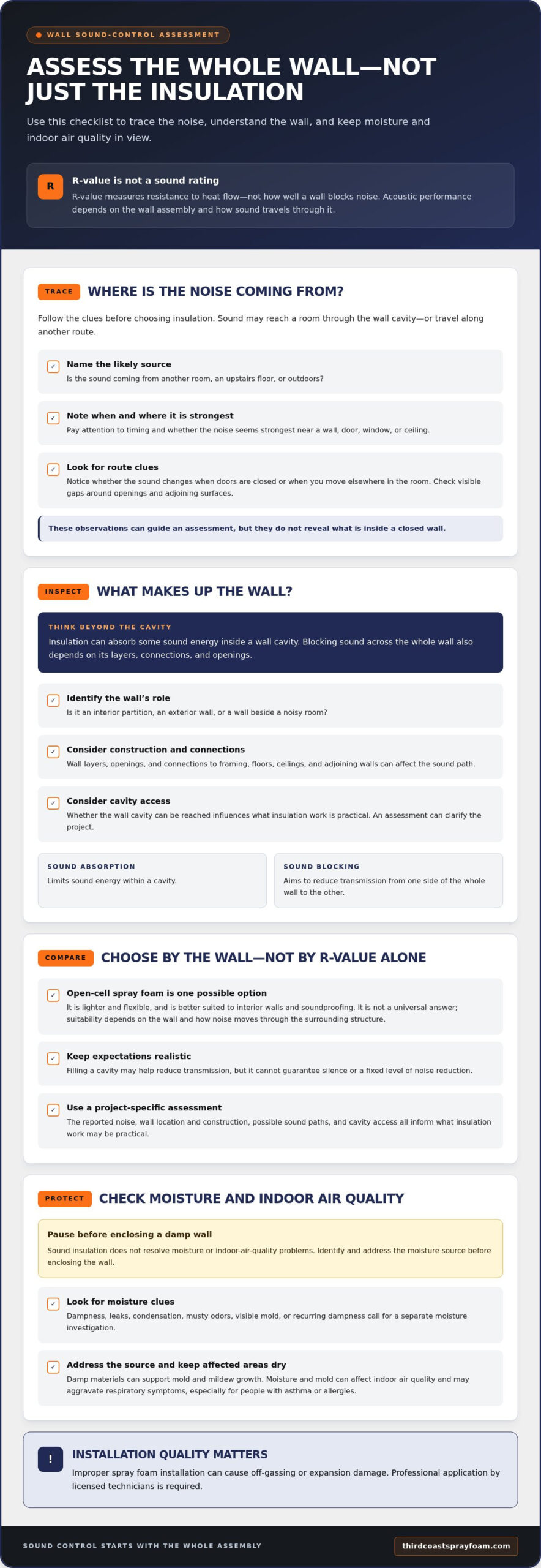
The best insulation for soundproofing walls is only part of the solution. Insulation inside a wall cavity can absorb some sound energy and reduce how much noise passes through the wall. Blocking sound across the whole assembly also depends on the wall’s layers, connections, and openings. R-value measures thermal resistance, not acoustic performance.
Sound absorption helps limit sound energy within a cavity. Sound blocking aims to reduce transmission from one side of the entire wall to the other. The Soundproofing principles and methods overview explains related concepts, including sound transmission and STC ratings. A wall’s acoustic performance is a system result, not a rating you can infer from its insulation alone.
For another example of how openings affect sound control, watch this video about soundproofing a door:
Why insulation alone may not make a wall soundproof
Noise can travel through more than the insulated cavity. Gaps around outlets and other openings can let sound through. Connected framing, ceilings, floors, and adjoining walls can also carry it around the treated section. Filling a cavity may help reduce transmission, but it can’t guarantee silence or a fixed level of noise reduction. The sound source and its route matter.
To narrow down the route, note where the noise is strongest and whether it changes when doors are closed or when you move to another part of the room. Check for visible gaps around wall openings and along adjoining surfaces. These observations can help guide an assessment, but they don’t establish what is inside a closed wall.
Sound insulation doesn’t resolve moisture or indoor-air-quality problems. If you notice dampness, leaks, condensation, or mold, identify and address the moisture source before enclosing the wall. Damp materials can support mold and mildew growth. Mold and persistent dampness may worsen respiratory symptoms, especially for people with asthma or allergies. Keeping affected areas dry and addressing moisture promptly supports healthier indoor air. Improper spray foam installation can also cause off-gassing or expansion damage, so professional application by licensed technicians is required.
How to Choose Wall Insulation for Your Noise, Wall, and Indoor-Environment Needs
Start by tracing the noise before choosing insulation. Note whether it comes through a shared room wall, seems to travel from an upstairs floor, or enters from outdoors. Pay attention to when it’s most noticeable and whether it seems strongest near a particular wall, door, window, or ceiling. These clues help distinguish a cavity issue from sound traveling along another path.
- Identify the wall’s role. An interior partition, an exterior wall, and a wall beside a noisy room have different conditions to assess.
- Consider the existing construction. Wall layers, openings, and connections to nearby floors or ceilings can affect the noise path.
- Think about cavity access. Whether the wall cavity can be reached influences what insulation work is practical. A professional assessment can clarify the project.
Does a higher R-value mean better soundproofing?
No. R-value describes resistance to heat flow, so it isn’t a standalone measure of sound control. Open-cell spray foam is lighter and flexible, and is better suited to interior walls and soundproofing. That makes it a potential option, not a universal answer. The best insulation for soundproofing walls depends on the wall itself and how noise moves through the surrounding structure. Choose material based on an assessment, not an R-value comparison alone.
Keep the indoor environment in view, too. Musty odors, visible mold, or recurring dampness call for a separate moisture investigation. Sound insulation alone doesn’t resolve mold or mildew. Moisture and mold can affect indoor air quality and may aggravate respiratory symptoms, so address their source instead of treating insulation as a remedy.
For a project-specific view, Third Coast Spray Foam provides sound-dampening and soundproofing insulation and offers a free, no-obligation sound-dampening evaluation and quote.
Planning Professional Soundproofing Insulation in West Michigan
A sound-dampening project starts with the property, not a promise that one product will eliminate every noise. Third Coast Spray Foam evaluates the reported noise, the wall’s location and construction, and possible paths sound may be taking. This project-specific view helps determine whether insulation could contribute to better sound control and what details may affect the work.
Third Coast Spray Foam serves West Michigan communities including Grand Rapids, Lansing, Muskegon, Holland, Allegan, Kalamazoo, and Grand Haven. Before an evaluation, note which rooms are affected, when the noise is most noticeable, and whether it seems to come through an interior wall or from outside. These observations give the project discussion a useful starting point without assuming the wall’s construction or promising a set result.
What to expect from a project-specific evaluation
During a free, no-obligation evaluation, the property and sound concern inform a discussion of possible insulation work. Open-cell spray foam may be considered for interior walls and soundproofing. Exact recommendations depend on the building and project, and are provided in a transparent quote rather than inferred from a general material description.
Installation quality matters for both performance and the indoor environment. Improperly installed spray foam can cause off-gassing or expansion damage, so professional application by licensed technicians is required. If the wall also has dampness or signs of mold or mildew, address those concerns separately. Moisture problems can affect indoor air quality and may aggravate respiratory symptoms. Sound-dampening insulation alone isn’t a mold treatment.
This information reflects Third Coast Spray Foam’s own statements; exact project details require a free, no-obligation quote. For a property-specific next step, Request a free, no-obligation evaluation.
Take the Next Step Toward a Quieter, Healthier Space
A more comfortable property starts with a clear plan for the specific noise you want to address. The best insulation for soundproofing walls depends on the wall and how sound reaches your room, so set practical goals rather than expecting insulation to create complete silence. Keep acoustic improvements separate from moisture concerns: signs of mold or mildew deserve attention as part of protecting indoor air quality and respiratory comfort.
Third Coast Spray Foam provides sound-dampening and soundproofing insulation, backed by 15+ years of Michigan insulation expertise. A project-specific evaluation can help turn your concerns into a practical plan, with recommendations tailored to the property and a transparent quote.
Ready to discuss your wall and noise concerns? Request a free, no-obligation evaluation. A considered plan is a solid first step toward a calmer home.
Frequently Asked Questions
Can soundproof insulation reduce noise between rooms, floors, or from outside?
Yes, sound-dampening insulation can help reduce noise from neighboring rooms, floors, or outdoor sources, though the amount depends on the building and how sound travels. For example, noise heard near a shared wall may have a different path than traffic noise coming through an exterior wall. The best insulation for soundproofing walls is a project-specific choice for properties in Grand Rapids, Lansing, Muskegon, Holland, Allegan, Kalamazoo, and Grand Haven.
What is the difference between closed-cell and open-cell spray foam?
Closed-cell foam is denser, has a higher R-value, and is moisture-resistant and structural. Open-cell foam is lighter and flexible, and is better suited to interior walls and soundproofing. These differences can help guide a project discussion, but they don’t determine the right option on their own. The wall’s purpose and existing construction also matter when selecting spray foam.
Is DIY spray foam recommended?
No, DIY spray foam isn’t recommended. Kits can lead to uneven application and inadequate sealing, and they may pose health risks. Missed areas or inconsistent coverage can undermine the intended result, while exposure during application is a safety concern. Professional installation helps manage these risks; spray foam should be applied by licensed technicians rather than treated as a casual home project.
What is the downside of spray foam insulation?
Improper installation can cause off-gassing or expansion damage, so spray foam requires professional application. Follow appropriate installation practices to help protect the building and indoor environment. If indoor air quality or respiratory comfort is a concern, raise it during project planning. This information reflects Third Coast Spray Foam’s own statements; exact project details require a free, no-obligation quote.
Disclaimer
Information provided is for general educational purposes. Individual needs and circumstances vary. Speak to an experienced professional to get the correct information for your situation.