
What if the drafty air chilling your living room is carrying more than just a cold West Michigan breeze? Most local homeowners accept that historic charm often comes with uneven temperatures and high heating bills. You’ve likely felt that familiar shiver near a wall or wondered if a faint, musty smell is triggering your family’s allergies. When you’re researching the best methods for insulating old house walls Michigan weather requires a technical strategy that goes beyond simple fixes.
We’re here to show you how retrofitting your insulation can slash energy costs, eliminate drafts, and improve your indoor air quality. By focusing on high-performance air sealing, you can prevent mold growth and keep old attic dust out of your breathing air. This 2026 guide covers state-level rebates and the professional materials that ensure your home remains a healthy, efficient sanctuary for years to come.
Key Takeaways
- Identify why the process of insulating old house walls Michigan families rely on must address settled materials and air leaks to truly lower utility bills.
- Learn how professional removal of contaminated attic insulation eliminates deep-seated dust and allergens to drastically improve your indoor air quality.
- Discover the specific benefits of closed-cell spray foam for moisture management and mold prevention in damp West Michigan environments.
- Navigate the 2026 state-level rebate landscape to maximize your investment in long-term home health and structural efficiency.
Understanding Retro-Insulation: Why Upgrading Your Older Home Matters
Retro-insulation is the technical process of upgrading or replacing insulation in an already-built structure without requiring major demolition. For homeowners across West Michigan, this often involves addressing the unique needs of properties built before modern energy codes. Many older residences rely on settled cellulose or degraded fiberglass that fails to meet current R-value standards. A Deep energy retrofit protects the long-term physical and financial well-being of the property by creating a more durable thermal envelope.
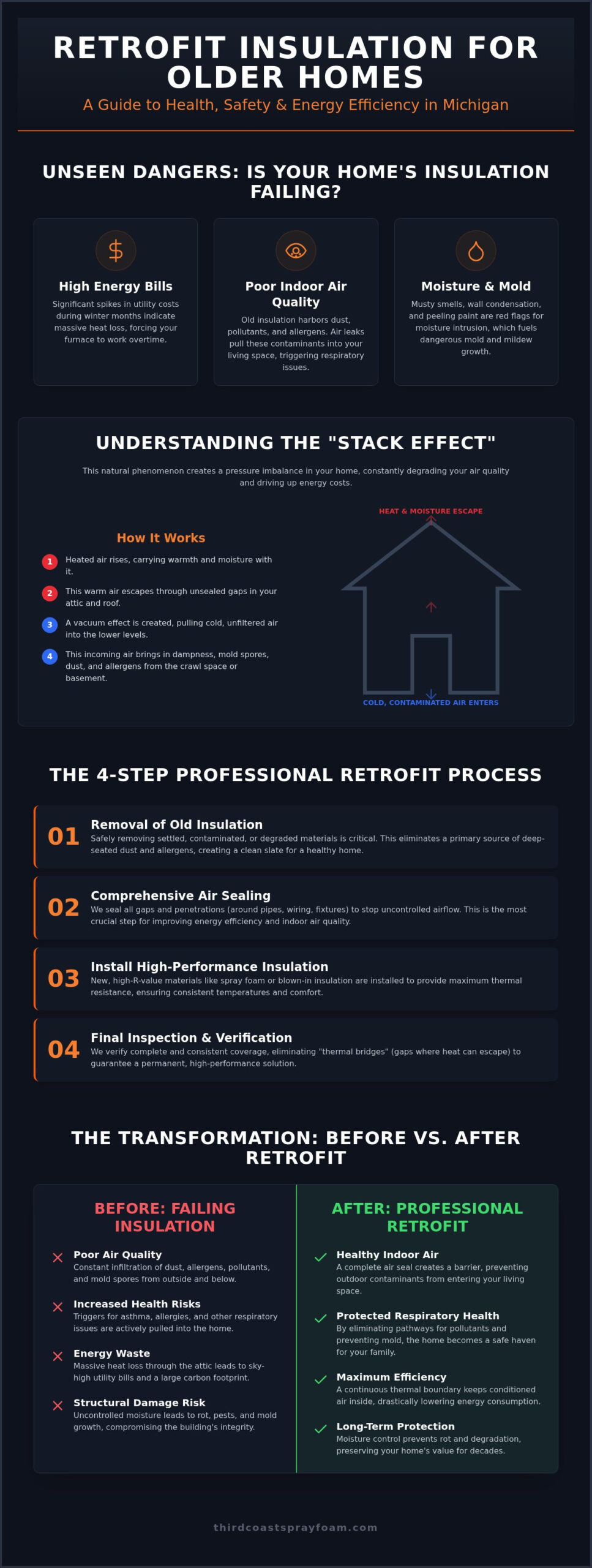
When insulating old house walls Michigan weather requires a technical strategy that addresses the “Stack Effect.” Heat rises and escapes through the attic, creating a pressure imbalance that pulls damp, unfiltered air from the crawl space into your home. This process doesn’t just waste energy; it introduces mold spores and outdoor pollutants into your breathing air, potentially triggering respiratory health issues for your family.
To better understand how insulation impacts your home’s performance, watch this helpful video from a local expert:
Common signs of failure include ice dams on the roof, frozen pipes, and fluctuating room-to-room temperatures. These issues indicate that your home’s thermal boundary is compromised, allowing heat to escape and moisture to accumulate in places where it can cause structural rot and degrade indoor air quality.
Identifying the Signs of Failing or Outdated Insulation
Look for utility bills that spike significantly during Michigan’s sub-zero winter months. Physical signs like wall condensation, peeling paint, or a persistent musty smell in the basement often point to moisture problems and mold growth. We recommend inspecting rim joists and box sills specifically. These areas are critical for air sealing, as they are often the primary entry points for cold drafts and environmental triggers that impact your respiratory health.
The Retrofitting Process: High-Performance Solutions for Existing Walls and Attics
Retrofitting an older structure requires a methodical, multi-stage approach to ensure lasting results. When we approach the task of insulating old house walls Michigan homeowners trust our systematic process. We begin with the professional removal of old, dust-heavy, or mold-contaminated insulation. This is a vital step because leaving degraded materials behind can trap allergens and compromise the efficacy of new layers. Once we’ve established a clean starting point, we focus on comprehensive air sealing. By using spray foam to close gaps around electrical penetrations, plumbing stacks, and light fixtures, we stop the uncontrolled air movement that drives up your energy bills.
While air sealing focuses on small gaps, larger vents like chimneys also require attention to prevent heat loss; homeowners in the Kansas City area can consult Best Chimney Services for professional inspections that ensure their home’s ventilation system is as efficient as its new insulation.
Next, we install high-R-value materials like blown-in insulation to provide maximum thermal resistance. This ensures your home maintains consistent temperatures regardless of the season. When insulating old house walls Michigan residents often discover that a final inspection is the most critical phase. We verify consistent coverage and eliminate thermal bridging in the building envelope to guarantee a permanent solution. If you’re ready to secure your home’s integrity, our team can help you evaluate your current insulation levels today.
Improving Indoor Air Quality and Respiratory Health Through Air Sealing
Selecting the correct strategy depends on where your home loses the most energy and moisture. Attic retrofits are vital for stopping the stack effect, while crawl space encapsulation blocks the ground moisture that fuels mold growth. When insulating old house walls Michigan residents must view their property as an integrated system. High humidity levels along the lakeshore make moisture control essential for protecting your family’s respiratory health from fungal triggers.
We consider closed cell spray foam the gold standard for these challenging environments. It creates a seamless vapor barrier that stops foundation-level drafts permanently. This is especially critical for rim joists in Grand Rapids and Muskegon homes, where cold air often bypasses traditional materials. Beyond immediate comfort, these upgrades provide a strong ROI. High-performance insulation increases property value and ensures eligibility for the energy efficient home improvement credit.
Professional Removal and Installation with Third Coast Spray Foam
DIY insulation removal carries significant health risks that shouldn’t be ignored. Tearing out old materials can kick up decades of accumulated toxins, fine dust, and allergens into your living space. Our team utilizes a Health-First approach to crawl space insulation and encapsulation. We prioritize your indoor air quality by ensuring all contaminants are safely contained and removed before new barriers are installed. We invite homeowners across Ottawa, Kent, and Muskegon counties to schedule a local inspection to begin their retrofit journey today.
Secure Your Home’s Future and Your Family’s Health
Retrofitting an older property is a permanent investment in both structural integrity and personal well-being. By prioritizing professional insulation removal and high-performance air sealing, you effectively eliminate the environmental triggers that compromise respiratory health. When you’re insulating old house walls Michigan winters become much more manageable and your indoor air remains free from mold spores and fine dust. We specialize in addressing Michigan-specific condensation issues with local expertise that spans from Grand Rapids to Muskegon. Our health-focused specialists ensure every gap is sealed to protect your home from the stack effect and rising utility costs. Don’t let another season pass with drafty rooms and poor air quality. Schedule your free West Michigan insulation retrofit estimate today to begin your journey toward a more efficient sanctuary. Your home deserves the security of modern, professional solutions.
Frequently Asked Questions
What is the best type of insulation for retrofitting an old house?
Closed-cell spray foam is the most effective solution for the West Michigan climate due to its superior air-sealing and moisture-blocking properties. When insulating old house walls Michigan residences often benefit from blown-in materials or injection foam to fill existing cavities without major demolition. These high-performance solutions create a durable thermal boundary that stops drafts while preventing the moisture accumulation that leads to mold growth.
How does retrofitting insulation help with my allergies and respiratory health?
Retrofitting improves respiratory health by eliminating old, contaminated materials and sealing out external pollutants. Professional insulation removal gets rid of decades of accumulated dust, rodent waste, and mold spores that circulate through your air. Once we seal gaps with spray foam, we block outdoor allergens and fine particulate matter from entering your living space through the stack effect, creating a cleaner environment.
Can I add new insulation over existing fiberglass or cellulose?
We generally recommend professional removal of old materials before installing new insulation. Adding new layers over settled or degraded fiberglass often traps moisture and hides existing mold colonies. By starting with a clean, empty cavity, we can perform comprehensive air sealing. This ensures your new investment provides maximum thermal efficiency while maintaining a healthy, pollutant-free indoor environment for your family and guests.
Is spray foam insulation safe for older homes in West Michigan?
Professional spray foam application is safe and adds structural rigidity to older West Michigan homes. It’s crucial to avoid DIY spray foam kits, which lack the precise pressure and temperature controls needed for a proper cure. Our expert installers ensure the material cures correctly to provide a permanent, non-toxic barrier that improves indoor air quality by preventing dampness and structural rot in historic frames.
Will retrofitting my attic help prevent ice dams in the winter?
Yes, retrofitting your attic is the most effective way to prevent ice dams. Ice dams form when heat escapes through your ceiling and melts snow on the roof. By combining professional air sealing with high-R-value blown insulation, we keep the heat inside your living space. This prevents the freeze-thaw cycle on your shingles and protects your home from moisture intrusion and subsequent mold growth.
How long does the insulation retrofit process typically take?
Most residential insulation retrofits are completed within one to three days. The timeline depends on the project’s scope, such as whether we’re performing full insulation removal or focusing on crawl space encapsulation. We prioritize a clean and efficient workflow to minimize disruption to your daily routine. Our team ensures all work areas are thoroughly vacuumed to protect your home’s indoor air quality throughout the process.
Disclaimer
Information provided is for general educational purposes. Individual needs and circumstances vary. Speak to an experienced professional to get the correct information for your situation.