
Have you ever woken up to “roof rain” dripping from your steel ceiling, even though it’s a perfectly clear Michigan morning? It’s a frustrating reality for many who realize that a metal shell alone can’t handle the extreme temperature swings of Climate Zone 5. We believe your home should be a secure sanctuary, not a drafty space that costs a fortune to heat. When you prioritize insulating a barndominium in Michigan with high-performance spray foam, you’re doing more than just sealing leaks; you’re building a foundation for long-term health and efficiency.
You likely want a living space that’s quiet, comfortable, and, most importantly, safe for your family. This guide will show you how to transform your property into an energy-efficient home that complies with the latest residential energy codes. We’ll explore how professional insulation prevents mold growth and protects your respiratory health by maintaining superior indoor air quality. You’ll learn the specific steps needed to meet R-49 ceiling requirements and create a durable, moisture-free environment that stands up to the harshest Great Lakes winters.
Key Takeaways
- Learn why insulating a barndominium in Michigan requires a specialized approach to stop thermal bridging and eliminate “roof rain” caused by condensation.
- Understand the critical link between moisture control and respiratory health, including how to prevent mold growth by managing dew points on steel surfaces.
- Discover how to meet the R-49 ceiling requirements enforced in Michigan for 2026 by using high-efficiency closed cell spray foam.
- Explore the benefits of unvented roof assemblies to create a quiet, temperature-controlled environment that lowers monthly utility costs.
- Find out why professional installation is essential to guarantee proper chemical curing and protect your home’s indoor air quality.
The Challenges of Insulating a Michigan Barndominium
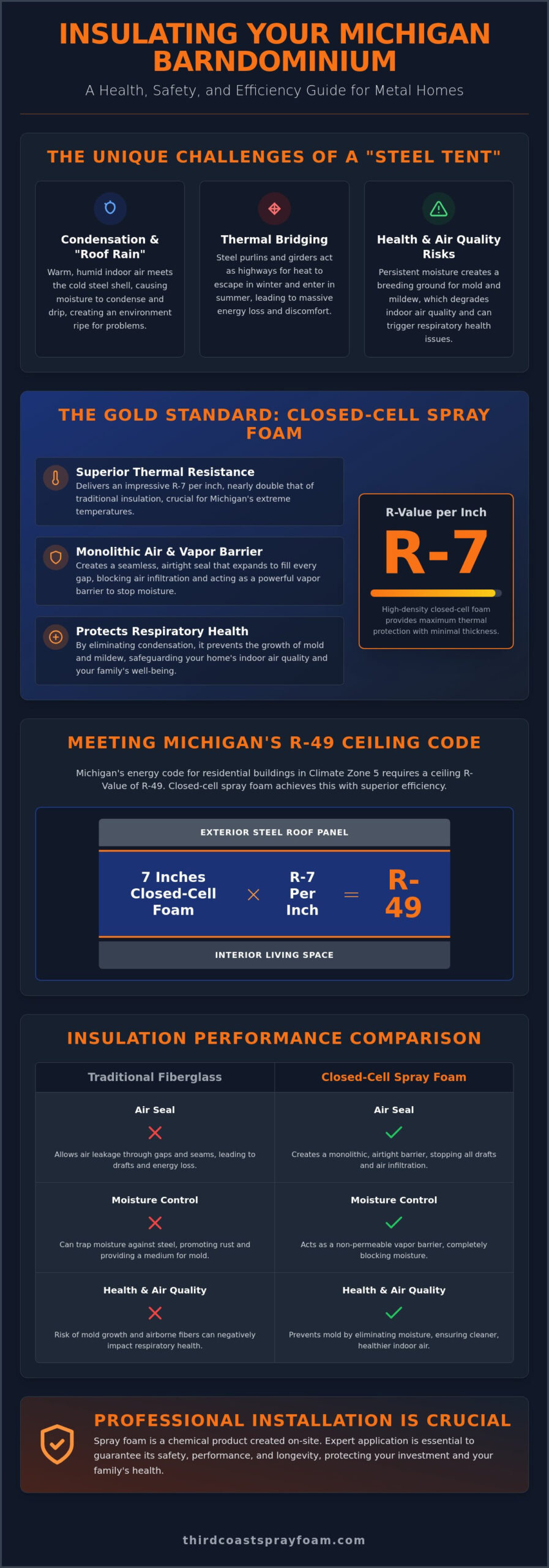
Converting a metal building into a residential space presents a unique set of thermal hurdles. While the steel shell offers unmatched durability, it behaves like a “steel tent” that lacks the natural insulating properties of wood framing. Steel is a highly efficient conductor. This means it carries the freezing temperatures of a Michigan January directly into your wall cavities. In the summer, that same metal shell absorbs solar heat, turning your living space into an oven. Without a specialized approach to insulating a barndominium in Michigan, you’ll likely face the dreaded “roof rain” phenomenon, where condensation drips from the ceiling like a leak in the middle of a clear day. Success starts with understanding that insulating a barndominium in Michigan requires more than just filling a gap; it requires a total air seal.
This moisture isn’t just a nuisance; it’s a direct threat to your family’s well-being. When warm, humid indoor air meets a cold metal surface, the resulting dew point creates a breeding ground for mold and mildew. These environmental triggers are known to aggravate respiratory health issues and degrade indoor air quality over time. Traditional fiberglass batts often fail in these structures because they allow air to bypass the insulation, leading to hidden rot and structural corrosion behind the finished walls. We prioritize a health-first approach that stops these pollutants before they start.
To better understand the complexities of this process, watch this helpful video:
Thermal Bridging in Metal Structures
In a standard pole barn or barndo, the steel purlins and girders act as thermal bridges. They create a continuous path for heat to escape and cold to enter. If the surface temperature of these metal components isn’t carefully controlled, they will “sweat” throughout the winter. Breaking this bridge requires a high-performance solution like Spray foam insulation. By applying a continuous layer of foam directly to the metal, we eliminate the air gaps that lead to condensation. This ensures the interior temperature remains stable regardless of the weather outside, protecting both your comfort and the structural integrity of the steel.
West Michigan Weather Factors
Living along the Lakeshore in cities like Muskegon or Holland adds another layer of complexity. Our region is famous for lake-effect snow, but the high humidity levels associated with the “Third Coast” are the real challenge for metal buildings. During the winter, moisture-laden air from Lake Michigan can infiltrate even the smallest seams in your metal siding. High winds exert pressure on the structure, forcing cold air into the building envelope. A simple “thick blanket” of blown-in insulation won’t stop this air infiltration. You need a system that seals every seam while providing the high R-values required for Climate Zone 5. Our team understands these local patterns, ensuring your home stays dry and healthy through every season.
Why Closed Cell Spray Foam is the Gold Standard for Barndos
Closed cell spray foam insulation is a game-changer for metal residences. While traditional materials struggle with the unique geometry of steel panels, closed-cell foam creates a monolithic bond. This material delivers an impressive R-value of roughly R-7 per inch, which is nearly double the thermal resistance of other common options. When you’re insulating a barndominium in Michigan, this efficiency is vital for maintaining a steady indoor climate during sub-zero nights. It doesn’t just stop heat loss; it acts as a high-performance vapor barrier. This eliminates the need for separate poly films that often fail or trap moisture against the steel.
The application process ensures that every rib, lap, and corner is hermetically sealed. Unlike fiberglass, which leaves tiny gaps at the seams, spray foam expands to fill every void. This total seal is your first line of defense for respiratory health. By preventing humid air from reaching the cold metal, we eliminate the moisture that fuels mold and mildew growth. This proactive approach to air quality ensures that the air your family breathes remains clean and free from environmental triggers. If you are ready to secure your home’s envelope, our experts provide specialized Closed Cell Spray Foam Insulation services tailored for these structures.
R-Value vs. Air Sealing
R-value measures thermal resistance, but it’s only half of the story. A high R-value means nothing if cold Michigan winds can blow right through the material. Traditional fiber insulation acts like a wool sweater; it’s warm until the wind hits it. Closed-cell foam acts like a windbreaker and a sweater combined. Comparing performance, three inches of closed-cell foam often outperforms twelve inches of blown-in fiber because it stops air infiltration entirely. Spray foam insulation stops convection by sealing every gap and crack where air would otherwise travel.
Long-Term Structural Protection
Steel buildings face a specific risk of hidden corrosion. When moisture is trapped between the insulation and the metal panel, it can quietly eat away at your structure. Closed-cell foam bonds directly to the steel, leaving no room for water to collect. This bond also adds significant rigidity to the building. It helps reduce “oil-canning” noises, which are the loud pops and bangs metal panels make during high winds or temperature shifts. Unlike batts that tend to slump or sag over time due to gravity and moisture weight, our foam stays locked in place for the life of the building. This permanent investment protects both your financial well-being and the physical integrity of your home.
Health-First Insulation: Air Quality and Respiratory Safety
Health is often an afterthought in construction, but for a metal home, it’s the most critical factor. When insulating a barndominium in Michigan, you aren’t just choosing a temperature; you’re choosing the quality of the air you breathe. Metal surfaces are notorious for reaching the dew point quickly. This creates moisture that, when trapped behind finished walls, fuels the “Mold Triangle.” This triangle consists of moisture, a food source like drywall paper, and the right temperature. By using closed-cell foam, we remove the moisture component entirely. This ensures that mold spores never have the chance to colonize and trigger respiratory health issues like asthma or chronic allergies.
Our commitment to your safety extends to the installation process itself. High-pressure spray polyurethane foam requires expert handling and precise ventilation. We follow strict safety protocols to ensure that isocyanates and other VOCs are properly vented during application. Following EPA guidelines, we recommend a minimum 24-hour re-occupancy period to allow the material to fully cure and stabilize. This ensures your indoor air remains pristine from day one. This holistic approach to insulating a barndominium in Michigan guarantees that your home is as healthy as it is durable.
Mold and Mildew Prevention
The “roof rain” mentioned earlier is more than a structural problem. It’s a health hazard. When water drips into wall cavities, it saturates organic materials that you can’t see or reach. This hidden dampness is where toxic mold thrives, releasing spores into your ventilation system. For those living with respiratory sensitivities, this can lead to persistent coughing or wheezing. Total home health also depends on what’s happening beneath your feet. Investing in high-quality crawl space insulation is a vital step in preventing damp air from rising through the floor and contaminating your primary living space.
Creating a Controlled Indoor Environment
An air-sealed envelope creates a fortress against outdoor pollutants. During a heavy Michigan pollen season, traditional insulation allows allergens to drift through seams in the siding and into your home. Spray foam blocks these pathways, significantly reducing dust and outdoor irritants. This controlled environment also makes it easier to maintain consistent humidity levels, which is essential for both comfort and health. Proper air sealing prevents the stack effect from pulling contaminants and soil gases upward through the home’s foundation and into the main living areas. By managing the pressure and airflow within the building, we ensure your barndominium remains a clean, secure environment for decades.
Meeting Michigan Building Codes and R-Value Targets
Understanding local building codes is the final piece of the puzzle for any homeowner. In the Great Lakes State, we follow the 2021 International Energy Conservation Code (IECC) with Michigan-specific amendments. For those insulating a barndominium in Michigan, this means adhering to strict R-value minimums. If you live in Climate Zone 5, which covers most of the Lower Peninsula, your ceilings and attics must reach an R-49 rating. While these numbers might seem like a bureaucratic hurdle, they exist to ensure your home remains a healthy, moisture-free environment. Proper R-values don’t just save money; they prevent the temperature imbalances that lead to mold-inducing condensation.
We often help clients navigate the “performance path” for code compliance. This approach allows us to demonstrate that the overall energy performance of your barndominium meets the required standards, even if individual components differ from prescriptive charts. This is especially useful for unvented roof assemblies. By spraying closed-cell foam directly to the underside of the metal roof deck, we create a conditioned attic space. This method is highly effective in our humid Lakeshore climate because it keeps moisture out of the building envelope entirely, protecting your respiratory health from hidden fungal growth.
Climate Zone 5 Compliance
Jurisdictions in Grand Rapids, Lansing, and Muskegon have specific expectations for residential conversions. Inspectors look for more than just a “nominal R-value” on a spec sheet. They want to see proof of a continuous air seal. We provide the necessary documentation and can utilize infrared scans to verify that there are no thermal gaps in your shell. This level of precision is why we never recommend DIY kits for a permanent residence. Our professional team ensures that your project passes inspection the first time, securing both your certificate of occupancy and your long-term peace of mind.
ROI and Tax Credits
Investing in high-performance insulation pays dividends beyond lower monthly utility bills. You may be eligible for the Energy Efficient Home Improvement Credit, which helps offset the initial cost of professional upgrades. Additionally, a properly insulated shell allows you to install smaller, more efficient HVAC equipment. This reduces your upfront mechanical costs while ensuring your heating system doesn’t over-dry the air, which can lead to its own set of respiratory irritations. If you’re ready to start your project, contact us today for a professional Pole Barn Insulation consultation to ensure your home meets every 2026 standard.
The Third Coast Approach to Michigan Barndominiums
We’ve spent over a decade perfecting the art of insulating a barndominium in Michigan. Since 2013, our team has served the Lakeshore, Grand Rapids, and Fruitport areas with a focus on precision and local accountability. We understand that a metal home is a significant investment. It requires more than just a generic application; it needs a tailored solution that accounts for our specific Great Lakes humidity and wind patterns. We treat every project as an integrated system. By sealing your home from the rim joists to the roof peak, we ensure that your living space remains a fortress against the elements.
Many homeowners are tempted by DIY spray foam kits to save on upfront costs. However, for a permanent residential space, the risks to your health and property are simply too high. Professional equipment ensures that the chemical components are heated and pressurized to exact specifications. If the foam is sprayed off-ratio, it may never fully cure. This can lead to lingering chemical odors and compromised indoor air quality, which directly impacts your long-term respiratory health. Our specialists take the guesswork out of the process, guaranteeing a safe, inert, and high-performing barrier that won’t sag or fail over time.
Why Local Reliability Matters
Our deep roots in Ottawa, Kent, and Muskegon counties mean we’re personally invested in the success of your build. We aren’t a statewide franchise; we’re your neighbors. This local focus allows us to respond quickly and provide the specific documentation your local county inspectors require. We understand the environmental challenges unique to West Michigan, from high water tables to lake-effect moisture. For those who want to dive deeper into the technical specifications of these systems, we recommend reviewing our ultimate guide to pole barn insulation for a comprehensive look at the 2026 standards.
Your Next Steps for a Healthy Barndo
Preparing your site for a professional application is a straightforward process. We ask that the work area is cleared of debris and that all metal surfaces are dry. Our team utilizes a multi-lift application process. We apply the foam in controlled layers to ensure it cures properly and bonds permanently to the steel panels. This careful approach prevents excessive heat buildup during the chemical reaction, which protects both the foam’s cell structure and the integrity of your siding. Once the process is complete and the space is fully cured, you’ll have a quiet, energy-efficient home that is free from the threat of mold and mildew. Schedule your free West Michigan barndominium estimate today and let our experts help you build a healthier future.
Secure Your Family’s Comfort and Health for the Future
Building a barndominium is a significant investment in your family’s long-term physical well-being. We’ve discussed how effective moisture management stops mold from colonizing metal surfaces, which is the most critical step for protecting your respiratory health and indoor air quality. By adhering to the R-49 standards required for Climate Zone 5, you’re creating a quiet, energy-efficient sanctuary that remains stable through every Michigan season.
When you’re insulating a barndominium in Michigan, the difference between a drafty shell and a high-performance home lies in the details of the air seal. We’ve served West Michigan as specialists in metal building science since 2013, bringing a health-first approach to every project we touch. Our team is ready to help you navigate the 2026 energy codes with pragmatism and local expertise.
Get a Free Barndominium Insulation Quote from Third Coast Spray Foam
Your dream home deserves the security and efficiency of a professionally sealed envelope. We’re excited to help you build a space that’s safe, healthy, and built to last.
Frequently Asked Questions
Is spray foam the best insulation for a barndominium in Michigan?
Yes, spray foam is the superior choice because it provides both a high R-value and a permanent air seal. Unlike fiberglass, it bonds directly to the metal panels and prevents air infiltration. This is vital for insulating a barndominium in Michigan where winter winds are harsh. It stops the temperature fluctuations that cause moisture and mold, which protects your long-term respiratory health.
How thick should spray foam be in a Michigan barndominium roof?
To meet the R-49 requirement for Climate Zone 5, you typically need seven inches of closed cell foam if following the prescriptive code. However, many projects utilize a performance-based approach or unvented roof assemblies that allow for different thicknesses. We calculate the specific depth needed to prevent the dew point from reaching the metal surface, which stops “roof rain” and prevents hidden fungal growth.
Will spray foam stop condensation on my metal barn ceiling?
Yes, it is the most effective way to eliminate condensation by creating a thermal break between the cold metal and warm indoor air. By bonding directly to the steel, it removes the air gap where moisture usually collects. This prevents the damp conditions that lead to mold growth and compromised indoor air quality, ensuring a safer and drier environment for your family.
Can I use open cell foam in a Michigan barndominium?
Open cell foam is an option for certain interior partition walls, but we generally recommend closed cell for the exterior shell of a barndominium. Closed cell foam provides a built-in vapor barrier and higher R-value per inch, which is vital for Michigan’s extreme cold. It also adds structural rigidity to the metal panels, whereas open cell is more permeable to moisture and lacks structural benefits.
How much does it cost to insulate a 40×60 barndominium with spray foam?
The total investment depends on factors like the required R-value, the complexity of the frame, and the chosen foam type. Since residential codes in Michigan require specific thicknesses for ceilings and walls, the volume of material needed will vary by project. We provide detailed assessments to help you understand the long-term energy savings and health benefits of this permanent, high-performance investment.
Is spray foam safe for my family’s respiratory health?
Yes, once the foam is fully cured, it is an inert material that helps improve indoor air quality by blocking outdoor allergens and pollutants. We follow strict safety protocols, including a 24-hour re-occupancy period to ensure all vapors are properly vented. By preventing mold and mildew, spray foam actually supports better respiratory health outcomes compared to moisture-prone traditional materials.
Do I need to vent my barndominium roof if I use spray foam?
No, when we apply spray foam directly to the underside of the roof deck, it creates an unvented roof assembly. This is a code-compliant method that brings the attic space into the conditioned building envelope. It is highly effective for insulating a barndominium in Michigan because it eliminates the risk of humid air entering through traditional vents and condensing on the cold steel.
Does spray foam insulation qualify for Michigan energy rebates in 2026?
Yes, professional spray foam installations typically qualify for federal tax credits like the Energy Efficient Home Improvement Credit. These incentives are designed to encourage homeowners to meet or exceed current energy codes. We provide the necessary documentation to show your project meets the performance standards required for these financial benefits, helping you offset the cost of your energy efficiency upgrades.
Disclaimer
Information provided is for general educational purposes. Individual needs and circumstances vary. Speak to an experienced professional to get the correct information for your situation.