What if the drafty rooms and musty crawl spaces in your West Michigan home were actually the keys to unlocking thousands of dollars in state-funded health upgrades? For many neighbors, rising DTE and Consumers Energy bills are a constant source of stress, especially when paired with concerns about how damp air impacts respiratory health. While the federal 25C tax credit expired at the end of 2025, local and state-level incentives have stepped up to fill the gap. Understanding the current landscape of Grand Rapids insulation rebates 2026 is the first step toward a more comfortable and secure household.
It’s frustrating to feel like your money is leaking through your rim joists and attic. We’re here to help you map out the transition to the new Michigan Home Energy Rebates (MiHER) program, which offers up to $14,000 for qualifying households. You’ll learn how to stack these federally funded state incentives with utility rebates from DTE or Consumers Energy to make high-performance solutions like crawl space encapsulation and spray foam insulation affordable. This guide provides a clear roadmap to maximizing your savings while ensuring your indoor air quality remains free from the mold and allergens that thrive in poorly insulated spaces.
Key Takeaways
- Learn how to secure up to $600 in DTE attic rebates or $475 from Consumers Energy to offset the cost of professional insulation upgrades.
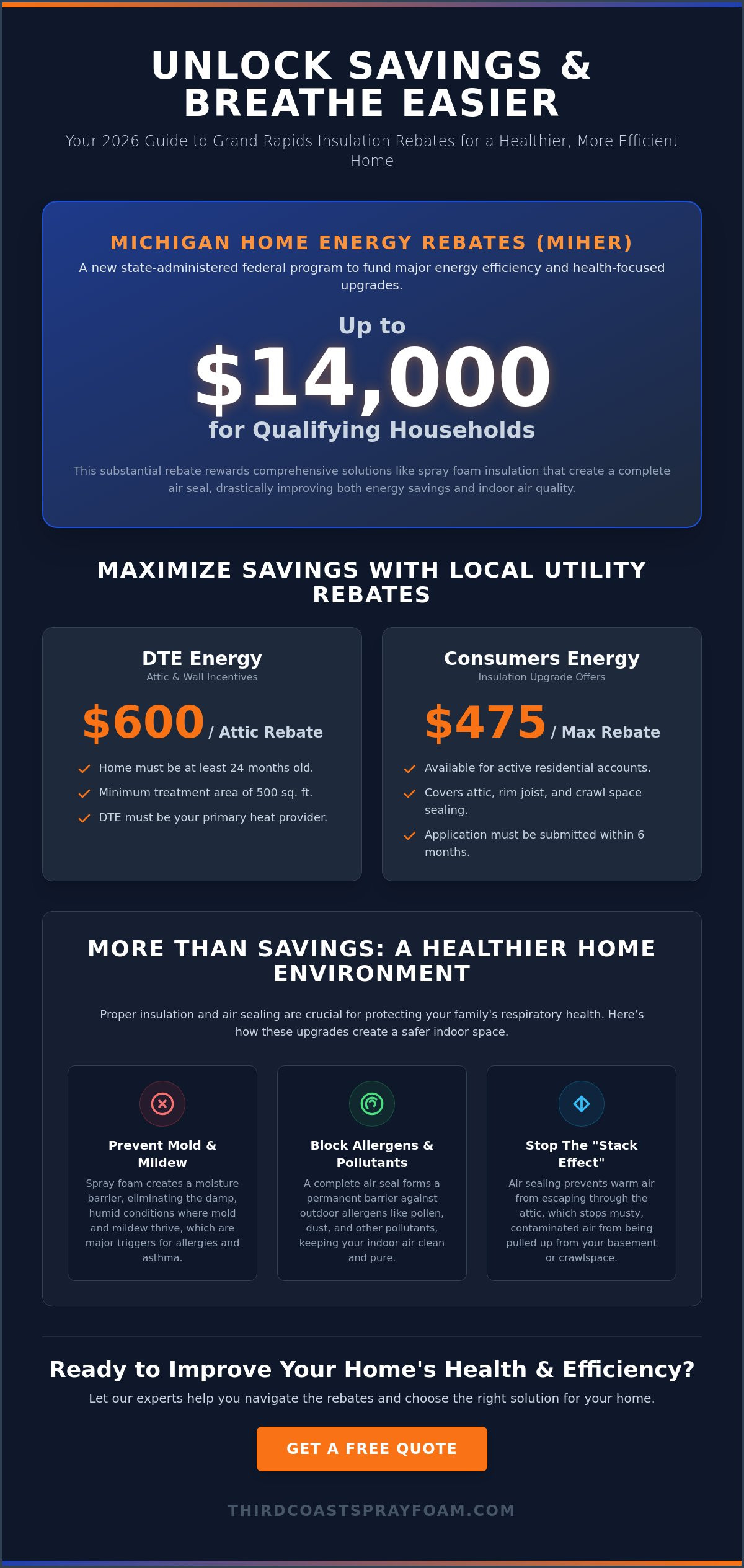
- Discover the new Michigan Home Energy Rebates (MiHER) program, which offers up to $14,000 for eligible households to improve energy efficiency.
- Understand how air sealing and crawl space encapsulation prevent mold growth and protect your family from the respiratory health risks of poor air quality.
- Verify your eligibility for Grand Rapids insulation rebates 2026 by confirming your home is at least 24 months old and serviced by a primary heat provider.
- See why switching to high-performance materials like spray foam creates a permanent barrier against outdoor allergens and pollutants.
2026 Insulation Rebates in Grand Rapids: Local Utility Programs
Managing the climate inside a West Michigan home requires more than just a powerful furnace. It requires a sealed envelope that keeps expensive heat in and damp, lake-effect moisture out. For homeowners looking to upgrade, Building insulation remains the most effective way to stabilize indoor temperatures while protecting your family’s respiratory health. In 2026, local utility providers have structured their incentive programs to reward high-performance upgrades that go beyond simple coverage. By leveraging Grand Rapids insulation rebates 2026, you can significantly reduce the initial investment required for professional air sealing and thermal protection.
To better understand how these utility programs support your home efficiency goals, watch this helpful overview from DTE Energy:
DTE Energy Attic & Wall Incentives
DTE Energy continues to lead the way for Grand Rapids residents with a $600 rebate specifically for attic insulation upgrades in 2026. To qualify, your home must be at least 24 months old, and DTE must be your primary heat provider. We’ve found that many homeowners overlook the square footage requirement; you generally need to treat at least 500 square feet to trigger the full incentive. These programs prioritize professional installation because precision matters. When we apply spray foam, we aren’t just adding R-value. We’re creating a permanent air seal that prevents the “stack effect,” where warm air escapes through the attic and pulls damp, mold-prone air into your living spaces from below. This holistic approach is why professional installs often qualify for higher-tier incentives compared to DIY attempts.
Consumers Energy and Municipal Utility Offers
Consumers Energy offers up to $475 in rebates for insulation upgrades, provided you have an active residential account. If you live in surrounding areas like Grand Haven or Holland, you may also have access to municipal utility credits that can be combined with these larger programs. These incentives aren’t limited to just the attic. Rebates for rim joist sealing and crawl space improvements are frequently available, as these areas are critical for preventing the musty smells and allergens that trigger respiratory issues. It’s vital to act quickly after your project is finished. All rebate applications must be submitted within 6 months of the purchase date. Our team handles the technical documentation required for these submissions, ensuring that your Grand Rapids insulation rebates 2026 are processed without administrative delays. We focus on the details so you can focus on the comfort and health of your home.
Federal Tax Credits: Maximizing the Energy Efficient Home Improvement Credit
Federal funding for Grand Rapids insulation rebates 2026 has undergone a significant transition. While the Energy Efficient Home Improvement Credit (Section 25C) served as the primary tool for years, the 2026 landscape now prioritizes state-administered federal programs like MiHER. These initiatives, born from the Inflation Reduction Act, provide a more robust path to affordability for high-performance materials. For West Michigan families, this shift means moving beyond small annual credits toward substantial, health-focused subsidies that reward total home air sealing. We focus on these federal standards because they directly correlate with the elimination of the damp environments where mold and mildew thrive.
The “Annual Reset” strategy remains a vital concept for homeowners planning multi-stage upgrades. By spreading improvements across 2026 and 2027, you can maximize your access to federal pools of funding. Spray foam is the most effective material to meet these rigorous federal air-sealing standards. Unlike traditional materials that may sag or allow air bypass, closed cell spray foam creates a monolithic barrier. This barrier is essential for maintaining superior indoor air quality and protecting long-term respiratory health by keeping outdoor pollutants and allergens from entering your living space. If you’re planning an upgrade, it’s helpful to review our Energy Efficient Home Improvement Credit guide to see how these standards apply to your specific floor plan.
Stacking Rebates for Maximum ROI
The real power of the 2026 incentives lies in stacking. Imagine a scenario where a homeowner secures a $600 DTE rebate for attic work and combines it with federal MiHER funding that can cover a significant percentage of the remaining project cost. This stacking makes premium solutions like crawl space encapsulation or rim joist insulation much more accessible. It’s important to distinguish between a tax deduction and a non-refundable tax credit; the latter directly reduces the amount of tax you owe, dollar-for-dollar. Because these programs require strict technical documentation, professional installation is a necessity. We provide the detailed invoices and material certifications required to pass federal audits and secure your funds.
Qualified Energy Efficiency Improvements
To qualify for the highest tier of federal support, materials must meet specific R-value and air-sealing criteria. Traditional fiberglass often fails to meet these air-sealing requirements because it acts as a filter rather than a barrier, trapping dust and moisture that can lead to respiratory issues. In contrast, our spray foam applications are designed to meet or exceed 2026 federal efficiency ratings. This isn’t just about passing an inspection; it’s about creating a permanent, healthy environment. If you want to ensure your home meets these rigorous standards, reach out for a professional assessment of your current insulation levels and air-sealing needs.
Beyond Savings: How Rebates Subsidize Better Indoor Air Quality
Financial incentives are the catalyst, but the true value of Grand Rapids insulation rebates 2026 is the transformation of your home’s environment. In West Michigan, we face unique challenges from high humidity and seasonal temperature swings. Traditional materials like fiberglass often act as filters; they trap dust, skin cells, and moisture rather than blocking them. By utilizing available rebates, you can upgrade to spray foam, which creates a permanent air seal. This transition is essential for families struggling with asthma or seasonal allergies. High-performance insulation doesn’t just lower your bills. It creates a physical barrier against outdoor pollutants and allergens like ragweed and pollen that frequently infiltrate drafty homes.
The shift in how we fund these projects is significant. While the Federal Energy Efficient Home Improvement Credit has seen changes for the 2026 tax year, the move toward state-administered programs like MiHER ensures that health-focused upgrades remain affordable. These programs prioritize the creation of a sealed building envelope. When we seal a home, we stop the “stack effect.” This is a process where warm air escapes through the attic, creating a vacuum that pulls damp, unfiltered air from the crawl space into your bedrooms. Stopping this cycle is the most effective way to improve your indoor air quality and protect your family’s respiratory health.
Respiratory Health and Air Sealing
Professional insulation removal is often the first step toward a healthier home. Old insulation can harbor rodent waste, mold spores, and decades of accumulated dust. Once we clear these hazards, we apply advanced materials to create a clean, airtight seal. Our VOC-compliant spray foam is a health-safe choice for 2026 that ensures your home’s air remains clean and free from harmful off-gassing. This airtight envelope prevents the infiltration of traffic fumes and industrial pollutants, which is a major benefit for homes near the Grand Rapids city center. By using Grand Rapids insulation rebates 2026 to subsidize this process, you are investing in a permanent solution for whole-home wellness; for those looking to expand their personal health routine, you can learn more about integrating recovery tools into your optimized space.
Mold Prevention in Michigan Climates
Lake effect moisture is a constant threat to the structural integrity of West Michigan properties. When warm indoor air meets a cold rim joist or crawl space wall, condensation forms. This moisture is the primary fuel for mold growth and wood rot. Closed cell spray foam acts as both an insulator and a vapor barrier, stopping condensation before it starts. This is why crawl space encapsulation is such a vital service for local homeowners. It transforms a damp, musty area into a clean, dry part of the home’s conditioned space. For a deeper look at how we manage these environments, read our Health-First Crawl Space Guide. We believe that a healthy home starts from the ground up, and these rebates make that foundation possible.
Eligibility Checklist for Grand Rapids Homeowners
Securing your share of Grand Rapids insulation rebates 2026 involves more than just selecting the right material. It’s a precise administrative process designed to ensure that every upgrade actually improves the home’s structural integrity and your family’s respiratory health. Utility providers like DTE and Consumers Energy have strict guidelines to verify that the work performed meets modern efficiency standards. To qualify, your Grand Rapids residence must be at least 24 months old. This requirement ensures the building has settled and that the utility company has a baseline for your energy consumption. Additionally, you must have an active residential account, and the utility providing the rebate must be your primary heat source.
Using a participating West Michigan contractor is a non-negotiable part of the process. These programs are built on trust and verified performance. Our team understands the specific documentation requirements, from detailed invoices to material spec sheets, that auditors look for during the approval phase. Without these specific records, even the most efficient spray foam installation might be disqualified from receiving funds. We handle this technical heavy lifting for you, ensuring that every square foot and R-value is documented correctly. If you’re ready to see if your home qualifies for these savings, schedule a professional insulation audit with our experts today.
Pre-Installation Requirements
Before any foam is sprayed, a comprehensive pre-insulation assessment is essential. We don’t just look for gaps in coverage; we search for the environmental triggers that compromise indoor air quality. In West Michigan, lake effect moisture often creeps into attics and crawl spaces, creating the perfect breeding ground for mold and mildew. These moisture issues must be resolved before any insulation is added to protect your respiratory health. We also identify “hot spots” where heat is actively bypassing your current barriers. Documenting these problem areas allows us to target the highest rebate tiers by proving a significant improvement in the home’s thermal envelope.
Post-Installation Paperwork
Once the project is complete, the focus shifts to the online application process. For DTE customers, this typically happens through their dedicated rebate portal. You’ll need to submit your final invoice, which must clearly state the specific R-value achieved and the total square footage treated. In 2026, typical wait times for rebate check delivery are between 4 to 6 weeks after the application is approved. Accuracy at this stage is vital. Any discrepancy in the paperwork can reset the clock on your submission. We provide our clients with a “rebate-ready” documentation packet that includes everything needed to ensure a smooth, successful payout from your utility provider.
Choosing a Rebate-Qualified Contractor in West Michigan
Selecting a contractor for your 2026 upgrades is about more than just finding a competitive bid. It’s about finding a partner who understands the intricate requirements of Grand Rapids insulation rebates 2026 and the technical nuances of Michigan’s climate. Many companies can spray foam, but few are equipped to handle the administrative “heavy lifting” required to secure your rebate check. We prioritize precision in our work and our paperwork. Our team ensures that every project meets the specific R-value and air-sealing thresholds demanded by DTE, Consumers Energy, and state-administered programs like MiHER. This attention to detail is what ensures your application moves through the audit process without delay. For business owners who need this same level of reliability for high-value cargo, you can explore Freight Forwarding and Logistics Management Fees to learn about ICAT Detroit’s shipping solutions.
As a local team based in Fruitport, we have a deep understanding of West Michigan building codes and the environmental challenges posed by lake-effect moisture. We treat your home as a complete system rather than a collection of isolated parts. This holistic approach is why Third Coast Spray Foam is the preferred choice for homeowners who value both financial savings and long-term structural integrity. We don’t just add insulation; we solve the underlying issues that lead to mold growth and poor indoor air quality. By positioning ourselves as a trusted advisor, we help you make decisions that protect your family’s physical and financial well-being.
The Third Coast Difference
Our commitment to your family’s wellness begins with professional insulation removal. Before we install new materials, we remove old, contaminated fiberglass that often traps allergens, rodent waste, and moisture. This step is critical for protecting respiratory health and ensuring a clean substrate for our spray foam. Whether we are working on residential retrofits or Grand Rapids pole barn projects, we use VOC-compliant materials that are safe for your indoor environment. To learn more about our specific processes, explore our Grand Rapids Spray Foam Guide. We take pride in delivering results that you can feel in your home’s comfort and see in your lower utility bills.
Getting Started with a Free Estimate
Your journey toward a healthier, more efficient home begins with a local on-site energy assessment. During this visit, we don’t just give you a price. We provide a roadmap for your savings. We calculate your potential utility rebates and federal tax credits upfront so you know exactly how much you’ll save before the work begins. Our experts identify where your home is losing energy and where moisture might be compromising your air quality. We believe in transparency and pragmatism, focusing on the solutions that offer the best return on investment for your specific property. Don’t leave your savings to chance. Schedule your 2026 rebate consultation today! and let us help you maximize your home’s health and efficiency.
Secure Your Home’s Future and Health Today
Investing in your home’s thermal envelope is a permanent decision that impacts your family’s daily comfort and long-term well-being. By leveraging Grand Rapids insulation rebates 2026, you can bridge the gap between basic coverage and high-performance air sealing. This strategy doesn’t just lower your monthly energy expenses; it creates a critical barrier against the lake-effect moisture and allergens that compromise respiratory health. We’ve seen how proper crawl space encapsulation and attic sealing can eliminate the damp environments where mold and mildew thrive.
Since 2013, our team has helped West Michigan residents navigate the complexities of DTE and Consumers Energy documentation. We handle the technical details to ensure you receive the maximum possible incentives for your project. Whether you are retrofitting an older Grand Rapids home or insulating a new pole barn, our health-focused approach ensures your indoor air remains clean and safe. Take the first step toward a more efficient, secure household by reaching out to our specialists today.
Get Your Free Insulation Estimate & Rebate Calculation
We look forward to helping you build a more durable and healthy environment for your family.
Frequently Asked Questions
Can I get a rebate if I install the insulation myself in 2026?
No, most 2026 incentive programs, including those from DTE and the state-administered MiHER program, require professional installation by a registered contractor. This requirement ensures that the work meets specific energy efficiency and air-sealing standards. Professional installation is also vital for managing moisture correctly, as improper DIY attempts can lead to the mold growth that compromises your home’s structural integrity and your family’s respiratory health.
Does spray foam insulation qualify for the $600 DTE rebate?
Yes, spray foam is a qualified material for the $600 DTE attic insulation rebate. To trigger the incentive, the project must typically cover a minimum of 500 square feet and meet the utility’s R-value increase requirements. Because spray foam provides a superior air seal compared to traditional materials, it’s often the preferred choice for Grand Rapids homeowners looking to permanently block out damp air and improve indoor air quality.
How much can I save on my taxes with the 2026 federal insulation credit?
The federal Section 25C tax credit expired for improvements made after December 31, 2025, and is not available for the 2026 tax year. Instead, homeowners should focus on the Michigan Home Energy Rebates (MiHER) program. Depending on your household income, you may qualify for up to $14,000 in direct rebates for high-efficiency upgrades. These state-administered funds are designed to make professional air sealing and insulation removal more affordable for West Michigan families.
What is the minimum R-value required for Michigan insulation rebates?
Most Michigan utility programs require your attic insulation to reach a total value of R-49 or R-60 to qualify for the highest rebate tiers. It’s not just about the thickness of the material; it’s about the performance of the building envelope. We use high-performance spray foam to ensure these standards are met while simultaneously eliminating the drafts that pull allergens and pollutants into your living spaces.
Are crawl space encapsulation and rim joist sealing covered by rebates?
Yes, both rim joist sealing and crawl space improvements are eligible for various local and state incentives. DTE Energy offers specific rebates for rim joist sealing, while the MiHER program often covers crawl space encapsulation as part of a comprehensive energy efficiency plan. These areas are critical for preventing the “stack effect,” which can pull musty, mold-laden air from your foundation into your bedrooms and affect respiratory health.
How long does it take to get my DTE insulation rebate check?
You can typically expect to receive your DTE insulation rebate check within 4 to 6 weeks after your application is approved. It’s vital to submit your paperwork within 6 months of the installation date to avoid disqualification. We provide our clients with all the necessary technical documentation, including R-value certifications and square footage proofs, to ensure the utility auditors can process the Grand Rapids insulation rebates 2026 without administrative delays.
Is there a limit to how many energy rebates I can claim in one year?
Yes, there are household caps, but you can often stack different types of Grand Rapids insulation rebates 2026 to maximize your savings. For example, a homeowner might combine a $600 attic rebate from DTE with a state-level MiHER grant. The total household cap for the HEAR program is currently $14,000. Our team helps you coordinate these different funding sources to ensure you get the maximum possible financial support for your project.
Will new insulation really improve my family’s respiratory health?
Yes, high-performance insulation is a primary tool for protecting your family’s respiratory health. By creating a monolithic air seal, spray foam prevents the infiltration of outdoor allergens like pollen and ragweed. More importantly, it stops the condensation that fuels mold and mildew growth in hidden areas like rim joists and crawl spaces. This results in cleaner indoor air and a significant reduction in the triggers that cause asthma and allergy flare-ups.
Disclaimer
Information provided is for general educational purposes. Individual needs and circumstances vary. Speak to an experienced professional to get the correct information for your situation.