
If your home is built with cinder blocks, you’re essentially living inside a giant, porous stone that’s constantly fighting your furnace. When it comes to insulating a cinder block house in Michigan, many homeowners worry that sealing those walls will trap moisture and trigger a mold crisis. It’s a valid concern because these blocks act like sponges, absorbing ground moisture and humidity that can lead to hidden fungal growth and poor indoor air quality.
You know that bone-chilling cold that radiates from the walls in January, and you’ve likely noticed that distinct, musty odor that lingers during a humid West Michigan summer. We understand that your priority isn’t just saving money; it’s ensuring your family breathes clean, dry air. Discover the most effective methods to insulate these unique homes while preventing mold and protecting your family’s respiratory health. We will explore how professional solutions like closed cell spray foam create a permanent vapor barrier, stopping the 15% to 25% heat loss common in Grand Rapids and Muskegon basements while keeping your interior environment safe and stable for years to come.
Key Takeaways
- Understand why cinder block walls act as “thermal sponges” and how this porous structure creates unique challenges for your home’s energy efficiency.
- Learn why closed cell spray foam is the gold standard for insulating a cinder block house in Michigan by providing a high R-value and a seamless vapor barrier.
- Identify the critical link between block moisture and indoor air quality to protect your family from mold-induced respiratory issues.
- Compare interior and exterior insulation methods to find a balance between modern comfort and preserving your home’s original decorative block exterior.
- Discover how a local, West Michigan-based approach ensures your insulation system is designed specifically for our unique regional climate and building styles.
The Unique Challenges of Insulating Cinder Block in Michigan
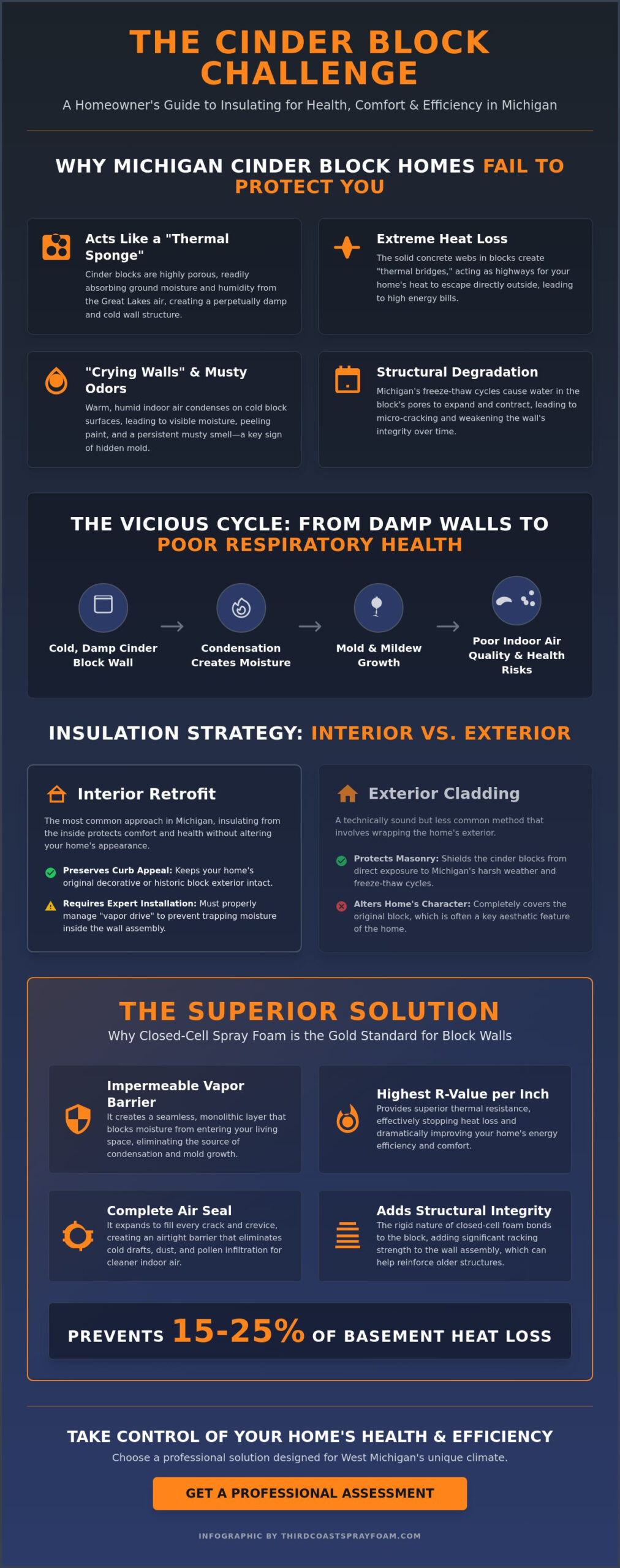
Cinder blocks, or Concrete Masonry Units (CMUs), are essentially “thermal sponges.” Their porous structure allows them to absorb liquid water and vapor with ease. In Michigan, where humidity levels fluctuate wildly due to our proximity to the Great Lakes, these blocks often stay damp year-round. When you consider insulating a cinder block house in Michigan, you have to account for the “thermal bridge” effect. Heat doesn’t just pass through the hollow cores; it moves rapidly through the solid concrete webs that connect the inner and outer faces of the block. Understanding foundational building insulation principles helps homeowners realize that an uninsulated block wall is essentially a highway for heat to escape your home.
Michigan’s climate is particularly brutal on masonry. Our state experiences frequent freeze-thaw cycles that can occur dozens of times each season. Water enters the pores of the block, freezes, expands, and then thaws. This process can degrade the structural integrity over decades, causing micro-cracking and mortar failure. Without proper insulation, these cold walls become the perfect breeding ground for mold. When warm, humid indoor air hits a cold block surface, it reaches its dew point and turns into liquid water. This surface condensation provides the moisture mold spores need to thrive, directly impacting the indoor air quality and the respiratory health of everyone in the home.
Why Michigan’s Climate Makes CMU Insulation Critical
The “Lake Effect” isn’t just about heavy snow; it’s about persistent humidity that permeates porous building materials. Concrete masonry units soak up this moisture like a wick. Many 1950s-era Michigan block homes feel drafty even after the owners install expensive new windows. This is because the walls themselves are radiating cold into the living space. In the context of Michigan’s sub-zero winter nights, thermal mass describes how uninsulated block walls act as a massive heat sink, drawing warmth out of your living space and holding onto the cold for hours.
Identifying ‘Crying Walls’ and Moisture Migration
Homeowners often report “crying walls,” where visible beads of water form on the interior surface during the peak of winter. This isn’t usually a plumbing leak. It’s the result of warm indoor air meeting a wall that is effectively at outdoor temperatures. Additionally, moisture can “wick” through the block from the surrounding damp Michigan soil through capillary action. If you notice a persistent musty smell, see peeling paint, or find dark spots along the base of your walls, your home is likely suffering from moisture migration. These are the first signs that insulating a cinder block house in Michigan is no longer optional for maintaining a healthy, dry indoor environment. For those who also observe sunken concrete or uneven walkways near their foundation, riselock.net offers expert polyurethane lifting and leveling to restore your property’s safety.
Interior vs. Exterior Insulation: What Works for Michigan Homes?
Choosing between interior and exterior methods for insulating a cinder block house in Michigan usually comes down to a balance of aesthetics and practicality. Wrapping the exterior with rigid foam and new siding is a technically sound approach, but it completely hides the original character of the building. Many homeowners in Muskegon and Fruitport live in homes with decorative or historical block faces that they want to preserve. Because of this, interior retrofitting is the most common choice in our region. It allows us to upgrade the thermal performance without altering the home’s curb appeal. However, this method requires a deep understanding of vapor drive. This is the physical process where moisture is pushed through the wall assembly as it moves from the warm, humid interior toward the cold Michigan winter air outside.
The Case for Interior Insulation Retrofits
To insulate from the inside, we typically see homeowners install furring strips or 2×4 wall framing to create a new cavity. While furring strips are thinner, 2×4 framing is often better because it allows for a thicker layer of high-performance insulation. You do lose a small amount of square footage, typically about four inches along each exterior wall, but the gain in comfort and health is immense. It’s also critical to air-seal electrical outlets. These boxes are often cut directly into the block, creating “leaks” where cold air and moisture can bypass your insulation and enter your living space. If you’re planning a renovation, it’s a great time to evaluate your current insulation removal needs to ensure you’re starting with a clean, mold-free slate.
The Risks of Improperly Insulated Block Walls
When selecting materials, keep in mind that not all products are suited for the unique environment of a CMU wall. We don’t sell fiberglass batts because they often fail in these cavities. Fiberglass is porous; it doesn’t stop vapor and can actually trap moisture against the cold block. This leads to the “rotting furring strip” scenario, where wood framing stays perpetually damp and begins to decay. When wood rots behind your drywall, it creates hidden mold colonies that release spores into your home. This degrades indoor air quality and can lead to serious respiratory health issues for children or the elderly. Following proven masonry insulation strategies ensures that moisture is managed correctly, preventing these health hazards before they start.
Closed Cell Spray Foam: The Superior Solution for Michigan CMU
When we discuss the process of insulating a cinder block house in Michigan, we aren’t just looking for a thermal buffer. We’re looking for a moisture shield that can withstand the relentless humidity of the Great Lakes region. Closed cell spray foam has earned its reputation as the gold standard for masonry because it addresses the structural and environmental realities of block construction. Unlike loose-fill materials that only fill the hollow cores, spray foam applied to the wall face creates a monolithic, airtight barrier. This application stops the convective air loops that happen inside ungrouted cells, where cold air sinks and warm air rises within the wall itself, creating a constant cycle of heat loss and potential condensation.
The dual-action nature of this material is what sets it apart. It provides a high R-value while simultaneously acting as a built-in vapor barrier. This is vital for Michigan homes because it prevents the “vapor drive” we mentioned earlier from pushing moisture into your living space. By sealing every crack and crevice in the block, we stop winter drafts in their tracks. This isn’t just about comfort; it’s about control. When you control the air movement, you control the moisture, which is the most effective way to prevent the mold growth that threatens your family’s respiratory health.
R-Value and Thermal Performance in Masonry
In the tight spaces of a Michigan basement or a mid-century ranch, every inch of square footage matters. Most interior retrofits use two-inch furring strips, which leaves very little room for traditional materials to reach modern energy standards. You can find more details on how various materials compare in the Department of Energy’s guide on insulation types. Closed-cell foam offers nearly double the R-value per inch compared to open-cell or fibrous alternatives, making it the only logical choice for thin cavities. Beyond heat retention, this high-density foam actually adds structural rigidity to older walls that might be showing signs of settling. By keeping the interior wall surface warm even during a February deep freeze, closed-cell foam prevents the condensation that leads to mold growth and respiratory irritation.
The Importance of a Continuous Air Barrier
A “piece-meal” approach to insulation is a common mistake we see across West Michigan. If you insulate the walls but ignore the gaps where the block meets the wood framing, you’re leaving the door wide open for drafts. These cold spots are where localized mold often begins, eventually degrading your indoor air quality. We treat the home as an integrated system. This means ensuring a seamless transition from the wall insulation to the rim joist insulation. When you seal the rim joist and the top plate with the same high-performance foam, you create a permanent air barrier that protects your family’s health and slashes your utility bills.
Protecting Respiratory Health: Mold, Mildew, and Air Quality
Cinder blocks don’t just stay cold; they stay wet. This moisture is the primary catalyst for mold growth in Michigan homes. When we talk about insulating a cinder block house in Michigan, we aren’t just discussing thermal comfort. We’re discussing the air your family breathes. Mold spores are microscopic. They easily travel from a damp basement wall into the upper living areas. For children with developing lungs or elderly family members with compromised immune systems, these spores are significant respiratory irritants. They can trigger asthma attacks, chronic coughing, and persistent sinus congestion. We treat every project as a health mission because we know that a dry home is a safe home.
That classic “musty basement” smell isn’t just a quirk of older construction. It’s actually the byproduct of microbial volatile organic compounds (MVOCs) released by active mold and bacteria. It’s a chemical signal that your home’s environment is out of balance. Professional air-sealing is the only way to break the “stack effect.” This phenomenon occurs when warm air rises and escapes through the top of your house, creating a vacuum that pulls cold, damp air and soil gases up through the porous cinder blocks and into your living space. By sealing these entry points, we stop the upward migration of pollutants before they reach your bedrooms.
Eliminating the Environment for Mold and Mildew
The secret to respiratory safety is keeping the “dew point” outside the wall assembly. By applying closed-cell spray foam, we ensure that warm indoor air never touches the cold block surface. This prevents the condensation that feeds organic growth on drywall and wood framing. A dry home also discourages dust mite populations. These microscopic pests thrive in humidity above 50%, and their waste is a leading cause of indoor allergies. When you’re insulating a cinder block house in Michigan, you’re effectively removing the fuel that these allergens need to survive.
Indoor Air Quality (IAQ) and Environmental Safety
Many homeowners ask about environmental safety during the installation process. When you work with our professional team, we manage the application to ensure proper ventilation and curing times. This eliminates concerns about VOCs or off-gassing. The long-term health benefits of a stable, humidity-controlled environment are profound. Consistent indoor temperatures reduce the physical stress on the body, which no longer has to work overtime to regulate its own heat in a drafty, damp room. A stable interior climate leads to better sleep and improved overall wellness for everyone under your roof.
If you’re tired of the musty smells and want a healthier home for your family, contact our team today to discuss a professional assessment of your walls.
The Third Coast Approach: Local Expertise in West Michigan
Living in West Michigan requires a specific understanding of how Lake Effect moisture interacts with 1950s and 60s masonry. National chains often apply a one-size-fits-all approach, but we know that insulating a cinder block house in Michigan demands local precision. Based in Fruitport, our team understands the unique structural nuances of homes from Muskegon to Grand Rapids. We treat every project as a holistic system. This begins with a thorough inspection of your existing walls. If we find old, damp fiberglass or debris, we start with professional insulation removal to ensure your new thermal barrier isn’t trapping old mold or allergens. We believe that a clean start is the only way to guarantee long-term respiratory health for your family.
Our process is designed for durability and efficiency. Once the cavities are prepped, we apply high-performance closed-cell spray foam that bonds directly to the block. This creates the seamless air and vapor barrier we discussed in previous sections. We also help our neighbors navigate the shifting landscape of energy incentives. While the federal Energy Efficient Home Improvement Credit (25C) was a major factor through 2025, we stay current on the latest 2026 Michigan-specific rebates and energy standards. Our goal is to provide a solution that is both a physical and financial investment in your property’s future.
Professional Installation vs. DIY Risks
It’s tempting to look at DIY spray foam kits as a budget-friendly shortcut. However, these kits often lack the temperature controls and pressure levels required for insulating a cinder block house in Michigan effectively. Improperly mixed foam can result in “off-ratio” applications that never fully cure, leading to persistent odors and compromised indoor air quality. Professional-grade equipment ensures the foam reaches the back of every cell and expands correctly without creating fire safety risks. When you choose a professional installation, you’re also securing a warranty and local accountability that a box from a home improvement store simply cannot provide.
Ready to Warm Up Your Cinder Block Home?
The journey to a dry, comfortable, and mold-free home starts with a simple conversation. When you schedule an on-site assessment, we evaluate your wall thickness, moisture levels, and any existing air leaks. We’ll walk you through the entire retrofit process so you know exactly what to expect. Most block insulation projects can be completed with minimal disruption to your daily routine, leaving you with a home that is easier to heat and much healthier to live in. Contact Third Coast Spray Foam today for your free estimate and take the first step toward permanent structural comfort.
Investing in a Dry, Warm Future for Your Michigan Home
Cinder block homes don’t have to be cold, drafty, or musty. We’ve explored how professional closed-cell spray foam acts as a permanent shield against the unique moisture challenges of our Great Lakes region. It remains the only solution that provides the high R-value and integrated vapor barrier needed to stop thermal bridging and mold growth simultaneously. When you prioritize insulating a cinder block house in Michigan, you’re making a long-term commitment to your family’s respiratory health and physical comfort. By eliminating the damp conditions where mold spores thrive, you ensure stable, high-quality indoor air for years to come.
Serving communities from Grand Rapids to Muskegon since 2013, we take immense pride in being your local specialists for high-performance insulation and expert mold prevention. Our team is ready to help you transform your living space into a sanctuary of efficiency and wellness. We believe every Michigan resident deserves a home that feels as solid and secure as the day it was built. Get Your Free Michigan Insulation Estimate today and start breathing easier in a home that is truly optimized for your health.
Frequently Asked Questions
Is it safe to insulate a cinder block house from the inside?
Yes, insulating from the interior is safe and highly effective if you use the correct materials. We recommend closed cell spray foam because it creates a seamless vapor barrier directly against the block. This prevents warm indoor air from reaching the cold masonry, which eliminates the condensation that causes mold and threatens your family’s respiratory health.
Will insulating my block walls cause them to freeze and crack in Michigan winters?
Properly installed insulation actually protects your home’s structural integrity. By stopping moisture from condensing inside the block cores, you reduce the internal pressure caused by Michigan’s intense freeze-thaw cycles. Keeping the interior face of the wall at a stable temperature prevents the structural stress that often leads to cracking in uninsulated masonry.
How much does it cost to insulate a cinder block house in Michigan?
The total investment for insulating a cinder block house in Michigan depends on several project-specific factors. The square footage of the walls, the required thickness to meet current R-value standards, and the accessibility of the space all play a role. We focus on providing permanent solutions that reduce long-term energy costs and prevent expensive mold remediation in the future.
What is the best insulation for a cinder block garage or pole barn?
Closed cell spray foam is the industry gold standard for cinder block garages and pole barns. It provides a high R-value in a thin profile and adds significant structural rigidity to the building. This material also acts as an air seal that keeps out pests and prevents the “sweating” common in unconditioned Michigan outbuildings.
Can I use blown-in insulation for cinder block walls?
We do not recommend blown-in insulation for the hollow cores of cinder block walls. These materials can settle over time, leaving large uninsulated gaps at the top of your walls. More importantly, blown-in materials don’t provide a vapor barrier, meaning they can trap moisture against the block and create hidden colonies of mold and mildew.
How do I stop mold from growing on my cinder block walls?
Stopping mold requires total moisture control. By applying a professional layer of closed cell spray foam, you remove the environment mold needs to survive. This application seals the porous surface of the block and prevents condensation, which is the most effective way to protect your home’s indoor air quality and your family’s health.
Does spray foam insulation qualify for the 2026 federal tax credits?
As of June 2026, the federal Energy Efficient Home Improvement Credit (25C) is no longer available for new insulation installations. While the federal credit has expired, we recommend checking with your local Michigan utility providers. Many local companies still offer rebates or incentive programs for homeowners who make verified energy efficiency upgrades to their properties.
How long does it take to insulate a standard cinder block home?
Most residential insulation projects are completed in just one to two days. The timeline varies depending on whether we need to perform insulation removal of old, failing materials first. Our team works efficiently to ensure your home is sealed and protected quickly, allowing you to enjoy improved comfort and air quality almost immediately.
Disclaimer
Information provided is for general educational purposes. Individual needs and circumstances vary. Speak to an experienced professional to get the correct information for your situation.