
Your attic is the frontline of your home’s defense, yet it is often the very place where Michigan’s harsh weather and airborne pollutants invade your living space. You have likely noticed your utility bills climbing as regional electricity rates reach 21.2 cents per kilowatt-hour, leaving you to wonder if your current insulation is doing enough. It is exhausting to battle drafty rooms and seasonal allergies while worrying about the hidden threat of mold growth in your rafters.
Understanding the benefits of closed cell spray foam in attic applications allows you to transform your home into a high-performance environment that prioritizes both structural integrity and respiratory health. This advanced material does more than just trap heat; it creates a total air and vapor barrier that seals out dust, pollen, and moisture. By choosing a solution that addresses indoor air quality and energy efficiency simultaneously, you’re making a permanent investment in your family’s well-being. We will explore how this durable shield lowers your monthly costs, helps you claim the 30% federal tax credit, and provides the peace of mind that comes with a dry, healthy home.
Key Takeaways
- Learn how a total air seal prevents outdoor allergens and pollutants from entering your home through the attic, protecting your family’s respiratory health.
- Discover how closed cell foam acts as a vapor retarder to stop “attic rain” and mold growth, preserving the structural integrity of your roof.
- Understand the long-term financial benefits of closed cell spray foam in attic spaces, including its ability to lower heating loads and strengthen your home’s bones.
- Find out why professional application is necessary to ensure proper temperature controls and avoid the safety risks associated with DIY kits.
- See how West Michigan homeowners can leverage federal tax credits and utility rebates to offset the initial investment in a permanent insulation solution.
What is Closed Cell Spray Foam for Attic Applications?
Closed cell spray foam is a robust, high-density polyurethane material engineered to provide a superior thermal barrier. Unlike traditional insulation materials that allow air to pass through their fibers, this material consists of millions of tiny, interconnected bubbles filled with an insulating gas. This “closed” structure creates a rigid matrix that is essentially impermeable to air and water. In the context of Michigan’s extreme temperature swings, Spray foam stands out as a permanent solution that won’t sag, settle, or lose its shape over time.
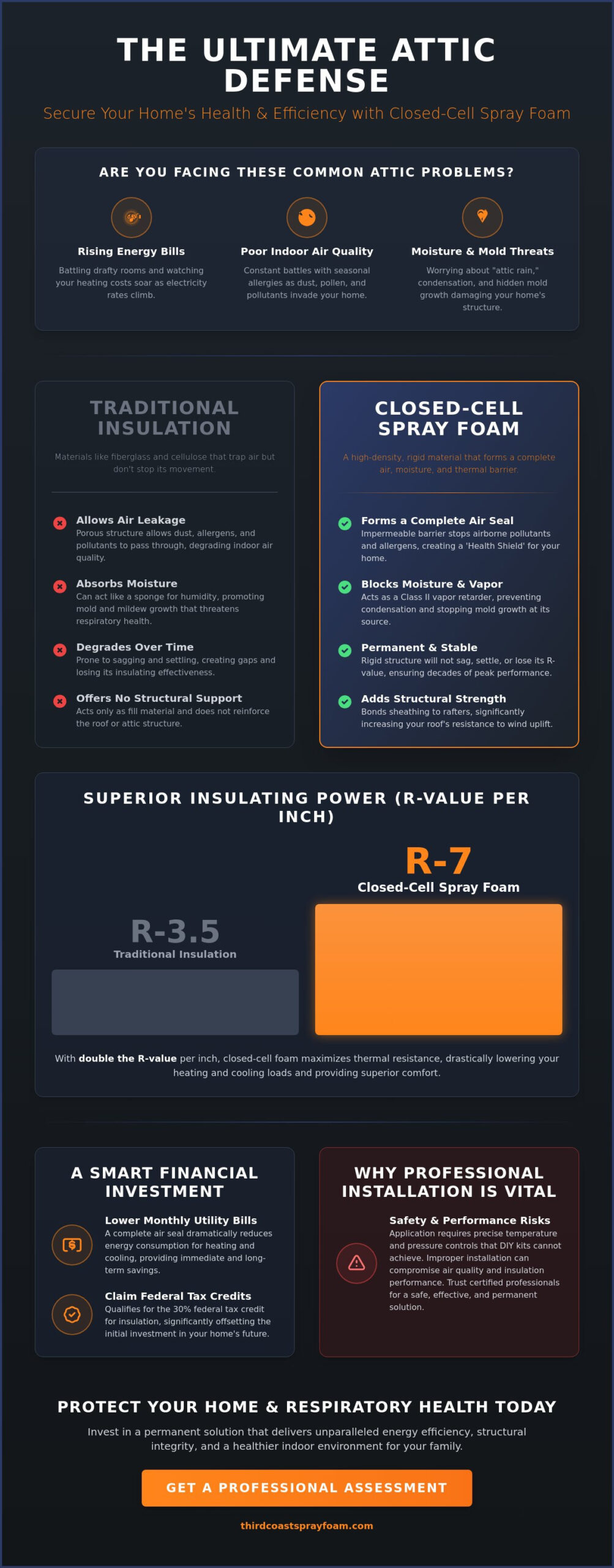
One of the primary benefits of closed cell spray foam in attic spaces is its industry-leading R-value. While common alternatives might offer around R-3 per inch, closed cell foam delivers a powerful R-6 to R-7 per inch. This density makes it a premium choice for West Michigan homeowners who want to maximize their insulation performance in the limited space of a roof deck or attic gable. It is a pragmatic investment that addresses the structural and environmental needs of a home in a single application.
To better understand how this material performs in a conditioned attic, watch this helpful comparison:
Closed Cell vs. Open Cell: The Attic Debate
The choice between foam types often comes down to moisture management. Closed cell foam is significantly denser than open cell varieties, weighing about two pounds per cubic foot. This density is crucial for unvented attic designs because it acts as a Class II vapor retarder. It stops humid indoor air from hitting the cold roof deck, which prevents the condensation that leads to mold growth and respiratory issues. While open cell foam expands more to fill large cavities, closed cell foam provides a structural “glue” that reinforces the roof itself. It effectively bonds the roof sheathing to the rafters, increasing the wind uplift resistance of your home during Michigan’s seasonal storms.
The Science of High-Density Polyurethane
The secret to this material’s longevity lies in the blowing agent used during the application process. This agent creates a rigid, insulating matrix that traps gas within the cells. Unlike other materials that settle or compress, the R-value of closed cell foam is remarkably stable. Professionals often discuss “aged R-value,” which refers to the long-term thermal resistance after the initial installation. Because the cells are tightly sealed, the insulation maintains its effectiveness for decades. This stability ensures that your attic remains a health-conscious shield against outdoor pollutants and fluctuating energy costs. It creates a seamless environment where dust, pollen, and pests cannot find a foothold, directly improving the air your family breathes every day.
Improving Indoor Air Quality and Respiratory Health
Your attic is much more than a storage space; it acts like a lung for your entire home. When an attic is insulated with traditional loose-fill materials, it often functions as a dirty filter that has never been cleaned. One of the most significant benefits of closed cell spray foam in attic applications is the creation of a total air seal. This “Health Shield” prevents the infiltration of outdoor allergens like pollen and ragweed, which are common triggers for West Michigan residents during the spring and fall. By blocking these microscopic invaders at the source, you create a cleaner, more stable environment for family members who struggle with asthma or chronic respiratory sensitivities.
We frequently encounter a phenomenon known as “attic rain” in our local climate. This happens when warm, moist air from your living space escapes into a cold attic during winter, condensing on the underside of the roof deck. This moisture creates a perfect breeding ground for mold and mildew. As these fungi grow, their spores can migrate into your bedrooms and living areas through small gaps around light fixtures and plumbing stacks. Closed cell foam stops this cycle by acting as a Class II vapor retarder. It ensures that moisture cannot accumulate on your roof’s structure, preventing the growth of biological pollutants that can compromise your family’s health.
Sealing Out Environmental Triggers
The “stack effect” is a mechanical reality in every Michigan home. Warm air naturally rises and escapes through the top of the house, which creates a vacuum that pulls in cold, dusty air from the bottom. When you seal the attic with high-density foam, you break this cycle. This prevents attic dust, old insulation fibers, and outdoor pollutants from being drawn into your HVAC system and circulated throughout your rooms. A sealed attic reduces mechanical strain on air purifiers by significantly lowering the initial particulate load within the home. If your current attic is filled with old, dusty materials, it may be time to consider professional insulation removal to start your health-first upgrade with a clean slate.
VOCs and Safe Installation Practices
Safety and science go hand-in-hand in modern home improvement. The spray foam formulations used in 2026 utilize advanced, low-VOC blowing agents that are significantly more environmentally friendly than older products. During the installation process, we prioritize high-capacity ventilation to ensure that all vapors are cleared while the product cures. Once the foam has fully reacted, it becomes an inert, rigid material that does not off-gas or degrade over time. This results in a permanent, stable barrier that maintains its integrity for the life of the home. Relying on expert installation ensures that the chemical reaction is precise, providing a result that is both effective and entirely safe for your indoor environment.
Protecting Your Michigan Home from Moisture, Mold, and Ice Dams
Michigan winters are notorious for creating a “perfect storm” of moisture issues within residential structures. When sub-zero temperatures hit your roof deck while you keep your home warm and cozy, the temperature differential is extreme. Without a proper seal, warm indoor air migrates upward, carrying household humidity with it. This leads to immediate condensation on the underside of your roof. One of the core benefits of closed cell spray foam in attic applications is its status as a Class II vapor retarder. This means it doesn’t just provide a thermal barrier; it stops moisture from ever reaching the cold wood surfaces of your roof structure.
It’s a common misconception that mold-resistant insulation is enough to protect a home. While many materials won’t grow mold themselves, they still allow humid air to pass through to the wood rafters. Closed cell foam creates a physical, airtight bond with your lumber. By sealing the wood entirely, we eliminate the damp pockets where spores typically take root. This is a critical distinction for long-term respiratory health. It prevents the structural wood rot and hidden mold colonies that can release harmful particulates into your home’s air supply over time.
Combating the Michigan Humidity Cycle
Our regional humidity cycle doesn’t stop at the attic floor. Whether you are insulating a residential home or looking for crawl space insulation, the goal is a comprehensive moisture management strategy. In pole barns, we often see “sweating” metal roofs that drip onto equipment or livestock; in homes, this same moisture ruins drywall and ceiling joists. Closed cell foam provides a seamless barrier that stops this migration in its tracks. It ensures that the air you’ve paid to heat and humidify stays within the living envelope rather than feeding a biological problem in the rafters.
Eliminating the Root Cause of Ice Dams
Ice dams are more than just a nuisance; they are a sign of systemic attic failure. When heat leaks through the ceiling, it melts the snow sitting on your roof. This water then runs down to the cold eaves and refreezes, creating a dam that pushes liquid water back under your shingles. Traditional venting often fails during extreme West Michigan winters when snow loads are heavy. By applying high-density foam directly to the roof deck, we create what is known as a conditioned attic space. This design keeps the roof surface at a uniform temperature, preventing the melt-and-freeze cycle that leads to expensive leaks and structural damage. It’s a pragmatic, permanent fix for a uniquely local problem.
Maximizing Energy Efficiency and Structural Integrity
Investing in your home’s envelope is a pragmatic decision that yields dividends in both comfort and cost savings. While we have discussed the respiratory health advantages, the financial benefits of closed cell spray foam in attic spaces are equally compelling. Michigan’s average residential electricity rate of 21.2 cents per kilowatt-hour is significantly higher than the national average, making energy waste a costly burden. By creating a high-performance thermal barrier, you reduce the mechanical load on your HVAC system, extending its lifespan and lowering your monthly utility commitments. This upgrade also qualifies many homeowners for the energy efficient home improvement credit, which can provide a tax credit of 30% of the project cost, up to $1,200 annually.
Beyond thermal performance, closed cell foam provides a unique “glue” effect that traditional materials simply cannot match. This high-density polyurethane is incredibly rigid once cured, essentially bonding the roof deck to the rafters. This increases the “racking strength” of the entire roof structure, which is a critical defense against the heavy snow loads and high wind events common in West Michigan. By reinforcing the bones of your home, you are protecting your long-term investment from structural shifts that could otherwise lead to cracks, leaks, and subsequent mold issues.
R-Value Performance in Extreme Cold
Michigan’s climate zones 5, 6, and 7 demand insulation that doesn’t quit when the temperature drops below zero. Many homeowners rely on blown in insulation, but these loose-fill materials can lose a portion of their effective R-value as the air within the fibers begins to circulate during extreme cold snaps. In contrast, closed cell foam maintains a stable R-value of R-6 to R-7 per inch regardless of the outside temperature. This compact profile is especially beneficial in limited attic spaces where achieving an R-49 rating with traditional materials would require nearly 20 inches of depth, often blocking necessary airflow or access points.
Structural Reinforcement and Longevity
The rigid nature of closed cell foam serves as a permanent reinforcement for your roof deck. It eliminates air pressure differentials that can lead to “shingle blow-off” during severe storms. Because the material is chemically stable and does not sag, settle, or degrade, it represents a one-time investment in the structural integrity of your property. This permanence ensures that your home remains a safe, dry, and energy-efficient environment for decades to come. If you’re ready to secure your home’s future, contact us to discuss a professional attic evaluation.
Why Professional Installation is Vital for Attic Foam
While the benefits of closed cell spray foam in attic applications are extensive, they are entirely dependent on the quality of the installation. Many homeowners consider DIY spray foam kits to save on initial costs, but these portable canisters lack the sophisticated controls required for a safe and permanent result. In a large attic space, maintaining a consistent chemical reaction is a complex task. If the two components don’t mix at the precise temperature and pressure, the foam may fail to bond correctly or, worse, fail to cure entirely. This leads to structural gaps and potential off-gassing that can negatively impact your family’s respiratory health.
We take immense pride in our role as a trusted local advisor for West Michigan residents. Professional application ensures that every square inch of your roof deck, including difficult areas like rim joists and tight eaves, receives a seamless coating. This comprehensive coverage is what creates the health shield we’ve discussed throughout this guide. Our team understands the specific environmental challenges of our region, from lake effect moisture to extreme temperature swings, and we apply that knowledge to every project to ensure your home meets or exceeds 2026 Michigan building codes.
The Professional Equipment Advantage
Our high-pressure rigs are engineered to ensure a perfect 1:1 chemical ratio at all times. This mechanical precision is what allows the material to transform into a rigid, inert matrix that provides decades of service. We also utilize thermal imaging technology to verify the integrity of the air seal after the application is complete. This allows us to see heat signatures that the naked eye might miss, ensuring there are no hidden leaks that could invite moisture or allergens into your living space. Choosing a professional for closed cell spray foam installation means you’re investing in a verified, high-performance system rather than a gamble with unproven tools.
Safety Protocols and Occupant Wellness
Your family’s safety is our highest priority. We follow strict re-entry protocols that dictate exactly when it’s safe for occupants to return to the home after the curing process is complete. Our site preparation is equally rigorous; we protect your belongings and use high-capacity ventilation to manage air quality during the entire project. A final inspection serves as our seal of approval, verifying that the foam has reached its full structural density and that your new attic shield is ready to perform. This disciplined approach ensures that your transition to a healthier, more energy-efficient home is smooth, secure, and permanent.
Secure Your Home’s Health and Stability
Your attic is the most critical boundary between the harsh Michigan elements and your family’s living space. You now recognize that the benefits of closed cell spray foam in attic applications extend far beyond simple temperature control. This high-performance material creates a permanent air and vapor barrier that stops moisture migration, prevents mold growth, and reinforces your roof against heavy snow loads. It’s a pragmatic investment that protects both the structural integrity of your property and the respiratory health of everyone inside.
We’ve provided expert insulation solutions across West Michigan since 2013, with a steadfast focus on high-performance moisture control and indoor air quality. Our team understands that a healthy home starts with a sealed, dry, and efficient attic. We’re here to help you navigate the technical requirements and ensure your installation delivers the security and comfort you deserve. Take the first step toward a more resilient and energy-efficient future for your household.
Get Your Free Attic Insulation Estimate from Third Coast Spray Foam and discover the lasting peace of mind that comes with a professionally protected environment.
Frequently Asked Questions
Is closed cell spray foam safe for my family and pets?
Yes, closed cell spray foam is safe for your family and pets once the material has fully cured. During the installation process, we use high-capacity ventilation and follow strict re-entry protocols to protect your indoor air quality. Once the chemical reaction is complete, the foam becomes an inert solid that doesn’t off-gas, providing a stable environment that supports long-term respiratory health.
Does closed cell spray foam in the attic cause roof rot?
Closed cell foam actually prevents roof rot by stopping moisture from reaching your rafters and roof deck. It acts as a Class II vapor retarder, which stops the “attic rain” common during West Michigan winters. By sealing the wood entirely, it eliminates the damp conditions where mold and wood rot typically begin, preserving your home’s structural integrity and preventing biological pollutants.
How much does closed cell spray foam cost compared to blown-in insulation?
While the initial investment for this premium material is higher than blown-in insulation, the long-term ROI is superior. You save more on monthly utilities because the foam provides both a thermal barrier and a total air seal. Additionally, the benefits of closed cell spray foam in attic spaces include eligibility for the 30% federal tax credit, which helps offset the upfront investment.
Can I stay in my home during the spray foam installation?
You’ll need to vacate your home during the installation and for a specific curing window, which is typically 24 hours. This safety measure ensures that no one is exposed to vapors during the application process. We prioritize your family’s wellness by strictly adhering to these timelines, ensuring the air is clean and safe before you return to your living space.
Does closed cell foam strengthen my roof against Michigan snow loads?
Yes, the high-density nature of closed cell foam significantly increases the racking strength of your roof. It bonds the roof deck to the rafters, creating a rigid structure that’s better equipped to handle heavy Michigan snow loads and high wind events. This reinforcement provides a level of physical security and durability that traditional loose-fill materials simply cannot offer.
Will spray foam in the attic lower my energy bills in the summer?
It’ll lower your summer cooling costs by preventing hot attic air from radiating into your living spaces. Since Michigan electricity rates average 21.2 cents per kWh, stopping heat gain is vital for your budget. It reduces the mechanical load on your air conditioner, keeping your home comfortable and dry during the most humid months of the year.
What is the R-value of closed cell spray foam in 2026?
In 2026, closed cell spray foam continues to offer an industry-leading R-value of R-6 to R-7 per inch. This high thermal resistance allows you to meet Michigan’s R-49 code requirements with a much thinner profile than other materials. It’s the most efficient choice for homeowners who want to maximize attic space while ensuring a permanent, high-performance thermal shield.
Do I need to remove my old insulation before spraying foam?
We strongly recommend professional insulation removal before applying new foam to your attic. Old insulation often harbors decades of dust, pollen, and pest waste that can compromise your indoor air quality and trigger respiratory issues. Removing these materials ensures the foam bonds directly to the wood and creates a clean, healthy environment for your family.
Disclaimer
Information provided is for general educational purposes. Individual needs and circumstances vary. Speak to an experienced professional to get the correct information for your situation.