
What if your persistent winter allergies or those skyrocketing utility bills aren’t just a seasonal headache, but a symptom of a failing system? For many Michigan residents, the most common signs of bad attic insulation stay hidden until they cause expensive structural damage or respiratory discomfort. You likely want a home that feels secure and stays warm without forcing your furnace to work overtime. It’s frustrating to feel a draft in the nursery or see ice dams forming on the eaves when you’ve already invested so much in your property’s comfort.
We believe a healthy home starts with a high-performing thermal envelope that protects your indoor air quality. This guide will help you identify the critical indicators that your current setup is compromised, from uneven room temperatures to the subtle presence of mold. We’ll explore how professional solutions like insulation removal and closed cell spray foam can restore your environment and protect your family’s health. You’ll learn how to spot these red flags and how to leverage the 30% federal tax credit available in 2026 to make your home efficient, dry, and safe again.
Key Takeaways
- Recognize the seven specific signs of bad attic insulation that lead to drafts and uneven temperatures between floors.
- Learn how the stack effect migrates attic contaminants into your living areas, potentially causing respiratory discomfort and poor indoor air quality.
- Identify the connection between heat loss and ice dams to prevent structural moisture damage during harsh Michigan winters.
- Understand the necessity of full insulation removal to eliminate mold and old debris before upgrading to high-performance solutions like blown insulation.
Beyond High Bills: What Defines “Bad” Attic Insulation?
Many homeowners assume their insulation is functioning correctly simply because they see pink or gray material between their attic joists. However, “bad” insulation isn’t defined solely by its presence. It’s defined by the failure of the thermal and air barrier. One of the most common signs of bad attic insulation is when the material no longer resists heat flow effectively because it has settled or compressed. This physical degradation creates gaps that allow heat to bypass the barrier entirely, forcing your HVAC system to work much harder than necessary.
The effectiveness of any Building insulation is measured by its R-value, which represents its thermal resistance. Over time, traditional materials like cellulose or fiberglass can lose their loft. When these materials settle, their R-value drops significantly. Moisture is another major factor in Michigan. If your insulation becomes damp from roof leaks or poor ventilation, it loses its ability to trap air. This creates a breeding ground for mold and mildew, which compromises both the structure of your home and the air you breathe.
To better understand this concept, watch this helpful video:
The Role of the Attic Thermal Barrier
Think of your attic insulation as the “hat” of your home. During a Michigan winter, heat naturally rises. Without a proper thermal barrier, that warmth escapes directly through the roof. Air leakage through the attic floor often bypasses even thick layers of old insulation, rendering it ineffective. Thermal bridging occurs when heat travels through the wooden joists and structural elements rather than the insulation itself, creating cold spots on your ceilings. This process doesn’t just waste energy; it creates temperature imbalances that make your second-floor rooms feel drafty and uncomfortable.
Why Traditional Materials Often Fail Prematurely
Fiberglass batts often fail because they are difficult to install perfectly. They frequently leave small gaps around wiring, plumbing stacks, and light fixtures. These gaps act like open windows for air to escape. In West Michigan, our high humidity levels can cause cellulose to clump and become heavy. This clumping leaves sections of your attic floor completely uninsulated. These failures accelerate the “chimney effect,” where your home sucks in cold air from the lower levels while venting warm air out the top. This cycle often pulls dust and allergens from the attic into your living spaces, which can lead to persistent respiratory discomfort for your family. Recognizing these signs of bad attic insulation early is the first step toward reclaiming your home’s health and efficiency.
7 Telltale Signs of Bad Attic Insulation in Your Home
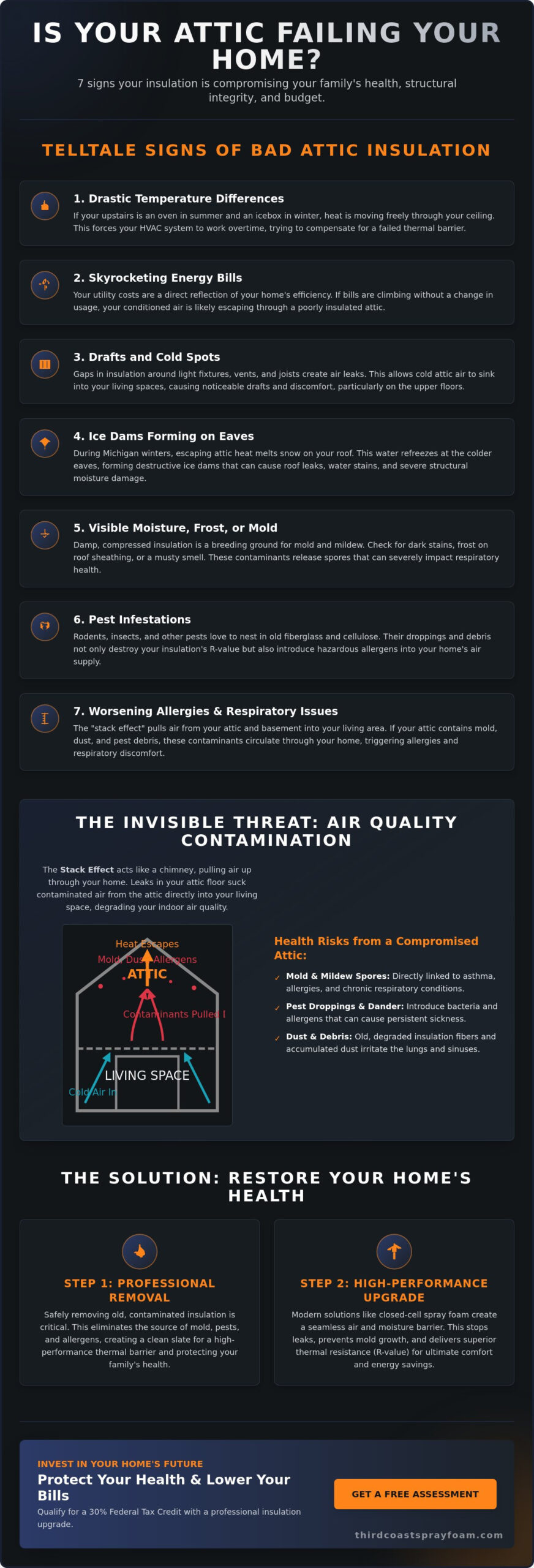
Identifying the specific signs of bad attic insulation doesn’t require a degree in building science, but it does require knowing how your home communicates its failures. When your attic’s thermal envelope is compromised, the symptoms often manifest in your daily comfort and monthly expenses. If your upstairs bedrooms feel like a sauna in July and a refrigerator in January, your thermal barrier has likely failed. This drastic temperature fluctuation between floors is a classic indicator that heat is moving freely through your ceiling rather than being trapped by a high-performance barrier.
Energy bills that don’t match your usage patterns or the local weather are another major red flag. If you notice your furnace running constantly even during a mild West Michigan autumn, you’re likely paying to heat the neighborhood. ENERGY STAR provides excellent guidance on diagnosing insulation problems, emphasizing that comfort and cost are the primary indicators of a failing system. You should also watch for cold drafts near light fixtures or ceiling fans, as these are “leaky” points where air bypasses traditional materials like fiberglass batts.
Health and safety concerns often appear as physical changes in the attic itself. Pest infestations are common in old, degraded materials; look for droppings or “tunnels” in the insulation. These pests don’t just destroy the material; they introduce allergens into your home’s air supply. If you’re noticing these issues, a professional assessment of your current setup can help determine if it’s time for insulation removal to protect your family’s respiratory health.
Physical and Visual Cues in the Attic
You can often spot trouble just by looking at the color and height of your insulation. “Dirty” insulation, which appears gray or black in specific spots, indicates that the material is acting as a filter for air leaks. This means air from your living space is carrying dust and pollutants into the attic. You should also check for “thin spots” where the wooden floor joists are clearly visible. In Michigan, insulation should be thick enough to completely bury these joists. If you see mold or mildew growth on the underside of your roof deck, it’s a sign that warm, moist air is escaping and condensing, which can lead to structural rot and poor indoor air quality.
The “Touch Test” and Draft Detection
A simple way to find failures is the “touch test” during a cold snap. Safely feel the ceiling in different rooms; if it feels icy to the touch, the heat is being sucked out through the attic. You can also use a smoke pen or a simple incense stick near the attic hatch or recessed lighting. If the smoke wafts horizontally, you’ve found a significant air leak. This “hot room” syndrome in the summer, where the AC can’t keep up with the heat radiating from the ceiling, confirms that your current insulation is no longer doing its job. Identifying these signs of bad attic insulation early allows you to take action before minor drafts turn into major moisture damage.
The Invisible Threat: Bad Insulation and Your Respiratory Health
Your attic air isn’t a separate environment; it’s a critical part of your home’s respiratory system. One of the most overlooked signs of bad attic insulation is a decline in indoor air quality caused by the stack effect. As warm air rises and escapes through your roof, it creates a vacuum that pulls air from the lower levels upward. If your attic floor isn’t properly air-sealed, this cycle frequently reverses, pushing contaminated attic air down into your living spaces. This invisible exchange means you’re breathing whatever is currently living, or decaying, in your insulation. Understanding how insulation works involves more than just heat; it’s about controlling the movement of air that carries these pollutants.
Old, dusty materials like fiberglass or cellulose act as a massive filter for the home, trapping years of debris. When these materials are disturbed by airflow or pests, they release microscopic fibers and irritants. This is why many families experience persistent respiratory discomfort or seasonal allergies that never seem to end, even when the windows are shut. Poorly managed attic spaces also contribute to high indoor humidity. When heat escapes into the attic, it leads to condensation that drips back into wall cavities. This elevated moisture level encourages dust mite proliferation and further complicates respiratory sensitivity for children and the elderly.
Indoor Air Quality (IAQ) and Attic Contaminants
Old attic spaces are frequently home to uninvited guests that leave behind hazardous waste. When rodents nest in traditional materials, their droppings and urine create airborne pathogens that lead to significant health risks. Fiberglass particulates also pose a threat; when these tiny glass fibers are disturbed by airflow, they can irritate the lining of your lungs and throat. Maintaining a clean environment is a top-to-bottom job. We emphasize the importance of Crawl Space Insulation in Grand Rapids & West Michigan: A Health-First Guide for 2026 to ensure your entire home remains a safe haven from these hidden contaminants.
Mold, Mildew, and Respiratory Sensitivity
Chronic sinus issues and morning congestion are often linked to the presence of mold spores and mycotoxins originating in a damp attic. When insulation fails to regulate temperature, condensation forms on the roof deck and drips into the material. This creates a distinct musty smell that signals a growing mold problem. Many homeowners try to fix this by simply adding more material on top, but this is a mistake. Topping old, wet insulation traps moisture against the wood, which accelerates mold growth and worsens respiratory sensitivity. Recognizing these signs of bad attic insulation helps you stop the cycle of poor health before it leads to long-term illness.
The West Michigan Winter Test: Ice Dams and Moisture
West Michigan winters provide the ultimate stress test for your home’s thermal envelope. While heavy snowfall is expected in our region, the way your roof handles that snow reveals the truth about your attic. Ice dams are a primary symptom of significant heat loss through the attic floor. When your insulation fails to keep the attic space at a consistent, cold temperature, heat escapes and melts the bottom layer of snow on your roof. This water runs down to the cold eaves and freezes, creating a dam that forces liquid water back under your shingles and into your soffits. It’s vital to remember that ice dams are a symptom of insulation failure, not just a roofing problem.
This cycle is particularly destructive during Michigan’s frequent freeze-thaw periods. Beyond the visible ice on your gutters, there is a hidden threat known as “attic rain.” This phenomenon occurs when warm, moist air from your kitchen or bathroom hits the underside of a freezing roof deck. The air condenses into water droplets that fall back onto your insulation, creating a damp environment where mold and mildew thrive. Recognizing these moisture issues as signs of bad attic insulation is vital for protecting your home’s structural integrity and your family’s respiratory health. If moisture is allowed to sit, it eventually breaks down the R-value of your material, making the problem worse every year.
Why Grand Rapids and Muskegon Homes are at Risk
Homes in Grand Rapids and Muskegon face unique challenges due to intense lake-effect snow. The sheer weight and moisture content of this snow can compress old materials like cellulose, further reducing their effectiveness. In our local historic homes, poor insulation often leads to silent structural wood rot in the rafters because the wood can’t dry out. Proper rim joist and attic edge insulation are critical in these older architectural styles to prevent the “chimney effect” from pulling cold air in and pushing warm air out. This local context makes a robust air seal more than just an energy-saving measure; it’s a preservation strategy.
Condensation and Structural Integrity
Moisture doesn’t just damage wood; it compromises every component of your roof system. Rusted fasteners and weakened roof trusses are common results of poor attic climate control. This damp environment also triggers the growth of mold spores that can eventually migrate into your living space via the stack effect. Managing these conditions is just as important in outbuildings, as discussed in The Ultimate Guide to Pole Barn Insulation. If you’re seeing icicles longer than a few inches or damp spots on your ceiling, it’s time to consider a professional upgrade. Secure your home today by installing a solution that actually stops air movement and moisture buildup.
The Solution: Professional Removal and High-Performance Replacement
Once you’ve identified the signs of bad attic insulation, the next step is choosing a remedy that addresses the root cause rather than just masking the symptoms. We don’t recommend the common practice of “capping” old insulation with a new layer. This approach often traps existing moisture, mold, and pest contaminants against your ceiling joists, which can lead to structural rot and persistent respiratory issues. We prioritize full insulation removal to ensure a clean, sanitized slate for your home’s thermal and environmental health.
After our team vacuums out the old, degraded material, we perform a deep sanitization of the attic deck and rafters. This process neutralizes lingering mold spores and eliminates the microscopic allergens that have accumulated over decades. For attics with complex geometries or tight spaces, blown-in insulation provides an effective way to achieve high R-values while ensuring every corner is covered. This ensures that the signs of bad attic insulation, such as drafty rooms and uneven temperatures, become a thing of the past.
Why DIY Insulation Removal is Dangerous
Old Michigan attics aren’t just dusty; they’re often hazardous environments. Attempting to remove insulation yourself risks disturbing legacy materials like asbestos or lead dust. You also face the threat of hantavirus and other pathogens found in rodent droppings. Consumer-grade shop vacuums are insufficient for these fine particulates. They often end up exhausting the smallest, most harmful allergens back into your breathing air. Professional PPE and high-powered extraction equipment are non-negotiable for maintaining a safe indoor environment during the removal process.
Upgrading to Spray Foam or Blown-In Cellulose
For homeowners seeking a permanent solution to air leakage, closed cell spray foam is the gold standard. Unlike traditional batts, it provides an airtight seal that stops the stack effect in its tracks. This investment pays off through significantly lower utility bills and improved structural rigidity. To help manage the cost of these upgrades, homeowners can utilize the Energy Efficient Home Improvement Credit. In 2026, this federal tax credit covers 30% of the cost of insulation materials, up to an annual cap of $1,200. Combining this with utility rebates ensures your transition to a healthy, efficient home is both a practical and financial success.
Secure Your Home’s Future and Family’s Health
Your attic is more than just a storage space; it’s the lungs and the protective shield of your home. By learning to recognize the common signs of bad attic insulation, you’ve taken the first step toward a more efficient and healthier living environment. We’ve seen how compromised materials don’t just drain your wallet through high energy bills. They also threaten your respiratory health by allowing mold spores and allergens to migrate into your bedrooms.
Restoring your home’s integrity requires more than a quick fix. It demands a holistic approach that includes expert insulation removal and thorough sanitization to eliminate legacy contaminants. As local West Michigan specialists, we focus on high-performance spray foam and blown-in solutions that create a permanent barrier against the elements. You deserve the peace of mind that comes with a dry, draft-free, and safe home. Don’t wait for the next ice dam to cause structural damage.
Get a Free Healthy Attic Assessment from Third Coast Spray Foam today to ensure your family breathes easier all year long. Let’s work together to make your home a bastion of comfort and durability.
Frequently Asked Questions
Can I just put new insulation over my old insulation?
We generally advise against “capping” old material, especially if it’s contaminated or compressed. Adding new layers over old, dusty insulation traps moisture, mold, and pest debris against your ceiling joists. This can lead to structural rot and poor indoor air quality. A full removal and sanitization process ensures your new system performs at its maximum R-value without hiding existing health hazards within your home’s thermal envelope.
How much does it cost to remove old attic insulation in Michigan?
While the final investment depends on your attic’s size and the material type, industry data shows removal costs typically range between $1 and $2 per square foot. This professional service is necessary to safely extract fine particulates, allergens, and mold-damaged materials that consumer-grade vacuums can’t handle. Investing in professional removal prevents attic contaminants from circulating through your living spaces during the upgrade process.
Is mold in the attic always a sign of bad insulation?
Yes, mold growth is a definitive indicator that your attic’s thermal and air barrier system has failed. It proves that warm, moist air is escaping from your home and condensing on cold roof surfaces. This moisture creates an ideal breeding ground for mold, which can damage your roof deck and release harmful spores. Addressing this requires more than just cleaning; you must fix the insulation failure causing the condensation.
How long does attic insulation typically last before it goes bad?
Traditional materials like cellulose or fiberglass often begin to settle and lose their thermal resistance after 15 to 20 years. However, factors like high West Michigan humidity, roof leaks, or pest infestations can significantly shorten this lifespan. If you notice common signs of bad attic insulation such as rising utility bills or drafty second-floor rooms, your material likely needs replacement regardless of its chronological age.
Will new attic insulation really improve my indoor air quality?
Upgrading your insulation significantly improves indoor air quality if you include a proper air seal. Removing old, contaminated material eliminates decades of accumulated dust, pet dander, and pest waste. High-performance solutions like closed cell spray foam stop the stack effect from pulling these pollutants into your bedrooms. This results in a cleaner environment and can reduce persistent respiratory discomfort for family members with allergies.
What is the best type of insulation for a Michigan attic?
Closed cell spray foam is the gold standard for Michigan’s climate because it provides both a high R-value and a permanent air seal. This dual-action protection is critical for preventing ice dams and moisture buildup during our harsh winters. For homeowners with specific attic configurations, professional blown insulation is another reliable option that offers comprehensive coverage and helps meet the R-60 levels recommended for optimal energy efficiency.
Can bad attic insulation make you sick?
Failing insulation can impact your health by harboring mold, mildew, and rodent waste. These contaminants produce airborne particulates and mycotoxins that migrate into your living space via air leaks. This often leads to chronic sinus issues, persistent coughing, and other respiratory sensitivities. Professional removal and sanitization are essential steps to ensure your attic doesn’t become a source of environmental illness for your household.
How do I know if my attic has enough R-value for the Michigan climate?
You can start by checking if your floor joists are visible. If you can see the wooden beams, your insulation is definitely insufficient. The Michigan Building Code requires at least an R-49 baseline for Southeast Michigan, while ENERGY STAR recommends up to R-60 for our region. A professional assessment can accurately measure your current thermal resistance and identify thin spots where heat is escaping through your ceiling.
Disclaimer
Information provided is for general educational purposes. Individual needs and circumstances vary. Speak to an experienced professional to get the correct information for your situation.