
Imagine trying to focus in your new basement home office while the heavy thuds of foot traffic and the constant hum of the HVAC system echo through the floor joists. For many Michigan homeowners, a basement renovation often feels incomplete because of persistent noise and that lingering, musty smell. Soundproofing a basement ceiling with spray foam offers a dual-purpose solution that traditional materials simply can’t match. It doesn’t just dampen sound; it seals the structural gaps where allergens and moisture thrive.
You probably already feel that your home should be a sanctuary, yet dampness and air leaks often turn your lower level into a source of stress rather than a retreat. We promise to show you how the right insulation strategy creates a quieter, healthier, and mold-free environment for your family. In this guide, we’ll explain why open-cell foam is the superior choice for acoustics, how to stay compliant with the 2015 Michigan Residential Code, and why sealing air leaks is a critical step for protecting your family’s respiratory health and long-term indoor air quality.
Key Takeaways
- Learn to distinguish between airborne noise like voices and structural impact vibrations to ensure your soundproofing strategy actually works.
- Discover why the porous structure of open-cell spray foam is the professional choice for maximum acoustic absorption in residential ceilings.
- Understand how soundproofing basement ceiling with spray foam protects your family’s respiratory health by sealing out dampness and preventing mold-friendly environments.
- See how eliminating the “stack effect” stops basement pollutants and musty odors from migrating into your main living spaces.
- Get a clear breakdown of the 2015 Michigan Residential Code requirements and the safety steps we take to ensure your home remains a healthy sanctuary.
Understanding Basement Noise: Air Leakage vs. Structural Vibration
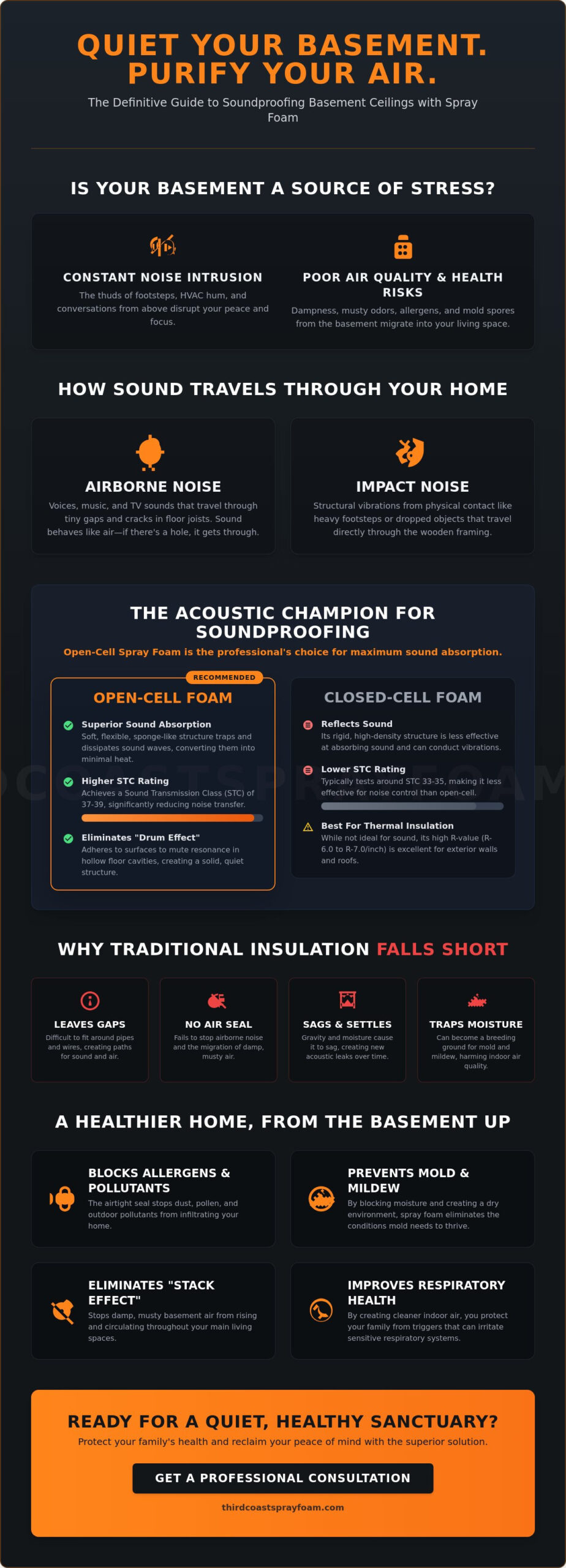
To solve the noise problem in your lower level, you first need to understand how sound actually travels through your home’s structure. Most Michigan homeowners experience two distinct types of acoustic interference. Airborne noise includes the sounds of voices, music, or television audio that leak through the tiny gaps and cracks in your floor joists. Impact noise occurs when physical contact, like heavy footsteps or a dropped object, sends vibrations directly through the wooden framing. When you consider soundproofing basement ceiling with spray foam, you are addressing both issues simultaneously by creating a dense, airtight barrier that traditional materials can’t replicate.
Spray foam is a sophisticated material that expands to fill every crevice, which is vital because sound behaves much like air or water; if there is a hole, the noise will find a way through. This total air seal doesn’t just block unwanted chatter from the floor above. It also stops the migration of damp, musty air and potential mold spores, which is a critical factor in maintaining high indoor air quality and protecting your family’s respiratory health. By eliminating the path of least resistance for air, we effectively shut the door on the pollutants and noises that compromise your comfort.
To better understand the physics of how sound travels through a ceiling, watch this helpful video:
Why Traditional Insulation Fails at Soundproofing
Fiberglass batts are often the default choice for builders, but they frequently fall short in basement applications. These batts are difficult to fit perfectly around wires, pipes, and irregular joist spacing, leaving significant gaps where air and sound waves pass through effortlessly. Because these materials don’t provide an airtight seal against the subfloor, they do little to stop airborne noise. Over time, traditional insulation can sag or settle due to gravity and moisture, creating new acoustic leaks and providing a breeding ground for mildew that can irritate sensitive respiratory systems.
The Science of Acoustic Dampening with Foam
The cellular structure of spray foam is designed to absorb and dissipate sound energy rather than reflecting it. By filling the entire joist cavity, the foam creates a monolithic barrier that significantly reduces the transmission of both airborne and impact sounds. By adhering directly to the subfloor and joists, the foam eliminates the “drum effect” of hollow floor cavities, effectively muting the resonance that usually amplifies noise throughout the house. This creates a more stable, quiet environment while ensuring that your basement ceiling remains a permanent defense against energy loss and indoor environmental triggers. Soundproofing basement ceiling with spray foam transforms a hollow, echoing space into a solid, peaceful part of your home.
Open Cell vs. Closed Cell Spray Foam for Soundproofing
Choosing the right material is the most critical decision in your renovation project. While many contractors might suggest a one-size-fits-all approach, soundproofing basement ceiling with spray foam requires a more nuanced understanding of material density. Open cell spray foam is widely considered the gold standard for interior acoustic applications. Its lower density and soft, sponge-like texture allow it to act as a massive sound absorber. Unlike rigid materials that can actually conduct vibrations, the flexible nature of open cell foam traps sound waves within its interconnected pores and converts that energy into low-grade heat.
In a standard 2×4 wall assembly, 3.5 inches of open-cell spray foam typically achieves a Sound Transmission Class (STC) rating of 37 to 39. By comparison, closed-cell foam usually tests lower, around 33 to 35, because its high-density, rigid structure tends to reflect sound rather than absorb it. For a deeper dive into these technical comparisons, you can review expert findings on Sound Control and Spray Foam Insulation. While closed-cell foam offers a superior R-value of R-6.0 to R-7.0 per inch, it is often overkill for an interior ceiling where noise reduction is the primary goal.
Beyond just noise, the choice of foam affects your home’s air quality. Open-cell foam provides a complete air seal that stops the “stack effect” from pulling damp, musty basement air into your main living areas. This is vital for protecting your family’s respiratory health; it prevents the migration of allergens and mold spores that often thrive in unsealed floor joists. If you’re dealing with a particularly damp West Michigan basement, we might suggest a hybrid approach to ensure both moisture control and acoustic comfort.
Acoustic Performance Breakdown
The difference in performance comes down to how each material interacts with sound energy. Soft materials like open-cell foam are designed to dissipate waves. Harder, denser materials like closed-cell foam are excellent for structural reinforcement and moisture barriers, but they lack the flexibility needed to dampen high-frequency airborne noises like voices or music. For most homeowners, the sound absorption of open-cell foam provides a more peaceful environment.
Choosing Based on Your Basement Usage
If you’re building a home theater or a dedicated music room, open-cell foam is the clear winner. It effectively eliminates the hollow echo common in unfinished basements. However, if your basement ceiling is also part of an unconditioned crawl space or an exterior rim joist, the moisture-resistant properties of closed-cell foam become more important. Balancing these needs is where professional guidance makes the difference in your long-term satisfaction. Properly soundproofing basement ceiling with spray foam ensures your home office or gym remains a quiet, healthy sanctuary for years to come.
The Health Connection: IAQ, Respiratory Safety, and Mold
A quiet home is a comfortable one, but a healthy home is a safe one. Many homeowners don’t realize that the air they breathe on the main floor is often directly influenced by the conditions in their basement. This happens because of the “stack effect,” a physical process where warm air rises and escapes through the top of the house, creating a vacuum that pulls air upward from the lowest levels. If your basement is damp or contains allergens, those pollutants are being drawn straight into your living room and bedrooms. Soundproofing basement ceiling with spray foam creates a permanent air seal that breaks this cycle, ensuring the air you breathe remains fresh and untainted by basement odors.
Respiratory health is a primary concern for our West Michigan clients, especially those living with asthma or seasonal allergies. Traditional insulation often acts as a filter, trapping dust and particulates while allowing air to pass through. In contrast, professional spray foam creates a monolithic barrier that stops the infiltration of fine dust and outdoor pollutants. We prioritize safety by using low-VOC products and strictly adhering to the 24-hour re-occupancy guidelines recommended by the EPA and CPSC. This professional approach ensures the foam cures completely and safely, leaving your home with improved indoor air quality and a more stable environment.
Preventing Mold and Mildew Growth
Mold requires three things to thrive: moisture, the right temperature, and a food source. Spray foam is a powerful tool for mold prevention because it addresses all three factors. It is an inorganic material, meaning it does not provide a food source for mold or pests. By air sealing the ceiling and rim joists, we prevent warm, humid air from condensing on cold wooden surfaces. This condensation is the leading cause of rot and mildew in Michigan homes. Keeping the ceiling structure dry is essential for protecting both your home’s structural integrity and your family’s respiratory wellness.
Enhancing Indoor Air Quality (IAQ)
Sealing your basement ceiling does more than just block noise; it creates a controlled indoor environment. By soundproofing basement ceiling with spray foam, you are effectively closing the “path of least resistance” for airborne irritants. This reduction in environmental triggers is particularly beneficial for children and the elderly, who are often more sensitive to changes in air quality. Our team focuses on the following IAQ benefits:
- Eliminating Drafts: Stopping the movement of unconditioned, unfiltered air between floor levels.
- Reducing Pests: Sealing the tiny entry points that spiders and insects use to enter the home.
- Controlling Humidity: Maintaining consistent moisture levels to prevent the growth of biological pollutants.
A healthy home requires a holistic strategy. By treating the basement ceiling as a critical part of your home’s envelope, we provide a solution that protects your peace of mind and your physical well-being.
Spray Foam vs. Other Basement Soundproofing Methods
When you look at ways to quiet a noisy basement, you’ll likely see recommendations for fiberglass batts or mineral wool. While these materials are common, they don’t offer the comprehensive protection required for a healthy Michigan home. We don’t sell fiberglass batts because they simply don’t deliver long-term results. Unlike soundproofing basement ceiling with spray foam, fiberglass fails to create an airtight seal. Over time, gravity and humidity cause batts to sag, creating gaps where both noise and cold air pass through unchecked.
Mineral wool is often praised for its density and fire resistance, but it still lacks the air-sealing capabilities of foam. In a basement environment, moisture is the primary enemy of respiratory health. Traditional materials can trap dampness against your floor joists, creating a hidden breeding ground for mold and mildew. By choosing a “one-and-done” solution, you address thermal insulation, air leakage, and acoustic dampening in a single application. This holistic approach ensures your home remains structurally sound and your air quality stays high.
The Limitations of Fiberglass and Mineral Wool
Fiberglass is notorious for shedding tiny glass fibers into your HVAC system, which can irritate the lungs of anyone with sensitive respiratory systems. Beyond the “itch factor,” these materials are highly porous. They allow the “stack effect” to pull musty air from the basement into your upper living spaces. Traditional batts act like a filter for dust and allergens, eventually becoming clogged and losing their already limited effectiveness. Perhaps most importantly, batts leave the rim joist, which is often the leakiest part of your foundation, completely unprotected from air infiltration and moisture condensation.
Total Value: More Than Just Sound
The true advantage of this method is how it integrates with your entire home’s efficiency. By combining rim joist insulation with ceiling soundproofing, you create a seamless thermal and acoustic envelope. This doesn’t just make your basement quieter for a home office or gym; it also keeps your main floor warmer during harsh West Michigan winters. Soundproofing basement ceiling with spray foam also prevents the migration of soil gases and other pollutants, which is a critical step for anyone concerned about long-term indoor air quality.
Because spray foam is a permanent, non-sagging solution, it offers a much higher long-term ROI than materials that require replacement or adjustment every few years. When your basement is properly sealed, your heating and cooling systems don’t have to work as hard to maintain a comfortable temperature on the floors above. This efficiency translates to lower monthly bills and a smaller environmental footprint for your household. If you’re ready to invest in a quieter, healthier home, reach out to our team today for an expert assessment.
Professional Installation in West Michigan: What to Expect
West Michigan basements face unique environmental pressures that require a specialized approach. Between the high humidity near the lakeshore in Muskegon and the significant temperature swings in Grand Rapids, moisture management is just as important as noise reduction. Soundproofing basement ceiling with spray foam in our region isn’t a simple “spray and go” task; it’s a technical process that protects your home’s structural integrity. We understand the local climate and ensure every project complies with the 2015 Michigan Residential Code, including the vital 15-minute thermal barrier requirements for interior foam applications.
Most basement ceilings are a maze of HVAC ducts, plumbing lines, and electrical wiring. Our team takes a pragmatic approach to these obstacles. We don’t just cover everything in sight. We carefully mask off recessed lighting and sensitive mechanical components to ensure your home’s infrastructure remains accessible and safe. This precision allows us to create a seamless air seal that stops both airborne noise and the migration of musty odors without compromising your home’s mechanical systems.
The Installation Process from Start to Finish
Our process begins with a thorough assessment of your basement’s specific noise paths and moisture levels. We look for the gaps where sound leaks are most prominent. During the application phase, we prioritize 100% coverage of the joist bays to eliminate the hollow resonance that often plagues unfinished spaces. Safety is our primary concern, which is why we strictly adhere to EPA and manufacturer guidelines. We require occupants and pets to vacate the premises during the installation and for a minimum of 24 hours afterward. This ensures the foam is fully cured and inert, protecting your family’s respiratory health.
Why Local Homeowners Trust Third Coast Spray Foam
We take immense pride in being a local partner for our neighbors. Our expertise in closed cell spray foam and open cell acoustics allows us to recommend the exact solution for your home’s specific layout. We treat your indoor air quality as a top priority, focusing on eliminating the environmental triggers that lead to mold and mildew growth. By choosing a specialist who understands Michigan’s residential challenges, you’re making a permanent investment in your home’s comfort and health. Schedule your free basement soundproofing estimate today and let our team help you reclaim your quiet, healthy space.
Reclaim Your Quiet and Healthy Home
Creating a sanctuary in your West Michigan home requires more than just masking noise; it demands a permanent solution that protects your family’s health. By soundproofing basement ceiling with spray foam, you effectively silence the echoes of daily life while sealing out the damp, musty air that often compromises respiratory wellness. We’ve explored how open-cell foam acts as a superior acoustic absorber and how professional air sealing prevents the migration of mold spores and allergens into your main living spaces. This holistic approach ensures your new home office or gym is a peaceful, safe environment for everyone.
Since 2013, our expert crew has specialized in health-first insulation solutions for families in Grand Rapids, Muskegon, and across the lakeshore. We understand the unique environmental challenges of our region and prioritize precision in every joist bay we seal. Don’t settle for temporary fixes that sag or harbor moisture. Get Your Free Basement Soundproofing Estimate today and benefit from a detailed, no-obligation onsite assessment. We’re ready to help you invest in the long-term integrity and comfort of your home.
Frequently Asked Questions
Is open cell or closed cell spray foam better for soundproofing?
Open cell spray foam is the superior choice for acoustic performance in a residential setting. Its soft, flexible structure and lower density allow it to trap and dissipate airborne sound waves more effectively than rigid materials. While closed cell foam is an excellent thermal insulator, its high density can sometimes reflect or transmit sound rather than absorbing it. For most soundproofing basement ceiling with spray foam projects, open cell provides the quietest results.
Can spray foam insulation help with footsteps noise from above?
Spray foam is highly effective at blocking airborne noises like voices or music, but it only partially dampens impact noise like heavy footsteps. Footsteps create structural vibrations that travel through the wooden floor joists themselves. While the foam reduces the echoing “drum effect” within the hollow ceiling cavity, stopping impact noise completely often requires additional measures like resilient channels or specialized underlayments on the floor above.
Is spray foam safe for my family and indoor air quality?
Professional spray foam is safe and inert once it has fully cured. We prioritize your family’s respiratory health by using low-VOC products and strictly following the EPA recommendation to vacate the home for at least 24 hours after application. This ensures that any off-gassing during the curing process is completely ventilated. Once cured, the foam creates a permanent air seal that actually improves indoor air quality by blocking outdoor pollutants and allergens.
Does spray foam in the basement ceiling prevent mold?
Yes, spray foam is a powerful tool for preventing mold and mildew because it eliminates the conditions they need to grow. By creating a seamless air barrier, it stops warm, humid air from condensing on cold rim joists or floor structures. Since the foam itself is an inorganic material, it doesn’t provide a food source for mold or pests. This protection is a critical step in maintaining a healthy, dry environment in West Michigan basements.
How long does the spray foam installation process take?
Most residential basement ceiling projects are completed within one to two business days. This timeframe includes site preparation, the precision application of the foam, and a thorough cleanup. The exact duration depends on the total square footage and the complexity of the ceiling, such as the number of pipes or wires we need to navigate. We provide a specific timeline during our initial onsite assessment so you can plan accordingly.
Will I need to leave my home during the spray foam application?
Yes, we require all occupants and pets to leave the premises during the installation and for a minimum of 24 hours after the job is finished. This safety protocol is standard for professional soundproofing basement ceiling with spray foam applications. It allows the chemicals to cure completely without exposing your family to isocyanates. We take these precautions seriously to ensure your home remains a safe and healthy sanctuary for the long term.
Can I still access my electrical wires and pipes after spraying foam?
You can still access your home’s infrastructure, though it requires a bit more effort than with traditional batts. Open cell foam is relatively soft and can be cut away with a basic saw or knife if a plumber or electrician needs to reach a specific line. We take care to mask off junction boxes, recessed lighting, and important valves before we begin spraying. This ensures that your essential mechanical systems remain functional and accessible for future maintenance.
Does spray foam insulation qualify for energy tax credits in Michigan?
Many homeowners qualify for federal tax credits, such as the Energy Efficient Home Improvement Credit (25C), which provides an annual credit for weatherization. In Michigan, additional rebates may be available through local utility providers for improving your home’s air seal and thermal envelope. While we don’t provide tax advice, we can provide the necessary documentation and product specifications you’ll need to claim these incentives and maximize your return on investment.
Disclaimer
Information provided is for general educational purposes. Individual needs and circumstances vary. Speak to an experienced professional to get the correct information for your situation.