
Last January, a family in Grand Rapids discovered that their drafty living room was more than just a comfort issue; it was a health hazard. While searching for residential insulation contractors to fix their high energy bills, they realized the real concern was a persistent cough that only flared up at home. You likely understand the frustration of fluctuating Michigan temperatures and those rising utility costs that never seem to plateau. You want a home that stays comfortable, but you also deserve peace of mind knowing your crawl space isn’t harboring mold or allergens that compromise your indoor air quality.
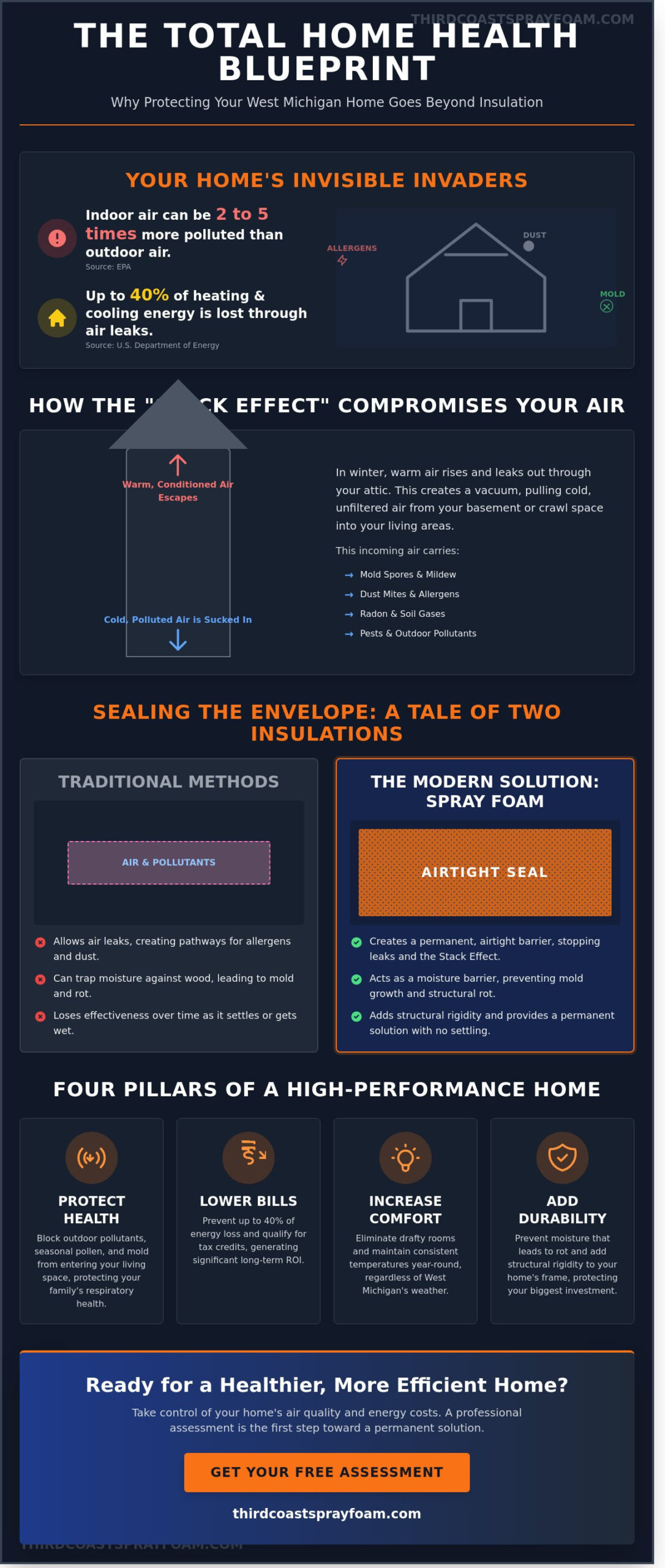
This guide will teach you how to select a professional who prioritizes your family’s respiratory health alongside your home’s energy efficiency. According to the EPA, indoor air can be 2 to 5 times more polluted than outdoor air, which is why our team focuses on the “total home health” of your building. We will preview the 2026 standards for air sealing and moisture management, providing you with a clear roadmap to lower utility bills and a permanent solution for a cleaner, safer living environment.
Key Takeaways
- Learn how professional air sealing prevents the “Stack Effect” from pulling allergens and basement pollutants into your living spaces, directly protecting your family’s respiratory health.
- Discover the essential steps for vetting residential insulation contractors in West Michigan, ensuring they possess the specialized licensing and experience required for our unique climate.
- Compare the long-term ROI of high-performance spray foam against traditional materials to see how “sealing the envelope” creates a permanent barrier against mold and mildew.
- Understand why West Michigan’s specific moisture challenges demand a holistic approach to insulation to maintain superior indoor air quality and structural integrity.
- Explore how the “Total Home Health” framework transforms your property into a secure, energy-efficient sanctuary that prioritizes the long-term physical well-being of your household.
Why Hiring the Right Residential Insulation Contractors in West Michigan Matters
In 2026, the work performed by residential insulation contractors involves far more than just filling wall cavities with pink batts. It’s a complex discipline rooted in building science and holistic home health. A professional contractor now acts as a technical consultant who manages the delicate balance of heat, air, and moisture flow. Selecting a qualified team ensures your home operates as a high-performance system rather than a collection of drafty, disconnected rooms. Cheap solutions often skip the critical step of air sealing, which is the leading cause of failed building inspections and compromised comfort across West Michigan.
The West Michigan Climate Challenge
West Michigan presents a brutal environment for standard building materials. From the high lake-effect humidity in Muskegon to the extreme temperature swings in Lansing and Holland, your home’s exterior takes a constant beating. These fluctuations often create a dew point inside your walls. Without expert moisture management, this leads to hidden condensation and structural rot. Building insulation must be installed with a deep understanding of Michigan Energy Code requirements to be effective. Local expertise is non-negotiable. A contractor from a milder climate won’t account for the 75-inch average annual snowfall in Grand Rapids that puts immense pressure on attic ventilation and ice dam prevention.
Insulation as a Health Investment
Our team views your home through the lens of the “Building Envelope.” This is the physical barrier that separates your conditioned living space from the harsh Michigan elements. When residential insulation contractors use high-performance spray foam, they create an airtight seal that blocks outdoor pollutants, seasonal pollen, and pests. This professional air sealing is your primary defense against respiratory triggers and poor indoor air quality.
- Mold Prevention: High-performance insulation prevents the damp conditions that allow Stachybotrys and other toxic molds to thrive.
- Pollutant Control: Proper sealing stops the “stack effect” from pulling dust and allergens from your crawl space into your bedrooms.
- Financial Recovery: Quality work qualifies for the energy efficient home improvement credit, which can offset up to 30% of your project costs.
Poorly installed, “budget” insulation often traps moisture against wood framing. This creates a breeding ground for mold that causes long-term respiratory health issues for children and the elderly. Moving from traditional fiberglass to high-performance foam isn’t just about lower utility bills. It’s about the security of knowing your family is breathing clean air. We treat every project as a permanent investment in your physical well-being and financial stability.
Protecting Respiratory Health Through Professional Air Sealing
Your home’s air quality depends on more than just a clean furnace filter. Most West Michigan homes lose up to 40% of their heating and cooling energy through air leaks. These gaps don’t just waste money; they act as highways for outdoor pollutants. Choosing the right residential insulation contractors is about more than R-value. It’s about sealing your living space from allergens, dust, and seasonal pollen that trigger respiratory distress. When a home isn’t properly sealed, these particles bypass your filtration systems and settle in your carpets and upholstery.
The “Stack Effect” is a primary driver of poor indoor air quality in our region. In winter, warm air rises and escapes through the attic, creating a vacuum that pulls cold, unfiltered air in through the basement or crawl space. This air often carries high concentrations of radon, soil gases, and moisture from the earth. Professional air sealing breaks this cycle. While traditional materials might struggle to stop this airflow, our team uses spray foam to create a permanent, airtight barrier that keeps the “bad air” out and the “good air” in.
When comparing different Types of Insulation, it’s clear that spray foam provides a superior seal compared to traditional batts. Fiberglass and cellulose are often permeable to air, meaning they act like a filter that traps dust rather than a shield that blocks it. Spray foam expands into every crack and crevice, providing a level of precision that manual stuffing simply cannot match. This technical advantage is why many residential insulation contractors now prioritize the building envelope’s integrity over thickness alone. If you’re weighing your options between local providers, our detailed RetroFoam of Michigan vs. Third Coast Spray Foam comparison breaks down the key differences in materials, methods, and long-term health outcomes for West Michigan homeowners.
Eliminating Mold and Mildew Triggers
Closed-cell spray foam is a game changer for moisture management. It acts as a Class II vapor retarder, stopping the condensation that occurs when warm, humid air hits cold surfaces like rim joists or wall cavities. By keeping these hidden areas dry, we prevent the growth of mold spores that contribute to chronic asthma. A sealed crawl space can reduce whole-home humidity levels by 20% or more, creating a hostile environment for dust mites and mildew.
IAQ (Indoor Air Quality) and Spray Foam Safety
We prioritize safety during every installation. Our team ensures that spray foam is applied under strict temperature controls to allow for safe off-gassing, typically reaching full cure within 24 hours for immediate occupancy safety. We also evaluate whether your home requires mechanical ventilation to replace natural “accidental” leaks with fresh, filtered air. Professional air sealing creates a controlled environment for HEPA filtration to work effectively. If you want to transform your home into a healthier sanctuary, you can speak with our specialists about a custom air sealing plan.
Evaluating Your Home’s Needs: Spray Foam vs. Blown-In Insulation
Choosing the right material isn’t just a matter of budget; it’s about the “total home health” of your West Michigan residence. Expert residential insulation contractors look at how a material interacts with moisture, airflow, and structural longevity. Our team at Third Coast Spray Foam prioritizes high-performance materials like closed-cell foam and cellulose over traditional fiberglass. We avoid fiberglass because its porous nature often traps dust, pollen, and moisture, which can eventually compromise your respiratory health and lead to hidden mold growth.
Proper Air Sealing serves as the foundation of a healthy indoor environment. By closing the microscopic gaps where outdoor pollutants enter, we directly protect your family’s air quality. This holistic approach prevents the damp, stagnant conditions that allow mildew to thrive in Michigan’s humid summers. While the initial investment for spray foam is higher than traditional batts, the long-term ROI is clear. Homeowners typically see a 20% to 30% reduction in monthly utility costs, and the material doesn’t sag or degrade over time like cheaper alternatives.
When you search for foam insulation near me, you’ll find that the best results come from a tailored strategy. No two homes in Grand Rapids are identical, so we match the material to the specific thermal challenges of your property’s layout.
When to Choose Closed-Cell Spray Foam
Closed-cell spray foam is the gold standard for structural integrity and moisture resistance. It provides an impressive R-value of 6.5 to 7.0 per inch, making it the best choice for compact spaces like rim joists and flood-prone crawl spaces. In unvented attic spaces, it manages condensation by moving the dew point outside the building envelope. This prevents the wood rot and mold issues common in our region. It also adds up to 300% more racking strength to walls, which is a major benefit for large pole barns and outbuildings.
When Blown-In Insulation Makes Sense
For many older homes in Lansing or Grand Rapids, blown-in cellulose offers a cost-effective way to boost thermal performance in 2026. This material consists of recycled paper treated with borates to resist fire and pests. Before adding new material, we often recommend professional insulation removal. This critical step ensures we clear out old, contaminated materials that may house rodent waste or mold spores. Once the attic floor is clean, we “top-off” the space to reach modern R-49 or R-60 standards, effectively sealing existing wall cavities without a full teardown. This balance of efficiency and health remains a top priority for residential insulation contractors dedicated to quality craftsmanship.
How to Vet a West Michigan Insulation Installer: A Step-by-Step Guide
Choosing the right residential insulation contractors in West Michigan requires a process that goes beyond a simple price quote. To ensure your home remains a healthy environment for the next several decades, follow these five steps.
Step 1: Verify local licensing and specialized insurance. General liability isn’t enough for spray foam application. Ensure the team carries pollution occurrence insurance, which specifically covers the application of chemical components. Step 2: Check for Michigan-specific moisture expertise. Our state’s humidity swings cause condensation in 85 percent of improperly vented attics. Ask how they prevent the “sweating” that leads to structural rot.
A thorough health-focused assessment is the third and most vital step. A quality contractor evaluates your home as a holistic system rather than a collection of separate rooms. They should discuss indoor air quality (IAQ) and how sealing the envelope prevents outdoor allergens and pollutants from entering your living space. Step 4: Evaluate onsite safety protocols. Professional crews use high-pressure proportioners and fresh-air supply systems. If they arrive with DIY-grade kits, your home’s safety and the foam’s chemical balance are at risk. Step 5: Review local testimonials. Look for specific mentions of comfort improvements in Grand Rapids or lower energy bills in Kalamazoo from the last 12 months.
Questions to Ask About Health and Safety
Your family’s respiratory health depends on the contractor’s precision during the prep phase. Ask: “How do you manage dust and debris during the insulation removal process?” Old insulation often harbors rodent waste and mold spores that shouldn’t enter your living space. Inquire about their protocol for people with respiratory sensitivities. A professional team uses negative air machines to ensure contaminants don’t migrate into bedrooms. Finally, ask about crawl space encapsulation. Using a 20-mil vapor barrier is the standard for preventing soil gases and moisture from rising into your floorboards.
Red Flags to Avoid in Michigan Contractors
- Fiberglass in crawl spaces: This is a major mold risk. Fiberglass acts as a sponge for Michigan’s high ground moisture, leading to wood rot and poor air quality.
- No local physical address: “Storm chasers” often lack a permanent presence in Grand Rapids or Muskegon. This leaves you with no recourse if the thermal seal fails.
- Vague R-value answers: Michigan Zone 5 and 6 codes are strict. If they can’t explain why your attic needs R-49 to R-60, they aren’t following current 2026 energy standards.
Protect your home’s structural integrity and your family’s health by partnering with a team that understands the unique West Michigan climate. Schedule a professional health and efficiency assessment with Third Coast Spray Foam today.
Third Coast Spray Foam: Your Local Partner for Healthier Michigan Homes
Third Coast Spray Foam isn’t just another name in the phone book. We’re a team of specialists dedicated to the concept of Total Home Health. Our work centers on the belief that a house functions as a single, interconnected system where the attic, walls, and crawl space all influence the air you breathe. We serve homeowners across the diverse climates of West Michigan, providing expert services in Lansing, Grand Rapids, Kalamazoo, and the entire Lakeshore region.
We’ve built our reputation on a foundation of local reliability and technical precision. Our goal isn’t just to lower your utility bills. We aim to create a fortress against the outdoor elements that compromise your comfort. By sealing the thermal envelope, we ensure that your living space remains a sanctuary of stable temperatures and clean air, regardless of how harsh the Michigan winter becomes.
Our commitment to your family’s well-being is why we maintain a strict No Fiberglass policy. Traditional fiberglass batts often act as a filter that traps dust, pollen, and other allergens. More importantly, fiberglass is prone to moisture retention. When moisture gets trapped against your home’s wooden structure, it creates a breeding ground for mold and mildew. This leads to poor indoor air quality and significant respiratory health risks. As professional residential insulation contractors, we replace these outdated materials with high-performance spray foam that provides a permanent air and moisture barrier.
Our Specialized Services in Grand Rapids and Beyond
Finding spray foam contractors near me requires looking for a team that understands local building science. We provide a full suite of services designed to address the unique vulnerabilities of Michigan homes:
- Crawl Space Encapsulation: We transform damp, dark crawl spaces into clean, dry areas that no longer contribute to basement mold or “stack effect” drafts.
- Rim Joist Sealing: Our team applies precision foam to the rim joists to stop foundation-level air leaks, which are responsible for up to 15 percent of a home’s heat loss.
- Pole Barn Solutions: We offer specialized insulation for Michigan workshops and storage buildings, preventing condensation and protecting your equipment from rust and rot.
Get Your Professional Insulation Assessment
Every project we undertake begins with a comprehensive evaluation. We don’t just look at individual rooms; we evaluate your home as a holistic system. Our technicians identify thermal bridges and hidden air leaks that traditional inspections often miss. This data-driven approach ensures that our recommendations are based on your home’s specific needs rather than a one-size-fits-all solution.
For homeowners in Ottawa or Kent County, our process is designed for transparency. You’ll receive a detailed quote that clearly explains the scope of work and the expected health benefits. As your trusted residential insulation contractors, we take the guesswork out of home improvement. Contact us today to schedule your free health-focused estimate and take the first step toward a safer, more efficient living environment for your family.
Secure a Healthier Future for Your West Michigan Home
Choosing the right residential insulation contractors is a decision that impacts your family’s respiratory health for decades. Since 2013, Third Coast Spray Foam has served Grand Rapids and the surrounding region by prioritizing high-performance spray foam over traditional fiberglass. We focus on creating a total home seal because it’s the only way to effectively block outdoor pollutants and prevent the moisture buildup that leads to mold. Our specialized crawl space encapsulation stops rising dampness at the source, which is critical for maintaining high indoor air quality standards in 2026 and beyond. This holistic approach ensures your home’s envelope remains durable against the harshest Michigan winters.
You don’t have to settle for inconsistent temperatures or poor air quality. By investing in professional air sealing, you’re choosing a permanent solution for both comfort and physical well-being. Our team brings over a decade of local expertise to every project, ensuring your property meets the highest safety and efficiency benchmarks. We’re here to help you protect what matters most.
Schedule Your Free Home Health & Insulation Assessment Today
It’s time to enjoy the peace of mind that comes with a professionally sealed and healthy home.
Frequently Asked Questions
How do I know if I need new residential insulation in my Michigan home?
You likely need new insulation if you notice ice dams on your roof during winter or feel consistent drafts near your baseboards. Data from Energy Star indicates that 90% of existing homes in the United States are under-insulated. When you hire experienced residential insulation contractors, we look for signs like fluctuating room temperatures and moisture buildup. These conditions often lead to mold growth, which compromises your indoor air quality and structural integrity.
Can poor insulation actually cause respiratory health problems?
Inadequate insulation creates a bridge for moisture and outdoor pollutants to enter your living space, which can trigger asthma and other respiratory issues. When walls aren’t properly sealed, condensation forms and leads to mold growth. These fungal spores circulate through your HVAC system and into your lungs. Our team focuses on sealing the envelope to prevent these triggers, ensuring your family breathes cleaner air while maintaining a stable indoor climate.
Is spray foam insulation safe for people with asthma or allergies?
Professional spray foam is safe and beneficial for asthma sufferers because it creates a permanent air seal that blocks pollen and dust. Once the material cures within 24 hours, it’s inert and doesn’t off-gas like older, fiber-based materials. By eliminating the pathways for outdoor irritants, we significantly improve your indoor air quality. This helps reduce the frequency of respiratory flare-ups for residents with sensitive lungs or seasonal allergies.
What is the best type of insulation for a crawl space in West Michigan?
Closed-cell spray foam is the most effective solution for West Michigan crawl spaces because it acts as both high-grade insulation and a vapor barrier. Our region experiences high humidity levels that cause fiberglass batts to sag and trap moisture. This trapped water often leads to wood rot and hazardous mold colonies. By sealing the envelope with spray foam, we prevent damp air and soil gases from rising into your main living areas.
How much can I save on my energy bills with professional spray foam?
Homeowners typically see a reduction in heating and cooling costs of 15% after sealing air leaks and adding insulation. The Environmental Protection Agency confirms these savings for homeowners who prioritize the integrity of their thermal envelope. Because spray foam expands to fill every crack, it provides a more consistent R-value than traditional materials. This efficiency ensures your furnace doesn’t work overtime during harsh Michigan winters, protecting your financial well-being.
Do you provide insulation removal services for old, moldy material?
Our team handles the safe removal of old, moldy, or pest-infested materials before installing new products. Leaving degraded insulation in your attic or crawl space allows mold spores to continue affecting your respiratory health and indoor air quality. We use high-powered vacuums to ensure all contaminants are removed without spreading dust throughout your home. This clean slate is essential for residential insulation contractors to achieve a perfect seal and a healthy environment.
Are there tax credits available for home insulation in 2026?
The federal government offers the Energy Efficient Home Improvement Credit, which provides a tax credit of 30% for insulation materials, capped at $1,200 annually. This incentive was extended through December 31, 2032, under the Inflation Reduction Act. We provide the necessary documentation to help you claim these savings on your 2026 tax return. It’s a pragmatic way to offset the cost of improving your home’s long-term efficiency and comfort.
How long does the professional insulation installation process take?
A standard home insulation project usually takes between 8 and 16 hours to complete from start to finish. This timeline includes the preparation of your space, the actual application, and a thorough cleanup. Larger homes or complex removals might extend the schedule slightly, but we always aim for minimal disruption to your daily routine. Our goal is to secure your home’s thermal envelope quickly so you can enjoy immediate comfort and peace of mind.
Disclaimer
Information provided is for general educational purposes. Individual needs and circumstances vary. Speak to an experienced professional to get the correct information for your situation.
4 Responses