
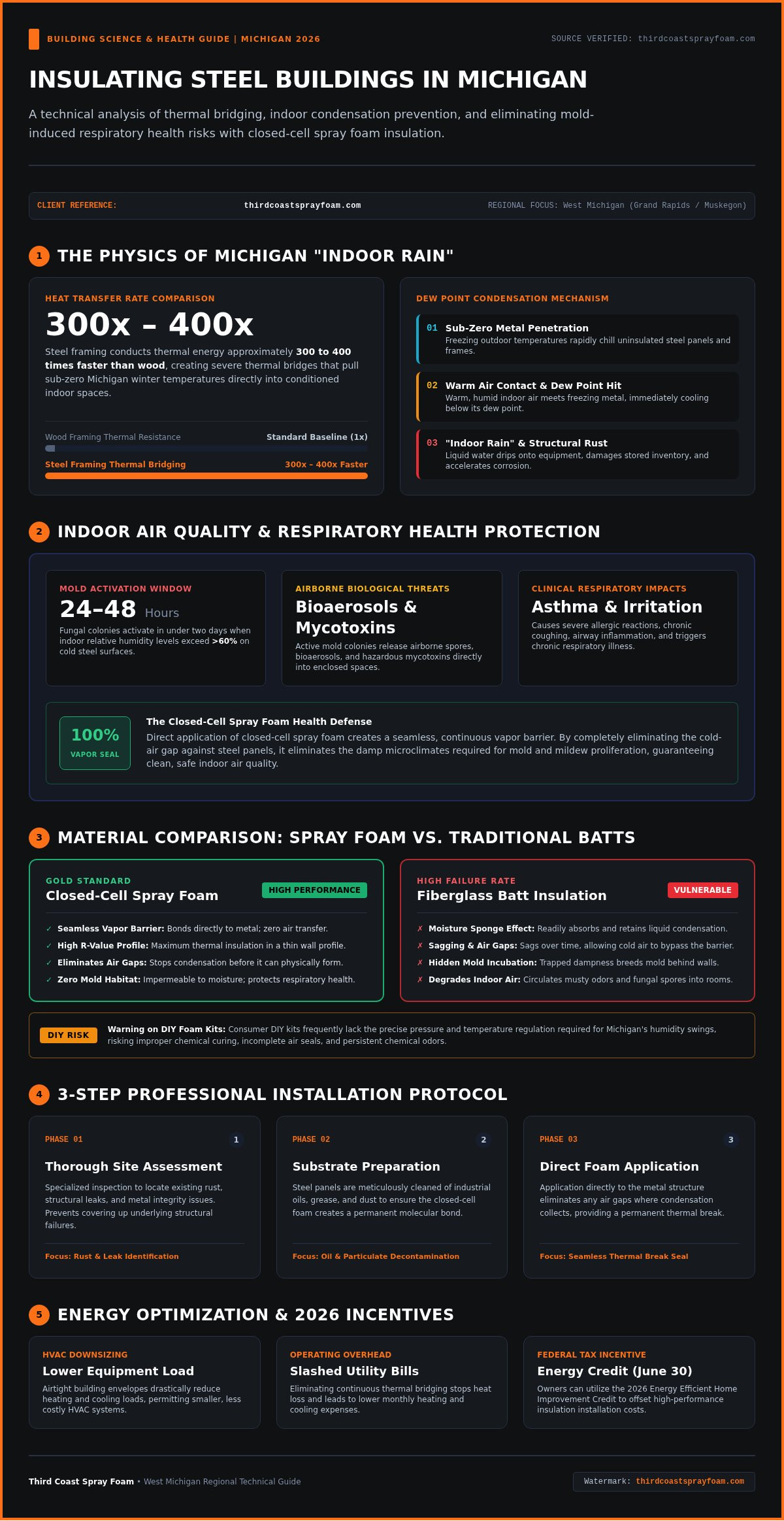
Did you know that the steel framing in your structure conducts heat approximately 300 times faster than wood? This extreme thermal bridging is exactly why so many owners in Grand Rapids and Muskegon face “indoor rain” every winter as warm air hits freezing metal panels. If you’ve noticed dripping condensation damaging your equipment or a lingering musty smell, you’re dealing with a common but serious Michigan challenge. We understand the frustration of watching your investment sweat while heating costs climb. Insulating a steel building in Michigan requires a specialized, airtight approach to stop moisture before it triggers mold growth and respiratory issues.
This 2026 guide teaches you to master the insulation process to create a dry, temperature-controlled environment while slashing energy bills. We’ll explain why closed-cell spray foam is the gold standard for achieving a permanent vapor barrier. You’ll also learn how to meet the latest Michigan Energy Code requirements and protect your health by ensuring superior indoor air quality.
Key Takeaways
- Stop the cycle of “indoor rain” and condensation that fosters mold colonies and threatens your long-term respiratory health.
- Master the professional process of insulating a steel building in Michigan to ensure an airtight seal and permanent structural protection.
- Learn why specialized surface assessments are vital for preventing rust and ensuring your insulation bonds permanently to the steel.
- Maximize your 2026 investment by leveraging federal tax credits before the June 30 deadline to slash your monthly energy costs.
The Michigan Condensation Crisis: Why Steel Buildings Need Specialized Insulation
Michigan winters are unforgiving. Steel structures present a unique challenge because the metal panels and framing act as “thermal bridges” that pull freezing temperatures directly into your conditioned space. Since steel conducts heat roughly 400 times more efficiently than wood, cold penetrates the building envelope almost instantly without a thermal break. When warm, humid indoor air touches these cold surfaces, it hits the dew point instantly. The resulting liquid water leads to “indoor rain” that causes structural rust and ruins expensive equipment or stored inventory. Effective thermal building insulation must do more than just trap heat. It has to provide a continuous air seal to prevent this moisture from forming in the first place.
Without a professional approach to insulating a steel building in Michigan, your structure becomes a liability. We’ve seen how West Michigan’s lake-effect humidity compounds these issues in Grand Rapids and Muskegon. Traditional methods often leave gaps where air can bypass the barrier, leading to saturated materials and hidden structural decay. A high-performance solution must stop the air transfer entirely to maintain structural integrity and keep your assets dry.
Protecting Respiratory Health: The Link Between Metal Buildings and Mold
Untreated moisture isn’t just a building problem. It’s a health hazard. When liquid water pools behind walls or on roof panels, it creates a breeding ground for mold and mildew. Fungal colonies can activate in as little as 24 to 48 hours when relative humidity exceeds 60%. These spores release bioaerosols and mycotoxins that trigger allergic reactions, chronic coughing, and serious respiratory issues like asthma. We prioritize a health-first strategy for insulating a steel building in Michigan. By utilizing closed-cell spray foam, we create a seamless vapor barrier that eliminates the damp microclimates where mold thrives. This ensures your indoor air quality remains safe, protecting the long-term well-being of everyone inside.
Step-by-Step: How to Insulate a Steel Building in Michigan Properly
Proper execution is vital for a lasting result. First, we conduct a thorough site assessment to identify existing rust or leaks. If these aren’t fixed, you’re simply hiding a structural failure. Second, surface preparation is mandatory. Steel panels must be free of oils and dust so the foam bonds permanently to the substrate. Finally, we apply the insulation directly to the metal. This eliminates the air gap where moisture usually collects and prevents the “sweating” that leads to long-term damage.
When insulating a steel building in Michigan, the goal is a seamless thermal break. This approach is the only way to guarantee a dry interior during our harsh winters. According to the Building Science Corporation guide to vapor barriers, managing vapor permeance is essential in cold climates to prevent interstitial condensation within the building assembly.
Closed-Cell Foam vs. Traditional Methods: Why West Michigan Pros Skip the Batts
Fiberglass batts are a poor choice for metal structures. They absorb moisture like a sponge, which leads to sagging and hidden mold growth. This trapped dampness ruins your indoor air quality and triggers respiratory irritation for anyone using the space. When insulating a steel building in Michigan, choosing closed cell spray foam is the only way to ensure a high R-value in a thin profile, perfect for steel walls.
Don’t risk your health with DIY kits. These kits often lack the precise pressure and temperature control needed for Michigan’s fluctuating humidity, leading to improper curing and lingering chemical odors. For a safe, professional installation that protects your respiratory health, reach out to our local specialists for a reliable, expert assessment of your structure.
Maximizing ROI and Air Quality with Professional West Michigan Installation
Investing in professional installation offers long-term financial security. When we create an airtight seal, we drastically lower your building’s heating and cooling loads. This efficiency allows you to install smaller, less expensive HVAC units while significantly reducing monthly utility bills. Owners can also leverage the Energy Efficient Home Improvement Credit available for Michigan projects in 2026. This federal incentive helps offset the cost of high-performance upgrades, making it easier to prioritize the health and durability of your structure.
Navigating Michigan’s specific building codes and climate zones requires local expertise. We understand how the latest standards impact your project. Insulating a steel building in Michigan isn’t just about meeting a number; it’s about ensuring the assembly functions as a single, healthy system. By choosing a professional team, you ensure the work meets safety standards for curing and ventilation, providing immediate peace of mind for your respiratory health.
Navigating Local Climate Challenges: From Grand Rapids to Muskegon
Lake-effect humidity presents a constant threat to structures in Muskegon and Grand Haven. High moisture levels in the air can compromise inferior materials, but our specialized pole barn insulation approach is designed to withstand these coastal conditions. For workshops or storage hubs, we recommend a whole-system seal. This means we don’t just spray the panels. We address critical areas like rim joists and gables where air leakage is most common. This comprehensive strategy is the best way to maintain insulating a steel building in Michigan effectively, ensuring stable indoor air quality and a mold-free environment for years to come.
Secure Your Investment with a Health-First Insulation Strategy
Choosing the right approach for insulating a steel building in Michigan is a permanent investment in your property’s structural integrity and your own respiratory well-being. By eliminating the “indoor rain” caused by thermal bridging, you stop the cycle of moisture that leads to rust and dangerous mold colonies. We’ve seen how professional closed-cell spray foam transforms damp, musty workshops into dry, energy-efficient spaces that protect your health and your assets.
As a locally owned specialist in Fruitport, MI, we pride ourselves on providing Michigan-specific condensation solutions that meet rigorous air quality standards. Don’t let another winter damage your equipment or compromise your indoor air quality. It’s time to prioritize a dry, temperature-controlled environment that lasts for decades.
Get Your Free Steel Building Insulation Estimate in West Michigan
We look forward to helping you create a safer, more efficient environment for your Grand Rapids or Muskegon structure.
Frequently Asked Questions
Is spray foam insulation safe for the steel panels on my building?
It’s completely safe and actually beneficial for your steel panels. The foam bonds directly to the metal, creating a protective barrier that prevents oxygen and moisture from reaching the surface. This stops rust and structural decay before they start. By sealing the panels, you also eliminate the damp areas where mold colonies grow, ensuring better indoor air quality for your Grand Rapids workshop.
How much does it cost to insulate a steel building in Michigan?
The cost of insulating a steel building in Michigan depends on the total square footage and the depth of foam required to meet local energy codes. Variables like the complexity of your steel framing and the current condition of the panels also play a role. A professional installation is a permanent investment that’ll pay for itself through lower energy bills and avoided inventory damage.
Can I use open-cell foam in a metal building, or must it be closed-cell?
Closed-cell spray foam is the gold standard for metal buildings because it functions as a built-in vapor barrier. While open-cell foam offers thermal resistance, its permeable structure can allow humid air to reach the cold steel in Muskegon or Holland. Closed-cell foam provides a rigid, airtight seal that’s essential for preventing the condensation and mold growth that trigger respiratory health issues.
Does insulating a steel building prevent the roof from “sweating” in the winter?
Yes, professional insulation is the only reliable way to stop roof sweating. When you focus on insulating a steel building in Michigan with a continuous thermal break, you prevent warm air from hitting the freezing metal. This stops the dew point from occurring inside your structure. It’ll keep your storage dry and protect your health by preventing the damp conditions that foster fungal proliferation.
Disclaimer
Information provided is for general educational purposes. Individual needs and circumstances vary. Speak to an experienced professional to get the correct information for your situation.