
Could the traditional insulation in your attic actually be contributing to your family’s seasonal allergies or those persistent ice dams every January? When weighing spray foam vs blown insulation for attic spaces, many West Michigan homeowners assume that more material always equals better protection. However, the real secret to a healthy home lies in how well you control air movement and moisture. We understand the stress of high utility bills and the worry that hidden mold might be growing in humid attic corners during our muggy summers.
In this guide, we’ll settle this debate by comparing long-term performance, costs, and impact on indoor air quality. You’ll discover how the right choice provides a permanent seal against dust and allergens while protecting your respiratory health. We’ll break down the differences between spray foam and blown-in options so you can choose the best system for a comfortable, efficient, and secure Michigan home.
Key Takeaways
- Learn the fundamental differences between spray foam vs blown insulation for attic projects and how they uniquely handle the R-value requirements of the Michigan building code.
- Understand the link between attic air sealing and respiratory health, specifically how preventing the “stack effect” keeps dust and allergens out of your indoor air.
- Discover how a permanent air barrier stops the heat loss responsible for ice dams and protects your home’s structural integrity during freezing temperatures.
- Gain insights into moisture management and mold prevention to ensure your insulation investment supports a healthier, drier environment throughout the humid summer months.
Comparing Attic Insulation: Spray Foam vs. Blown-In Basics
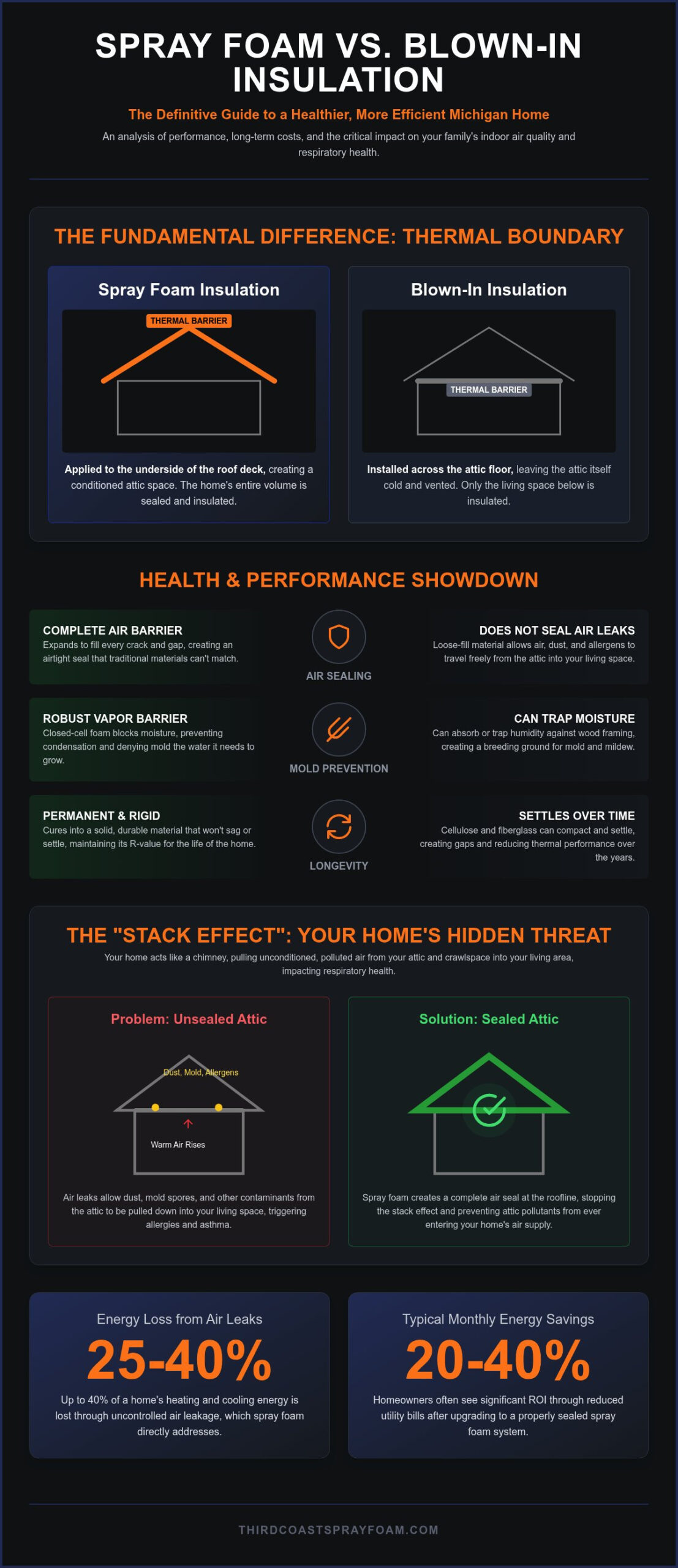
Choosing between spray foam vs blown insulation for attic upgrades starts with understanding where the material lives. Traditional blown-in insulation, often cellulose or fiberglass, is installed across the attic floor. This creates a thermal blanket but leaves the attic space itself vented and cold in winter. Conversely, spray foam is applied directly to the underside of the roof deck. This approach brings the attic into the conditioned space of your home, effectively moving the thermal boundary to the roofline.
Before installing new materials, we prioritize professional insulation removal. Old, contaminated insulation often harbors dust, rodent waste, or mold spores that compromise your respiratory health. Starting with a clean slate ensures your new building insulation basics are built on a healthy foundation. While a high R-value is vital, it doesn’t stop drafts. Air leaks can account for 25% to 40% of a home’s energy loss; spray foam addresses this by creating a permanent air barrier that won’t settle like cellulose over time.
Material Composition: Cellulose, Fiberglass, and Spray Foam
Blown-in materials rely on trapped air pockets for thermal resistance. Cellulose is made from recycled paper treated for fire resistance, while fiberglass consists of fine glass fibers. Both are effective for budget-friendly blown-in insulation top-offs but lack the expansion properties of foam. Professional-grade spray foam expands to seal tiny bypasses around pipes and wires that traditional materials miss. This expansion requires expert chemical balancing to ensure the foam cures correctly, providing a durable seal that prevents humid Michigan air from fueling mold growth in your roof structure.
Performance and Health: Protecting Your Indoor Air Quality
Your home behaves like a giant chimney. This phenomenon, known as the “Stack Effect,” means that air from your attic doesn’t always stay there. When comparing spray foam vs blown insulation for attic spaces, the ability to seal off these air pathways is a major health advantage. Unsealed blown-in insulation allows dust, pollen, and attic debris to migrate into your bedrooms through small gaps around light fixtures and plumbing stacks. These particulates often carry allergens that compromise your respiratory health during peak allergy seasons.
Controlling moisture is just as critical for your family’s well-being. In our humid West Michigan summers, warm air often hits cooler surfaces in the attic, causing condensation. This dampness is a breeding ground for mold and mildew. Utilizing closed cell spray foam creates a robust vapor barrier that prevents this moisture from ever reaching your roof deck. This permanent seal protects your home’s structural integrity while ensuring the air you breathe remains clean and dry.
Mold Prevention and Respiratory Wellness
Attic humidity is a primary trigger for asthma and seasonal allergies. By creating a hygienic barrier, professional air sealing stops environmental triggers from entering your home’s respiratory zone. Unlike traditional materials that can trap moisture against wooden beams, a sealed system manages indoor humidity levels effectively. This holistic approach to property maintenance is a smart investment in your long-term wellness. If you’re concerned about your home’s air quality, our team can help you evaluate your current insulation levels to ensure a safer living environment.
The Michigan Factor: Choosing the Right Solution for Your Home
Michigan winters present a unique challenge: the dreaded ice dam. When you evaluate spray foam vs blown insulation for attic spaces, consider how heat escapes your living area. Escaping heat melts snow on your roof, which then refreezes at the cold eaves, causing structural damage and mold-inducing leaks. Spray foam’s air-sealing properties stop this heat transfer at the source. For homeowners on a stricter budget, blown-in insulation remains a practical choice for topping off existing levels, provided the attic floor is already properly air-sealed to protect your indoor air quality.
A total attic reset often begins with professional insulation removal. This process eliminates old, contaminated materials that might trigger respiratory issues or harbor hidden moisture. By combining removal with high-performance materials, you create a permanent solution for your home. While the initial investment for spray foam is higher, the long-term ROI is significant. Homeowners often see 20% to 40% in monthly energy savings while increasing their property value through a durable, mold-resistant roof system.
Maximizing Your Investment with Energy Credits
You can offset project costs by maximizing your energy efficient home improvement credit, which provides federal tax incentives for qualifying upgrades. It’s vital to partner with a Grand Rapids or Fruitport specialist who understands Michigan energy codes and the R-49 requirements for our specific climate zone. Before starting, assess your primary goals: is it lower utility bills, better respiratory health, or stopping ice dams? Identifying these priorities ensures your insulation strategy protects both your family’s wellness and your financial security for decades.
Secure Your Home’s Health and Efficiency
Deciding between spray foam vs blown insulation for attic upgrades is about more than just thermal R-values; it’s about creating a permanent shield for your family’s respiratory health. We’ve seen how air sealing prevents the migration of allergens and moisture that leads to mold growth. Whether you choose the high-performance seal of closed-cell foam or a practical blown-in top-off, the foundation must be a clean environment. Our team specializes in professional insulation removal to ensure your new system isn’t sitting on decades of contaminants.
With our deep roots in the Grand Rapids and Muskegon climates, we understand how to stop ice dams and lower your monthly bills. You deserve a home that’s as healthy as it is comfortable. Get your free attic insulation estimate in Fruitport and West Michigan today. Let’s work together to build a more secure, efficient future for your home.
Frequently Asked Questions
Is spray foam insulation safe for people with asthma or allergies?
Yes, it’s highly beneficial for respiratory health. By creating a total air seal, it prevents outdoor allergens like pollen and dust from entering your home through the attic. This barrier also stops the moisture infiltration that leads to mold growth. Once cured, the material is inert and provides a cleaner indoor environment for those managing asthma or seasonal allergies.
How much can I actually save on my Michigan energy bills with spray foam?
Most West Michigan homeowners see monthly energy savings between 20% and 40% after upgrading. When comparing spray foam vs blown insulation for attic efficiency, the air-sealing properties of foam provide a significant edge. It stops the heat loss that forces your furnace to work harder during freezing Muskegon winters, leading to lower utility costs year-round.
Can I install spray foam over my existing blown-in insulation?
We don’t recommend applying spray foam directly over old materials. For the foam to bond correctly to the roof deck or attic floor, the surface must be clean. Leaving old insulation can trap existing mold or rodent waste. Professional insulation removal ensures a healthy start and allows the new material to perform at its full potential.
Does spray foam insulation cause roof rot in Michigan attics?
No, professional application actually protects your roof structure. Closed-cell spray foam acts as a vapor barrier, preventing warm indoor air from condensing against the cold roof deck. This moisture control is vital for preventing the rot and mold that often plague vented attics. Using a local expert ensures the chemical balance is correct for our specific West Michigan humidity levels.
Disclaimer
Information provided is for general educational purposes. Individual needs and circumstances vary. Speak to an experienced professional to get the correct information for your situation.