
If your metal building is “sweating” from the ceiling, you aren’t just dealing with a moisture problem; you’re looking at a serious threat to your property and your family’s respiratory health. In West Michigan, choosing the right metal building insulation Michigan solution is about more than just staying warm during a January blizzard. You’ve likely felt the frustration of watching condensation drip onto your tools or smelled that heavy, musty odor that signals mold growth. It’s discouraging to pay rising energy bills for a heated shop that still feels damp and drafty.
We believe your building should be a safe, dry, and efficient asset. This 2026 guide reveals how professional closed-cell spray foam creates a seamless air barrier to stop condensation for good. You’ll discover how to meet the latest R-30 energy code requirements, potentially slash your heating costs by 30%, and create a healthy indoor environment. We’ll also walk through current Michigan HEAR program details and utility rebates from providers like DTE and Consumers Energy that make these structural upgrades more accessible. It’s time to turn your building into a dry, secure space that protects both your equipment and your lungs.
Key Takeaways
- Stop the cycle of “pole barn sweat” by understanding the science of condensation and how Michigan temperature swings impact your structure’s integrity.
- Discover why professional closed-cell spray foam is the gold standard for metal building insulation Michigan, providing a permanent vapor barrier that fiberglass can’t match.
- Prioritize your respiratory health by eliminating the damp environments where toxic mold and mildew thrive in uninsulated steel buildings.
- Navigate the 2026 Michigan energy codes and maximize your savings through available utility rebates from providers like DTE and Consumers Energy.
- Prepare for a successful installation by learning how local weather patterns and proper site prep dictate the ideal timing for professional spray foam application.
The Michigan Metal Building Insulation Crisis: Why ‘Sweating’ Happens
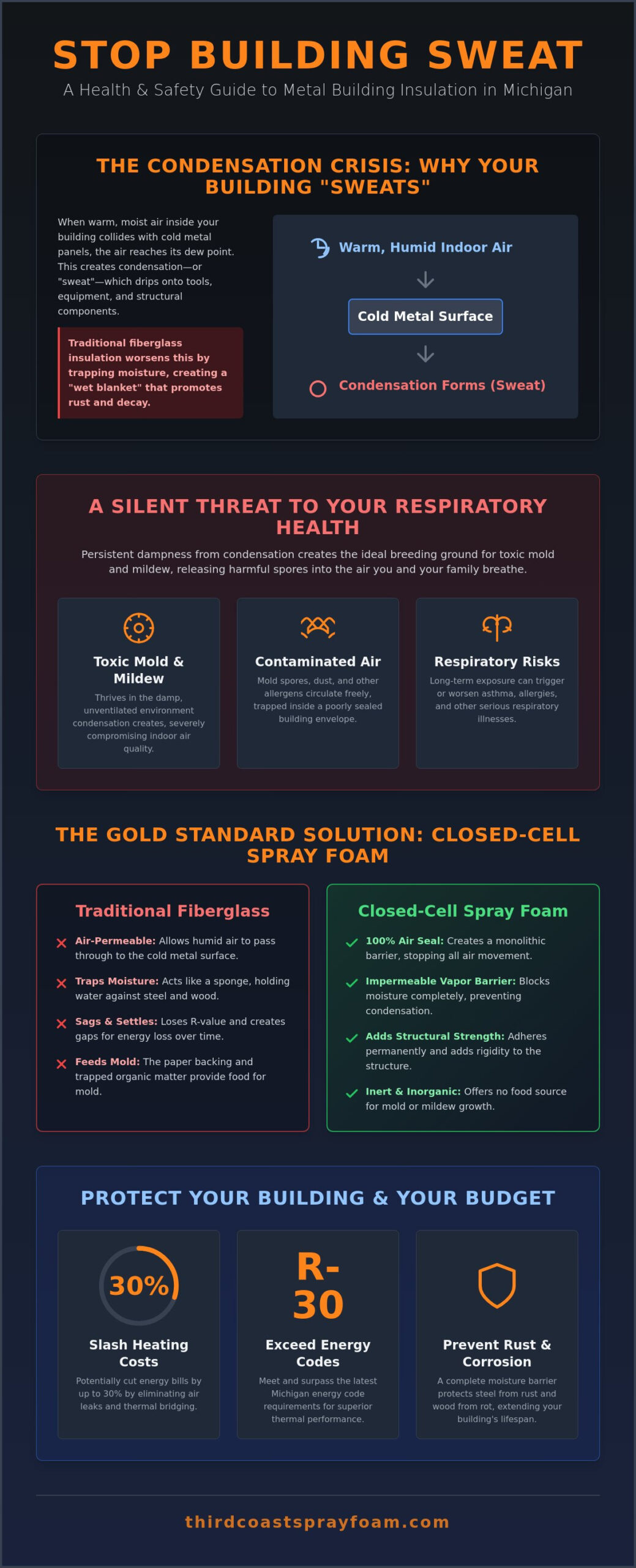
Michigan property owners often encounter the frustrating phenomenon of “interior rain.” This isn’t caused by a roof leak; it’s a result of basic physics. When warm, humid air inside a heated shop or barn comes into contact with cold steel panels, the air reaches its dew point instantly. Water droplets form on the ceiling and walls, eventually dripping onto your tools, vehicles, and equipment. This “sweating” is the single biggest challenge for metal building insulation Michigan owners face during our long winters and humid summers. Because steel is a highly conductive material, it transfers external temperatures to the interior of your building with incredible efficiency.
Many owners attempt to fix this with traditional fiberglass batts, but this often makes the moisture problem worse. Fiberglass is air-permeable, meaning it allows humid air to pass right through the fibers. Once that moisture hits the cold metal behind the insulation, it condenses and gets trapped. This creates a “wet blanket” effect that destroys the insulation’s R-value and creates a hidden breeding ground for mold and mildew. This cycle of dampness eventually compromises your indoor air quality and puts your respiratory health at risk.
To better understand how professional application addresses these structural moisture challenges, watch this overview:
Lake Effect Humidity and Your Steel Structure
Living in West Michigan means we deal with unique environmental stressors that property owners in other regions don’t experience. Our proximity to the lake creates high humidity levels that can spike quickly, even during the summer months. These rapid temperature swings cause uninsulated metal panels to expand and contract, which can stress unsealed seams and fasteners. High summer humidity is just as dangerous as winter cold because it fuels the persistent dampness that leads to wood rot in hybrid structures and poor air quality for anyone working inside.
The Hidden Cost of Poor Insulation
Every unsealed seam in your building is a gap where your expensive heat escapes. Beyond the immediate energy waste, persistent internal moisture causes structural rust and corrosion that aren’t always visible until the damage is severe. Thermal bridging is the primary cause of energy loss in steel buildings. This occurs because the metal frame itself acts as a highway that carries heat directly out of the structure, bypassing your insulation entirely. To stop this, Spray foam insulation is required to create a thermal break. By sealing these gaps, you protect the structural integrity of your building and ensure the air you breathe remains free from the mold spores that thrive in damp, unventilated steel environments.
Closed-Cell Spray Foam: The Best Insulation for Metal Buildings in Michigan
When it comes to high-performance metal building insulation Michigan property owners need a solution that does more than just block the cold. Closed-cell spray foam is the gold standard for steel structures because it addresses the unique physical challenges of metal panels. Unlike traditional materials that sit loosely in a cavity, closed-cell foam is a high-density material that adheres directly to the steel. This creates a permanent, monolithic thermal barrier that won’t sag, settle, or pull away over time. By choosing this professional application, you’re investing in a system that protects your building’s structural integrity while providing superior thermal resistance.
The secret to its success lies in its ability to achieve a 100% air seal. As the liquid foam expands, it reaches into every tiny gap, seam, and fastener hole where condensation typically starts. This eliminates the “sweating” issues we discussed earlier by ensuring warm indoor air never touches the cold metal surface. Additionally, the high-density nature of the foam adds significant rigidity to the metal panels. This reinforcement helps the building withstand heavy West Michigan snow loads and wind shear, effectively making the entire structure stronger from the inside out. With an R-value of approximately 6.5 to 7 per inch, it provides maximum performance even in the thin wall cavities common in metal shops.
Closed-Cell vs. Open-Cell Foam for Steel
It’s vital to understand that not all spray foams are equal. Open-cell foam is a liability in a metal building because its sponge-like structure can actually absorb and hold moisture. If condensation occurs behind open-cell foam, it traps water against the steel, leading to rapid corrosion and hidden mold growth. Closed-cell foam, however, acts as its own vapor barrier. It’s completely moisture-resistant, which is essential for maintaining excellent indoor air quality and protecting your respiratory health. By preventing damp environments, you stop mold spores before they can ever take root.
Stopping the ‘Chimney Effect’ in Tall Buildings
Tall pole barns and steel warehouses often suffer from the “chimney effect,” where heat rises rapidly and escapes through the ridge cap and gables. This process pulls cold air in through the base plates and floor-level drafts, making the building feel perpetually cold despite the thermostat setting. Professional spray foam application seals these critical exit and entry points, including the ridge cap and gables, to lock heat inside. Integrating these methods with proven pole barn insulation strategies ensures your building remains comfortable from the floor to the peak. If you’re tired of drafts and dampness, it’s time to see how a professional closed-cell installation can transform your workspace.
Insulation and Your Health: Air Quality, Mold, and Respiratory Safety
While the structural and financial benefits of proper insulation are clear, the impact on your physical well-being is often the most critical factor. In Michigan’s humid climate, the condensation that forms on uninsulated steel isn’t just a nuisance; it’s a primary catalyst for biological growth. When water sits on metal surfaces or becomes trapped behind traditional materials, it creates a microclimate where mold and mildew thrive. These spores are invisible to the naked eye, but they quickly circulate through the air you breathe while working in your shop or barn. Investing in high-quality metal building insulation Michigan residents can trust is a direct investment in your long-term physical well-being.
Indoor air quality (IAQ) is also heavily influenced by how well your building is sealed from the outside environment. Traditional insulation often fails to stop the “stack effect,” which pulls in dust, pollen, and outdoor pollutants through gaps in the steel panels. We focus on creating a comprehensive seal that keeps these irritants out. Furthermore, a properly insulated building discourages pest infestations. Rodents and insects frequently nest in fiberglass batts, leaving behind dander and waste that are potent allergens. Closed-cell foam is too dense for nesting, which helps maintain a cleaner, safer environment for everyone inside.
Mold Prevention as a Health Priority
Fiberglass and cellulose insulation are particularly problematic in damp metal buildings because they can act as a food source for mold. These materials trap dust and organic debris, providing the perfect substrate for fungal colonies once they become damp from “pole barn sweat.” In contrast, closed-cell spray foam is an inert, non-porous material that provides no nutritional value to mold. By eliminating the dampness and the food source, we create an inhospitable environment for fungal growth. This protects sensitive occupants from the volatile organic compounds (VOCs) and airborne allergens that often plague poorly ventilated steel structures.
Creating a Biologically Safe Workspace
Whether you use your building as a commercial garage or a home hobby shop, clean air is essential for productivity and safety. Properly applied metal building insulation Michigan contractors install creates a permanent barrier against the environmental triggers of respiratory illness. By establishing a 100% vapor-tight seal, professional insulation prevents the persistent moisture accumulation that fuels toxic mold growth, directly lowering the risk of asthma triggers and chronic respiratory distress within the building. This air sealing also prevents the “pulling” of industrial or agricultural pollutants from the surrounding area, ensuring that the air inside your workspace remains fresh and safe year-round.
The Installation Process: What Michigan Property Owners Should Expect
Every successful metal building insulation Michigan project starts with meticulous site preparation. We don’t just show up and spray; we protect your investment. This involves masking off floors, windows, and any equipment that stays in the building during the application. Since spray foam adheres with incredible strength, preventing overspray is our first priority. Once the area is secure, we monitor the surface temperature of the steel panels. Michigan weather is a major factor here. If the metal is too cold or contains trace moisture from morning frost, the foam won’t bond correctly. This can lead to delamination, which creates the very gaps where condensation and mold thrive.
The application itself happens in layers, known as “passes.” We apply the high-density foam in specific thicknesses to build up to your required R-value while managing the heat generated by the chemical reaction. This layering ensures the foam cures evenly and creates the monolithic seal needed to stop the “pole barn sweat” we discussed earlier. Safety remains paramount throughout this process. While the foam is being applied, the area must be ventilated. For your health and safety, we typically recommend staying out of the building for 24 to 72 hours. This window allows the material to fully cure, ensuring the indoor air quality is pristine before you move your equipment back in.
Professional Grade vs. DIY Kits
While DIY spray foam kits are available, they often pose significant risks for large steel structures. These kits frequently result in “off-ratio” foam if the canisters aren’t kept at the exact right temperature. Off-ratio foam can remain sticky, fail to provide a vapor barrier, or emit odors indefinitely. Professional equipment ensures the chemicals mix at the precise temperature and pressure required for a permanent chemical bond to the steel. Hiring a closed cell spray foam expert provides the specialized equipment and the warranty that a handheld kit simply cannot offer.
Meeting Michigan Building Codes in 2026
In 2026, Michigan building codes for Climate Zones 5 and 6 require a minimum of R-30 for heated metal structures. We ensure your project meets these rigorous standards by applying the correct depth of foam. We also address fire safety by applying intumescent coatings when the foam is left exposed in a workshop or garage. While the landscape for the energy efficient home improvement credit has shifted, professional installation is still the primary requirement for securing state-level HEAR rebates or utility incentives from DTE and Consumers Energy. If you’re ready to secure your structure and your health, consult with our local specialists to ensure your project is done right the first time.
Choosing the Right Michigan Insulation Contractor for Your Metal Building
Selecting the right partner for metal building insulation Michigan projects is a decision that impacts the longevity of your structure and the health of everyone inside it. While national chains might highlight their massive footprint, they often overlook the specific environmental challenges unique to West Michigan. We live and work in this climate. We understand how the lake effect humidity interacts with steel panels in Fruitport and Grand Rapids. Choosing a local specialist ensures your project is handled by experts who recognize the difference between a standard residential job and the rigorous demands of a commercial steel structure.
When you evaluate credentials, prioritize contractors with specialized experience in metal. Steel requires specific surface preparation and an understanding of thermal bridging that wood-frame homes do not. Verify that your contractor is fully insured and holds the necessary Michigan licensing for insulation work. Beyond technical skills, a professional team should offer a comprehensive assessment that prioritizes your indoor air quality. If a contractor ignores existing moisture or mold issues, they aren’t providing a solution; they’re masking a future health crisis. We believe in getting it right the first time to protect your financial and physical well-being.
The Third Coast Difference: A Holistic Approach
We view your building as an integrated system rather than a collection of separate walls. Our approach focuses on creating a permanent seal that addresses the root cause of “pole barn sweat” while safeguarding your respiratory wellness. By utilizing high-density closed-cell foam, we eliminate the damp environments where toxic mold spores thrive. We take immense pride in our craft, supporting West Michigan residents from Muskegon to Lansing with solutions built to last a lifetime. Our commitment to environmental safety means we prioritize your health at every stage of the installation, ensuring a clean and safe workspace for years to come.
Start Your Project with a Health-First Consultation
Every project begins with a detailed local site visit. We look for existing structural rust, moisture accumulation, and potential air leaks that traditional insulation methods miss. This thorough inspection allows us to provide a precise estimate tailored to your building’s specific geometry and usage. We don’t believe in one-size-fits-all quotes because every steel structure has its own set of thermal challenges. If you are ready to protect your property and improve your indoor environment, Schedule your free metal building insulation estimate today. We look forward to being your trusted advisor for a drier, healthier, and more efficient workspace.
Investing in a Dry, Healthy Workspace
Your metal building represents a significant investment in your property and your daily productivity. As we’ve explored, the right metal building insulation Michigan solution is the only permanent way to eliminate “pole barn sweat” and protect your respiratory health from the silent threat of mold. By opting for high-density closed-cell spray foam, you’re creating a bone-dry environment that meets 2026 energy codes while slashing your monthly utility costs. It’s about more than just temperature; it’s about structural preservation and clean air.
Since 2013, our team has operated as expert West Michigan installers dedicated to high-performance solutions. We specialize in closed-cell foam that creates a 100% air and vapor seal, focusing specifically on mold prevention and long-term respiratory safety. Don’t let another season of condensation compromise your equipment or your physical well-being. Protect your building and your health—get a free estimate from Third Coast Spray Foam today. We’re ready to help you turn your steel structure into a secure, efficient, and permanent asset for your property.
Frequently Asked Questions
Is spray foam safe for metal buildings in Michigan’s climate?
Professional spray foam is completely safe for Michigan metal buildings when installed by licensed contractors. Once the material fully cures, which typically takes between 24 and 72 hours, it becomes an inert solid that does not off-gas harmful chemicals. This creates a permanent, secure environment that protects both your property and your respiratory health by preventing the damp conditions where mold thrives.
Can I insulate my metal building myself with fiberglass batts?
While you can technically install fiberglass yourself, we strongly discourage it for steel structures. Fiberglass is air-permeable and tends to absorb moisture; this creates a “wet blanket” effect that traps water against your metal panels. This leads to hidden rust and the growth of toxic mold spores, which can severely compromise your indoor air quality and structural integrity over time.
How much R-value do I need for a heated shop in Grand Rapids?
As of 2026, the Michigan Commercial Energy Code mandates a minimum R-value of R-30 for heated structures in Climate Zones 5 and 6. Achieving this level of metal building insulation Michigan ensures you stay compliant with state laws while maximizing your energy savings. For ceilings in heated shops, many property owners choose to go even higher to R-49 for optimal heat retention.
Will spray foam insulation stop my pole barn ceiling from sweating?
Yes, closed-cell spray foam is the most effective solution for stopping ceiling condensation. It creates a seamless air and vapor barrier that prevents warm, moist indoor air from ever touching the cold metal surface. By eliminating this contact, you stop the “sweating” cycle permanently; this protects your tools and equipment from water damage and prevents the musty smells associated with mildew.
Does metal building insulation improve indoor air quality?
Properly installed insulation significantly improves indoor air quality by creating a comprehensive air seal. This seal prevents outdoor pollutants, dust, and allergens from being pulled into your workspace through gaps in the steel panels. Most importantly, it manages moisture to prevent the growth of mold and mildew, which are primary triggers for asthma and other chronic respiratory health issues.
How long does it take to insulate a standard 30×40 metal building?
A standard 30×40 metal building typically takes one to two days to insulate professionally. This timeline includes the essential site preparation to protect your floors and equipment, the application of the foam in multiple passes, and the initial curing phase. We prioritize a steady, logical pace to ensure every seam is sealed correctly for long-term performance and structural protection.
Is closed-cell foam better than open-cell for steel structures?
Closed-cell foam is the superior choice for steel structures because it does not absorb water and acts as its own vapor barrier. Open-cell foam can trap moisture against the metal, which leads to corrosion and air quality problems. Additionally, high-density closed-cell foam adds significant rigidity to your metal panels, helping your building withstand heavy Michigan snow loads and high winds.
Can I get a tax credit for insulating my Michigan metal building in 2026?
The federal 25C tax credit expired at the end of 2025 and is not available for 2026 installations. However, Michigan residents can still access significant savings through the state HEAR program, which offers rebates up to $1,600. You should also check with local providers like DTE Energy or Consumers Energy, as they currently offer insulation rebates ranging from $600 to $800.
Disclaimer
Information provided is for general educational purposes. Individual needs and circumstances vary. Speak to an experienced professional to get the correct information for your situation.