
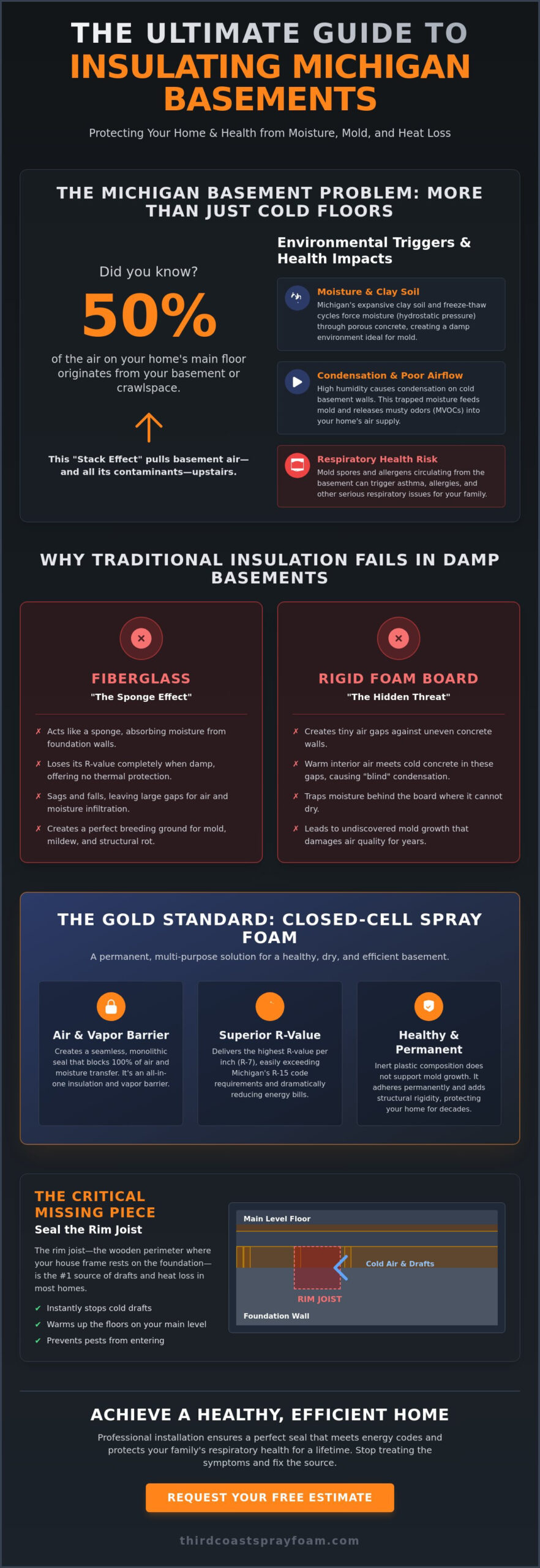
Did you know that up to half of the air you breathe on your home’s main floor actually originates in your basement? If you are currently dealing with musty smells, icy floors, or the constant worry of mold affecting your family’s respiratory health, you are not alone. Most Michigan homeowners treat a damp basement as an unavoidable local reality, but these symptoms are actually signs of a failing building envelope. Finding the best insulation for Michigan basements is about more than just hitting a specific R-value; it is about moisture management and long-term security for your property.
We understand that your priority is a healthy, dry environment where your utility bills stay low and your indoor air quality stays high. This guide explores how the latest 2021 International Energy Conservation Code updates affect your project and why professional solutions like closed cell spray foam or rim joist insulation are the gold standard for 2026. We will walk you through the current Michigan Home Energy Rebates (MiHER) and utility programs from DTE or Consumers Energy that help make these critical upgrades more accessible now that federal tax credits have expired. By the end of this article, you will have a clear roadmap to stop heat loss and transform your basement into a conditioned, mold-free space that protects your family’s well-being for decades.
Key Takeaways
- Identify how Michigan’s unique clay soil impacts foundation moisture and learn the specific environmental triggers that lead to mold development.
- Discover why closed cell spray foam is the best insulation for Michigan basements because it provides a permanent vapor barrier that fiberglass simply cannot match.
- Connect your basement’s condition to your family’s respiratory health by learning how to seal out dampness and improve overall indoor air quality.
- Learn why rim joist insulation is the critical missing piece for stopping drafts and warming up the floors on your main living level.
- Understand the technical advantages of professional-grade application over DIY kits to ensure your home meets the updated 2026 energy codes.
Understanding the Unique Challenges of Michigan Basements
Michigan’s geography creates a specific set of hurdles for homeowners trying to maintain a healthy living space. Whether your home is a century old or a recent build, the foundation is constantly under pressure from the environment. Choosing the best insulation for Michigan basements requires an understanding of how our local soil and climate interact with your home’s structure. It’s not just about warmth; it’s about creating a permanent barrier against the elements. We view your basement as the foundation of your home’s health, not just a storage area.
The “Mitten” Climate: Moisture, Clay, and Condensation
Our state is famous for its expansive clay soil, which acts like a heavy, water-retaining blanket around your foundation. During the frequent freeze-thaw cycles of a Michigan winter, this soil expands and contracts, pushing moisture through porous concrete or stone walls. This hydrostatic pressure doesn’t just cause dampness. It creates the perfect breeding ground for mold and mildew. Because Michigan experiences high humidity levels throughout the year, condensation often forms on cold basement walls even during the summer months. This cycle directly impacts your family’s respiratory health by releasing allergens and spores into the air that eventually circulates to the main living floors.
Traditional vs. Dug-Out Basements
In communities like Grand Rapids and Muskegon, many older homes feature what we call a traditional “Michigan Basement.” These are often original crawl spaces that were later dug out to provide more head height, typically featuring stone, brick, or cinderblock foundations. These materials are naturally porous. They lack a modern capillary break to stop water wicking. If you notice a persistent “earthy” smell, it isn’t just a sign of an old house. That scent is often a byproduct of microbial volatile organic compounds produced by mold growing in damp conditions. Modern poured concrete basements are more structurally sound but still require a robust thermal envelope to prevent air infiltration and keep the space conditioned.
Under the 2021 International Energy Conservation Code (IECC) standards adopted in August 2025, Michigan homeowners must now meet stricter insulation requirements. For residential buildings in our climate, this means achieving an R-value of at least R-15 for continuous insulation. Using traditional, porous building insulation materials often fails these modern standards because they trap moisture against the wall. A dry, healthy basement is an integrated system. The insulation must serve as both a thermal barrier and a moisture shield to protect your home’s structural integrity and your family’s well-being.
Why Traditional Insulation Fails in Damp Michigan Basements
Many homeowners assume that the pink fiberglass batts used in their attics are also the best insulation for Michigan basements. This is a common misconception that often leads to costly property damage and health concerns. Fiberglass is a porous material designed to trap air, but in a subterranean environment, it acts more like a sponge. When it absorbs moisture from the foundation, it loses its R-value and begins to sag, leaving your walls unprotected. This “Sponge Effect” creates a heavy, sodden mess that stays damp for months, providing the perfect environment for structural rot to take hold. Because of these persistent performance issues, fiberglass is not sold by Third Coast Spray Foam for basement applications.
Rigid foam board is often seen as an alternative, but it presents its own set of challenges. Because concrete walls are rarely perfectly flat, installing rigid panels often leaves small air gaps between the insulation and the foundation. These hidden pockets allow warm, humid indoor air to meet the cold concrete, resulting in “blind” condensation. This moisture is trapped behind the board where it cannot dry, often leading to mold growth that remains undiscovered for years. Understanding the underlying causes of basement moisture is the first step in realizing why a seamless, air-tight barrier is non-negotiable for Michigan homes.
Mold Growth and Respiratory Health
When traditional insulation fails, the consequences extend far beyond high energy bills. Damp fiberglass or trapped moisture behind foam boards becomes a primary breeding ground for mold and mildew. These fungi release microscopic spores and mycotoxins into your basement environment. For families with asthma or seasonal allergies, this can lead to chronic respiratory health issues and persistent coughs. We believe that a healthy home starts with a dry foundation. By eliminating materials that hold moisture, you remove the environmental triggers that compromise your indoor air quality.
The Stack Effect: How Basement Air Reaches Your Living Room
It is a mistake to think that basement air stays in the basement. Through a process called the “stack effect,” air naturally moves upward through your home. As warm air rises and escapes through the attic, it creates a vacuum that pulls air from the lowest points of the house. This means that the musty, “dirty” air from a damp basement is constantly being drawn into your kitchen, living room, and bedrooms. This air often carries high levels of humidity and soil gases like radon. Implementing a professional rim joist insulation solution is a critical step in breaking this cycle, as it seals the primary entry points for outdoor drafts and pollutants. Proper air sealing ensures that the air your family breathes remains clean and stable throughout every season.
The Best Insulation Options: Closed-Cell vs. Open-Cell Spray Foam
When selecting the best insulation for Michigan basements, the decision usually comes down to two distinct types of spray foam. While both materials provide a superior air seal compared to traditional batts, they serve very different purposes within your home’s ecosystem. We view basement insulation as a specialized engineering challenge. The material must withstand hydrostatic pressure, varying humidity levels, and the constant threat of microbial growth. Unlike porous materials that fail when wet, spray foam creates a custom-fit barrier that adheres directly to your foundation, leaving no room for condensation to hide.
The performance gap between spray foam and traditional materials is significant. For example, 2 inches of closed-cell spray foam consistently outperforms 6 inches of fiberglass insulation in a basement setting. This isn’t just about the R-value on a label. Fiberglass relies on pockets of air that lose their insulating power the moment they become damp. Spray foam maintains its thermal resistance regardless of the humidity levels outside. By installing a dense, monolithic barrier, you ensure your heating and cooling system operates efficiently without fighting the constant influx of cold, damp air from the soil.
Closed-Cell Foam: The Waterproof Powerhouse
Closed-cell foam is the gold standard for foundation walls. It is a high-density material that dries into a rock-hard state, which actually adds structural integrity to older stone or cinderblock foundations. This is the primary service offered by Third Coast Spray Foam for West Michigan homeowners because of its “Class II” vapor retarder properties. It effectively stops water vapor from migrating through your walls and into your home. By preventing this moisture transfer, you eliminate the environmental triggers that lead to mold spores. This creates a safer environment for anyone in your family who suffers from asthma or other respiratory health concerns.
Open-Cell Foam: Breathability vs. Air Sealing
Open-cell foam is a lighter, more flexible alternative that excels in specific areas. While it is an incredible air sealer, it is not waterproof and should be used with caution in subterranean spaces. The best use case for open-cell foam in a Michigan basement is often the ceiling. If you are finishing your basement and want to dampen the sound of footsteps or television noise from reaching the main floor, open-cell foam provides exceptional soundproofing. It is more cost-effective for large, dry areas, but it requires careful moisture management. We typically recommend it for the overhead “envelope” rather than the foundation walls to ensure your basement remains a healthy, conditioned part of your home.
Don’t Ignore the Rim Joist: The #1 Source of Basement Drafts
The rim joist, also known as the box sill, is the wooden member that sits directly on top of your foundation wall. It is the specific point where your home’s framing meets the masonry. Because this area is located above the ground but remains exposed to the elements, it acts as a massive thermal bridge. In many West Michigan homes, this is the primary reason for that uncomfortable “cold floor” feeling in your kitchen or living room. While many people focus only on the walls, the best insulation for Michigan basements must include a comprehensive plan for the rim joist area. Without sealing this perimeter, your heating system will continue to fight a losing battle against incoming drafts.
Traditional fiberglass batts are often stuffed into these joist bays, but they are ineffective at stopping air movement. In fact, they often hide a growing problem: “sweating” rim joists. When warm indoor air hits the cold wooden surface, condensation forms. Over time, this moisture leads to hidden wood rot and mold growth that compromises your home’s structural integrity. Unlike porous materials, closed cell spray foam creates a 100% air-tight seal. It adheres directly to the wood and concrete, eliminating the air gaps where condensation begins. This permanent solution keeps your sill plate dry and your floors warm throughout the winter.
The Rim Joist Insulation Process
We follow a disciplined approach to ensure your rim joist is sealed correctly for the long term. This isn’t a quick fix; it is a systematic upgrade to your home’s building envelope.
- Step 1: Removal. We start by removing old, dusty fiberglass or cellulose. These materials often harbor allergens and have lost their effectiveness due to moisture absorption.
- Step 2: Surface Preparation. Our team cleans the joist bays to ensure maximum foam adhesion. This step is critical for creating a permanent bond that won’t pull away as the house settles.
- Step 3: Application. We apply professional-grade closed cell spray foam to seal every crack and crevice. This creates a monolithic barrier that stops air infiltration and moisture transfer in one step.
Stopping Pests and Pollutants
Sealing your rim joists provides benefits that go beyond temperature control. This area is a common entry point for spiders, ants, and even rodents seeking warmth. By creating a hard, airtight seal, you effectively shut down these “pest highways.” More importantly, this barrier protects your family’s respiratory health. It prevents outdoor pollutants, vehicle exhaust, and seasonal allergens from being drawn into your basement and circulated through the rest of your home. Protecting your indoor air quality is a vital part of our mission to create safer, healthier living spaces for our neighbors. If you are ready to stop the drafts at their source, you can schedule a professional rim joist insulation assessment today.
Transforming Your Michigan Basement with Professional Installation
Choosing the best insulation for Michigan basements is only the first step toward a healthier home. The effectiveness of any material depends entirely on the precision of its application. While some homeowners consider DIY spray foam kits, these retail products often lack the temperature and pressure controls required for a proper chemical reaction. In our West Michigan climate, an improper mix can result in poor adhesion or lingering odors that compromise your indoor air quality. Professional installation ensures a monolithic seal that adheres perfectly to your foundation, creating a permanent barrier that becomes a structural asset to your property.
Local expertise is vital when prepping a basement in Grand Rapids or Muskegon. We understand how lake-effect humidity and soil saturation levels impact the installation process. Our team manages the entire insulation removal and replacement process, ensuring that old, contaminated materials are safely extracted before new foam is applied. This thorough approach doesn’t just improve comfort; it significantly increases your home’s resale value. In today’s market, West Michigan buyers prioritize energy-efficient homes with dry, mold-free basements that offer safe, usable living space.
Why West Michigan Homeowners Trust Third Coast
We’ve built our reputation on a foundation of local reliability and technical excellence. Our commitment to your family’s well-being is reflected in our strict “no-fiberglass” policy for all subterranean projects. We know that porous materials eventually fail in our damp environment, leading to the respiratory health issues we’ve discussed. By focusing on high-performance spray foam, we provide a solution that prioritizes long-term security. We are proud to serve neighbors along the shoreline from Muskegon to Grand Haven and inland toward Lansing, treating every project as a collaborative effort to improve our community’s housing standards.
Next Steps: Getting Your Custom Insulation Plan
Every Michigan basement has its own set of structural quirks, from original stone walls to modern poured concrete. A professional on-site assessment is the only way to identify specific air leaks and moisture entry points. During this visit, we can also discuss how to navigate the current incentive landscape. While the federal 25C tax credit expired at the end of 2025, homeowners can still explore state-level programs like the Michigan Home Energy Rebates (MiHER) or utility-specific incentives from DTE and Consumers Energy. You can learn more about these opportunities by reviewing our guide on the Energy Efficient Home Improvement Credit to see what options remain for your 2026 project.
Don’t let a damp basement continue to impact your home’s air quality and energy efficiency. Take the first step toward a drier, healthier, and more comfortable living space. Schedule your free basement insulation estimate today.
Securing Your Home’s Health and Efficiency
Protecting your home from the ground up requires a strategy that goes beyond simple R-values. We’ve discussed how modern moisture-resistant materials outperform porous alternatives and why sealing the rim joist is essential for warm floors and clean air. By prioritizing a seamless vapor barrier, you aren’t just saving money on energy; you are actively defending your family’s respiratory health against the environmental triggers of mold and mildew. This holistic approach ensures your basement remains a dry, conditioned asset rather than a source of concern.
Finding the best insulation for Michigan basements means choosing a solution that stands up to expansive clay soils and seasonal humidity. As local West Michigan experts since 2013, we take pride in providing health-focused, mold-resistant solutions that offer permanent security. Our specialists in closed cell spray foam understand the technical demands of our regional climate and the importance of a precision application. Don’t settle for temporary fixes that trap moisture and compromise your indoor air quality. We’re here to help you build a more efficient and stable home for the future.
Get Your Free Michigan Basement Insulation Estimate
Frequently Asked Questions
Is spray foam safe for older stone Michigan basements?
Yes, closed-cell spray foam is highly effective and safe for older stone foundations. It conforms to the irregular shapes of stone and mortar, creating a rigid, monolithic barrier that actually adds structural stability to the wall. This is often the best insulation for Michigan basements with historical construction because it seals deep gaps that traditional materials can’t reach.
Can basement insulation help with my allergies and respiratory health?
Professional basement insulation significantly improves indoor air quality by eliminating the damp conditions mold needs to thrive. By sealing out high humidity and soil gases, you stop the circulation of allergens into your main living areas through the stack effect. This permanent barrier reduces the environmental triggers that often cause chronic coughing or asthma flare-ups for your family.
How much does it cost to insulate a basement in Michigan?
The total investment for your project depends on the square footage of your foundation walls and the thickness of the foam required to meet code. While professional spray foam is an upfront investment, it provides permanent energy savings and moisture protection that fiberglass cannot offer. We recommend an on-site assessment to determine the exact scope and to identify active utility rebates that can lower your costs.
Will insulating my basement walls stop water from leaking in?
Insulation is not a substitute for professional waterproofing and will not stop active liquid water leaks. You must address any foundation cracks, drainage issues, or exterior grading problems before the insulation is applied; to find professional support for these repairs, click here. Once your basement is structurally dry, we install spray foam to keep it that way by preventing condensation and humidity from migrating through the porous concrete.
What is the best R-value for a Michigan basement wall?
Under the 2021 International Energy Conservation Code (IECC) adopted in Michigan, basement walls must have an R-value of at least R-15 for continuous insulation. If you are using cavity insulation, the requirement is R-19. Closed-cell spray foam is the most efficient way to meet the best insulation for Michigan basements standards because it provides high thermal resistance in a very thin profile.
How long does the spray foam installation process take?
Most professional basement insulation projects are completed within one to two business days. This timeframe includes the careful removal of any existing, contaminated materials and the precise application of the new spray foam. We focus on a clean and efficient workflow to ensure your home’s thermal envelope is secured quickly without sacrificing the quality of the seal.
Does basement insulation qualify for the federal 25C tax credit?
No, the federal 25C tax credit for insulation expired on December 31, 2025, and is not available for projects installed in 2026. However, you can still access the Michigan Home Energy Rebates (MiHER) program, which provides income-based incentives. Many residents also qualify for specific rebates through DTE or Consumers Energy for home energy efficiency upgrades this year.
Can I stay in my home while the basement is being spray foamed?
We typically recommend that residents and pets vacate the home for at least 24 hours while the spray foam cures. This is a standard safety precaution to ensure no one is exposed to odors during the initial chemical reaction. Our team prioritizes your family’s safety and will provide clear instructions on when it’s appropriate to return to your conditioned living space.
Disclaimer
Information provided is for general educational purposes. Individual needs and circumstances vary. Speak to an experienced professional to get the correct information for your situation.