
Have you ever walked into your shop on a cold West Michigan morning only to have condensation “rain” fall from your metal ceiling? It’s a frustrating reality for many local owners who realize that a damp environment does more than just chill the air; it actively invites mold growth and compromises your respiratory health. When you’re calculating the cost to insulate a 24×32 pole barn, the real price involves more than just materials. It’s about protecting your structural integrity from rust and ensuring the air you breathe remains clean and dry.
We understand that you want a workspace that stays comfortable year-round without sending your heating bills through the roof. You’ll get a detailed breakdown of how to budget for a professional installation that meets the 2026 Michigan energy codes for Climate Zone 5 and beyond. We’ll examine why high-performance air sealing is the only way to stop the “indoor rain” for good. This guide previews the essential factors that influence your total investment, from surface area calculations to the long-term ROI of a properly conditioned building envelope.
Key Takeaways
- Learn why calculating the insulation for your 768-square-foot footprint actually requires covering over 2,000 square feet of wall and roof surface area.
- Discover how high-performance closed-cell spray foam eliminates “ceiling rain” and protects your respiratory health by preventing mold and mildew growth.
- Get a breakdown of the specific variables that impact the cost to insulate a 24×32 pole barn in accordance with 2026 Michigan energy standards.
- Understand the critical link between professional air sealing and improved indoor air quality, which keeps your workspace free from allergens and structural rust.
Understanding the 24×32 Pole Barn Footprint and Michigan Insulation Needs
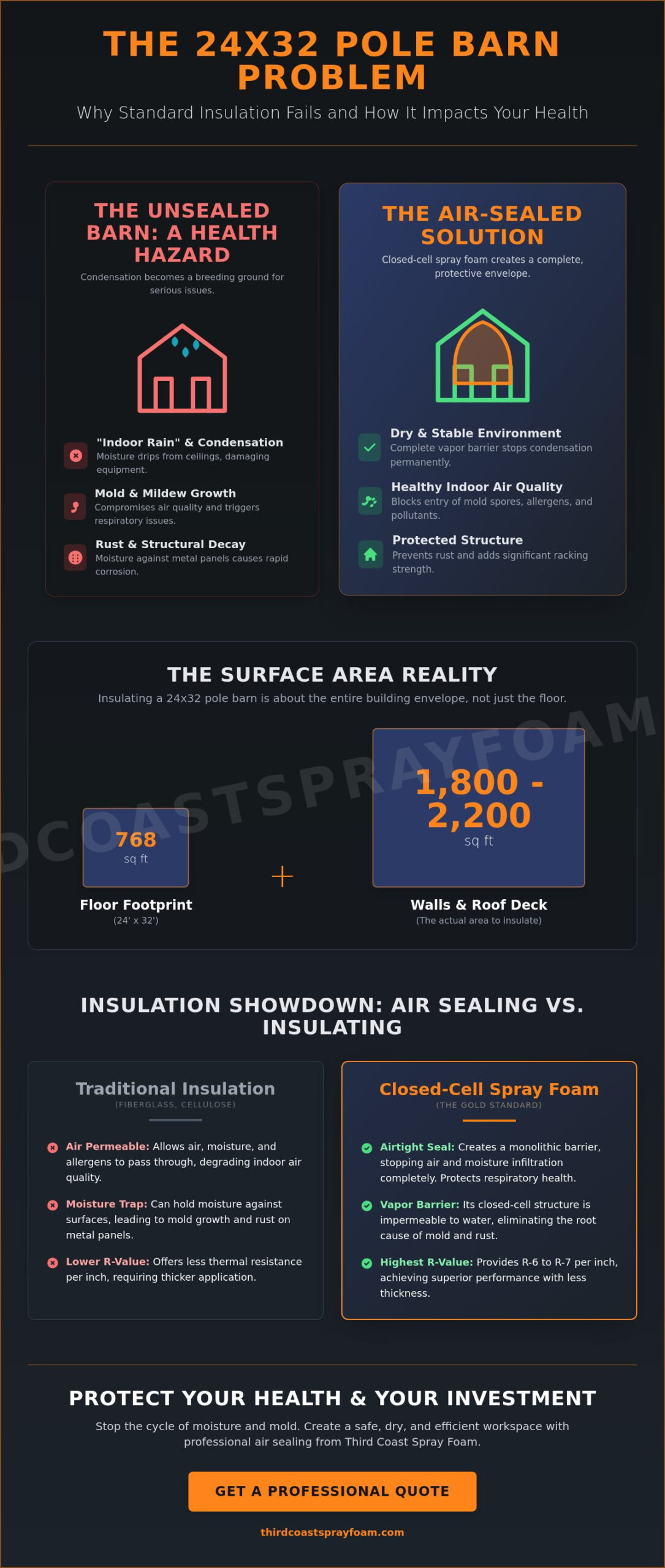
A 24×32 pole barn provides a solid 768 square feet of floor space, but this number is deceptive when you start planning for climate control. Many owners focus on the footprint when they first ask about the cost to insulate a 24×32 pole barn; however, the floor is only a small part of the equation. To create a truly conditioned space, we must look at the entire building envelope. This includes the vertical walls and the expansive roof deck, which typically total between 1,800 and 2,200 square feet of treatable area. If your ceiling is currently “sweating” or dripping onto your equipment, it’s a clear signal that your current insulation strategy isn’t managing the dew point correctly.
This moisture isn’t just an inconvenience for your tools. In the humid environment of West Michigan, trapped moisture against metal panels quickly leads to mold and mildew growth. These fungal colonies compromise indoor air quality and can trigger serious respiratory health issues for anyone spending time in the shop. Proper Spray foam insulation acts as both a thermal barrier and a vapor retarder, stopping the condensation cycle before it starts. This holistic approach ensures your building remains a healthy, dry environment for decades.
To better understand this concept, watch this helpful video:
Surface Area Calculations for a Standard 24×32 Structure
The total material needed depends heavily on your wall height. A barn with 12-foot walls requires significantly more product than one with 10-foot walls. When you add a standard 4/12 roof pitch, the square footage of the roof deck increases by about 5 percent compared to a flat surface. We calculate the entire envelope because insulating just the ceiling often leaves the walls to serve as a massive thermal bridge. This bridge allows heat to escape and moisture to collect, undermining the efficiency of the entire system.
The Michigan Climate Factor: Humidity and Temperature Swings
Living in Climate Zones 5 and 6 means your barn faces extreme temperature swings. In cities like Grand Rapids and Muskegon, lake-effect humidity levels stay high throughout the year. When warm, moist air inside the barn hits a cold metal surface, it reaches the dew point instantly. Without a proper air seal, R-value alone cannot stop this process. We also consider the frost line, as thermal transfer through the ground can affect the internal temperature of your slab. A professional installation creates a seamless barrier that manages these regional challenges while protecting your long-term respiratory health.
Comparing Materials: Why Closed-Cell Spray Foam is the Gold Standard
Choosing the right material is the single most important decision you’ll make for your shop’s longevity. While some might look for the cheapest upfront price when researching the cost to insulate a 24×32 pole barn, the long-term impact on your health and building structure tells a different story. There’s a fundamental difference between simply insulating a space and air sealing it. Traditional materials allow air to pass through, which carries moisture and allergens into your barn. High-performance pole barn insulation creates an airtight envelope that stops the exchange of outdoor pollutants, significantly improving your indoor air quality.
A primary goal for any Michigan property owner is maximizing the energy savings from insulation, which requires a material that blocks both heat and air movement. Closed-cell spray foam provides more punch in less space than any other option. It offers an impressive R-value of R-6 to R-7 per inch. This allows us to achieve superior thermal resistance without consuming valuable square footage inside your 24×32 structure. Because it’s so dense, it doesn’t just stop heat; it creates a permanent barrier against the elements.
While open-cell foam has its uses in residential attics, we prefer closed-cell for metal buildings. Open-cell foam is permeable to moisture, which is a significant drawback in the high-humidity environment of the Third Coast. Closed-cell foam is hydrophobic. It rejects water and provides the structural rigidity necessary to keep your barn standing strong against heavy snow loads and high winds. It’s a pragmatic, one-time investment in the health of your building and your lungs.
The Failure of Traditional Batts in Post-Frame Buildings
We don’t install fiberglass batts because they are fundamentally ill-suited for metal buildings. In Michigan, seasonal humidity causes fiberglass to act like a massive sponge. Once batts become damp, they sag and lose their R-value, often failing within just five years. This trapped moisture sits directly against your metal siding, leading to premature rust and corrosion. Even worse, wet fiberglass is a breeding ground for mold. This hidden growth releases spores into your workspace, creating a toxic environment that can lead to chronic respiratory health issues.
Closed-Cell Foam: Structural Integrity and Vapor Barrier
Closed-cell foam acts as a structural glue. When applied, it bonds the metal skin to the wooden posts, significantly increasing the wind-load resistance of the entire structure. It also functions as a built-in vapor barrier, so you don’t have to worry about installing separate plastic sheets that eventually tear or leak. Beyond climate control, this dense material is a powerful deterrent for pests. Rodents and insects can’t nest in closed-cell foam like they do in soft batts, which keeps your barn cleaner and protects you from the allergens and diseases that pests often carry.
Calculating the Real Cost to Insulate a 24×32 Pole Barn in 2026
The cost to insulate a 24×32 pole barn depends on several structural variables that generic online calculators often ignore. While the footprint is 768 square feet, our focus is on the total surface area of the building envelope. A barn with 12-foot walls and a standard roof pitch presents roughly 2,228 square feet of area that requires treatment. We also account for the necessary prep work, such as masking off windows, doors, and exposed bypasses. This ensures the application is precise and doesn’t interfere with the mechanical operation of your building.
Thickness is the primary driver of your investment. A “flash coat” of one inch provides a basic air seal, but we typically recommend a full two-inch application for Michigan’s Climate Zone 5 and 6. This two-inch depth is critical because it creates a true vapor barrier. Without this thickness, you risk sub-surface condensation that can lead to mold growth behind the foam. When considering the health and safety of insulation materials, achieving a proper seal is essential to keep your indoor air free from dampness and spores that trigger respiratory issues.
Choosing a local partner in Fruitport, Grand Haven, or Muskegon also impacts your bottom line. Local mobilization reduces travel fees and ensures your contractor understands the specific humidity challenges of the Third Coast. We treat your barn as a complete system, focusing on long-term durability rather than just a quick fix. Investing in professional installation now prevents the high cost of future repairs due to metal corrosion or structural rot.
Estimated Price Breakdown by Component
The ceiling or roof deck is the most critical area for investment. Since heat rises and metal roofs are prone to “raining” condensation, this area requires the most attention to detail. Wall insulation follows, providing the thermal comfort needed to work in the shop comfortably during January. We also pay close attention to gable ends and rim joists. These small areas are often overlooked, but they are major sources of air leakage that can significantly increase your monthly heating expenses.
Long-Term Financial Gains: Energy Bills and Property Value
The return on investment for a properly sealed pole barn is tangible. Owners often see a dramatic reduction in propane or electric heating costs during our harsh Michigan winters. Beyond monthly savings, a fully conditioned barn increases the overall appraisal value of your property. Buyers in West Michigan prioritize shops that are already dry and comfortable. You should also explore the energy efficient home improvement credit to see if your project qualifies for federal tax savings, further offsetting your initial capital outlay.
Health and Safety: Respiratory Wellness and Mold Prevention
When you evaluate the cost to insulate a 24×32 pole barn, the numbers on the quote are only half the story. The hidden expense of a poorly insulated barn often shows up in your physical well-being. In the damp climate of West Michigan, unsealed metal buildings act as massive condensers. This moisture doesn’t just sit on the walls; it drips into your equipment and fuels fungal growth. If you’ve ever felt a persistent cough or “heavy” chest after a few hours in your shop, you’re likely experiencing the effects of poor indoor air quality. We believe a building is only as good as the air inside it.
Preventing the ‘Barn Cold’: Mold, Mildew, and Spores
Mold thrives on the organic dust that naturally accumulates in workshops and agricultural spaces. In a damp, unventilated metal structure, dangerous varieties like Stachybotrys, commonly known as black mold, can take root in corners or behind traditional insulation. These colonies release microscopic spores that you inhale throughout the day. Professional air sealing with closed-cell foam is the most effective way to inhibit mold colonization. By eliminating the cold surfaces where moisture condenses, we remove the water source that mold requires to survive. This proactive approach protects your lungs and keeps your structure sound.
Indoor Air Quality (IAQ) and Your Workspace
Indoor air quality is a critical factor for anyone spending significant time in their barn. An unsealed building allows draft-driven allergens and Michigan pollen to settle in your workspace, creating a constant cycle of respiratory irritation. High-performance insulation stops these pollutants at the door. However, a tightly sealed barn requires a smart strategy for air movement. The air exchange rate refers to the number of times the total volume of air within a room is completely replaced by fresh outdoor air in one hour. We help you understand how to balance a perfect seal with proper mechanical ventilation to ensure your air stays fresh and oxygen-rich.
Modern spray foam is a safe, permanent solution when applied by trained professionals. We follow strict safety protocols to manage the application process. During the install, we use specialized equipment to protect the environment. Once the material reaches its full cure, typically within 24 hours, it becomes an inert part of your building’s structure. It doesn’t shed fibers or release harmful particles into your breathing zone like older materials might. You can feel confident that your investment is supporting a healthy, productive workspace for years to come.
Protect your health and your property by choosing the right pole barn insulation for your Michigan shop.
The Third Coast Advantage: Professional Pole Barn Insulation in West Michigan
West Michigan weather is unforgiving, and our local expertise in Fruitport, Lansing, and Muskegon ensures your project accounts for the unique humidity levels of the Third Coast. When you calculate the cost to insulate a 24×32 pole barn, you’re making a long-term investment in your property’s structural health. We believe in a “Done Right Once” philosophy. This means using high-performance materials that provide a permanent air seal and a healthy indoor environment. Our team approaches every barn as an integrated system, ensuring that your workspace remains dry, warm, and free from the respiratory triggers caused by dampness and mold.
Why We Don’t Recommend DIY Spray Foam Kits
While the initial price of a DIY kit might seem attractive, these systems often lead to costly complications. Professional-grade results require precise temperature control and high-pressure equipment to ensure the chemicals mix perfectly. A common risk with DIY kits is an improper mix, which can lead to “sticky” foam that never fully cures. This failure results in permanent, unpleasant odors and lingering off-gassing that directly threatens your respiratory health.
- Consistent R-Value: Professional equipment maintains the exact pressure needed for a uniform cell structure.
- Financial Risk: DIY kits often end up costing more per board foot due to poor yield and the high cost of correcting application errors.
- Safety Protocols: Our crews use specialized respiratory protection and follow strict safety standards that are difficult to replicate at home.
Your Next Steps: From Estimate to a Dry, Healthy Barn
The journey to a conditioned shop begins with a precise evaluation of your building’s specific needs. Our local pole barn insulation process is designed to be efficient and transparent. On installation day, our crew focuses on creating a seamless thermal envelope that stops “ceiling rain” and prevents mold from ever taking root. To prepare, we ask that you clear the walls and move any sensitive equipment to the center of the floor so we can protect it with drop cloths.
A properly insulated 24×32 barn is more than just a storage space; it’s a healthy environment where you can work comfortably year-round. By choosing a professional installation, you avoid the hazards of moisture traps and ensure your air quality remains high. Stop worrying about high heating bills and damp walls. Contact Third Coast Spray Foam today to get an accurate estimate for the cost to insulate a 24×32 pole barn and take the first step toward a more durable, efficient, and healthy workspace.
Secure Your Investment and Your Health Today
You’ve invested significant time and resources into your property, and protecting that investment starts with a high-performance building envelope. We’ve explored how the cost to insulate a 24×32 pole barn is a pragmatic step toward eliminating “ceiling rain” and preventing the mold growth that threatens your respiratory health. By choosing closed-cell spray foam, you aren’t just buying insulation; you’re securing your structure against Michigan’s humidity while lowering your monthly energy bills. This choice ensures that your indoor air quality remains high and your workspace stays dry year-round.
Third Coast Spray Foam has specialized in health-conscious air sealing across Grand Rapids, Muskegon, and Lansing since 2013. Our 5-star reputation is built on delivering professional results that prioritize your long-term wellness and financial security. We take pride in being the trusted advisor for West Michigan owners who value quality and durability over quick fixes. Don’t settle for a damp, drafty shop when a permanent solution is within reach. Get Your Custom 24×32 Pole Barn Insulation Quote and enjoy the peace of mind that comes with a job done right.
Frequently Asked Questions
What is the average cost to insulate a 24×32 pole barn in Michigan?
The total investment for this project depends on your wall height and the thickness of the material applied. While we don’t provide flat rates, industry data for Michigan in 2026 suggests that professional spray foam applications for a 2,228 square foot surface area can range between $3,342 and $17,824. This variation accounts for the difference between a basic flash coat and a full two-inch thermal barrier that meets local energy codes.
Will insulating my pole barn ceiling stop it from ‘raining’ inside?
Yes, professional insulation stops internal condensation by preventing warm, moist air from contacting the cold metal roof. By shifting the dew point outside of the building envelope, we eliminate the “raining” effect that often plagues unconditioned barns in West Michigan. This keeps your equipment dry and prevents the persistent moisture that fuels mold growth and structural rust within your shop.
Is spray foam safe for a workshop where I spend several hours a day?
Professional spray foam is safe for long-term occupancy once it has reached a full cure, which typically occurs within 24 hours of application. We use high-performance materials that become inert and don’t shed harmful fibers or particulates into your breathing zone. This protects your respiratory health by maintaining superior indoor air quality compared to traditional materials that can harbor dust and allergens.
How long does it take for a professional crew to insulate a 24×32 barn?
Most 24×32 pole barn projects are completed within one to two business days. The first day usually involves masking off windows, doors, and equipment to ensure a clean application. The actual spraying process is highly efficient, but we allow specific time for the material to set and for the workspace to be thoroughly ventilated before you return to your normal workshop routine.
Can I use open-cell foam in a metal pole barn, or is closed-cell required?
While open-cell foam is an option for some residential attics, we strongly recommend closed-cell foam for metal buildings. Closed-cell foam is hydrophobic and acts as a built-in vapor barrier, which is essential for managing the high humidity levels found near the Third Coast. It also adds significant structural rigidity to your barn, helping it withstand heavy Michigan snow loads and high winds.
Does pole barn insulation qualify for the federal energy tax credit in 2026?
Many property owners utilize the Energy Efficient Home Improvement Credit to offset the cost to insulate a 24×32 pole barn. While specific eligibility depends on whether the barn is part of your primary residence and meets current efficiency standards, these credits can provide significant tax savings. You should verify current IRS guidelines to confirm how these 2026 regulations apply to your specific project.
What happens if I don’t insulate my pole barn and just use a space heater?
Using a space heater in an uninsulated barn is inefficient and often harmful to your health. Without an air seal, the heater creates warm air that immediately condenses on the cold metal, leading to excessive moisture and mold colonization. This damp environment compromises your respiratory health and causes your heating bills to skyrocket as the heat escapes through the unsealed building envelope.
How do I prevent mold growth in my pole barn after it’s been insulated?
The best way to prevent mold is to maintain a consistent air exchange rate and manage internal humidity levels. While closed-cell foam eliminates the condensation that feeds mold, you still need proper ventilation to remove moisture from activities like washing vehicles. Combining a professional air seal with a strategic ventilation plan ensures your indoor air quality remains high and your workspace stays healthy.
Disclaimer
Information provided is for general educational purposes. Individual needs and circumstances vary. Speak to an experienced professional to get the correct information for your situation.