
Attic insulation for HVAC efficiency means addressing both the attic boundary and any ducts in unconditioned space. Seal air leaks, insulate the attic floor or roof assembly as appropriate, and ensure exposed ductwork is insulated. Ducts left exposed to attic temperatures can undermine comfort and HVAC performance.
If upstairs rooms feel too hot in summer or cold in winter, it makes sense to look beyond the HVAC unit itself. Air leaks, uneven insulation, and poorly insulated ducts can all contribute to temperature swings and extra system workload. This guide explains how these parts work together, where attic air leaks commonly occur, and why moisture and ventilation matter to indoor air quality. You’ll learn what to consider when insulating an attic with HVAC ducts so the work supports a more comfortable, well-sealed home.
Key Takeaways
- Plan attic insulation around the home’s thermal boundary so heating and cooling systems face less heat transfer.
- Seal gaps around attic hatches, pipes, vents, and other penetrations to help limit drafts and outdoor pollutants.
- Give HVAC ducts in unconditioned attic space attention too; insulation can help reduce energy loss along the ductwork.
- Account for ventilation and moisture before insulating to support healthier indoor air and reduce conditions that encourage mold growth.
Correct way to insulate an attic with HVAC?
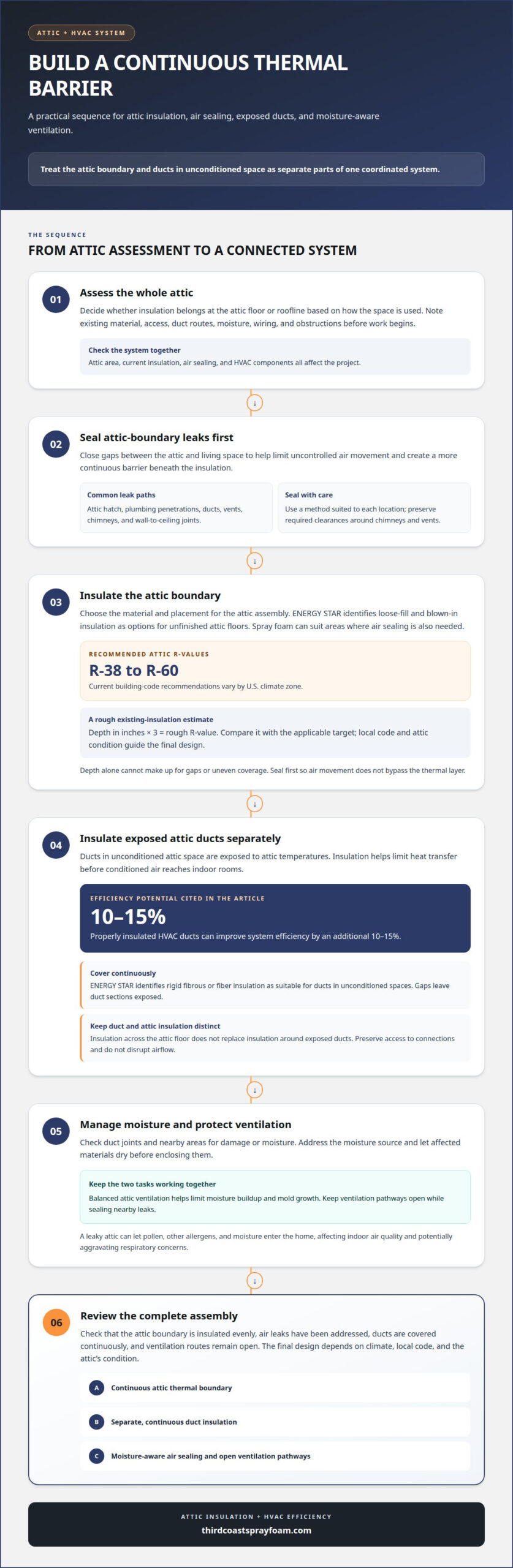
Insulate the attic boundary, seal air leaks first, and account for ducts and ventilation. These steps help limit heat transfer that can increase heating and cooling demand.
Insulation Costs and Energy Performance
Project cost and energy performance are different considerations: cost reflects the work required, while performance depends on how well the finished assembly limits heat flow. Insulation depth alone cannot compensate for gaps or uneven coverage. Attic area, existing material, access, and air sealing all affect the project. Energy savings depend on the home’s current condition, local climate, and heating and cooling use.
Insulation Materials for HVAC Efficiency
The best attic material depends on whether insulation belongs on the attic floor or roofline and how the space is used. ENERGY STAR identifies loose-fill and blown-in insulation as suitable for unfinished attic floors. Spray foam can suit areas where air sealing is also needed; closed-cell foam has an R-value of R-6.0 per inch, while open-cell foam has R-3.5 per inch.
DIY and Professional Installation
DIY insulation may suit a simple, accessible attic, but professional installation can address coverage, air leaks, ventilation, and HVAC components as one system. Before work, identify moisture, wiring, and obstructions that may affect placement. For eligible expenses through December 31, 2025, the Internal Revenue Service says the federal residential energy-efficiency tax credit for insulation covers up to 30% of insulation cost. Rebate eligibility depends on the program and its terms.
Climate-Zone R-Values and Insulation Needs
Recommended attic R-values vary by U.S. climate zone; current building codes recommend R-38 to R-60, depending on climate. Estimate existing insulation by multiplying its depth in inches by 3, then compare that rough R-value with the applicable target. Seal attic gaps before adding insulation so air movement does not bypass the thermal layer. Local code requirements and the attic’s condition guide the final design.
Air sealing gaps in attics
Air sealing closes cracks between the attic and living space, limiting uncontrolled air movement. Common leak paths include the attic hatch, plumbing pipes, chimneys, vents, ducts, and joints between building materials. Warm indoor air escaping through these openings can make heating and cooling less effective. Sealing gaps helps create a more continuous barrier beneath the attic insulation.
Work through the attic boundary methodically. Identify penetrations and joints, then use a sealing method suited to each location. For example, spray foam can be applied to attic walls and band joists, where it expands to fill spaces. Chimneys and vents require appropriate materials and clearances; do not cover components that need safe separation. A careful assessment helps catch missed leaks and protect the assembly.
- Seal around the attic hatch and its frame.
- Close gaps around plumbing penetrations and ducts.
- Address joints where attic walls meet ceilings.
- Keep ventilation pathways open while sealing nearby leaks.
A leaky attic can allow pollen, other allergens, and moisture into the home, affecting indoor air quality and potentially aggravating respiratory concerns. Moisture also matters for mold prevention: balanced attic ventilation helps limit moisture buildup and mold growth. Air sealing should therefore work with ventilation, not block it. If you’re planning insulation improvements, explore insulation solutions for your home as part of a whole-attic approach. Sealing before adding insulation helps reduce bypasses that can increase energy costs and weaken the thermal barrier.
Insulating an attic with HVAC ducts
Attic ducts sit outside the home’s conditioned space, so summer heat and winter cold can affect the air moving through them. Insulating the ducts helps limit heat transfer before conditioned air reaches indoor rooms. Properly insulated HVAC ducts can improve system efficiency by an additional 10-15%, which may help reduce energy bills and the strain on heating and cooling equipment. A project focused on attic insulation for HVAC efficiency treats ductwork as part of the overall thermal system.
ENERGY STAR identifies ducts in unconditioned spaces as suitable for rigid fibrous or fiber insulation. The right approach depends on duct location, condition, and the surrounding attic assembly. Insulation should cover the duct surface continuously, without blocking access to connections or disrupting airflow. Gaps in coverage can leave sections exposed to attic temperatures, weakening the benefit.
Keep duct insulation separate from the attic’s main insulation layer. For example, cellulose across an attic floor does not replace insulation around exposed ducts. Before adding materials, inspect duct joints and nearby areas for damage or moisture. Damp materials can undermine performance and create conditions that support mold growth. Address the moisture source and allow affected areas to dry before enclosing them.
Climate also shapes the attic’s overall design. This makes attic insulation for HVAC efficiency a coordinated project involving air sealing, insulation, and ventilation, rather than an isolated fix. A careful assessment of duct routes and coverage can identify where heat gain or loss is increasing HVAC runtime. For help improving the attic assembly, explore spray foam insulation options.
Third Coast Spray Foam
Third Coast Spray Foam helps homeowners address insulation gaps that can undermine attic comfort and HVAC performance. Uneven temperatures, exposed framing, or aging insulation may point to a broader issue. A coordinated assessment can identify which parts of the home’s thermal boundary need attention. Solutions include closed-cell and open-cell spray foam, blown insulation, and rim joist insulation, selected to suit the area and project.
Attic insulation works as part of a system: air leakage, moisture, and ventilation matter alongside material placement. In homes with HVAC equipment or ducts near the attic, considering the whole assembly helps identify where insulation improvements may support efficiency and indoor comfort. Contact Third Coast Spray Foam to discuss your insulation needs.
Plan Your Next Insulation Step
A thoughtful approach to attic insulation for HVAC efficiency starts with the home as a connected system. Consider how the attic boundary, duct placement, ventilation, and moisture conditions work together before making changes. Addressing these elements as a whole can support steadier indoor comfort and help protect indoor air quality, especially when dampness or mold is a concern.
The right next step is a project-specific assessment that accounts for your home’s construction and the areas needing improvement. Third Coast Spray Foam can help you consider insulation options suited to your property and goals. Contact Third Coast Spray Foam to discuss your project and move toward a more comfortable home.
Frequently Asked Questions
How does attic insulation improve HVAC efficiency and reduce energy bills?
Attic insulation can reduce heat transfer between the home and attic, helping HVAC equipment maintain indoor temperatures with less demand. A better-sealed, evenly insulated attic may also reduce cold drafts and hot spots. In Michigan communities such as Grand Rapids, Lansing, Muskegon, Holland, Allegan, Kalamazoo, and Grand Haven, results depend on the existing attic assembly, duct condition, and household heating and cooling use.
How much does attic insulation cost per square foot in the United States?
There is no single per-square-foot price for every attic project. Cost depends on attic size, existing insulation, accessibility, material choice, and whether removal or air sealing is needed. This information reflects Third Coast Spray Foam’s own service details; a free, no-obligation quote is required for exact project details.
How much can homeowners save by adding attic insulation?
Proper attic insulation can reduce a home’s energy bill by up to 20%, though the outcome depends on existing insulation, air leakage, climate, and heating and cooling use. Homes with substantial gaps may benefit differently from homes that already have effective insulation. Track energy use across comparable seasons to understand how changes affect your household’s bills.
What are the steps for insulating an attic properly?
A sound project starts with an assessment of existing insulation, moisture, ventilation, and HVAC duct locations. Next, address leaks and prepare the insulation boundary, then install suitable material with consistent coverage while keeping required ventilation paths clear. Finish by checking for missed areas, compressed insulation, and exposed ducts that could weaken overall thermal performance.
What ventilation and moisture risks should be addressed when insulating an attic?
Blocked ventilation, roof leaks, and damp insulation can contribute to moisture buildup and conditions that support mold or mildew. Before adding insulation, identify wet materials, staining, or deteriorated wood and address the moisture source. Preserve attic ventilation pathways: trapped moisture can affect building materials and indoor air quality, potentially aggravating respiratory sensitivities.
Disclaimer
Information provided is for general educational purposes. Individual needs and circumstances vary. Speak to an experienced professional to get the correct information for your situation.